

3 months 2 weeks ago
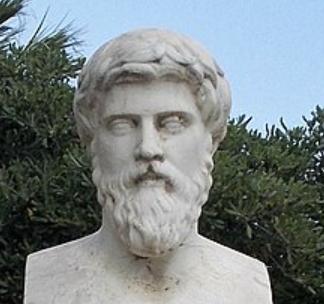
A prating barber asked Archelaus how he would be trimmed. He answered, "In silence."
▼
Source
source
33 Archelaus


4 months 2 weeks ago
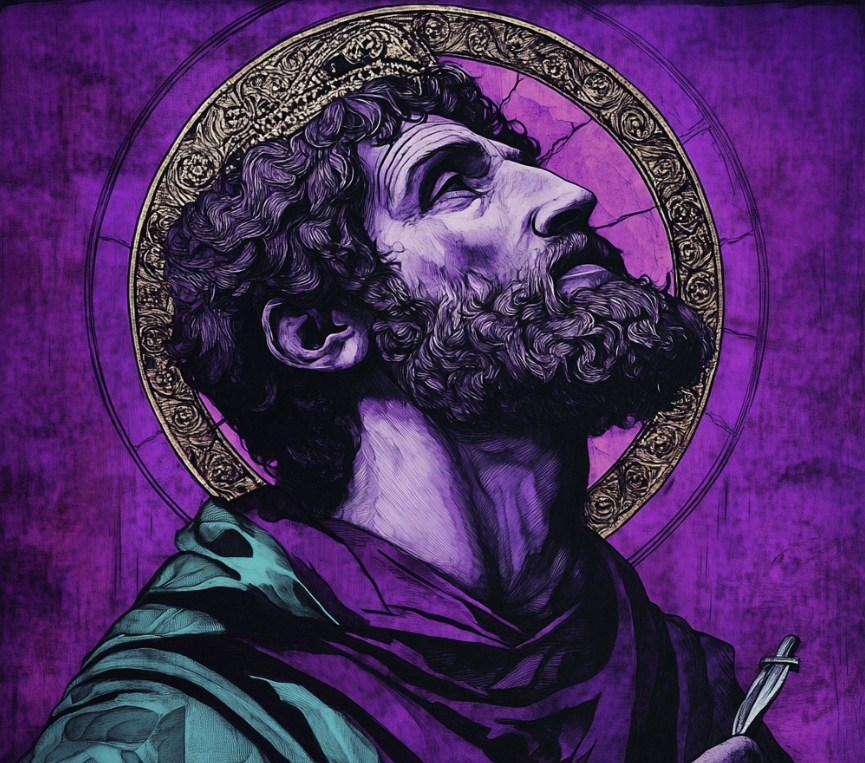
O sons of Peace, sons of the One Catholic [Church], walk in your way, and sing as you walk. Travelers do this in order to keep up their spirits.
▼
Source
source
p.427
2 months 2 weeks ago
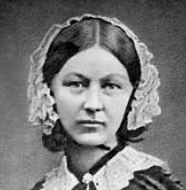
What are novels? What is the secret of the charm of every romance that ever was written? The first thing in a good novel is to place the persons together in circumstances which naturally call out the high feelings and thoughts of the character, which afford food for sympathy between them on these points - romantic events they are called. The second is that the heroine has generally no family ties (almost invariably no mother), or, if she has, these do not interfere with her entire independence. These two things constitute the main charm of reading novels.
1 week 5 days ago
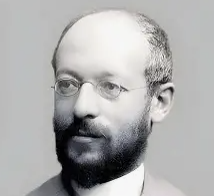
All relationships of people to each other rest, as a matter of course, upon the precondition that they know something about each other. The merchant knows that his correspondent wants to buy at the lowest price and to sell at the highest price. The teacher knows that he may credit to the pupil a certain quality and quantity of information. Within each social stratum the individual knows approximately what measure of culture he has to presuppose in each other individual.
▼
Source
source
p. 441: First lines of the article.
2 months 5 days ago
To challenge and to cope with this paradoxical state of things, we need a paradoxical way of thinking; since the world drifts into delirium, we must adopt a delirious point of view. We must no longer assume any principle of truth, of causality, or any discursive norm. Instead, we must grant both the poetic singularity of events and the radical uncertainty of events. It is not easy. We usually think that holding to the protocols of experimentation and verification is the most difficult thing. But in fact the most difficult thing is to renounce the truth and the possibility of verification, to remain as long as possible on the enigmatic, ambivalent, and reversible side of thought.
▼
Source
source
The Vital Illusion (2000) "The Murder of the Real". Wellek Library Lectures given May 1999 at the University of California, Irvine

4 months 3 days ago
There are various, nay, incredible faiths; why should we be alarmed at any of them? What man believes, God believes.

4 months 2 days ago
This life is worth living, we can say, since it is what we make it, from the moral point of view.
▼
Source
source
"Is Life Worth Living?"

3 weeks 6 days ago
But there has also been the rise of populist movements within existing liberal democracies, and particularly within the United States and Britain, which were... the leaders of the neoliberal revolution... in the 1980s...
▼
Source
source
20:01

4 months 1 day ago
There is one thing, and only one, in the whole universe which we know more about than we could learn from external observation. That one thing is Man. We do not merely observe men, we are men. In this case we have, so to speak, inside information; we are in the know.
▼
Source
source
Book I, Chapter 4, "What Lies behind the Law"

3 months 2 days ago
The primary use of knowledge is for such guidance of conduct under all circumstances as shall make living complete. All other uses of knowledge are secondary.
▼
Source
source
Vol. 3, Ch. XV, The Americans

4 months 1 week ago
We must remove the Decalogue out of sight and heart.
▼
Source
source
Wilhelm Martin Leberecht De Wette, 4, 188. As cited by Jonathan Ramachandran (January 1, 2019), Lake of Fire - Hope for the Wicked One Day? - Essays in First Christianity, 5 Loaf 2 Fish Publications, p. 1264.

4 months 2 days ago
Sometimes a scream is better than a thesis.
▼
Source
source
1836

3 months 1 week ago
The noblest Digladiation is in the Theatre of ourselves.
▼
Source
source
Part I, Section XXIV

3 months 3 days ago
The Crown of Great Britain cannot, in my opinion, be too magnificent. Let us see some great public works set on foot; let it never be said, that the Commons of Great Britain failed in what they owe to the first Crown in the world. Looking up to royalty, I do say, it is the oldest and one of the best parts of our constitution. I wish it should look like royalty; that it should look like a King; like a King of Great Britain.
▼
Source
source
Speech in the House of Commons (28 February 1769)
3 months 2 days ago
I know now that I shall. But all Actual Knowledge brings with it, by its formal nature, its schematised apposition; - although I now know of the Schema of God, yet I am not yet immediately this Schema, but I am only a Schema of the Schema. The required Being is not yet realised. I shall be. Who is this I? Evidently that which is, - the Ego gives in Intuition, the Individual. This shall be. What does its Being signify? It is given as a Principle in the World of Sense. Blind Instinct is indeed annihilated, and in its place there now stands the clearly perceived Shall. But the Power that at first set this Instinct in motion remains, in order that the Shall my now set it (the Power) in motion, and become its higher determining Principle. By means of this Power, I shall therefore, within its sphere, - the World of Sense, - produce and make manifest that which I recognise as my true Being in the Supersensuous World.
3 months 3 days ago
Economy is a distributive virtue, and consists not in saving but selection. Parsimony requires no providence, no sagacity, no powers of combination, no comparison, no judgment.
4 months 2 days ago
Every really able man, in whatever direction he work,-a man of large affairs, an inventor, a statesman, an orator, a poet, a painter,-if you talk sincerely with him, considers his work, however much admired, as far short of what it should be.
▼
Source
source
Immortality
3 months 3 weeks ago
When Alexander the Great addressed him with greetings, and asked if he wanted anything, Diogenes replied "Yes, stand a little out of my sunshine."
▼
Source
source
From Plutarch, Alexander, 14. Cf. Diogenes Laërtius, vi. 38, Cicero, Tusculan Disputations, v. 32

3 months 2 weeks ago
Concern should drive us into action and not into a depression.
▼
Source
source
The Collected Works of Karen Horney (1957) by Karen Horney, p. 154: "We may feel genuinely concerned about world conditions, though such a concern should drive us into action and not into a depression."

4 months 6 days ago
The heroes in paganism correspond exactly to the saints in popery, and holy dervises in MAHOMETANISM. The place of, HERCULES, THESEUS, HECTOR, ROMULUS, is now supplied by DOMINIC, FRANCIS, ANTHONY, and BENEDICT. Instead of the destruction of monsters, the subduing of tyrants, the defence of our native country; whippings and fastings, cowardice and humility, abject submission and slavish obedience, are become the means of obtaining celestial honours among mankind.
▼
Source
source
Part X - With regard to courage or abasement
4 months 1 day ago
Before mass leaders seize the power to fit reality to their lies, their propaganda is marked by its extreme contempt for facts as such, for in their opinion fact depends entirely on the power of man who can fabricate it.
▼
Source
source
On "alternate facts"
1 week 5 days ago
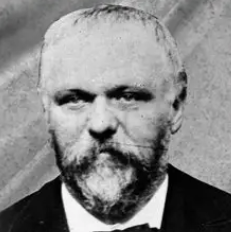
In ignoring the important fundamental contribution of the followers of Marx, and by insisting exclusively on the phenomenon of superficial adaptation and variation, Sorel passed in silence over all that was healthy, live and fruitful in the Marxist doctrine.
▼
Source
source
Lucien Laurat, Marxism and Democracy, 1940, published by the Left Book Club, Victor Gollancz Ltd, London; translated by Edward Fitzgerald. Text online at the Marxists Internet Archive.
4 months 2 weeks ago
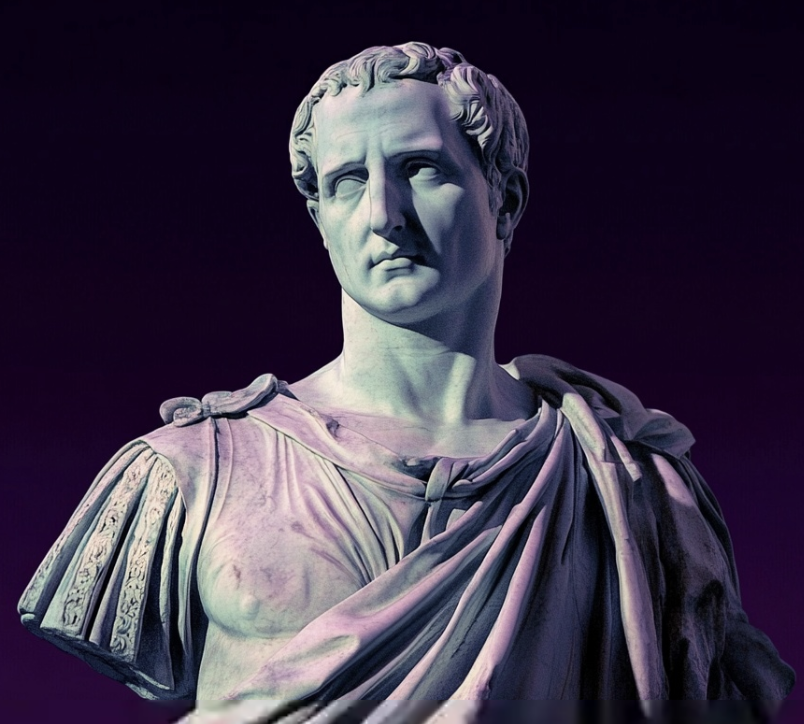
Do not blame Caesar, blame the people of Rome who have so enthusiastically acclaimed and adored him and rejoiced in their loss of freedom and danced in his path and gave him triumphal processions. Blame the people who hail him when he speaks in the Forum of the 'new, wonderful good society' which shall now be Rome, interpreted to mean 'more money, more ease, more security, more living fatly at the expense of the industrious.
▼
Source
source
This is also from the 1965 essay by Justice Millard Caldwell. It is not clear if this is based in any specific dialogue.

4 months 5 days ago
What I had to say was so clear and I felt it so deeply that I am amazed by the tediousness, repetitiousness, verbiage, and disorder of this writing. What would have made it lively and vehement coming from another's pen is precisely what has made it dull and slack coming from mine. The subject was myself, and I no longer found on my own interest that zeal and vigor of courage which can exalt a generous soul only for another person's cause.
▼
Source
source
On the Subject and Form of This Writing; translated by Judith R. Bush, Christopher Kelly, Roger D. Masters

4 months 3 weeks ago
Be loyal and trustworthy. Do not befriend anyone who is lower than yourself in this regard. When making a mistake, do not be afraid to correct it.
4 months 3 days ago
Even the death of Friends will inspire us as much as their lives. They will leave consolation to the mourners, as the rich leave money to defray the expenses of their funerals, and their memories will be incrusted over with sublime and pleasing thoughts, as monuments of other men are overgrown with moss; for our Friends have no place in the graveyard.

4 months 3 days ago
In the same year in which I began Latin, I made my first commencement in the Greek poet with the Iliad. After I had made some progress in this, my father put Pope's translation into my hands. It was the first English verse I had cared to read, and it became one of the books in which for many years I most delighted: I think I must have read it from twenty to thirty times through. I should not have thought it worth while to mention a taste apparently so natural to boyhood, if I had not, as I think, observed that the keen enjoyment of this brilliant specimen of narrative and versification is not so universal with boys, as I should have expected both à priori and from my individual experience.
▼
Source
source
(p. 10)
4 months 2 days ago
The war against war is going to be no holiday excursion or camping party. The military feelings are too deeply grounded to abdicate their place among our ideals until better substitutes are offered than the glory and shame that come to nations as well as to individuals from the ups and downs of politics and the vicissitudes of trade.
3 months 2 days ago
I have always taken as the standard of the mode of teaching and writing, not the abstract, particular, professional philosopher, but universal man, that I have regarded man as the criterion of truth, and not this or that founder of a system, and have from the first placed the highest excellence of the philosopher in this, that he abstains, both as a man and as an author, from the ostentation of philosophy, i.e., that he is a philosopher only in reality, not formally, that he is a quiet philosopher, not a loud and still less a brawling one.
▼
Source
source
Preface to Second Edition

2 months 4 weeks ago
Utopia is a mixture of childish rationalism and secularized angelism.
5 months 3 days ago
Now, in the solemn silence before God with the lilies and the birds, where accordingly there is nobody at all present, where accordingly there is no other intercourse for thee but with God-there indeed the rule holds good: either hold to Him/or despise Him. There is no excuse, for no one else is present, in any case no one is present in such a wise that thou canst hold to him without despising God; for precisely there in the silence it is clear how close God is to thee.

3 months 1 week ago
There is the world for you. Beauty, true beauty, is intangible. It is in the eye of the beholder. Something that we can lose at any moment, and the more you examine it, the more illusive it becomes. True happiness is virtue, and virtue is predicated on knowledge and righteous conduct.
▼
Source
source
The Alchemy of Happiness
2 months 2 weeks ago
There will be no mass-based feminist movement as long as feminist ideas are understood only by a well-educated few.
4 months 2 days ago
There are many things of which a wise man might wish to be ignorant.
▼
Source
source
Demonology
3 months 2 days ago
Though I myself am an atheist, I openly profess religion in the sense just mentioned, that is, a nature religion. I hate the idealism that wrenches man out of nature; I am not ashamed of my dependency on nature; I openly confess that the workings of nature affect not only my surface, my skin, my body, but also my core, my innermost being, that the air I breathe in bright weather has a salutary effect not only on my lungs but also on my mind, that the light of the sun illumines not only my eyes but also my spirit and my heart. And I do not, like a Christian, believe that such dependency is contrary to my true being or hope to be delivered from it. I know further that I am a finite moral being, that I shall one day cease to be. But I find this very natural and am therefore perfectly reconciled to the thought.
▼
Source
source
Lecture V, R. Manheim, trans. (1967), pp. 35-36

4 months 3 days ago
Freedom is the greatest of political goods. I do not say freedom is the greatest of all goods: the best things come from within-they are such things as creative art, and love, and thought. Such things can be helped or hindered by political conditions, but not actually produced by them; and freedom is, both in itself and in its relation to these other goods the best thing that political and economic conditions can secure.
▼
Source
source
Ch. V: Government and Law, p. 75

2 months 2 weeks ago
It was the normal working of the antisuccess mechanism. In our overcrowded modern world a hit record, a best-selling book, a successful film, can reach more people in a week than Shakespeare or Beethoven reached in a whole lifetime. And so fame has become the most romantic, the most desirable of all commodities, the dream for which a modern Faust might sell his soul to the Devil. Once attained, fame is never as easy to hold on to as some people believe. The people who achieve fame by some accident of fashion are usually forgotten within a week; the ones who remain on top have to work to stay there. But few people understand this. The result is that anyone who achieves sudden notoriety arouses envy and hostility. The greater the success, the greater the reaction.
▼
Source
source
p. 28
2 weeks 4 days ago
Whatever people do in the market economy, is the execution of their own plans. In this sense every human action means planning. What those calling themselves planners advocate is not the substitution of planned action for letting things go. It is the substitution of the planner's own plan for the plans of his fellow-men. The planner is a potential dictator who wants to deprive all other people of the power to plan and act according to their own plans. He aims at one thing only: the exclusive absolute pre-eminence of his own plan.

5 months ago
We certainly must contend by every argument against him who does away with knowledge or reason or mind and then makes any dogmatic assertion about anything. The philosopher, who pays the highest honor to these things, must necessarily, as it seems, because of them refuse to accept the theory of those who say the universe is at rest, whether as a unity or in many forms, and must also refuse utterly to listen to those who say that being is universal motion; he must say that being and the universe consist of both.
4 months 2 weeks ago
I do not speak here of divine truths... because they are infinitely superior to nature: God alone can place them in the soul... I know that he has desired that they should enter from the heart into the mind, and not from the mind into the heart, to humiliate that proud power of reasoning that pretends to the right to be the judge of the things that the will chooses; and to cure this infirm will which is wholly corrupted by its filthy attachments.
4 months 3 days ago
That virtue we appreciate is as much ours as another's. We see so much only as we possess.
▼
Source
source
June 22, 1839

3 weeks 2 days ago
Nature admits no lie.
▼
Source
source
Latter Day Pamphlet, No. 5.
2 months 4 weeks ago
Nothing proves that we are more than nothing.

4 months 4 days ago
False and doubtful positions, relied upon as unquestionable maxims, keep those who build on them in the dark from truth. Such are usually the prejudices imbibed from education, party, reverence, fashion, interest, et cetera.
▼
Source
source
Book IV, Ch. 7
1 week 6 days ago
Justice is conscience, not a personal conscience but the conscience of the whole of humanity. Those who clearly recognize the voice of their own conscience usually recognize also the voice of justice.
▼
Source
source
Letter to three students (October 1967) as translated in Solzhenitsyn: A Documentary Record (1970) edited by Leopold Labedz, "The Struggle Intensifies"
2 months 3 weeks ago
As we shall see later, the most important factor in the training of good mental habits consists in acquiring the attitude of suspended conclusion, and in mastering the various methods of searching for new materials to corroborate or to refute the first suggestions that occur. To maintain the state of doubt and to carry on systematic and protracted inquiry ― these are the essentials of thinking.
▼
Source
source
Chapter 1: "What Is Thought?"
CivilSimian.com created by AxiomaticPanic, CivilSimian, Kalokagathia