

4 months 2 weeks ago
Sincerity is the end and beginning of things; without sincerity there would be nothing. On this account, the superior man regards the attainment of sincerity as the most excellent thing.


3 weeks 2 days ago
One need only open the eyes to see that the conquests of industry which have enriched so many practical men would never have seen the light, if these practical men alone had existed and if they had not been preceded by unselfish devotees who died poor, who never thought of utility, and yet had a guide far other than caprice.As Mach says, these devotees have spared their successors the trouble of thinking.
▼
Source
source
Author's Essay Prefatory to the Translation: "The Choice of Facts," p.4
1 month 2 weeks ago
Not far from the invention of fire... we must rank the invention of doubt.
▼
Source
source
Collected Essays vol 6, viii; quoted in T. H. Huxley: Scientist, Humanist, and Educator (1950) by Cyril Bibby, p. 257
1 week 3 days ago
The divergent scales of values scream in discordance, they dazzle and daze us, and in order that it might not be painful we steer clear of all other values, as though from insanity, as though from illusion, and we confidently judge the whole world according to our own home values. Which is why we take for the greater, more painful and less bearable disaster not that which is in fact greater, more painful and less bearable, but that which lies closest to us. Everything which is further away, which does not threaten this very day to invade our threshold - with all its groans, its stifled cries, its destroyed lives, even if it involves millions of victims - this we consider on the whole to be perfectly bearable and of tolerable proportions.

3 months 4 weeks ago
The deadliest enemies of nations are not their foreign foes; they always dwell within their borders. And from these internal enemies civilization is always in need of being saved. The nation blest above all nations is she in whom the civic genius of the people does the saving day by day, by acts without external picturesqueness; by speaking, writing, voting reasonably; by smiting corruption swiftly; by good temper between parties; by the people knowing true men when they see them, and preferring them as leaders to rabid partisans or empty quacks.
▼
Source
source
Robert Gould Shaw: Oration upon the Unveiling of the Shaw Monument
2 months 3 weeks ago
The dream is the small hidden door in the deepest and most intimate sanctum of the soul, which opens to that primeval cosmic night that was soul long before there was conscious ego and will be soul far beyond what a conscious ego could ever reach.
▼
Source
source
The Meaning of Psychology for Modern Man

2 months 2 weeks ago
In the vast all of the Universe, must there be this unique anomaly - a consciousness that knows itself, loves itself and feels itself, joined to an organism which can only live within such and such degrees of heat, a merely transitory phenomenon? No, it is not mere curiosity that inspires the wish to know whether or not the stars are inhabited by living organisms, by consciousness akin to our own, and a profound longing enters into that dream that our souls shall pass from star to star through the vast spaces of the heavens, in an infinite series of transmigrations. The feeling of the divine makes us wish and believe that everything is animated, that consciousness, in a greater or less degree, extends through everything. We wish not only to save ourselves, but to save the world from nothingness. And therefore God. Such is his finality as we feel it.

1 month 4 weeks ago
Science is meaningless because it gives no answer to our question, the only question important for us: 'what shall we do and how shall we live.
▼
Source
source
Quoted by Max Weber in his lecture "Science as a Vocation"; in Lynda Walsh (2013)
4 months 2 weeks ago
For freedom is not acquired by satisfying yourself with what you desire, but by destroying your desire.
▼
Source
source
Book IV, ch. 1, 175.

2 weeks ago
Take your fill when the cask is first opened and when it is nearly spent, but midways be sparing: it is poor saving when you come to the lees.
▼
Source
source
Line 5 This quote is often directly attributed to Seneca, but he is referring to lines 368-369 of Works and Days by the Greek poet Hesiod, (translated by Hugh G. Evelyn-White)

1 month 1 week ago
True hedonic engineering, as distinct from mindless hedonism or reckless personal experimentation, can be profoundly good for our character. Character-building technologies can benefit utilitarians and non-utilitarians alike. Potentially, we can use a convergence of biotech, nanorobotics and information technology to gain control over our emotions and become better (post-)human beings, to cultivate the virtues, strength of character, decency, to become kinder, friendlier, more compassionate: to become the type of (post)human beings that we might aspire to be, but aren't, and biologically couldn't be, with the neural machinery of unenriched minds. Given our Darwinian biology, too many forms of admirable behaviour simply aren't rewarding enough for us to practise them consistently: our second-order desires to live better lives as better people are often feeble echoes of our baser passions.
▼
Source
source
Utopian Neuroscience, BLTC Research, 2019
4 months 2 weeks ago
It is more shameful to distrust our friends than to be deceived by them.
1 month 2 weeks ago
I would not give up the keys to the granary, because I know that, by doing so, I should turn scarcity into a famine.
▼
Source
source
Sullivan, p. 266

4 months 1 week ago
For my own part, I cannot without grief see so much as an innocent beast pursued and killed that has no defence, and from which we have received no offence at all.
▼
Source
source
Ch. 11, tr. Cotton, 1685
2 months 3 weeks ago
Artist and perceiver alike begin with what may be called a total seizure, an inclusive qualitative whole not yet articulated, not distinguished into members.
▼
Source
source
p. 199
2 months 1 day ago
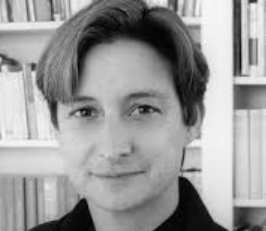
The move from a structuralist account in which capital is understood to structure social relations in relatively homologous ways to a view of hegemony in which power relations are subject to repetition, convergence, and rearticulation brought the question of temporality into the thinking of structure, and marked a shift from a form of Althusserian theory that takes structural totalities as theoretical objects to one in which the insights into the contingent possibility of structure inaugurate a renewed conception of hegemony as bound up with the contingent sites and strategies of the rearticulation of power.
▼
Source
source
"Further Reflections on the Conversations of Our Time" (1997), which received first place in the Philosophy and Literature Bad Writing Contest

4 months 1 week ago
Among the celestial bodies that are revolving over our heads, though the motions are not the same, and though the force is not equal, yet they move, and ever have moved, without clashing, and in perfect harmony.


4 months ago
I speak for the slave when I say that I prefer the philanthropy of Captain Brown to that philanthropy which neither shoots me nor liberates me.

1 month 3 weeks ago
A moral point of view too often serves as a substitute for understanding in technological matters.
▼
Source
source
(p. 245)
1 week 3 days ago
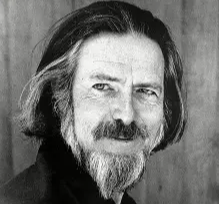
When a man no longer confuses himself with the definition of himself that others have given him, he is at once universal and unique. He is universal by virtue of the inseparability of his organism from the cosmos. He is unique in that he is just this organism and not any stereotype of role, class, or identity assumed for the convenience of social communication.
▼
Source
source
p. 9
1 week 2 days ago
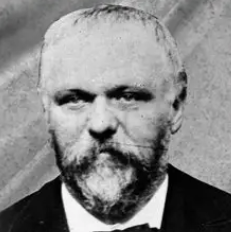
Mussolini is a man no less extraordinary than Lenin. He, too, is a political genius, of a greater reach than all the statesmen of the day, with the only exception of Lenin...
▼
Source
source
As quoted in The Myth of the Nation and the Vision of Revolution: The Origins of Ideological Polarization in the 20th Century, Jacob L. Talmon, University of California Press (1981) p. 451.
4 months 1 day ago
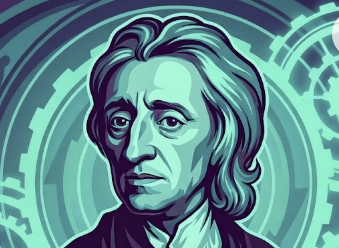
Preference of vice to virtue, a manifest wrong judgment.
▼
Source
source
Book II, Ch. 21, sec. 70

3 months 3 weeks ago
All these present struggles revolve around the question: Who are we? They are a refusal of these abstractions, of economic and ideological state violence, which ignore who we are individually, and also a refusal of a scientific or administrative inquisition which determines who one is.
▼
Source
source
p. 781

3 months 4 weeks ago
I grasp at each second, trying to suck it dry: nothing happens which I do not seize, which I do not fix forever in myself, nothing, neither the fugitive tenderness of those lovely eyes, nor the noises of the street, nor the false dawn of early morning: and even so the minute passes and I do not hold it back, I like to see it pass.

4 months 1 day ago
The best is the enemy of the good.
2 months 1 week ago
The smartphone seems to be a playground, but it is a digital panopticon.

3 months 4 weeks ago
Good is a good doctor, but Bad is sometimes a better.
▼
Source
source
Considerations by the Way

3 months 3 weeks ago
Frazer's account of the magical and religious views of mankind is unsatisfactory; it makes these views look like errors.
▼
Source
source
Ch. 7 : Remarks on Frazer's Golden Bough, p. 119
3 months 4 weeks ago
As there is a use in medicine for poisons, so the world cannot move without rogues.
▼
Source
source
Power

2 months 1 week ago
I found Randi likable and plausible; the only thing that bothered me was the sweeping and intense nature of his skepticism. He was obviously working from the premise that all paranormal phenomena, without exception, are fakes or delusions. He seemed to take to take it for granted that all of us - there were also two women present - shared his opinions, and he made jovial, disparaging remarks about psychics and other such weirdos. I began to get the uncomfortable feeling of a Jew who has accidentally walked into a Nazi meeting, or a Jehovah's Witness at a convention of militant atheists. As a supposedly scientific psychic investigator, Randi struck me as being oddly fixed in his opinions.
▼
Source
source
pp. 39-40

4 months ago
May it not be the fact that mankind, who after all are made up of single human beings, obtain a greater sum of happiness when each pursues his own, under the rules and conditions required by the good of the rest, than when each makes the good of the rest his only object, and allows himself no personal pleasures not indispensable to the preservation of his faculties? The regimen of a blockaded town should be cheerfully submitted to when high purposes require it, but is it the ideal perfection of human existence?
▼
Source
source
Auguste Comte and Positivism, p. 142
4 months 2 weeks ago
If any one will piously and soberly consider the sermon which our Lord Jesus spoke on the mount, as we read it in the Gospel according to Matthew, I think that he will find in it, so far as regards the highest morals, a perfect standard of the Christian life: and this we do not rashly venture to promise, but gather it from the very words of the Lord Himself. For the sermon itself is brought to a close in such a way, that it is clear there are in it all the precepts which go to mould the life. He has sufficiently indicated, as I think, that these sayings which He uttered on the mount so perfectly guide the life of those who may be willing to live according to them, that they may justly be compared to one building upon a rock.
▼
Source
source
On the Sermon on the Mount, as translated by William Findlay (1888), Book I, Ch. 1
3 months 4 weeks ago
I have often thought that the best way to define a man's character would be to seek out the particular mental or moral attitude in which, when it came upon him, he felt himself most deeply and intensely active and alive. At such moments there is a voice inside which speaks and says: "This is the real me!"
▼
Source
source
To his wife, Alice Gibbons James, 1878

2 months 3 weeks ago
All natures, all formed things, all creatures exist in and with one another and will again be resolved into their own roots, because the nature of matter is dissolved into the roots of its nature alone. He who has ears to hear, let him hear.
4 months 1 day ago
Let them have what instructions you will, and ever so learned lectures of breeding daily inculcated into them, that which will most influence their carriage will be the company they converse with, and the fashion of those about them.
▼
Source
source
Sec. 67

2 months 4 weeks ago
Music must take rank as the highest of the fine arts - as the one which, more than any other, ministers to human welfare.
▼
Source
source
On the Origin and Function of Music
4 months 1 day ago
There is no more mistaken path to happiness than worldliness, revelry, high life.
▼
Source
source
Our Relation to Others, § 24
1 month 3 weeks ago
Think about the two qualities that a virus, or any sort of parasitic replicator, demands of a friendly medium, the two qualities that make cellular machinery so friendly towards parasitic DNA, and that make computers so friendly towards computer viruses. These qualities are, firstly, a readiness to replicate information accurately, perhaps with some mistakes that are subsequently reproduced accurately; and, secondly, a readiness to obey instructions encoded in the information so replicated.

2 months 3 days ago
It seems to me, that if the matter of our sun and planets and all the matter of the universe, were evenly scattered throughout all the heavens, and every particle had an innate gravity towards all the rest, and the whole of space throughout which this matter was scattered was but finite, the matter on [toward] the outside of this space would, by its gravity, tend towards all the matter on the inside, and, by consequence, fall down into the middle of the whole space, and there compose one great spherical mass. But if the matter was evenly disposed throughout an infinite space it could never convene into one mass; but some of it would convene into one mass and some into another, so as to make an infinite number of great masses, scattered at great distances from one another throughout all that infinite space.
▼
Source
source
Four Letters to Bentley (1692) first letter

2 weeks 6 days ago
We are no longer instinctively driven to apprehend, and lay to heart, what is Good and Lovely, but rather to inquire, as onlookers, how it is produced, whence it comes, whither it goes. Our favourite Philosophers have no love and no hatred; they stand among us not to do, nor to create anything, but as a sort of Logic mills, to grind out the true causes and effects of all that is done and created.
4 months ago
Though they may think the proof incomplete that the universe is a work of design, and though they assuredly disbelieve that it can have an Author and Governor who is absolute in power as well as perfect in goodness, they have that which constitutes the principal worth of all religions whatever, an ideal conception of a Perfect Being, to which they habitually refer as the guide of their conscience; and this ideal of Good is usually far nearer to perfection than the objective Deity of those, who think themselves obliged to find absolute goodness in the author of a world so crowded with suffering and so deformed by injustice as ours.
▼
Source
source
(p. 46)

5 months 2 days ago
If you have hitherto believed that life was one of the highest value and now see yourselves disappointed, do you at once have to reduce it to the lowest possible price?
4 months 1 week ago
All who say the same things do not possess them in the same manner; and hence the incomparable author of the Art of Conversation pauses with so much care to make it understood that we must not judge of the capacity of a man by the excellence of a happy remark that we heard him make. ...let us penetrate, says he, the mind from which it proceeds... it will oftenest be seen that he will be made to disavow it on the spot, and will be drawn very far from this better thought in which he does not believe, to plunge himself into another, quite base and ridiculous.
▼
Source
source
Montaigne, Essais, liv. III, chap. viii.-Faugère

3 months 4 weeks ago
All that the conscious ego can do is to formulate wishes, which are then carried out by forces which it controls very little and understands not at all.
2 months 2 weeks ago
I know well that many of my readers do not think as I do. This also is most natural and confirms the theorem. For although my opinion turn out erroneous, there will always remain the fact that many of those dissentient readers have never given five minutes' thought to this complex matter. How are they going to think as I do? But by believing that they have a right to an opinion on the matter without previous effort to work one out for themselves, they prove patently that they belong to that absurd type of human being which I have called the "rebel mass." It is precisely what I mean by having one's soul obliterated, hermetically closed. Here it would be the special case of intellectual hermetism.
▼
Source
source
Chap. VIII: The Masses Intervene In Everything, And Why Their Intervention Is Solely By Violence
3 months 4 weeks ago
The law of the table is beauty, a respect to the common soul of the guests. Everything is unreasonable which is private to two or three, or any portion of the company. Tact never violates for a moment this law; never intrudes the orders of the house, the vices of the absent, or a tariff of expenses, or professional privacies; as we say, we never "talk shop" before company. Lovers abstain from caresses, and haters from insults, while they sit in one parlor with common friends.
▼
Source
source
Social Aims
1 month 3 weeks ago
It is often said, mainly by the 'no-contests', that although there is no positive evidence for the existence of God, nor is there evidence against his existence. So it is best to keep an open mind and be agnostic. At first sight that seems an unassailable position, at least in the weak sense of Pascal's wager. But on second thoughts it seems a cop-out, because the same could be said of Father Christmas and tooth fairies. There may be fairies at the bottom of the garden. There is no evidence for it, but you can't prove that there aren't any, so shouldn't we be agnostic with respect to fairies?
▼
Source
source
From speech at the Edinburgh International Science Festival, 1992-04-15.
CivilSimian.com created by AxiomaticPanic, CivilSimian, Kalokagathia