

3 months 3 weeks ago
At the point at which the concept of différance, and the chain attached to it, intervenes, all the conceptual oppositions of metaphysics (signifier/signified; sensible/intelligible; writing/speech; passivity/activity; etc.)- to the extent that they ultimately refer to the presence of something present (for example, in the form of the identity of the subject who is present for all his operations, present beneath every accident or event, self-present in its "living speech," in its enunciations, in the present objects and acts of its language, etc.)- become non pertinent. They all amount, at one moment or another, to a subordination of the movement of différance in favor of the presence of a value or a meaning supposedly antecedent to différance, more original than it, exceeding and governing it in the last analysis. This is still the presence of what we called above the "transcendental signified.
▼
Source
source
p. 29

3 months 4 weeks ago
Even the death of Friends will inspire us as much as their lives. They will leave consolation to the mourners, as the rich leave money to defray the expenses of their funerals, and their memories will be incrusted over with sublime and pleasing thoughts, as monuments of other men are overgrown with moss; for our Friends have no place in the graveyard.
2 weeks 6 days ago
Karl Marx was born at Trier on 5 May 1818, the child of Jewish parents with a long rabbinical tradition on both sides. His grandfathers were rabbis; his father, a well-to-do lawyer, changed his first name from Herschel to Heinrich and adopted Protestantism, which in Prussia was a necessary condition of professional and cultural emancipation.
▼
Source
source
(pg. 96)

3 weeks 1 day ago
Let us pardon him his hope of a vain apocalypse, and of a second coming in great triumph upon the clouds of heaven. Perhaps these were the errors of others rather than his own; and if it be true that he himself shared the general illusion, what matters it, since his dream rendered him strong against death, and sustained him in a struggle to which he might otherwise have been unequal?
▼
Source
source
Ch. 17.

1 week 5 days ago
He who boasts of his descent, praises the deeds of another.
3 weeks ago
When navigators... determine a longitude... they must... calculate Paris time…with a chronometer set for Paris. The qualitative problem of simultaneity is made to depend upon the quantitative problem of the measurement of time.
2 months 2 weeks ago
Some would deny any legitimate use of the word God because it has been misused so much. Certainly it is the most burdened of all human words. Precisely for that reason it is the most imperishable and unavoidable. And how much weight has all erroneous talk about God's nature and works (although there never has been nor can be any such talk that is not erroneous) compared with the one truth that all men who have addressed God really meant him? For whoever pronounces the word God and really means Thou, addresses, no matter what his delusion, the true Thou of his life that cannot be restricted by any other and to whom he stands in a relationship that includes all others.
3 months 3 weeks ago
From Plato's Republic... the primary danger of liberty and free speech in a democracy is what results when everyone has his own... style of life... For then there can be no common logos, no possible unity, for the city.
4 months 4 weeks ago
Oh, can I really believe the poet's tales, that when one first sees the object of one's love, one imagines one has seen her long ago, that all love like all knowledge is remembrance, that love too has its prophecies in the individual. ... it seems to me that I should have to possess the beauty of all girls in order to draw out a beauty equal to yours; that I should have to circumnavigate the world in order to find the place I lack and which the deepest mystery of my whole being points towards, and at the next moment you are so near to me, filling my spirit so powerfully that I am transfigured for myself, and feel that it's good to be here.
2 months ago
If the thought enunciates an object as a truth, it is only as a challenge to this object's own self-fulfillment.
3 months 3 weeks ago
If you want to deserve Hell, you need only stay in bed. The world is iniquity; if you accept it, you are an accomplice, if you change it you are an executioner.
▼
Source
source
Act 3, sc. 6
2 months 1 week ago
The God idea is growing more impersonal and nebulous in proportion as the human mind is learning to understand natural phenomena and in the degree that science progressively correlates human and social events.

4 months ago
Remorse sleeps during a prosperous period but wakes up in adversity.
▼
Source
source
Variant translations: Remorse sleeps during prosperity but awakes bitter consciousness during adversity. Remorse goes to sleep during a prosperous period and wakes up in adversity.
3 weeks ago
It always seems to me extreme rashness on the part of some when they want to make human abilities the measure of what nature can do. On the contrary, there is not a single effect in nature, even the least that exists, such that the most ingenious theorists can arrive at a complete understanding of it. This vain presumption of understanding everything can have no other basis than never understanding anything. For anyone who had experienced just once the perfect understanding of one single thing, and had truly tasted how knowledge is accomplished, would recognize that of the infinity of other truths he understands nothing.
▼
Source
source
Day One
1 week 5 days ago
He who receives a benefit with gratitude, repays the first installment of it.
▼
Source
source
De Beneficiis (On Benefits): Book 2, cap. 22, line 1.
3 months 3 weeks ago
But more correctly: The fact that I use the word "hand" and all the other words in my sentence without a second thought, indeed that I should stand before the abyss if I wanted so much as to try doubting their meanings - shows that absence of doubt belongs to the essence of the language-game, that the question "How do I know..." drags out the language-game, or else does away with it.
4 months ago
It is too difficult to think nobly when one thinks only of earning a living.
▼
Source
source
Variant translation: It is too difficult to think nobly when one only thinks to get a living.

4 months 1 week ago
Nothing is ever gotten out of nothing by divine power.
▼
Source
source
Book I, line 150 (tr. Munro)


1 month 4 days ago
Tyranny offers relief from the burden of sanity and a licence to enact forbidden impulses of hatred and violence. By acting on these impulses and releasing them in their subjects tyrants give people a kind of happiness, which as individuals they may be incapable of achieving.
▼
Source
source
An Old Chaos: What a Tyrant Can Do For You (p. 57)
3 months 2 weeks ago
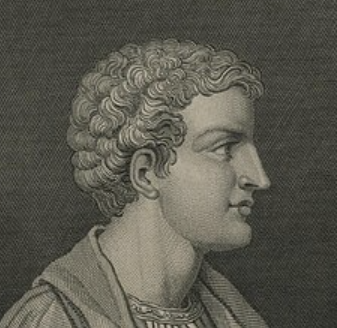
At times the world sees straight, but many times the world goes astray.
▼
Source
source
Book II, epistle i, line 63

3 months 4 weeks ago
Both in thought and in feeling, even though time be real, to realise the unimportance of time is the gate of wisdom.
▼
Source
source
p. 167
2 months 3 weeks ago
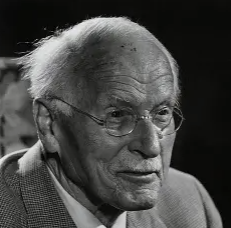
We must now turn to the question of how the existence of archetypes can be proved. Since archetypes are supposed to produce certain psychic forms, we must discuss how and where one can get hold of the material demonstrating these forms. The main source, then, is dreams, which have the advantage of being involuntary, spontaneous products of nature not falsified by any conscious purpose. By questioning the individual one can ascertain which of the motifs appearing in the dream are known to him... Consequently, we must look for motifs which could not possibly be known to the dreamer and yet behave functionally of the archetype known from historical sources.
▼
Source
source
p. 48

3 months 3 weeks ago
The career a young man should choose should be] one that is most consonant with our dignity, one that is based on ideas of whose truth we are wholly convinced, one that offers us largest scope in working for humanity and approaching that general goal towards which each profession offers only one of the means: the goal of perfection ... If he works only for himself he can become a famous scholar, a great sage, an excellent imaginative writer [Dichter], but never a perfected, a truly great man.
▼
Source
source
in Karl Marx and World Literature (1976) by S. S. Prawer, p. 2.
2 months 1 week ago
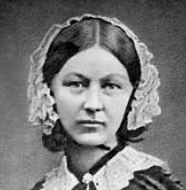
The progressive world is necessarily divided into two classes - those who take the best of what there is and enjoy it - those who wish for something better and try to create it. Without these two classes the world would be badly off. They are the very conditions of progress, both the one and the other. Were there none who were discontented with what they have, the world would never reach anything better.
1 week ago
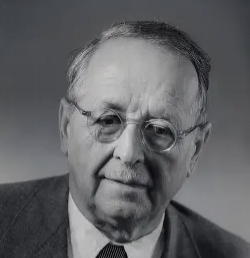
Important though the general concepts and propositions may be with which the modern industrious passion for axiomatizing and generalizing has presented us, in algebra perhaps more than anywhere else, nevertheless I am convinced that the special problems in all their complexity constitute the stock and core of mathematics; and to master their difficulties requires on the whole the harder labor.
▼
Source
source
The Classical Groups
2 months 1 week ago
Man should possess an infinite appetite for life. It should be self-evident to him, all the time, that life is superb, glorious, endlessly rich, infinitely desirable. At present, because he is in a midway position between the brute and the truly human, he is always getting bored, depressed, weary of life. He has become so top-heavy with civilisation that he cannot contact the springs of pure vitality. Control of the prefrontal cortex will change all of this. He will cease to cast nostalgic glances towards the womb, for he will realise that death is no escape. Man is a creature of life and the daylight; his destiny lies in total objectivity.
▼
Source
source
pp. 317-318
1 week 6 days ago
If one takes pleasure in calling the gold standard a "barbarous relic," one cannot object to the application of the same term to every historically determined institution. Then the fact that the British speak English - and not Danish, German, or French - is a barbarous relic too, and every Briton who opposes the substitution of Esperanto for English is no less dogmatic and orthodox than those who do not wax rapturous about the plans for a managed currency.
▼
Source
source
The Gold Standard - LvMI, excerpt from chapter 17 of Human Action
2 months 1 week ago
Wyman's overpopulated universe is in many ways unlovely. It offends the aesthetic sense of us who have a taste for desert landscapes.
▼
Source
source
"On What There Is", p. 4. a humorous comment on the idea "unactualized possible".

3 months 3 weeks ago
Analytical philosophy was very interesting. It always struck me as being very interesting and full of tremendous intellectual curiosities. It is wonderful to see the mind at work in such an intense manner, but, for me, it was still too far removed from my own issues.
▼
Source
source
Interview in African-American Philosophers: 17 Conversations (1998) edited by George Yancy, p. 35
2 months 2 weeks ago
The real field of knowledge is not the given fact about things as they are, but the critical evaluation of them as a prelude to passing beyond their given form. Knowledge deals with appearances in order to get beyond them. .... The concept of reality has thus turned into the concept of possibility. The real is not yet 'actual,' but is at first only the possibility of an actual.
▼
Source
source
P. 145
3 months 4 weeks ago
If you're certain, you're certainly wrong, because nothing deserves certainty.
▼
Source
source
Bertrand Russell Speaks His Mind (1960), p. 14 (video)
3 months 4 weeks ago
Obscenity is whatever happens to shock some elderly and ignorant magistrate.
▼
Source
source
Quoted in Look (New York, 23 February 1954). Cf. Russell (1928), Sceptical Essays

4 months 5 days ago
Observe, observe perpetually.
1 month 6 days ago
The educated man is the man who does not live in immediate intuition, but in his recollection so that little is new to him any longer.
▼
Source
source
Chapter 4, Philosophy As Writing: The Case Of Hegel, p. 74
2 months 3 weeks ago
The purpose of the State is, as we have already shown in our last lecture, no other than that of the Human Race itself:-to order all its relations according to the Laws of Reason. It is only after the Age of Reason as Science shall have been traversed, and we shall have arrived at the Age of Reason as Art, that the State can reflect upon this purpose with clear consciousness. Till then it constantly promotes this purpose, but without its own knowledge, or free pre meditated design; prompted thereto by the natural law of the development of our Race, even while it has a totally different purpose in view;-with which purpose of its own, Nature has indissolubly bound up the purpose of the whole Race.
▼
Source
source
p. 168
4 months 4 weeks ago
An old proverb fetched from the outward and visible world says: "Only the man that works gets the bread." Strangely enough this proverb does not aptly apply in that world to which it expressly belongs. For the outward world is subjected to the law of imperfection, and again and again the experience is repeated that he too who does not work gets the bread, and that he who sleeps gets it more abundantly than the man who works. In the outward world everything is made payable to the bearer, this world is in bondage to the law of indifference, and to him who has the ring, the spirit of the ring is obedient, whether he be Noureddin or Aladdin, and he who has the world's treasure, has it, however he got it.

4 months 3 weeks ago
It was the addition of status that brought the little things: a more comfortable seat here, a better cut of meat there, a shorter wait in line at the other place. To the philosophical mind, these items might seem scarcely worth any great trouble to acquire.Yet no one, however philosophical, could give up those privileges, once acquired, without a pang. That was the point.
2 months 3 weeks ago
If now I...say "Stealing money is wrong," I produce a sentence which has no factual meaning - that is, expresses no proposition which can be either true or false. It is as if I had written "Stealing money!!" - where the shape and thickness of the exclamation marks show, by a suitable convention, that a special sort of moral disapproval is the feeling which is being expressed.
▼
Source
source
p. 107.
2 weeks 6 days ago
I have found a paper of mine among some others in which I call architecture 'petrified music.' Really there is something in this; the tone of mind produced by architecture approaches the effect of music.
▼
Source
source
Conversations with Eckermann (23 March 1829) - Often quoted as "Architecture is frozen music."

3 weeks 2 days ago
The multitude is the real productive force of our social world, whereas Empire is a mere apparatus of capture that lives only off the vitality of the multitude - as Marx would say, a vampire regime of accumulated dead labor that survives only by sucking off the blood of the living.
▼
Source
source
62
3 months 4 weeks ago
Essentially, this war...is a great race-conflict, a conflict of Teuton and Slav, in which certain other nations, England, France and Belgium, have been led into cooperation with the Slav. ... The conflict of Germany and Russia has been produced not by this or that diplomatic incident, but by primitive passions expressing themselves in the temper of the two races.
▼
Source
source
War: The Offspring of Fear (1914), quoted in Ray Monk, Bertrand Russell: The Spirit of Solitude, 1872-1921 (1996), p. 373
3 months 4 weeks ago
Only in thought is man a God; in action and desire we are the slaves of circumstance.
▼
Source
source
Letter to Lucy Donnely, November 25, 1902

2 months 3 weeks ago
The fact disclosed by a survey of the past that majorities have usually been wrong, must not blind us to the complementary fact that majorities have usually not been entirely wrong.
▼
Source
source
Pt. I, The Unknowable; Ch. I, Religion and Science
2 months 2 weeks ago
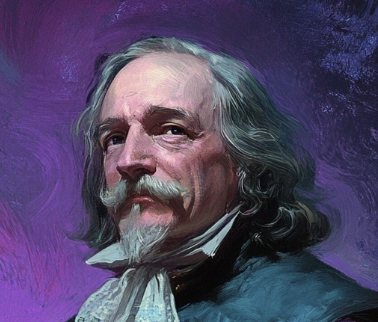
And Beasts that have Deliberation, must necessarily also have Will.
▼
Source
source
The First Part, Chapter 6, p. 28
4 months 3 weeks ago
The undramatic fact is that I just think and think and think until I have something [for a story], and there is nothing marvelous or artistic about the phenomenon.
3 months 3 weeks ago
To be an intellectual really means to speak a truth that allows suffering to speak. That is, it creates a vision of the world that puts into the limelight the social misery that is usually hidden or concealed by the dominant viewpoints of a society. "Intellectual" in that sense simply means those who are willing to reflect critically upon themselves as well as upon the larger society and to ascertain whether there is some possibility of amelioration and betterment.
▼
Source
source
"Chekhov, Coltrane, and Democracy: Interview by David Lionel Smith." in The Cornel West Reader. Basic Books. 2000. p. 551. ISBN 978-0-465-09110-2.
3 weeks 6 days ago
The great artist liberates the emotions and recreates the sheer wonder of childhood without surrendering the development of the intellect.
▼
Source
source
p. 258
3 months 4 weeks ago
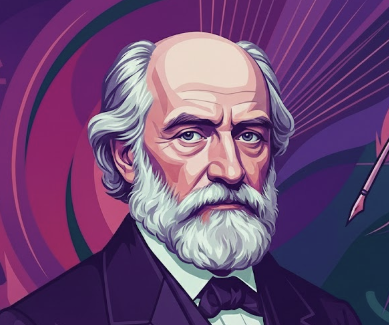
A book can never be anything more than the impression of its author's thoughts [Ein Buch kann nie mehr seyn, als der Abdruck der Gedanken des Verfassers]. The value of these thoughts lies either in the matter about which he has thought, or in the form in which he develops his matter - that is to say, what he has thought about it.
3 months 3 weeks ago
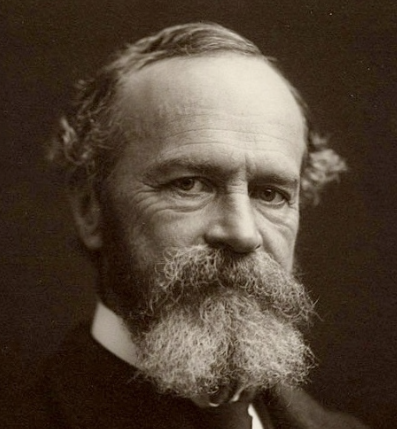
The pivot round which the religious life... revolves, is the interest of the individual in his private personal destiny. Religion, in short, is a monumental chapter in the history of human egotism. The gods believed in-whether by crude savages or by men disciplined intellectually-agree with each other in recognizing personal calls. Religious thought is carried on in terms of personality, this being, in the world of religion, the one fundamental fact. To-day, quite as much as at any previous age, the religious individual tells you that the divine meets him on the basis of his personal concerns.
▼
Source
source
Lecture XX, "Conclusions"
CivilSimian.com created by AxiomaticPanic, CivilSimian, Kalokagathia