
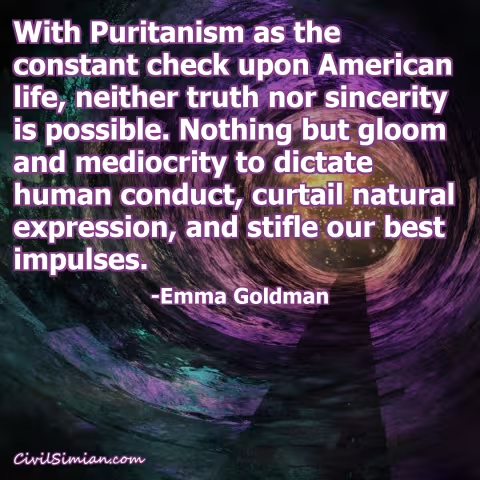
Some things never change...
Emma Goldman (1869–1940)
Emma Goldman believed freedom was meaningless if it did not extend to thought, speech, love, and the body itself.


Art is not, as the metaphysicians say, the manifestation of some mysterious Idea of beauty or God; it is not, as the aesthetical physiologists say, [play or] a game in which one releases surplus energy, ...not the production of pleasing objects, and is above all, not pleasure itself, but it is the means of union among mankind, joining them in the same feelings, and necessary for the life and progress toward the good of the individual and of humanity.
In its most general form, confinement was explained, or at least justified, by a will to avoid scandal. It thereby signalled an important change in the consciousness of evil. The Renaissance had let unreason in all its forms come out into the light of day, as public exposure gave evil the chance to redeem itself and to serve as an exemplum.

A people represents not so much an aggregate of ideas and theories as of obsessions.
The human understanding is unquiet; it cannot stop or rest, and still presses onward, but in vain. Therefore it is that we cannot conceive of any end or limit to the world, but always as of necessity it occurs to us that there is something beyond... But he is no less an unskilled and shallow philosopher who seeks causes of that which is most general, than he who in things subordinate and subaltern omits to do so.
This freedom from absolute, arbitrary power, is so necessary to, and closely joined with a man's preservation, that he cannot part with it, but by what forfeits his preservation and life together: for a man, not having the power of his own life, cannot, by compact, or his own consent, enslave himself to any one, nor put himself under the absolute, arbitrary power of another, to take away his life, when he pleases.
Yes! We believe in a higher principle than your virtue and the kind of morality you speak of so paltrily and without much conviction. We believe that there is no imperative or reward for virtue for the soul because it simply acts according to the necessity of its inherent nature. The moral imperative expresses itself in an ought and presupposes the concept of an evil next to that of good.
The criticism of the reformers was directed not so much at the weakness or cruelty of those in authority, as at a bad economy of power.

A world without delight and without affection is a world destitute of value.

Imagination, which is the social sense, animates the inanimate and anthropomorphizes everything; it humanizes everything and even makes everything identical with man. And the work of man is to supernaturalize Nature - that is to say, to make it divine by making it human, to help it to become conscious of itself, in short. The action of reason, on the other hand, is to mechanize or materialize.

It is the very joy of man's heart to admire, where he can; nothing so lifts him from all his mean imprisonments, were it but for moments, as true admiration.

If you know these things, happy you are if you do them.
Then we understand that rebellion cannot exist without a strange form of love. Those who find no rest in God or in history are condemned to live for those who, like themselves, cannot live; in fact, for the humiliated.

That by any series of changes a protozoon should ever become a mammal, seems to those who are not familiar with zoology, and who have not seen how clear becomes the relationship between the simplest and the most complex forms when intermediate forms are examined, a very grotesque notion. Habitually, looking at things rather in their statical aspect than in their dynamical aspect, they never realize the fact that, by small increments of modification, any amount of modification may in time be generated.
It is not by recognizing the want of courage in someone else that you acquire courage yourself.
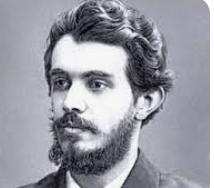
A real reconciliation of East and West is impossible and inconceivable on the basis of a materialistic Communism, or of a materialistic Capitalism, or indeed of a materialistic Socialism. The third way will neither be "anti-Communist" nor "anti-Capitalist". It will recognize the truth in liberal democracy, and it will equally recognize the truth in Communism. A critique of Communism and Marxism does not entail an enmity towards Soviet Russia, just as a critique of liberal democracy is not entail enmity towards the west. ... But the final and most important justification of a "third way" is that there must be a place from which we may boldly testify to, and proclaim, truth, love and justice. No one today likes truth: utility and self interest have long ago been substituted for truth.
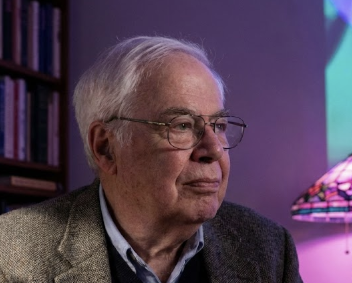
Rather, we heirs of Enlightenment think of enemies of liberal democracy like Nietzsche or Loyola as, to use Rawls's word, "mad." We do so because there is no way to see them as fellow citizens of our constitutional democracy, people whose life plans might, given ingenuity and good will, be fitted in with those of other citizens. They are crazy because the limits of sanity are set by what we can take seriously. This, in turn, is determined by our upbringing, our historical situation.

The absolute idea is the subject in its final form, thought. The otherness and negation is the object, being. The absolute idea now has to be interpreted as objective being. Hegel's Logic thus ends where it began, with the category of being. This, however is a different being that can no longer be explained thought he concepts applied in the analysis that opened the Logic. For being now is understood in its notion that is, as a concrete totality wherein all particular forms subsist as the essential distinctions and relations of on comprehensive principle. Thus comprehended, being is nature, and dialectical thought passes on to the Philosophy of Nature.

For in every country of the world, I believe, the avarice and injustice of princes and sovereign states, abusing the confidence of their subjects, have by degrees diminished the real quantity of metal, which had been originally contained in their coins.
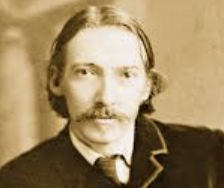
Time passes quickly with lovers.
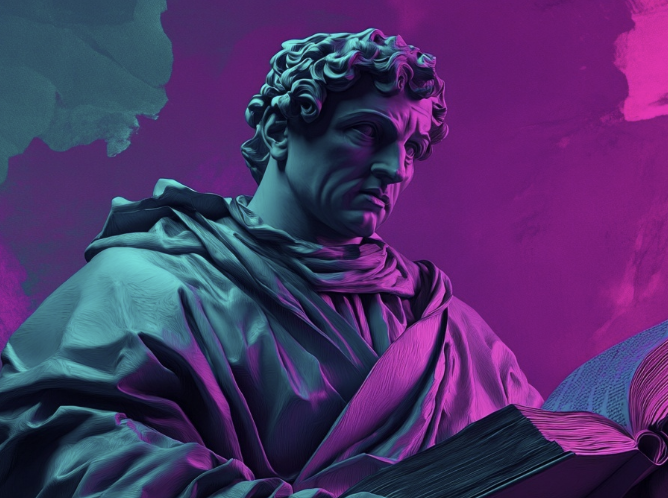
...God commanded in the law [Deut. 22:22-24] that adulterers be stoned . . . The temporal sword and government should therefore still put adulterers to death . . . Where the government is negligent and lax, however, and fails to inflict the death penalty, the adulterer may betake himself to a far country and there remarry if he is unable to remain continent. But it would be better to put him to death, lest a bad example be set . . .
The point I wish to make is that I became aware that we discipline our minds to see only certain aspects of the world; life is complicated, and we need all our wits about us to deal with its complexities. There would be no great point in having second sight or thaumaturgic powers for most of us. But it is worth observing that they can generally be developed where needed.

The Whigs of this day have before them, in this Appeal, their constitutional ancestors: They have the doctors of the modern school. They will choose for themselves. The author of the Reflections has chosen for himself. If a new order is coming on, and all the political opinions must pass away as dreams, which our ancestors have worshipped as revelations, I say for him, that he would rather be the last (as certainly he is the least) of that race of men, than the first and greatest of those who have coined to themselves Whig principles from a French die, unknown to the impress of our fathers in the constitution.
There is room in the world, no doubt, and even in old countries, for a great increase of population, supposing the arts of life to go on improving, and capital to increase. But even if innocuous, I confess I see very little reason for desiring it. The density of population necessary to enable mankind to obtain, in the greatest degree, all the advantages both of co-operation and of social intercourse, has, in all the most populous countries, been attained. If the earth must lose that great portion of its pleasantness which it owes to things that the unlimited increase of wealth and population would extirpate from it, for the mere purpose of enabling it to support a larger but not a better or a happier population, I sincerely hope, for the sake of posterity, that they will be content to be stationary, long before necessity compels them to it..
It is only natural that I should constantly have revolved in my mind the question of the relationship of the symbolism of the unconscious to Christianity as well as to other religions. Not only do I leave the door open for the Christian message, but I consider it of central importance for Western man. It needs, however, to be seen in a new light, in accordance with the changes wrought by the contemporary spirit.
When the real is no longer what it was, nostalgia assumes its full meaning. "The Precession of Simulacra,"

Mucius might have accomplished something more successful in that camp, but never anything more brave.
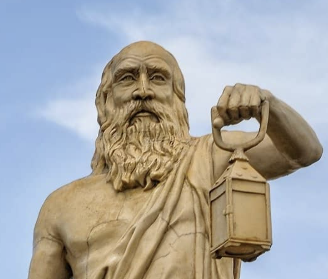
Poverty is a virtue which one can teach oneself.

People seem not to see that their opinion of the world is also a confession of character.

"We may ignore, but we can nowhere evade, the presence of God. The world is crowded with Him. He walks everywhere incognito."
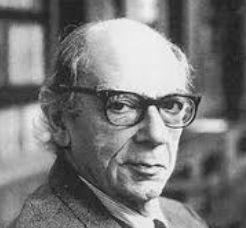
Everyone knows what made Berkeley notorious. He said that there were no material objects. He said the external world was in some sense immaterial, that nothing existed save ideas - ideas and their authors. His contemporaries thought him very ingenious and a little mad.

Indeed, the drunken man while in that condition does not know the definition of drunkenness nor the scientific account of it; he has not the very least scientific knowledge of it. The sober man, on the other hand, knows the definition of drunkenness and its basis, yet he is not drunk in the very least. Again the doctor, when he is himself ill, knows the definition and causes of health and the remedies which restore it, and yet is lacking in health. Similarly there is a difference between knowing the true nature and causes and conditions of the ascetic life and actually leading such a life and forsaking the world.
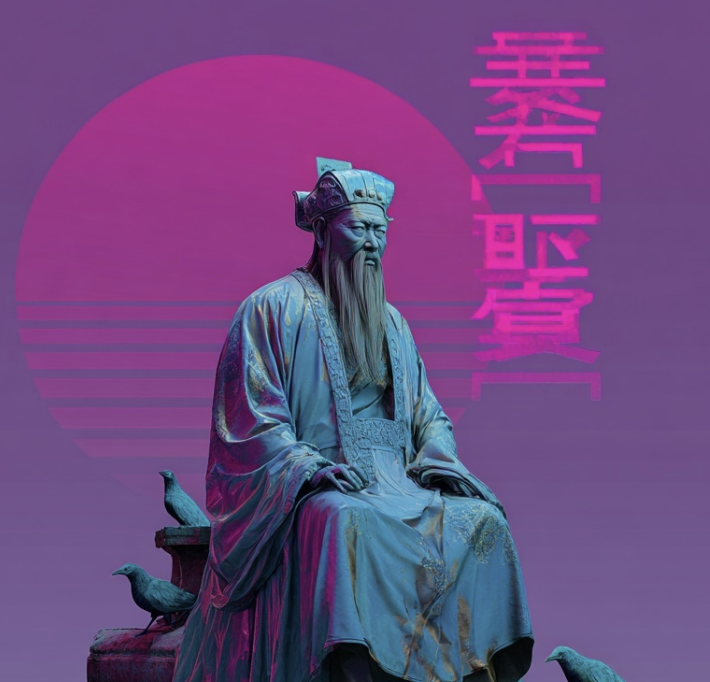
Sincerity is the way of Heaven. The attainment of sincerity is the way of men. He who possesses sincerity is he who, without an effort, hits what is right, and apprehends, without the exercise of thought — he is the sage who naturally and easily embodies the right way. He who attains to sincerity is he who chooses what is good, and firmly holds it fast. To this attainment there are requisite the extensive study of what is good, accurate inquiry about it, careful reflection on it, the clear discrimination of it, and the earnest practice of it.
The operations of understanding thus divide the world into numberless polarities, and Hegel uses the expression 'isolated reflection' (isolierte Reflection) to characterize the manner in which understanding forms and connects its polar concepts. The rise and spread of this kind of thinking Hegel connects with the origin and prevalence of crucial relationships in human life. The antagonisms of 'isolated reflections' express real antagonisms. .... Isolation and opposition are not, however, the final state of affairs. The world must not remain a complex of fixed disparates. The unity that underlies the antagonisms must be grasped and realized by reason, which has the task of reconciling the opposites and 'sublimating' them in a true unity.
I leave you but the sound of many a word In mocking echoes haply overheard, I sang to heaven. My exile made me free,from world to world, from all worlds carried me.
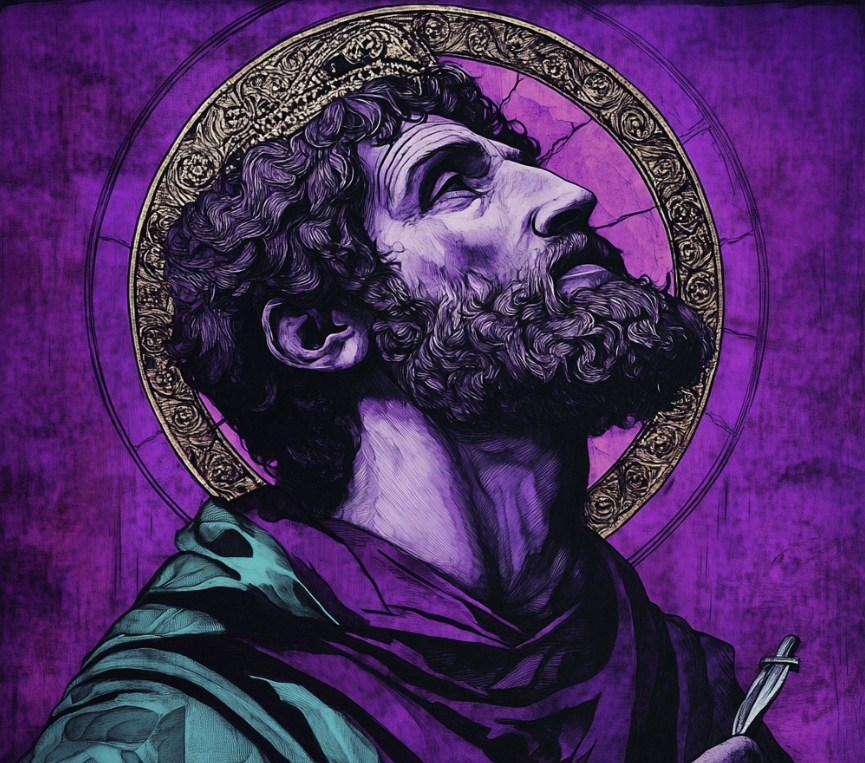
When I, who conduct this inquiry, love something, then three things are found: I, what I love, and the love itself. There are, therefore three things: the lover, the beloved and the love.
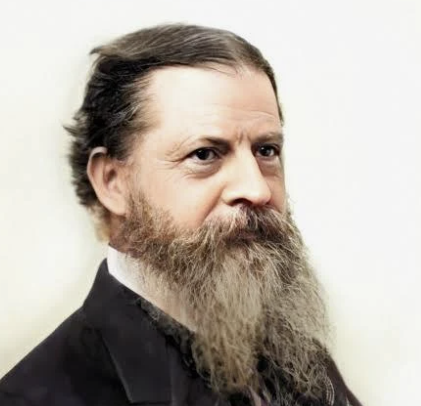
Suppose a surface to be part red and part blue; so that every point on it is either red or blue, and of course, no part can be both red and blue. What then, is the color of the surface in the immediate neighborhood of the point. ...it follows that the boundary is half red and half blue. In like manner, we find it necessary to hold that consciousness essentially occupies time... Thus, the present is half past and half time to come. ...Take another case: the velocity of a particle at any instant of time is its mean velocity during an infinitesimal instant in which that time is consumed. Just so, my immediate feeling is my feeling through an infinitesimal duration containing the present instant.
There are people with whom everything they consider a means turns mysteriously into an end.
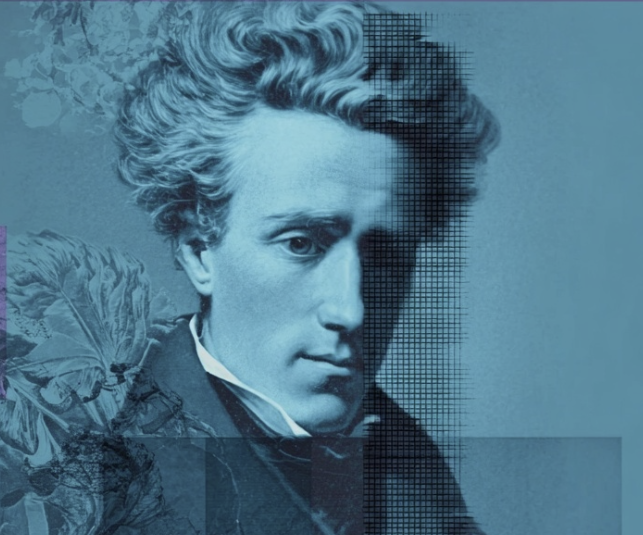
If it were so, as conceited sagacity, proud of not being deceived, thinks, that we should believe nothing that we cannot see with our physical eyes, then we first and foremost ought to give up believing in love. ... We can be deceived by believing what is untrue, but we certainly are also deceived by not believing what is true. ... Which deception is more dangerous?
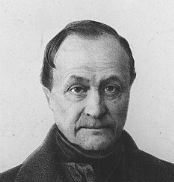
Mathematical Analysis is... the true rational basis of the whole system of our positive knowledge.

Among the things held to be just by law, whatever is proved to be of advantage in men's dealings has the stamp of justice, whether or not it be the same for all; but if a man makes a law and it does not prove to be mutually advantageous, then this is no longer just. And if what is mutually advantageous varies and only for a time corresponds to our concept of justice, nevertheless for that time it is just for those who do not trouble themselves about empty words, but look simply at the facts.
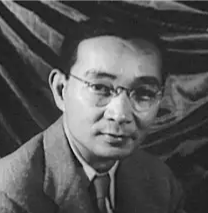
All men and women have passions, natural desires and noble ambitions, and also a conscience; they have sex, hunger, fear, anger, and are subject to sickness, pain, suffering and death. Culture consists in bringing about the expression of these passions and desires in harmony.
To travel hopefully is a better thing than to arrive.
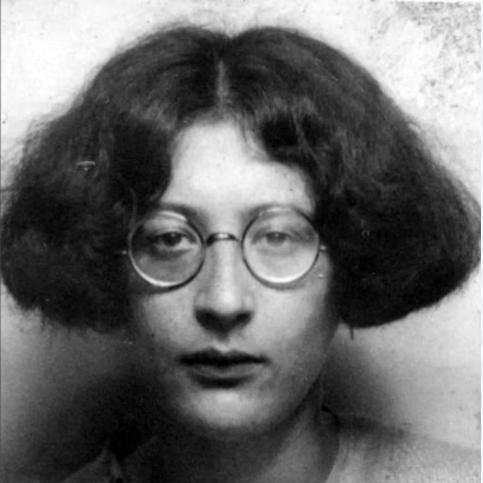
That is why St. John of the Cross calls faith a night. With those who have received a Christian education, the lower parts of the soul become attached to these mysteries when they have no right at all to do so. That is why such people need a purification of which St. John of the Cross describes the stages. Atheism and incredulity constitute an equivalent of such a purification.
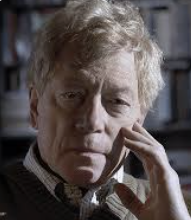
Conservatism is itself a modernism, and in this lies the secret of its success.
It is our deliberate opinion that the French Revolution, in spite of all its crimes and follies, was a great blessing to mankind.
[I]t would be a piece of ingenuousness to accuse the man of to-day of his lack of moral code. The accusation would leave him cold, or rather, would flatter him. Immoralism has become a commonplace, and anybody and everybody boasts of practising it.
One grasps incomparably more things in boredom than by labor, effort being the mortal enemy of meditation.
The conscious mind allows itself to be trained like a parrot, but the unconscious does not - which is why St. Augustine thanked God for not making him responsible for his dreams.
They that be whole need not a physician, but they that are sick. But go ye and learn what that meaneth, I will have mercy, and not sacrifice: for I am not come to call the righteous, but sinners to repentance.
CivilSimian.com created by AxiomaticPanic, CivilSimian, Kalokagathia