


3 months 2 weeks ago
I was seeing what Adam had seen on the morning of his creation - the miracle, moment by moment, of naked existence.
▼
Source
source
Pages 160-61

3 months 3 weeks ago
All passions that suffer themselves to be relished and digested are but moderate.
▼
Source
source
Ch. 2. Of Sorrow, tr. Cotton, rev. W. Hazlitt, 1842

3 months 2 weeks ago
Nothing can be preserved that is not good.
▼
Source
source
Books

2 months 4 weeks ago
Nothing is more ancient than God, for He was never created; nothing more beautiful than the world, it is the work of that same God; nothing is more active than thought, for it flies over the whole universe; nothing is stronger than necessity, for all must submit to it.
▼
Source
source
As quoted in Love and Live Or Kill and Die: Realities of the Destruction of Human Life (2009) by James H. Wilson, p. 72

3 months 2 weeks ago
Subject matters in general do not exist. There are no subject matters; no branches of learning-or, rather, of inquiry: there are only problems, and the urge to solve them.
3 months 2 weeks ago
We are always getting ready to live, but never living.
▼
Source
source
April 12, 1834
3 months 2 weeks ago
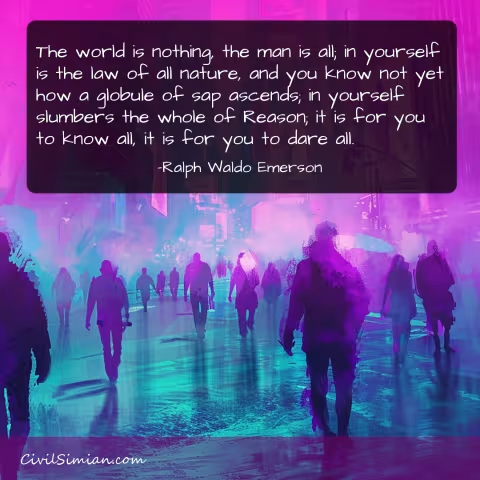
Wherever a man comes, there comes revolution. The old is for slaves.
▼
Source
source
p. 25

1 week 5 days ago
For both the pragmatic... and... moral reasons... liberalism became the dominant doctrine of the 20th century, and should... continue to be defended....
▼
Source
source
12:32

2 months 1 week ago
Did ye never read in the scriptures, The stone which the builders rejected, the same is become the head of the corner: this is the Lord's doing, and it is marvellous in our eyes? Therefore say I unto you, The kingdom of God shall be taken from you, and given to a nation bringing forth the fruits thereof. And whosoever shall fall on this stone shall be broken: but on whomsoever it shall fall, it will grind him to powder.
▼
Source
source
21:27-42 and 44 (KJV)

4 months 1 week ago
Like great works, deep feelings always mean more than they are conscious of saying.

2 months 1 week ago
For thought and speech are of a thinking and speaking subject, and if the life of the latter depends on the performance of a superimposed function, it depends on fulfilling the requirements of this function - thus it depends on those who control these requirements.
▼
Source
source
p. 128

2 months 1 week ago
The only minds which seduce us are the minds which have destroyed themselves trying to give their life a meaning.

3 months 2 weeks ago
I heartily accept the motto, "That government is best which governs least"; and I should like to see it acted up to more rapidly and systematically. Carried out, it finally amounts to this, which also I believe - "That government is best which governs not at all"; and when men are prepared for it, that will be the kind of government which they will have.

3 months 2 weeks ago
The question of the principle of the form of the intelligible world turns, therefore, upon making apparent in what manner it is possible for several substances to be in mutual commerce, and for this reason to pertain to the same whole, which is called world. We do not here consider the world, let it be understood, as to matter, that is, as to the nature of the substances of which it consists, whether they be material or immaterial, but as to form, that is to say, how among several things taken separately a connection, and among them all, totality can have place.

3 months 3 weeks ago
Time, which is the author of authors.
▼
Source
source
Book I, iv, 12
1 month 3 weeks ago
When land and its tillage are the basis of taxation, one need not care exactly how many people there are.
▼
Source
source
Chapter 12, Political Arithmetic, p. 103.

3 months 2 weeks ago
He is happy, whose circumstances suit his temper; but he is more excellent, who can suit his temper to any circumstances.
▼
Source
source
§ 6.9 : Of Qualities Useful to Ourselves, Pt. 1

4 months 2 weeks ago
For those who need consolation no means of consolation is so effective as the assertion that in their case no consolation is possible: it implies so great a degree of distinction that they at once hold up their heads again.
3 months 2 weeks ago
Philosophy is by its nature something esoteric, neither made for the mob nor capable of being prepared for the mob.
▼
Source
source
Introduction to the Critical Journal of Philosophy, cited in W. Kaufmann, Hegel (1966), p. 56

3 months 2 weeks ago
Where we find a difficulty we may always expect that a discovery awaits us. Where there is cover we hope for game.
▼
Source
source
Reflections on the Psalms (1958), ch. III: Cursings
1 month 1 week ago
In argument about moral problems, relativism is the first refuge of the scoundrel.
▼
Source
source
Some More -isms, p. 32

3 months 2 weeks ago
I shall keep it [the manuscript] by me until the end of May for purposes of revision, and of adding malicious foot-notes.
▼
Source
source
Letter to W. W. Norton, 17 February, 1931
2 months ago
When we subordinate rest to work, we ignore the divine.

2 months 4 days ago
Not only are we unable to conceive of the full and living God as masculine simply, but we are unable to conceive of Him as individual simply, as the projection of a solitary I, an unsocial I, an I that is in reality an abstract I. My living I is an I that is really a We; my living personal I lives only in other, of other, and by other I's; I am sprung from a multitude of ancestors. I carry them within me in extract, and at the same time I carry within me, potentially, a multitude of descendants, and God, the projection of my I to the infinite - or rather I, the projection of God to the finite - must also be a multitude. Hence, in order to save the personality of God - that is to say, in order to save the living God - faith's need - the need of the feeling and the imagination - of conceiving Him and feeling Him as possessed of a certain internal multiplicity.

1 month 2 weeks ago
Advertising is the greatest art form of the twentieth century.
▼
Source
source
quoted in Advertising Age, Sep. 3, 1976
2 months 4 days ago
One of those leaders of what they call the social revolution has said that religion is the opiate of the people. Opium...opium...opium, yes. Let us give them opium so that they can sleep and dream.

1 month 2 weeks ago
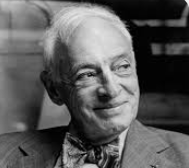
With Gutenberg Europe enters the technological phase of progress, when change itself becomes the archetypal norm of social life.
▼
Source
source
(p. 177)
1 month 1 week ago
A good American makes propaganda for whatever existence has forced him to become.
▼
Source
source
"Cousins," from Him With His Foot in His Mouth and Other Stories (1984), p. 263
1 month 2 days ago
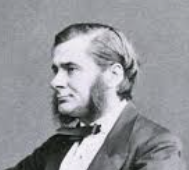
If the hypothesis of evolution is true, living matter must have arisen from non-living matter; for by the hypothesis the condition of the globe was at one time such, that living matter could not have existed in it, life being entirely incompatible with the gaseous state.
▼
Source
source
In the Encyclopaedia Britannica, Ninth edition, (1876) Vol. III, "Biology", p. 689. Also quoted in Joseph Cook (1878), Biology, with Preludes on Current Events, Houghton, Osgood, p. 39

3 months 2 weeks ago
Ramsgate is full of Jews and fleas.
▼
Source
source
MEKOR IV, 490, 25 August 1879

1 week 1 day ago
And so in City after City, street-barricades are piled, and truculent, more or less murderous insurrection begins; populace after populace rises, King after King capitulates or absconds; and from end to end of Europe Democracy has blazed up explosive, much higher, more irresistible and less resisted than ever before; testifying too sadly on what a bottomless volcano, or universal powder-mine of most inflammable mutinous chaotic elements, separated from us by a thin earth-rind, Society with all its arrangements and acquirements everywhere, in the present epoch, rests! The kind of persons who excite or give signal to such revolutions-students, young men of letters, advocates, editors, hot inexperienced enthusiasts, or fierce and justly bankrupt desperadoes, acting everywhere on the discontent of the millions and blowing it into flame,-might give rise to reflections as to the character of our epoch. Never till now did young men, and almost children, take such a command in human affairs.

2 months ago
The Outsider is always unhappy, but he is an agent that ensures the happiness for millions of 'Insiders'.
▼
Source
source
Chapter Seven, The Great Synthesis…
3 months 1 week ago
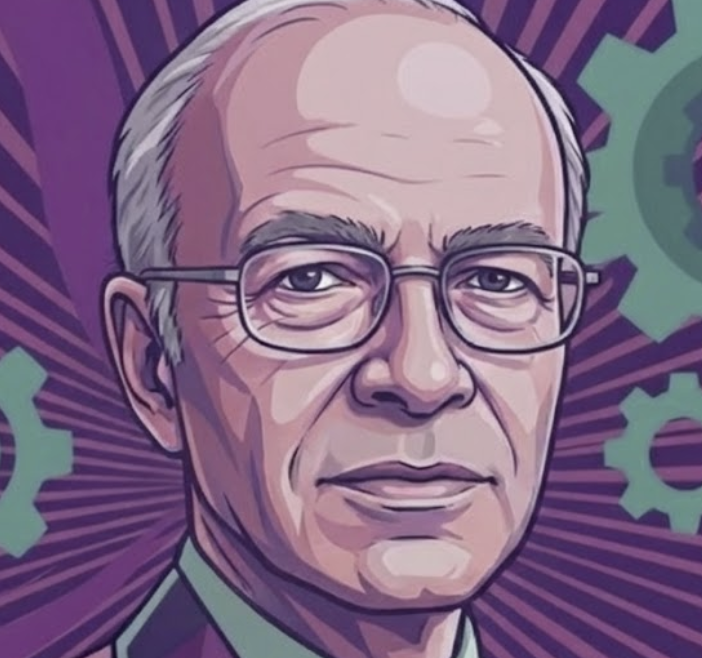
The principles of ethics come from our own nature as social, reasoning beings.
▼
Source
source
Chapter 6, A New Understanding Of Ethics, p. 149
2 months 4 days ago
Suffering is a spiritual thing. It is the most immediate revelation of consciousness, and it may be that our body was given us simply in order that suffering might be enabled to manifest itself. A man who had never known suffering, either in greater or less degree, would scarcely possess consciousness of himself. The child first cries at birth when the air, entering into his lungs and limiting him, seems to say to him: You have to breathe me in order to live!
1 month 2 weeks ago
America is 100% 18th Century. The 18th century had chucked out the principle of metaphor and analogy - the basic fact that as A is to B so is C to D. AB:CD. It can see AB relations. But relations in four terms are still verboten. This amounts to deep occultation of nearly all human thought for the USA.
▼
Source
source
Letter to Ezra Pound
1 month 5 days ago
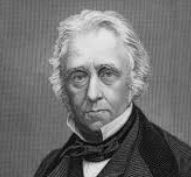
We hardly know any instance of the strength and weakness of human nature so striking, and so grotesque, as the character of this haughty, vigilant, resolute, sagacious blue-stocking, half Mithridates and half Trissotin, bearing up against a world in arms, with an ounce of poison in one pocket and a quire of bad verses in the other.
▼
Source
source
'Frederic the Great', The Edinburgh Review (April 1842), quoted in T. B. Macaulay, Critical and Historical Essays Contributed to The Edinburgh Review: A New Edition (1852), p. 802
1 month 4 weeks ago
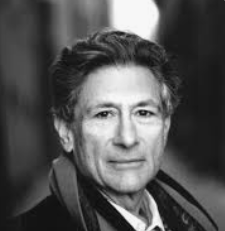
Ideas, cultures, and histories cannot seriously be understood or studied without their force, or more precisely their configurations of power, also being studied.
4 months 1 week ago
Query: How to contrive not to waste one's time? Answer: By being fully aware of it all the while. Ways in which this can be done: By spending one's days on an uneasy chair in a dentist's waiting room; by remaining on one's balcony all a Sunday afternoon; by travelling by the longest and least-convenient train routes, and of course standing all the way; by queueing at the box-office of theatres and then not booking a seat.

3 months 3 weeks ago
The man who barely abstains from violating either the person, or the estate, or the reputation of his neighbours, has surely very little positive merit. He fulfils, however, all the rules of what is peculiarly called justice, and does every thing which his equals can with propriety force him to do, or which they can punish him for not doing. We may often fulfil all the rules of justice by sitting still and doing nothing.
▼
Source
source
Section II, Chap. I.
2 months 1 week ago
There is no one whose death I have not longed for, at one moment or another.
3 months 2 weeks ago
So much of modern mathematical work is obviously on the border-line of logic, so much of modern logic is symbolic and formal, that the very close relationship of logic and mathematics has become obvious to every instructed student. The proof of their identity is, of course, a matter of detail: starting with premisses which would be universally admitted to belong to logic, and arriving by deduction at results which as obviously belong to mathematics, we find that there is no point at which a sharp line can be drawn, with logic to the left and mathematics to the right. If there are still those who do not admit the identity of logic and mathematics, we may challenge them to indicate at what point, in the successive definitions and deductions of Principia Mathematica, they consider that logic ends and mathematics begins. It will then be obvious that any answer must be quite arbitrary.
▼
Source
source
Ch. 18: Mathematics and Logic
3 months 3 weeks ago
In the land of the blind the one-eyed man is lord.
▼
Source
source
Act III, scene ix

2 months 3 weeks ago
I pray you, magnificent Sir, do not trouble yourself to return to us, but await our coming to you.
▼
Source
source
Third Dialogue
3 months 2 weeks ago
All human knowledge begins with intuitions, proceeds from thence to concepts, and ends with ideas.
▼
Source
source
B 730; Variant translation: All our knowledge begins with the senses, proceeds then to the understanding, and ends with reason. There is nothing higher than reason.
2 months 3 days ago
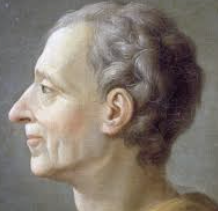
History is full of religious wars; but, we must take care to observe, it was not the multiplicity of religions that produced these wars, it was the intolerating spirit which animated that one which thought she had the power of governing.
▼
Source
source
No. 65. (Usbek writing to his wives)
1 month 3 weeks ago
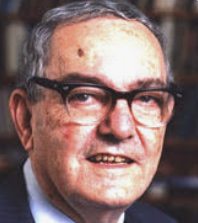
We are organization watchers in our role as citizens. Increasing attention has been fixed in recent years upon the functioning of society's organizations: its large corporations and its governments. Hence this could also be described as a book for Everyman-for it proposes a way of thinking about organizational issues that concern us all.
▼
Source
source
Simon (1975, p. ix); As cited in Stefano Franchi(2006) "Herbert simon, anti-philosopher." Computing and Philosophy. p. 34.
3 months 2 weeks ago
I strongly suspect that most of the great knowers of Suchness paid very little attention to art.... (To a person whose transfigured and transfiguring mind can see the All in every this, the first-rateness or tenth-rateness of even a religious painting will be a matter of the most sovereign indifference.) Art, I suppose, is only for beginners, or else for those resolute dead-enders, who have made up their minds to be content with the ersatz of Suchness, with symbols rather than with what they signify, with the elegantly composed recipe in lieu of actual dinner.
2 months 1 week ago
The obsession with suicide is characteristic of the man who can neither live nor die, and whose attention never swerves from this double impossibility.
2 months ago
The Americans have always been more open to my ideas. In fact, I could earn a living in America just by lecturing. One of my brightest audiences, incidentally, were the prisoners in a Philadelphia gaol - brighter than my students at university.
▼
Source
source
Interview with Paul Newman in Abraxas Unbound #7
CivilSimian.com created by AxiomaticPanic, CivilSimian, Kalokagathia