

3 months 3 weeks ago
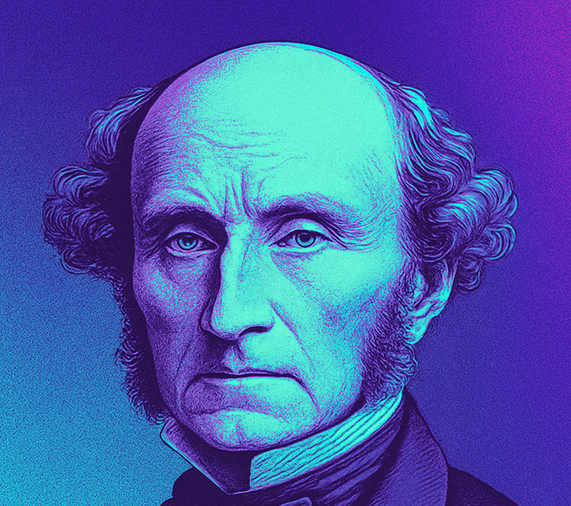
Again, defenders of utility often find themselves called upon to reply to such objections as this-that there is not time, previous to action, for calculating and weighing the effects of any line of conduct on the general happiness. This is exactly as if any one were to say that it is impossible to guide our conduct by Christianity, because there is not time, on every occasion on which anything has to be done, to read through the Old and New Testaments. The answer to the objection is, that there has been ample time, namely, the whole past duration of the human species. During all that time mankind have been learning by experience the tendencies of actions.
▼
Source
source
Ch. 2
3 months 3 weeks ago
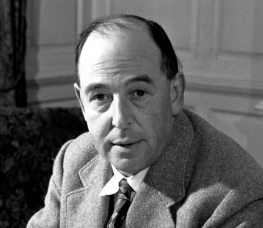
Nothing is yet in its true form.
3 months 3 weeks ago
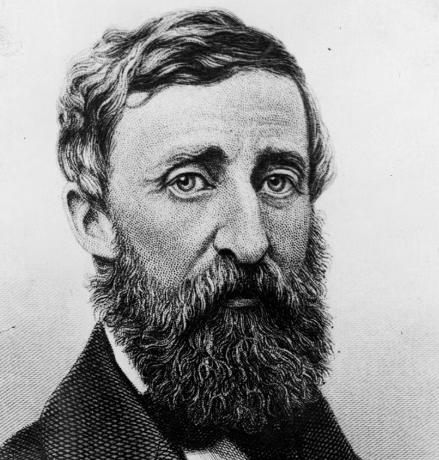
What is commonly called friendship even is only a little more honor among rogues.
▼
Source
source
Pearls of Thought (1881) p. 95
4 months 3 days ago
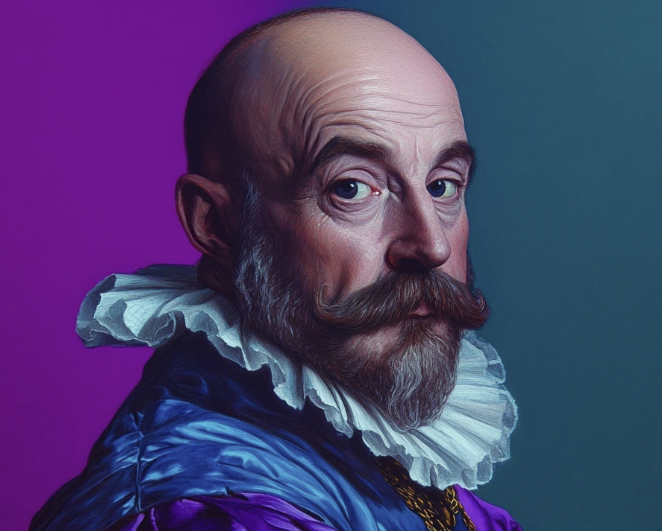
As to fidelity, there is no animal in the world so treacherous as man. Our histories have recorded the violent pursuits that dogs have made after the murderers of their masters.
▼
Source
source
Ch. 12, tr. Cotton, rev. W. Carew Hazlitt, 1877

3 months 3 weeks ago
All mortals are equal; it is not their birth,But virtue itself that makes the difference.
▼
Source
source
Ériphyle Act II, scene I (1732); these lines were also later used in Voltaire's Mahomet, Act I, scene IV (1741)

1 month 3 weeks ago
It may be that brain hardware has co-evolved with the internal virtual worlds that it creates. This can be called hardware-software co-evolution.
4 months 1 week ago
Nature, which alone is good, is wholly familiar and common.
4 months 3 days ago
I suppose the body to be nothing but a statue or machine made of earth, which God forms with the explicit intention of making it as much as possible like us.
▼
Source
source
Descartes, René (1662). Le Homme (The Treatise on Man), XI:119, CSM I:99 in The Stanford Encyclopedia of Philosophy: "Descartes and the Pineal Gland - 2.1 "The Treatise of Man".

1 month 2 days ago
The evidence of science and history is that humans are only ever partly and intermittently rational, but for modern humanists the solution is simple: human beings must in future be more reasonable. These enthusiasts for reason have not noticed that the idea that humans may one day be more rational requires a greater leap of faith than anything in religion. Since it requires a miraculous breach in the order of things, the idea that Jesus returned from the dead is not as contrary to reason as the notion that human beings will in future be different from how they have always been.
▼
Source
source
An Old Chaos: Humanism and Flying Saucers (p. 75)
3 months 3 weeks ago
Wherever Law ends, Tyranny begins.
▼
Source
source
Second Treatise of Government, Sec. 202
2 months 5 days ago
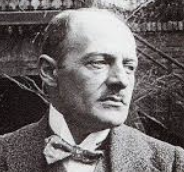
A clever child brought up with a foolish one can itself become foolish. Man is so perfectable and corruptible he can become a fool through good sense.
▼
Source
source
F 69
2 months 2 weeks ago
It is peculiar to "ressentiment criticism" that it does not seriously desire that its demands be fulfilled. It does not want to cure the evil. The evil is merely the pretext for the criticism.
▼
Source
source
L. Coser, trans. (1973), p. 51

2 months 3 weeks ago
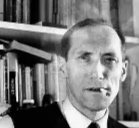
Death is too exact; it has all the reasons on its side. Mysterious for our instincts, it takes shape, to our reflection, limpid, without glamor, and without the false lures of the unknown. By dint of accumulating non-mysteries and monopolizing non-meanings, life inspires more dread than death: it is life which is the Great Unknown.
2 weeks 4 days ago
Marx sees Epicurus as a destroyer of the Greek myths and as a philosopher bringing to light the break-up of a tribal community. His system destroyed the visible heaven of the ancients as a keystone of political and religious life. Marx allies himself, so to speak, with Epicurean atheism, which he regards at this stage as a challenge by the intellectual élite to the cohorts of common sense. 'As long as a single drop of blood pulses in her world-conquering and totally free heart, philosophy will continually shout at her opponents the cry of Epicurus: "Impiety does not consist in destroying the gods of the crowd but rather in ascribing to the gods the ideas of the crowd."'
▼
Source
source
(pp. 102-3)

3 months 3 weeks ago
The second doctrine of the Perennial Philosophy - that it is possible to know the Divine Ground by a direct intuition higher than discursive reasoning - is to be found in all the great religions of the world. A philosopher who is content merely to know about the ultimate Reality - theoretically and by hearsay - is compared by Buddha to a herdsman of other men's cows. Mohammed uses an even homelier barnyard metaphor. For him the philosopher who has not realized his metaphysics is just an ass bearing a load of books. Christian, Hindu, Taoist teachers wrote no less emphatically about the absurd pretensions of mere learning and analytic reasoning.

3 months 3 weeks ago
Piecemeal social engineering resembles physical engineering in regarding the ends as beyond the province of technology. (All that technology may say about ends is whether they are compatible with each other or realizable.)
▼
Source
source
The Poverty of Historicism (1957) Ch. 22 The Unholy Alliance with Utopianism
1 month 3 weeks ago
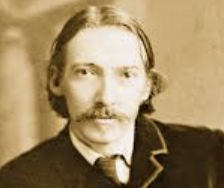
To be what we are, and to become what we are capable of becoming, is the only end of life.
▼
Source
source
Familiar Studies of Men and Books (1882).
3 months 2 weeks ago
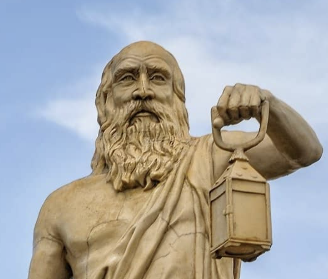
When scolded for masturbating in public, he said "I wish it were as easy to banish hunger by rubbing my belly."
▼
Source
source
Diogenes Laërtius, vi. 46, 69



2 months 3 weeks ago
I have never in my life met a man like him for noble simplicity, and boundless truthfulness. I understood from the way he talked that anyone who chose could deceive him, and that he would forgive anyone afterwards who had deceived him, and that was why I grew to love him.
▼
Source
source
Part 4, Chapter 8
1 month 3 weeks ago
Evidence is the only good reason to believe anything.
▼
Source
source
Interview shown in AlJazeera ,

2 months 3 weeks ago
That is a long word: forever!
▼
Source
source
Act I.

1 month 4 weeks ago
Descartes may have made a lot of mistakes, but he was right about this: you cannot doubt the existence of your own consciousness. That's the first feature of consciousness, it's real and irreducible. You cannot get rid of it by showing that it's an illusion in a way that you can with other standard illusions.
1 month 4 weeks ago
The "hard law of value," the "law set in stone"-when it abandons us, what sadness, what panic! This is why there are still good days left to fascist and authoritarian methods, because they revive something of the violence necessary to life-whether suffered or inflicted. The violence of ritual, the violence of work, the violence of knowledge, the violence of blood, the violence of power and of the political is good! It is clear, luminous, the relations of force, contradictions, exploitation, repression! This is lacking today, and the need for it makes itself felt.
▼
Source
source
"Value's Last Tango," p. 156

2 weeks 2 days ago
Men do reverence men. Men do worship in that 'one temple of the world,' as Novalis calls it, the Presence of a Man! Hero-worship, true and blessed, or else mistaken, false and accursed, goes on everywhere and everywhen. In this world there is one godlike thing, the essence of all that was or ever will be of godlike in this world: the veneration done to Human Worth by the hearts of men. Hero-worship, in the souls of the heroic, of the clear and wise,-it is the perpetual presence of Heaven in our poor Earth: when it is not there, Heaven is veiled from us; and all is under Heaven's ban and interdict, and there is no worship, or worthship, or worth or blessedness in the Earth any more!-
3 months 3 weeks ago
The fault of the utilitarian doctrine is that it mistakes impersonality for impartiality.
▼
Source
source
Chapter III, Section 30, pg. 190

4 months 4 weeks ago
If you have hitherto believed that life was one of the highest value and now see yourselves disappointed, do you at once have to reduce it to the lowest possible price?
4 months 4 weeks ago
Good prose is written only face to face with poetry.

4 months 3 weeks ago
It's my belief that the Universe possesses, in its essence, fractal properties of a very complex sort and that the pursuit of science shares those properties. It follows that any part of the Universe that remains un-understood, and any part of scientific investigation that remains unresolved, however small that might be in comparison to what is understood and resolved, contains within it all the complexity of the original. Therefore, we'll never finish. No matter how far we go, the road ahead will be as long as it was at the start, and that's the secret of the Universe.
4 months 3 weeks ago
If anyone can be considered the greatest writer who ever lived, it is Shakespeare.
2 months 3 weeks ago
Humanity may endure the loss of everything: all its possessions may be torn away without infringing its true dignity; - all but the possibility of improvement.
▼
Source
source
"The Vocation of the Scholar" (1794), as translated by William Smith, in The Popular Works of Johann Gottlieb Fichte (1889), Vol. I, Lecture IV, p. 188.
2 months 3 weeks ago
If I were to go blind, what would bother me the most would be no longer to be able to stare idiotically at the passing clouds.

3 months 3 weeks ago
What point of morals, of manners, of economy, of philosophy, of religion, of taste, of the conduct of life, has he not settled? What mystery has he not signified his knowledge of? What office, or function, or district of man's work, has he not remembered? What king has he not taught state, as Talma taught Napoleon? What maiden has not found him finer than her delicacy? What lover has he not outloved? What sage has he not outseen? What gentleman has he not instructed in the rudeness of his behavior?
▼
Source
source
Shakespeare; or, The Poet
2 months 2 weeks ago
Injustice in this world is not something comparative; the wrong is deep, clear, and absolute in each private fate.
▼
Source
source
Ch. IV: The Aristocratic Ideal
1 month 3 weeks ago
Audacity augments courage; hesitation, fear.
▼
Source
source
Maxim 63 Variant translation: "Valour grows by daring, fear by holding back."
2 months 3 weeks ago
True Religion does not manifest itself outwardly, and impels man to no course of external conduct which he would not otherwise have adopted, but that it only completes his true In ward Being and Dignity. It is neither an Action, nor an incentive to Action, but a Thought:-it is LIGHT, and the One True Light, which bears within it all Life and all the forms of Life, and pervades their innermost substance. Once arisen, this Light flows on spontaneously forever, spreading itself forth without term or limit;-and it is as idle to bid it shine, as it would be to address such a command to the material sun when it stands in the noon-day heavens. It does this without our bidding; and if it shine not, then has it not arisen. At its uprising, Darkness, and the brood of spectres and phantasms which are born of Darkness, vanish of themselves.
▼
Source
source
p. 264
2 months 3 weeks ago
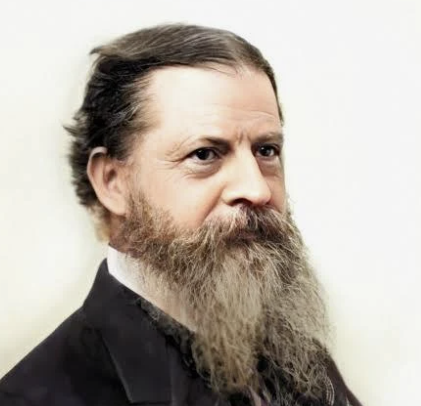
It is important to understand what I mean by semiosis. All dynamic action, or action of brute force, physical or psychical, either takes place between two subjects, - whether they react equally upon each other, or one is agent and the other patient, entirely or partially, - or at any rate is a resultant of such actions between pairs. But by "semiosis" I mean, on the contrary, an action, or influence, which is, or involves, a cooperation of three subjects, such as a sign, its object, and its interpretant, this tri-relative influence not being in any way resolvable into actions between pairs.
▼
Source
source
"Pragmatism" (1907) in The Essential Peirce : Selected Philosophical Writings (1998) edited by the Peirce Edition Project, Vol. 2, p. 411, Indiana University Press.

2 months 1 week ago
The first act of violence that patriarchy demands of males is not violence toward women. Instead patriarchy demands of all males that they engage in acts of psychic self-mutilation, that they kill off the emotional parts of themselves. If an individual is not successful in emotionally crippling himself, he can count on patriarchal men to enact rituals of power that will assault his self-esteem.
▼
Source
source
The Will To Change: Men, Masculinity, and Love (2004), p. 66
2 months 3 days ago
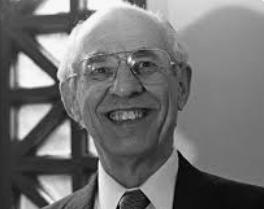
To successfully adjudicate ethical problems, as opposed to 'solving' them, it is necessary that the members of the society have a sense of community. A compromise that cannot pretend to be the last word on an ethical question, that cannot pretend to derive from binding principles in an unmistakeably constraining way, can only derive its force from a shared sense of what is and is not reasonable, from loyalties to one another, and a commitment to 'muddling through' together.
▼
Source
source
"How Not to Solve Ethical Problems"
3 months 3 weeks ago
I am a democrat because I believe in the Fall of Man. I think most people are democrats for the opposite reason.
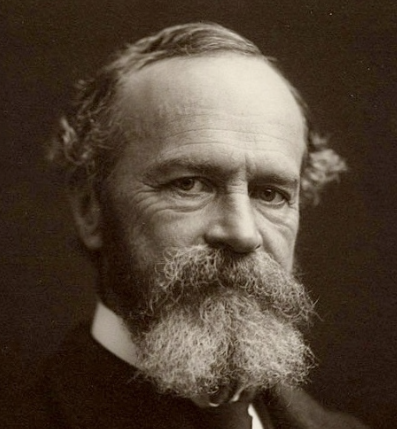
3 months 3 weeks ago
The study a posteriori of the distribution of consciousness shows it to be exactly such as we might expect in an organ added for the sake of steering a nervous system grown too complex to regulate itself.
▼
Source
source
Ch. 5

3 months 3 weeks ago
I cannot escape from the conclusion that the great ages of progress have depended upon a small number of individuals of transcendent ability.
▼
Source
source
Ch. 8: Western Civilisation


Meijer for entrapping and arresting a disabled employee
Target
Meijer
Rationale
An autistic 16 year old was taking food from the deli over 3 months. They tracked how much he took, and when he had crossed a certain threshold, the had him arrested. There was another employee who was also part of the entrapment scheme.
The general vibe around the boycott is, these are poor workers, scraping by on minimum level wages. The multi billion dollar corporation follows the law absolutely when it comes to you, but we all know it's not so cut and dry at the top.
Search: Meijers, autistic 16 year old, entrapment
The general vibe around the boycott is, these are poor workers, scraping by on minimum level wages. The multi billion dollar corporation follows the law absolutely when it comes to you, but we all know it's not so cut and dry at the top.
Search: Meijers, autistic 16 year old, entrapment
Target End Date
{1027} days left
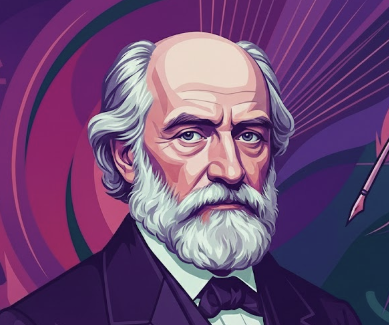
3 months 3 weeks ago
The teaching of my philosophy... that our whole existence is something which had better not have been, and that to disown and disclaim it is the highest wisdom.
▼
Source
source
Ch 1

3 months 4 weeks ago
Thus it may be said that not only the soul, the mirror of an indestructible universe, is indestructible, but also the animal itself, though its mechanism may often perish in part and take off or put on an organic slough.
▼
Source
source
La monadologie (77). Sometimes paraphrased as: The soul is the mirror of an indestructible universe.
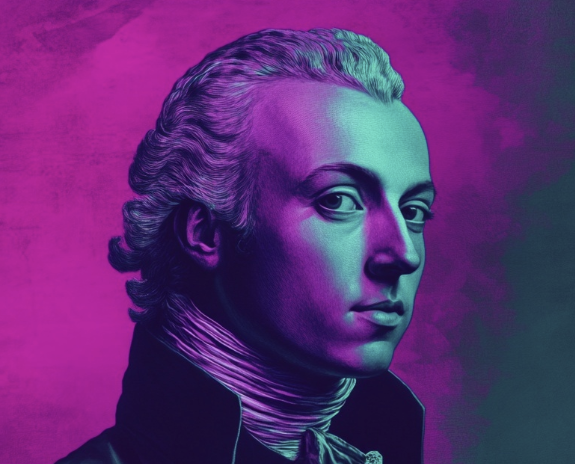
3 months 4 weeks ago
For instance, if you have by a lie hindered a man who is even now planning a murder, you are legally responsible for all the consequences. But if you have strictly adhered to the truth, public justice can find no fault with you, be the unforeseen consequence what it may. It is possible that whilst you have honestly answered Yes to the murderer's question, whether his intended victim is in the house, the latter may have gone out unobserved, and so not have come in the way of the murderer, and the deed therefore have not been done; whereas, if you lied and said he was not in the house, and he had really gone out (though unknown to you) so that the murderer met him as he went, and executed his purpose on him, then you might with justice be accused as the cause of his death. For, if you had spoken the truth as well as you knew it, perhaps the murderer while seeking for his enemy in the house might have been caught by neighbours coming up and the deed been prevented.
3 months 3 weeks ago
First Shakespeare sonnets seem meaningless; first Bach fugues, a bore; first differential equations, sheer torture. But training changes the nature of our spiritual experiences. In due course, contact with an obscurely beautiful poem, an elaborate piece of counterpoint or of mathematical reasoning, causes us to feel direct intuitions of beauty and significance. It is the same in the moral world.
▼
Source
source
Ch. 14, p. 333 [2012 reprint]
1 month 2 weeks ago
Wherever literature consoles sorrow, or assuages pain,-wherever it brings gladness to eyes which fail with wakefulness and tears, and ache for the dark house and the long sleep,-there is exhibited, in its noblest form, the immortal influence of Athens.
▼
Source
source
p. 179
CivilSimian.com created by AxiomaticPanic, CivilSimian, Kalokagathia