

4 months 1 week ago
The superior man, while there is anything he has not studied, or while in what he has studied there is anything he cannot understand, Will not intermit his labor. While there is anything he has not inquired about, or anything in what he has inquired about which he does not know, he will not intermit his labor. While there is anything which he has not reflected on, or anything in what he has reflected on which he does not apprehend, he will not intermit his labor. While there is anything which he has not discriminated or his discrimination is not clear, he will not intermit his labor. If there be anything which he has not practiced, or his practice fails in earnestness, he will not intermit his labor. If another man succeed by one effort, he will use a hundred efforts. If another man succeed by ten efforts, he will use a thousand. Let a man proceed in this way, and, though dull, he will surely become intelligent; though weak, he will surely become strong.

4 months 1 week ago
It is impossible for a man who secretly violates the terms of the agreement not to harm or be harmed to feel confident that he will remain undiscovered, even if he has already escaped ten thousand times; for until his death he is never sure that he will not be detected.

3 months 2 weeks ago
I cannot believe - and I say this with all the emphasis of which I am capable - that there can ever be any good excuse for refusing to face the evidence in favour of something unwelcome. It is not by delusion, however exalted, that mankind can prosper, but only by unswerving courage in the pursuit of truth.
▼
Source
source
"The Pursuit of Truth" in The Collected Papers of Bertrand Russell, 1993
1 month 1 week ago
To teach virtue we must educate the emotions, and this means learning "what to feel" in the various circumstances that prompt them.
▼
Source
source
"Knowledge and Feeling" (p. 37)
2 months 2 weeks ago
I have distinctly announced the grounds upon which I regard the Apostle John as the only teacher of true Christianity:-namely, that the Apostle Paul and his party, as the authors of the opposite system of Christianity, remained half Jews, and left unaltered the fundamental error of Judaism as well as of Heathenism, which we must afterwards notice. For the present the following may be enough: -It is only with John that the philosopher can deal, for he alone has respect for Reason, and appeals to that evidence which alone has weight with the philosopher-the internal. "If any man will do the will of him that sent me, he shall know of the doctrine, whether it be of God." But this Will of God, accord ing to John, is, that we should truly believe in God, and in Jesus Christ whom he hath sent. The other promulgators of Christianity, however, rely upon the external evidence of Miracle, which, to us at least, proves nothing.
▼
Source
source
P. 96-97
2 months 2 weeks ago
In a word, we reject all legislation, all authority, and all privileged, licensed, official, and legal influence, even though arising from universal suffrage, convinced that it can turn only to the advantage of a dominant minority of exploiters against the interest of the immense majority in subjection to them. This is the sense in which we are really Anarchists.
1 month ago
No being can be what he is unless he is putting his essence into action in his field.
▼
Source
source
Vol. 3

3 months 3 weeks ago
This world, the whole of the planet called earth, is the common country of all who live and breathe upon it.

3 months 2 weeks ago
Let us not underrate the value of a fact; it will one day flower in a truth.
▼
Source
source
"Natural History of Massachusetts". The Dial (July 1842) p. 39

1 week 2 days ago
The Philosopher of this age is not a Socrates, a Plato, a Hooker, or Taylor, who inculcates on men the necessity and infinite worth of moral goodness, the great truth that our happiness depends on the mind which is within us, and not on the circumstances which are without us; but a Smith, a De Lolme, a Bentham, who chiefly inculcates the reverse of this,-that our happiness depends entirely on external circumstances; nay, that the strength and dignity of the mind within us is itself the creature and consequence of these. Were the laws, the government, in good order, all were well with us; the rest would care for itself! Dissentients from this opinion, expressed or implied, are now rarely to be met with; widely and angrily as men differ in its application, the principle is admitted by all.

3 months 2 weeks ago
He is dead, and my hatred has died with him.
▼
Source
source
Electra, before the dead Aegistheus, Act 2

3 months 1 week ago
The chief function of the disciplinary power is to 'train', rather than to select and to levy; or, no doubt, to train in order to levy and select all the more. It does not link forces together in order to reduce them; it seeks to bind them together in such a way as to multiply and use them.
▼
Source
source
Part Three, The Means of Correct Training
3 months 2 weeks ago
In youth it is the outward aspect of things that most engages us; while in age, thought or reflection is the predominating quality of the mind. Hence, youth is the time for poetry, and age is more inclined to philosophy. In practical affairs it is the same: a man shapes his resolutions in youth more by the impression that the outward world makes upon him; whereas, when he is old, it is thought that determines his actions.
2 months 2 weeks ago
They say in the grave there is peace, and peace and the grave are one and the same.
▼
Source
source
Act I.

2 months 2 weeks ago
Only optimists commit suicide, the optimists who can no longer be . . . optimists. The others, having no reason to live, why should they have any to die?
2 months 2 weeks ago
Get hold of yourself, be confident once more, don't forget that it is not given to just anyone to have idolized discouragement without succumbing to it.
1 month 2 weeks ago
All these people talk so eloquently about getting back to good old-fashioned values. Well, as an old poop I can remember back to when we had those old-fashioned values, and I say let's get back to the good old-fashioned First Amendment of the good old-fashioned Constitution of the United States-and to hell with the censors! Give me knowledge or give me death!
▼
Source
source
As quoted in "An Interview with Kurt Vonnegut, Jr., Carey Horwitz, Library Journal, Apr. 15, 1973: 1131
4 months 2 days ago
Be bold to look towards God and say, "Use me henceforward for whatever you want; I am of one mind with you; I am yours; I refuse nothing that seems good to you; lead me where you will; wrap me in what clothes you will."
▼
Source
source
Book II, ch. 16, 42
2 months 2 weeks ago
Unity is the great goal toward which humanity moves irresistibly. But it becomes fatal, destructive of the intelligence, the dignity, the well-being of individuals and peoples whenever it is formed without regard to liberty, either by violent means or under the authority of any theological, metaphysical, political, or even economic idea. That patriotism which tends toward unity without regard to liberty is an evil patriotism, always disastrous to the popular and real interests of the country it claims to exalt and serve. Often, without wishing to be so, it is a friend of reaction - an enemy of the revolution, i.e., the emancipation of nations and men.
2 months 2 weeks ago
The traditional disputes of philosophers are, for the most part, as unwarranted as they are unfruitful. The surest way to end them is to establish beyond question what should be the purpose and method of a philosophical enquiry. And this is by no means so difficult a task as the history of philosophy would lead one to suppose. For if there are any questions which science leaves it to philosophy to answer, a straightforward process of elimination must lead to their discovery.
▼
Source
source
Ch. 1, first lines.

3 months 1 week ago
A hero looks death in the face, real death, not just the image of death. Behaving honourably in a crisis doesn't mean being able to act the part of a hero well, as in the theatre, it means being able to look death itself in the eye. For an actor may play lots of different roles, but at the end of it all he himself, the human being, is the one who has to die.
▼
Source
source
p. 50e
3 days ago
As you talk, so is your heart.

3 months 3 weeks ago
And as every present state of a simple substance is naturally a consequence of its preceding state, so its present is pregnant with its future.
▼
Source
source
La monadologie (22).

1 month 4 weeks ago
Religious men are and must be heretics now - for we must not pray, except in a "form" of words, made beforehand - or think of God but with a prearranged idea.

4 months 2 weeks ago
I have worked for this restlessness oriented toward inward deepening. But without authority. Instead of conceitedly making myself out to be a witness for the truth and causing others rashly to want to be the same, I am an unauthorized poet who influences by means of the ideas.

3 months 3 weeks ago
II. The tax which each individual is bound to pay ought to be certain, and not arbitrary.
▼
Source
source
Chapter II, Part II, p. 892.

1 month 3 weeks ago
Idolatry is a more dangerous crime because it is apt by the authority of Kings & under very specious pretenses to insinuate it self into mankind. Kings being apt to enjoyn the honour of their dead ancestors: & it seeming very plausible to honour the souls of Heroes & Saints & to believe that they can heare us & help us & are mediators between God & man & reside & act principally in the temples & statues dedicated to their honour & memory? And yet this being against the principal part of religion is in scripture condemned & detested above all other crimes. The sin consists first in omitting the service of the true God.
▼
Source
source
Of Idolatry

2 months 4 days ago
This mortal Don Quixote died and descended into hell, which he entered lance on rest, and freed all the condemned, as he freed the galley slaves, and he shut the gates of hell, and tore down the scroll that Dante saw there and replaced it by one on which was written "Long live hope!" and escorted by those whom he had freed, and they laughing at him, he went to heaven. And God laughed paternally at him, and this divine laughter filled his soul with eternal happiness.
2 months ago
As a way of maintaining relative intellectual independence, having the attitude of an amateur instead of a professional is a better course.
▼
Source
source
p. 87
4 months 2 weeks ago
What is asked of a man that he may be able to pray for his enemies? To pray for one's enemies is the hardest thing of all. That is why it exasperates us so much in our present day situation.
2 months 2 weeks ago
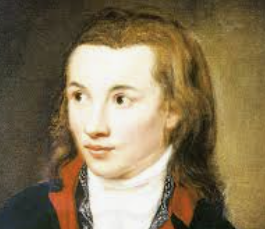
The best thing about the sciences is their philosophical ingredient, like life for an organic body. If one dephilosophizes the sciences, what remains left? Earth, air, and water.
▼
Source
source
Fragment No. 62
1 month 2 weeks ago
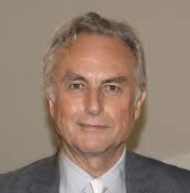
We are survival machines-robot vehicles blindly programmed to preserve the selfish molecules known as genes. This is a truth which still fills me with astonishment.
▼
Source
source
Preface to the first edition
3 months 1 week ago
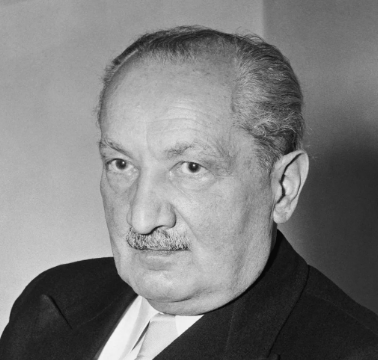
In order to remain silent Da-sein must have something to say.
▼
Source
source
Stambaugh translation

2 months 2 weeks ago
Men who undertake considerable things, even in a regular way, ought to give us ground to presume ability.
4 months 2 weeks ago
Those who assert that the mathematical sciences say nothing of the beautiful or the good are in error. For these sciences say and prove a great deal about them; if they do not expressly mention them, but prove attributes which are their results or definitions, it is not true that they tell us nothing about them. The chief forms of beauty are order and symmetry and definiteness, which the mathematical sciences demonstrate in a special degree.
2 months 2 days ago
We find here the final application of the doctrine of objective immortality. Throughout the perishing occasions in the life of each temporal Creature, the inward source of distaste or of refreshment, the judge arising out of the very nature of things, redeemer or goddess of mischief, is the transformation of Itself, everlasting in the Being of God. In this way, the insistent craving is justified - the insistent craving that zest for existence be refreshed by the ever-present, unfading importance of our immediate actions, which perish and yet live for evermore.



2 months 1 day ago
Jung fiercely resented the implication that he was a hypocritical, self-seeking Judas, a 'rat'. Yet there was just enough truth in it to strike home. He was undoubtedly a man who liked his own way, no matter what the cost to others.
▼
Source
source
p. 72
4 months 2 days ago
For he who is unmusical is a child in music; he who is without letters is a child in learning; he who is untaught, is a child in life.
▼
Source
source
Book III, ch. 19, 6.
3 months 1 week ago
The aim of the book is to set a limit to thought, or rather - not to thought, but to the expression of thoughts: for in order to be able to set a limit to thought, we should have to find both sides of the limit thinkable (i.e. we should have to be able to think what cannot be thought). It will therefore only be in language that the limit can be set, and what lies on the other side of the limit will simply be nonsense.
2 months 2 weeks ago
Our blight is ideologies - they are the long-expected Antichrist!
▼
Source
source
The Tibetan Book of the Great Liberation
2 months 2 weeks ago
No one should forget: Eros alone can fulfill life; knowledge, never. Only Eros makes sense; knowledge is empty infinity; - for thoughts, there is always time; life has its time; there is no thought that comes too late; any desire can become a regret.
2 months 2 weeks ago
Loneliness does not come from having no people about one, but from being unable to communicate the things that seem important to oneself, or from holding certain views which others find inadmissible.
▼
Source
source
p.356

4 months 2 weeks ago
May I really say it! All truths are bloody truths to me, take a look at my previous writings.
1 month 2 weeks ago
Say what you will about the sweet miracle of unquestioning faith, I consider a capacity for it terrifying and absolutely vile.
4 months 1 week ago
The flesh receives as unlimited the limits of pleasure; and to provide it requires unlimited time. But the mind, intellectually grasping what the end and limit of the flesh is, and banishing the terrors of the future, procures a complete and perfect life, and we have no longer any need of unlimited time. Nevertheless the mind does not shun pleasure, and even when circumstances make death imminent, the mind does not lack enjoyment of the best life.

3 months 1 week ago
Reaching and understanding is the process of bringing about an agreement on the presupposed basis of validity claims that are mutually recognized.
▼
Source
source
p. 23

1 month 2 weeks ago
When we invent a new technology, we become cannibals. We eat ourselves alive since these technologies are merely extensions of ourselves. The new environment shaped by electric technology is a cannibalistic one that eats people. To survive one must study the habits of cannibals.
▼
Source
source
(p. 261)
3 months 2 weeks ago
You know how much I admire Che Guevara. In fact, I believe that the man was not only an intellectual but also the most complete human being of our age: as a fighter and as a man, as a theoretician who was able to further the cause of revolution by drawing his theories from his personal experience in battle.
▼
Source
source
As quoted in Marianne Alexandre (ed.), !Viva Che!: Contributions in Tribute to Ernesto 'Che' Guevara, 1968
CivilSimian.com created by AxiomaticPanic, CivilSimian, Kalokagathia