


1 week 6 days ago
The election... on November 3 ... illustrates a lot of these clashing forces. ..That election was the most important political fight ...in my lifetime. It's important not just for the United States but... for the rest of the world, given the role that the United States has historically played in maintaining that broader liberal international order.
▼
Source
source
20:56
4 months 6 days ago
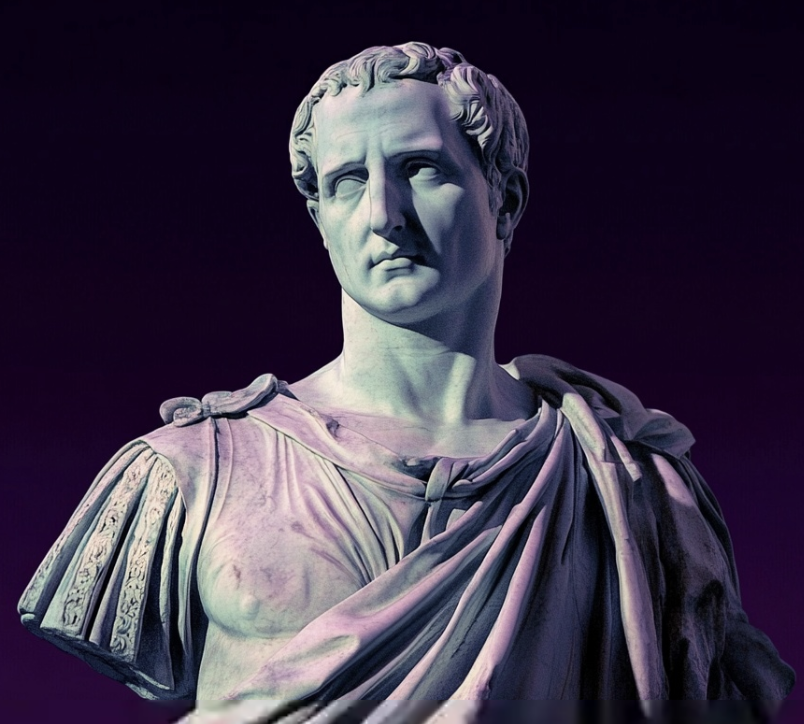
How long will men dare to call anything expedient that is not right? Can odium and infamy be of service to any empire, which ought to be supported by glory and by the good-will of its allies? I was often at variance even with my friend Cato. He seemed to me to guard the treasury and the revenues too obstinately, to refuse everything to the farmers of the revenue, and many things to our allies; while we ought to be generous to our allies, and to deal with the farmers of the revenue as leniently as we individually do with our own tenants, especially as the union of orders to which such a course would conduce is for the well-being of the state.
▼
Source
source
Book III, Sect. 22, as translated by Andrew P. Peabody
2 months ago
By incestuous symbiosis is meant the tendency to stay tied to the mother and to her equivalents - blood, family, tribe - to fly from the unbearable weight of responsibility, of freedom, of awareness, and to be protected and loved in a state of certainty dependence that the individual pays for with the ceasing of his own human development.
2 months 1 week ago
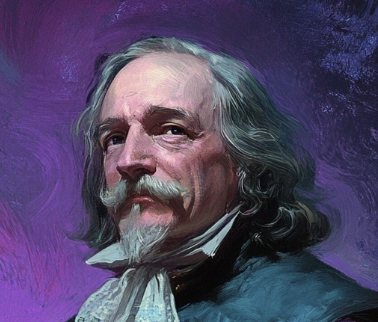
I know not how the world will receive it, nor how it may reflect on those that shall seem to favor it. For in a way beset with those that contend, on one side for too great Liberty, and on the other side for too much Authority, 'tis hard to passe between the points of both unwounded.
▼
Source
source
The Epistle Dedicatory, Paris, April 15-25, 1651

3 months 2 weeks ago
The charming landscape which I saw this morning, is indubitably made up of some twenty or thirty farms. Miller owns this field, Locke that, and Manning the woodland beyond. But none of them owns the landscape. There is a property in the horizon which no man has but he whose eye can integrate all the parts, that is, the poet. This is the best part of these men's farms, yet to this their warranty-deeds give no title. To speak truly, few adult persons can see nature. Most persons do not see the sun. At least they have a very superficial seeing. The sun illuminates only the eye of the man, but shines into the eye and the heart of the child. The lover of nature is he whose inward and outward senses are still truly adjusted to each other; who has retained the spirit of infancy even into the era of manhood. His intercourse with heaven and earth, becomes part of his daily food.
▼
Source
source
Nature

4 months 2 weeks ago
To work and create "for nothing," to sculpture in clay, to know one's creation has no future, to see one's work destroyed in a day while being aware that fundamentally this has no more importance than building for centuries, this is the difficult wisdom that absurd thought sanctions. Performing these two tasks simultaneously, negating on the one hand and magnifying on the other, it the way open to the absurd creator. He must give the void its colors.

3 months 2 weeks ago
The logical picture of the facts is the thought.
▼
Source
source
(3) Original German: Das logische Bild der Tatsachen ist der Gedanke.
1 month 4 days ago
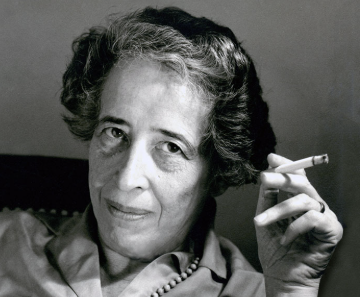
The mediaeval university looked backwards: it professed to be a storehouse of old knowledge... The modern university looks forward: it is a factory of new knowledge.
▼
Source
source
Letter to E. Ray Lankester (11 April 1892) Huxley Papers, Imperial College: 30.448
3 months 2 weeks ago
In its flight from death, the craving for permanence clings to the very things sure to be lost in death.
▼
Source
source
p. 17
3 months 2 weeks ago
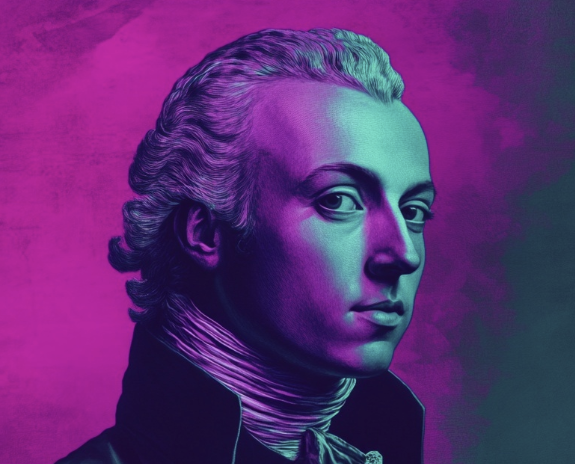
The true test of civilization is, not the census, nor the size of the cities, nor the crops - no, but the kind of man the country turns out.
▼
Source
source
Civilization
3 months 3 weeks ago
Men will not understand ... that when they fulfil their duties to men, they fulfil thereby God's commandments; that they are consequently always in the service of God, as long as their actions are moral, and that it is absolutely impossible to serve God otherwise.
▼
Source
source
As quoted in German Thought, From The Seven Years' War To Goethe's Death : Six Lectures (1880) by Karl Hillebrand, p. 207

3 days ago
The old Romans had a custom which survived even into my lifetime. They would add to the opening words of a letter: "If you are well, it is well; I also am well." Persons like ourselves would do well to say. "If you are studying philosophy, it is well." For this is just what "being well" means. Without philosophy the mind is sickly.


2 months 2 weeks ago
There ought to be system of manners in every nation which a well-formed mind would be disposed to relish. To make us love our country, our country ought to be lovely.
3 months 6 days ago
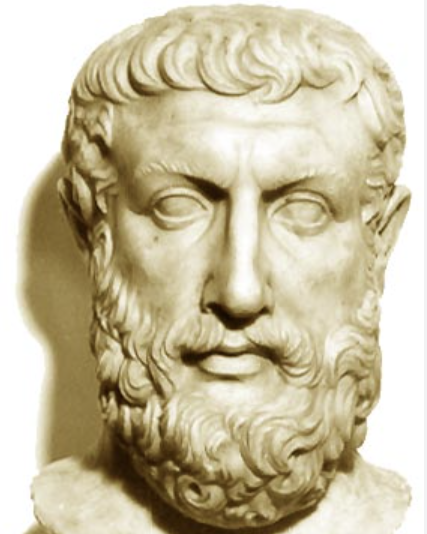
It is indifferent to me where I am to begin, for there shall I return again.
▼
Source
source
Frag. B 5, quoted by Proclus, Commentary on the Parmenides, 708
3 months 2 weeks ago
What I give is the morphology of the use of an expression. I show that it has kinds of uses of which you had not dreamed. In philosophy one feels forced to look at a concept in a certain way. What I do is suggest, or even invent, other ways of looking at it. I suggest possibilities of which you had not previously thought. You thought that there was one possibility, or only two at most. But I made you think of others. Furthermore, I made you see that it was absurd to expect the concept to conform to those narrow possibilities. Thus your mental cramp is relieved, and you are free to look around the field of use of the expression and to describe the different kinds of uses of it.
▼
Source
source
Lectures of 1946 - 1947, as quoted in Ludwig Wittgenstein : A Memoir (1966) by Norman Malcolm, p. 43
3 weeks 6 days ago
Negative-utilitarianism is only one particular denomination of a broad church to which the reader may well in any case not subscribe. Fortunately, the program can be defended on grounds that utilitarians of all stripes can agree on. So a defence will be mounted against critics of the theory and application of a utilitarian ethic in general. For in practice the most potent and effective means of curing unpleasantness is to ensure that a defining aspect of future states of mind is their permeation with the molecular chemistry of ecstasy: both genetically precoded and pharmacologically fine-tuned. Orthodox utilitarians will doubtless find the cornucopian abundance of bliss this strategy delivers is itself an extra source of moral value. Future generations of native ecstatics are unlikely to disagree.
▼
Source
source
2.7 Why Be Negative?
4 months 2 weeks ago
Of all the books I have ever worked on, I think Asimov's Guide to Shakespeare gave me the most pleasure, day in, day out. For months and months I lived and thought Shakespeare, and I don't see how there can be any greater pleasure in the world, any pleasure, that is, that one can indulge in for as much as ten hours without pause, day after day indefinitely.

3 months 2 weeks ago
Human nature is not a machine to be built after a model, and set to do exactly the work prescribed for it, but a tree, which requires to grow and develop itself on all sides, according to the tendency of the inward forces which make it a living thing.
▼
Source
source
Ch. III: Of Individuality, As One of the Elements of Well-Being
2 months 1 week ago
The specialist serves as a striking concrete example of the species, making clear to us the radical nature of the novelty. For, previously, men could be divided simply into the learned and the ignorant, those more or less the one, and those more or less the other. But your specialist cannot be brought in under either of these two categories. He is not learned , for he is formally ignorant of all that does not enter into his speciality; but neither is he ignorant, because he is "a scientist," and "knows" very well his own tiny portion of the universe. We shall have to say that he is a learned ignoramus, which is a very serious matter, as it implies that he is a person who is ignorant, not in the fashion of the ignorant man, but with an the petulance of one who is learned in his own special line.
▼
Source
source
Chapter XII: The Barbarism Of "Specialisation"

3 months 1 week ago
Education is an ornament for the prosperous, a refuge for the unfortunate.
▼
Source
source
Freeman (1948), p. 161
4 months 1 week ago
The Asharites have expressed a very peculiar opinion, both with regard to reason and religion; about this problem they have explained it in a way in which religion has not, but have adopted quite an opposite method.

3 months 2 weeks ago
It is better; heavier, crueler. The mouth you wear for hell.
▼
Source
source
Inès to Estelle after she has applied lipstick, Act 1, sc. 5
2 weeks ago
Ignorant as regards the unity of man with himself, the world is still more ignorant in respect to the two other unities - unity of man with God and the universe.

2 months 2 weeks ago
To win the guilty kiss of a saint, I'd welcome the plague as a blessing
3 months 3 weeks ago
I have greater confidence in my wife and my pupils than I have in Christ.
▼
Source
source
2397
3 months 2 weeks ago
Two Chinamen visiting Europe went to the theatre for the first time. One of them occupied himself with trying to understand the theatrical machinery, which he succeeded in doing. The other, despite his ignorance of the language, sought to unravel the meaning of the play. The former is like the astronomer, the latter the philosopher.
▼
Source
source
Vol. 2 "On Various Subjects" as translated in Essays and Aphorisms (1970), as translated by R. J. Hollingdale

3 months 3 weeks ago
Wherever your life ends, it is all there. The utility of living consists not in the length of days, but in the use of time; a man may have lived long, and yet lived but a little. Make use of time while it is present with you. It depends upon your will, and not upon the number of days, to have a sufficient length of life. Is it possible you can imagine never to arrive at the place towards which you are continually going? and yet there is no journey but hath its end. And, if company will make it more pleasant or more easy to you, does not all the world go the self-same way?

2 months 2 weeks ago
If not reason, then the devil.
4 months 2 weeks ago
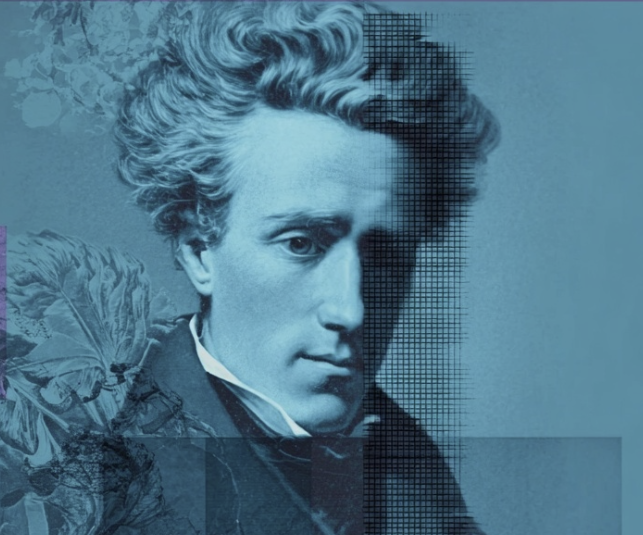
Spontaneous love can reach the point of despair, shows that it is in despair, that even when it is happy it loves with the power of despair.
2 months 2 weeks ago
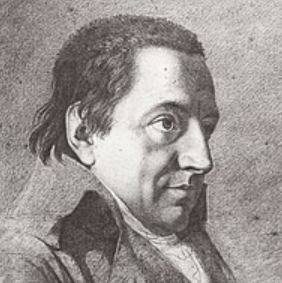
The purpose of the State is, as we have already shown in our last lecture, no other than that of the Human Race itself:-to order all its relations according to the Laws of Reason. It is only after the Age of Reason as Science shall have been traversed, and we shall have arrived at the Age of Reason as Art, that the State can reflect upon this purpose with clear consciousness. Till then it constantly promotes this purpose, but without its own knowledge, or free pre meditated design; prompted thereto by the natural law of the development of our Race, even while it has a totally different purpose in view;-with which purpose of its own, Nature has indissolubly bound up the purpose of the whole Race.
▼
Source
source
p. 168

2 months 1 week ago
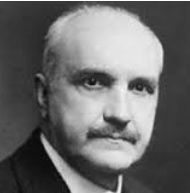
On fact, the whole machinery of our intelligence, our general ideas and laws, fixed and external objects, principles, persons, and gods, are so many symbolic, algebraic expressions. They stand for experience; experience which we are incapable of retaining and surveying in its multitudinous immediacy. We should flounder hopelessly, like the animals, did we not keep ourselves afloat and direct our course by these intellectual devices.
▼
Source
source
Theory helps us to bear our ignorance of fact. Pt. III, Form; § 30: "The average modified in the direction of pleasure.", p. 125
4 days ago
In the pedagogical as in certain other spheres freedom is not allowed to erupt, the power of the opposition is not allowed to put a word in edgewise: they want submissiveness. Only a formal and material training is being aimed at and only scholars come out of the menageries of the humanists, only "useful citizens" out of those of the realists, both of whom are indeed nothing but subservient people. Our good background of recalcitrancy [sic] gets strongly suppressed and with it the development of knowledge to free will. The result of school is then philistinism.
▼
Source
source
p. 23



3 months 2 weeks ago
We have, in fact, two kinds of morality side by side; one which we preach but do not practise, and another which we practise but seldom preach.
▼
Source
source
Ch. 8: Eastern and Western Ideals of Happiness
3 months 6 days ago
As Athenodorus was taking his leave of Cæsar, "Remember," said he, "Cæsar, whenever you are angry, to say or do nothing before you have repeated the four-and-twenty letters to yourself."
▼
Source
source
Cæsar Augustus
4 months 2 weeks ago
What the age needs is not a genius - it has had geniuses enough, but a martyr, who in order to teach men to obey would himself be obedient unto death. What the age needs is awakening. And therefore someday, not only my writings but my whole life, all the intriguing mystery of the machine will be studied and studied. I never forget how God helps me and it is therefore my last wish that everything may be to his honour.
2 weeks ago
Society attacks early, when the individual is helpless.
▼
Source
source
Walden Two (1948), p. 95

2 months 5 days ago
Faith makes us live by showing us that life, although it is dependent upon reason, has its well spring and source of power elsewhere, in something supernatural and miraculous. Cournot the mathematician, a man of singularly well-balanced and scientifically equipped mind has said that it is this tendency towards the supernatural and miraculous that gives life, and that when it is lacking, all the speculations of reason lead to nothing but affliction of the spirit. ...And in truth we wish to live.
2 months 1 week ago
I would say act like a man of thought and think like a man of action.
▼
Source
source
Speech at the Descartes Conference in Paris (1937) Quoted in The Forbes Scrapbook of Thoughts on the Business of Life (1950), p. 442, as "Think like a man of action, act like a man of thought."
3 months 2 weeks ago
There is no more light in a genius than in any other honest man-but he has a particular kind of lens to concentrate this light into a burning point.
▼
Source
source
p. 41e
3 months 3 weeks ago
It is not death, it is dying that alarms me.
▼
Source
source
Book II, Ch. 13
3 months 2 weeks ago
We see in tragedy the noblest men, after a long conflict and suffering, finally renounce forever all the pleasure of life and the aims till then pursued so keenly, or cheerfully and willingly give up life itself.
▼
Source
source
Book 1

2 months 1 day ago
Cézanne's painting is strictly painting, and its value is immense; but Van Gogh's painting has the Outsider's characteristic: it is a laboratory refuse of a man who treated his own life as an experiment in living; it faithfully records moods and developments of vision on the manner of a Bildungsroman.
▼
Source
source
p. 103
2 months ago
By narcissism is meant ceasing to have an authentic interest in the outside world but instead an intense attachment to oneself, to one's own group, clan, religion, nation, race, etc. - with consequent serious distortions of rational judgment. In general, the need for narcissistic satisfaction derives from the necessity to compensate for material and cultural poverty.
CivilSimian.com created by AxiomaticPanic, CivilSimian, Kalokagathia