


5 days ago
While it is in no way racist for any author to write a book exclusively about white women, it is fundamentally racist for books to be published that focus solely on the American white woman's experience in which that experience is assumed to be the American woman's experience.

6 days ago
Modern science has imposed on humanity the necessity for wandering. Its progressive thought and its progressive technology make the transition through time, from generation to generation, a true migration into uncharted seas of adventure.
▼
Source
source
Ch. 13: "Requisites for Social Progress", p. 291

2 weeks 3 days ago
We are all of us in error, the humorists excepted. They alone have discerned, as though in jest, the inanity of all that is serious and even of all that is frivolous.

3 weeks 5 days ago
Happiest are the people who give most happiness to others.
▼
Source
source
As quoted in Happyology by Harald W. Tietze, p. 28

2 months 2 weeks ago
Can one be a saint without God?, that's the problem, in fact the only problem, I'm up against today.
5 months 3 weeks ago
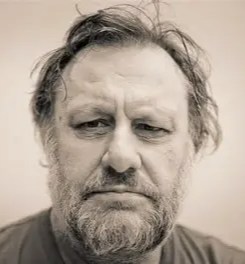
When we observe a thing, we see too much in it, we fall under the spell of the wealth of empirical detail which prevents us from clearly perceiving the notional determination which forms the core of the thing. The problem is thus not that of how to grasp the multiplicity of determinations, but rather to abstract from them, how to constrain our gaze and teach it to grasp only the notional determinism.
2 weeks 3 days ago
Ambition is a drug that makes its addicts potential madmen.

1 month 3 weeks ago
An increase in the productivity of labour means nothing more than that the same capital creates the same value with less labour, or that less labour creates the same product with more capital.
▼
Source
source
Notebook IV, The Chapter on Capital, p. 308.
2 months 2 weeks ago
Art is the activity that exalts and denies simultaneously. "No artist tolerates reality," says Nietzsche.

1 month 4 weeks ago
He who should teach men to die would at the same time teach them to live.
▼
Source
source
Ch. 18. That Men are not to judge of our Happiness till after Death, tr. Cotton, rev. W. Hazlitt, 1842

1 month 2 weeks ago
Every time you make a choice you are turning the central part of you, the part of you that chooses, into something a little different from what it was before. And taking your life as a whole, with all your innumerable choices, all your life long you are slowly turning this central thing either into a heavenly creature or into a hellish creature: either into a creature that is in harmony with God, and with other creatures, and with itself, or else into one that is in a state of war and hatred with God, and with its fellow-creatures, and with itself. To be the one kind of creature is heaven: that is, it is joy and peace and knowledge and power. To be the other means madness, horror, idiocy, rage, impotence, and eternal loneliness. Each of us at each moment is progressing to the one state or the other.
▼
Source
source
Book III, Chapter 4, "Morality and Psychoanalysis"

1 week 1 day ago
It is the furious longing to give finality to the Universe, to make it conscious and personal, that has brought us to believe in God, to wish that God may exist, to create God, in a word. To create Him, yes! This saying ought not to scandalize even the most devout theist. For to believe in God is, in a certain sense, to create Him, although He first creates us. It is He who is continually creating Himself.

1 month 2 weeks ago
I believe it might interest a philosopher, one who can think himself, to read my notes. For even if I have hit the mark only rarely, he would recognize what targets I had been ceaselessly aiming at.
1 week 6 days ago
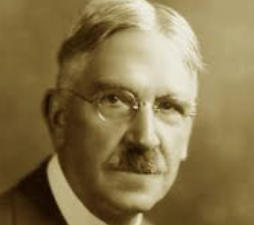
We cannot grasp any idea, any organ of meditation, we cannot possess it in full force, until we have felt and sensed it, as much so as if it were an odor or a color.

1 month 3 weeks ago
Of all the things that are beyond my power, I value nothing more highly than to be allowed the honor of entering into bonds of friendship with people who sincerely love truth. For, of things beyond our power, I believe there is nothing in the world which we can love with tranquility except such men.
▼
Source
source
Spinoza, Correspondence, 146, Letter xix

1 month 3 weeks ago
Any question of philosophy ... which is so obscure and uncertain, that human reason can reach no fixed determination with regard to it; if it should be treated at all; seems to lead us naturally into the style of dialogue and conversation.
▼
Source
source
Pamphilus to Hermippus, Prologue
1 month 2 weeks ago
I am a democrat because I believe in the Fall of Man. I think most people are democrats for the opposite reason.

1 month 3 weeks ago
Music is the poor man's Parnassus.
▼
Source
source
Poetry and Imagination

2 weeks 5 days ago
It is justice, not charity, that is wanting in the world.
▼
Source
source
Ch. 4

2 months 3 weeks ago
What the age needs is not a genius - it has had geniuses enough, but a martyr, who in order to teach men to obey would himself be obedient unto death. What the age needs is awakening. And therefore someday, not only my writings but my whole life, all the intriguing mystery of the machine will be studied and studied. I never forget how God helps me and it is therefore my last wish that everything may be to his honour.

1 month 3 weeks ago
The death of dogma is the birth of morality.
▼
Source
source
As quoted in Faith Or Fact (1897) by Henry Moorehouse Taber, p. 86

1 month 3 weeks ago
..Whenever it ceases to be true that mankind, as a rule, prefer themselves to others, and those nearest to them to those more remote, from that moment Communism is not only practicable, but the only defensible form of society...
1 month 3 weeks ago
Every man I meet is in some way my superior, and in that, I can learn of him.
▼
Source
source
As quoted in Think, Vol. 4-5 (1938), p. 32

1 month 3 weeks ago
The whole conception of God is a conception derived from the ancient Oriental despotisms. It is a conception quite unworthy of free men. When you hear people in church debasing themselves and saying that they are miserable sinners, and all the rest of it, it seems contemptible and not worthy of self-respecting human beings. We ought to stand up and look the world frankly in the face. We ought to make the best we can of the world, and if it is not so good as we wish, after all it will still be better than what these others have made of it in all these ages. A good world needs knowledge, kindliness, and courage; it does not need a regretful hankering after the past, or a fettering of the free intelligence by the words uttered long ago by ignorant men.
▼
Source
source
"What We Must Do"
1 month 1 week ago
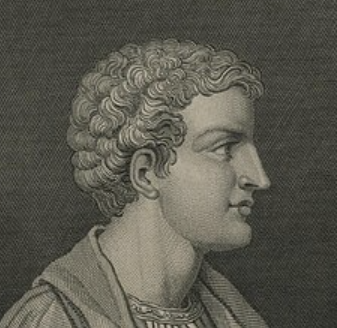
We are but numbers, born to consume resources.
▼
Source
source
Book I, epistle ii, line 27
2 months 3 weeks ago
I have worked for this restlessness oriented toward inward deepening. But without authority. Instead of conceitedly making myself out to be a witness for the truth and causing others rashly to want to be the same, I am an unauthorized poet who influences by means of the ideas.
1 month 3 weeks ago
The immediate aim of the Communists is the same as that of all the other proletarian parties: Formation of the proletariat into a class, overthrow of the bourgeois supremacy, conquest of political power by the proletariat.
▼
Source
source
Section 2 paragraph 7.
3 weeks 5 days ago
I believe in God, although I live very happily with atheists... It is very important not to mistake hemlock for parsley; but not at all so to believe or not in God.
▼
Source
source
As quoted in Against the Faith (1985) by Jim Herrick, p. 75
1 month 3 weeks ago
A plant, an animal, the regular order of nature - probably also the disposition of the whole universe - give manifest evidence that they are possible only by means of and according to ideas; that, indeed, no one creature, under the individual conditions of its existence, perfectly harmonizes with the idea of the most perfect of its kind - just as little as man with the idea of humanity, which nevertheless he bears in his soul as the archetypal standard of his actions; that, notwithstanding, these ideas are in the highest sense individually, unchangeably, and completely determined, and are the original causes of things; and that the totality of connected objects in the universe is alone fully adequate to that idea.
▼
Source
source
B 374

1 month 3 weeks ago
The man who esteems himself as he ought, and no more than he ought, seldom fails to obtain from other people all the esteem that he himself thinks due. He desires no more than is due to him, and he rests upon it with complete satisfaction.
▼
Source
source
Section III.

4 weeks ago
Of the eternal incorporeal substance nothing is changed, is formed or deformed, but there always remains only that thing which cannot be a subject of dissolution, since it is not possible that it be a subject of composition, and therefore, either of itself or by accident, it cannot be said to die.
▼
Source
source
As translated by Arthur Imerti

3 weeks 1 day ago
Inventors and geniuses have almost always been looked on as no better than fools at the beginning of their career, and very frequently at the end of it also.
▼
Source
source
Part 3, Chapter 1

1 month 2 weeks ago
The gesture that divides madness is the constitutive one, not the science that grows up in the calm that returns after the division has been made.
▼
Source
source
Preface to 1961 edition

1 month 2 weeks ago
I will not be modest. Humble, as much as you like, but not modest. Modesty is the virtue of the lukewarm.
▼
Source
source
Act 4, sc. 5

1 month 4 weeks ago
For where God built a church, there the Devil would also build a chapel...Thus is the Devil ever God's ape.
▼
Source
source
67. Compare "Where God hath a temple, the Devil will have a chapel", Robert Burton, Anatomy of Melancholy, part III, section 4, member 1, subsection 1

4 days ago
We are now living in an age of literary exhaustion; we get used to the bleak landscape. Cyril Connolly said that the writer's business is to produce masterpieces; but what masterpieces have been produced in the past fifty years?
▼
Source
source
p. 11
1 month 3 weeks ago
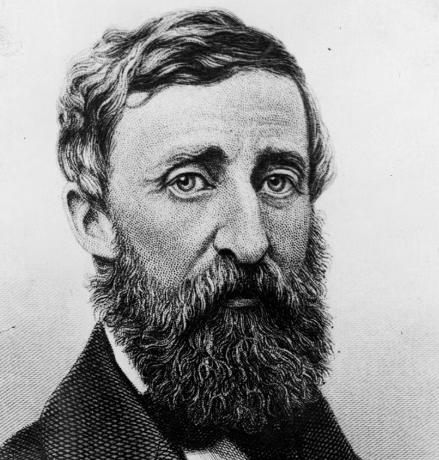
I wish to suggest that a man may be very industrious, and yet not spend his time well. There is no more fatal blunderer than he who consumes the greater part of his life getting his living. All great enterprises are self-supporting. The poet, for instance, must sustain his body by his poetry, as a steam planing-mill feeds its boilers with the shavings it makes. You must get your living by loving.
▼
Source
source
pp. 486-7
2 weeks 3 days ago
I get along quite well with someone only when he is at his lowest point and has neither the desire nor the strength to restore his habitual illusions.
2 months 3 weeks ago
The least initial deviation from the truth is multiplied later a thousandfold.
1 month 3 weeks ago
The scientific attitude of mind involves a sweeping away of all other desires in the interests of the desire to know-it involves suppression of hopes and fears, loves and hates, and the whole subjective emotional life, until we become subdued to the material, able to see it frankly, without preconceptions, without bias, without any wish except to see it as it is, and without any belief that what it is must be determined by some relation, positive or negative, to what we should like it to be, or to what we can easily imagine it to be.
2 weeks 5 days ago
If the world is a precipitation of human nature, so to speak, then the divine world is a sublimation of the same. Both occur in one act. No precipitation without sublimation. What goes lost there in agility, is won here.
▼
Source
source
Fragment No. 96

4 days ago
It is the private dominion over things that condemns millions of people to be mere nonentities, living corpses without originality or power of initiative, human machines of flesh and blood, who pile up mountains of wealth for others and pay for it with a gray, dull and wretched existence for themselves. I believe that there can be no real wealth, social wealth, so long as it rests on human lives - young lives, old lives and lives in the making.

1 week ago
We believe we are rising because while keeping the same base inclinations (for instance: the desire to triumph over others) we have given them a noble object. We should, on the contrary, rise by attaching noble inclinations to lowly objects.
▼
Source
source
La pesanteur et la grâce (1948), p. 61
1 month 3 weeks ago
The owl of Minerva first begins her flight with the onset of dusk.
1 month 4 weeks ago
The worst of my actions or conditions seem not so ugly unto me as I find it both ugly and base not to dare to avouch for them.
3 weeks 1 day ago
On our earth we can only love with suffering and through suffering. We cannot love otherwise, and we know of no other sort of love. I want suffering in order to love. I long, I thirst, this very instant, to kiss with tears the earth that I have left, and I don't want, I won't accept life on any other!"
2 weeks 3 days ago
I dream of a language whose words, like fists, would fracture jaws.

2 months 1 week ago
As the soul is the life of the body, so God is the life of the soul. As therefore the body perishes when the soul leaves it, so the soul dies when God departs from it.
▼
Source
source
p. 277
3 weeks 5 days ago
Wandering in a vast forest at night, I have only a faint light to guide me. A stranger appears and says to me: "My friend, you should blow out your candle in order to find your way more clearly." This stranger is a theologian.
▼
Source
source
Number VIII

2 months 3 weeks ago
May I really say it! All truths are bloody truths to me, take a look at my previous writings.
CivilSimian.com created by AxiomaticPanic, CivilSimian, Kalokagathia