

3 months 1 week ago
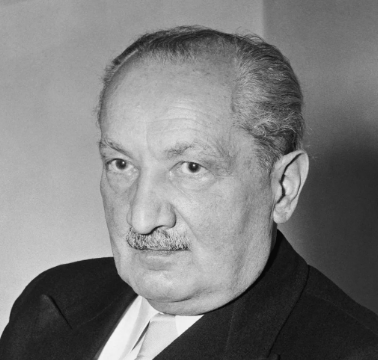
Mathematics is as little a natural science as philosophy is one of the humanities. Philosophy in its essence belongs as little in the philosophical faculty as mathematics belongs to natural science. To house philosophy and mathematics in this way today seems to be a blemish or a mistake in the catalog of the universities. Plato put over the entrance to his Academy the words: "Let no one who has not grasped the mathematical enter here!"
▼
Source
source
p. 69,75
3 months 3 weeks ago
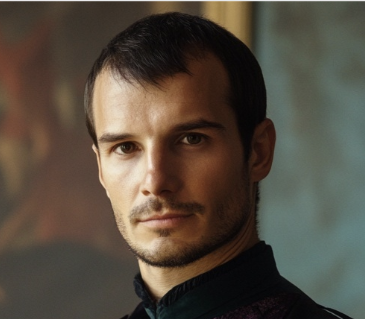
When evening comes, I return home and enter my study; on the threshold I take off my workday clothes, covered with mud and dirt, and put on the garments of court and palace. Fitted out appropriately, I step inside the venerable courts of the ancients, where, solicitously received by them, I nourish myself on that food that alone is mine and for which I was born; where I am unashamed to converse with them and to question them about the motives for their actions, and they, out of their human kindness, answer me. And for four hours at a time I feel no boredom, I forget all my troubles, I do not dread poverty, and I am not terrified by death. I absorb myself into them completely.
▼
Source
source
Letter to Francesco Vettori (10 December 1513), as translated by James Atkinson, in Prince Machiavelli (1976), p. 19

4 months 6 days ago
Where without any change in circumstances the things held to be just by law are seen not to correspond with the concept of justice in actual practice, such laws are not really just; but wherever the laws have ceased to be advantageous because of a change in circumstances, in that case the laws were for that time just when they were advantageous for the mutual dealings of the citizens, and subsequently ceased to be just when they were no longer advantageous.
1 month 2 weeks ago
Driving is a spectacular form of amnesia. Everything is to be discovered, everything to be obliterated. Admittedly, there is the primal shock of the deserts and the dazzle of California, but when this is gone, the secondary brilliance of the journey begins, that of the excessive, pitiless distance, the infinity of anonymous faces and distances, or of certain miraculous geological formations, which ultimately testify to no human will, while keeping intact an image of upheaval. This form of travel admits of no exceptions: when it runs up against a known face, a familiar landscape, or some decipherable message, the spell is broken: the amnesic, ascetic, asymptotic charm of disappearance succumbs to affect and worldly semiology.
▼
Source
source
Vanishing Point (pp. 9-10)
1 month 3 weeks ago
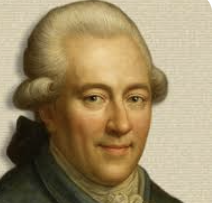
With prophecies the commentator is often a more important man than the prophet.
▼
Source
source
H 23
2 months 3 weeks ago
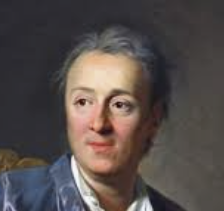
In any country where talent and virtue produce no advancement, money will be the national god. Its inhabitants will either have to possess money or make others believe that they do. Wealth will be the highest virtue, poverty the greatest vice. Those who have money will display it in every imaginable way. If their ostentation does not exceed their fortune, all will be well. But if their ostentation does exceed their fortune they will ruin themselves. In such a country, the greatest fortunes will vanish in the twinkling of an eye. Those who don't have money will ruin themselves with vain efforts to conceal their poverty. That is one kind of affluence: the outward sign of wealth for a small number, the mask of poverty for the majority, and a source of corruption for all.

3 months 2 weeks ago
'Our kingdom go' is the necessary and unavoidable corollary of 'Thy kingdom come.' For the more there is of self, the less there is of God.
▼
Source
source
Chapter VI - Mortification, Non-Attachment, Right Livelihood

2 months 1 week ago
They that be whole need not a physician, but they that are sick. But go ye and learn what that meaneth, I will have mercy, and not sacrifice: for I am not come to call the righteous, but sinners to repentance.
▼
Source
source
9:12-13 (KJV)

1 month 4 weeks ago
When I'm bored, my sense of values goes to sleep. But it's not dead, only asleep. A crisis can wake it up and make the world seem infinitely important and interesting. But what I need to learn is the trick of shaking them awake myself . . . And incidentally, another name for the sense of values is intelligence. A stupid person is a person whose values are narrow.
▼
Source
source
p. 57



3 months 2 weeks ago
If you want to deserve Hell, you need only stay in bed. The world is iniquity; if you accept it, you are an accomplice, if you change it you are an executioner.
▼
Source
source
Act 3, sc. 6
2 months 1 week ago
Wherefore think ye evil in your hearts? For whether is easier, to say, Thy sins be forgiven thee; or to say, Arise, and walk? But that ye may know that the Son of man hath power on earth to forgive sins, (then saith he to the sick of the palsy,) Arise, take up thy bed, and go unto thine house.
▼
Source
source
9:4-6 (KJV) Said to some scribes.
2 months 2 weeks ago
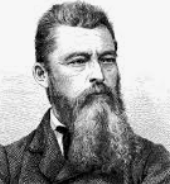
Speculative philosophy as the realisation of God is the positing of God, and at the same time his cancellation or negation; theism and at the same time atheism: for God - in the sense of theology - is God only as long as he is taken to be a being distinguished from and independent of the being of man as well as of nature. The theism that as the positing of God is simultaneously his negation or, conversely, as the negation of God equally his affirmation, is pantheism. Theological theism - that is, theism properly speaking - is nothing other than imaginary pantheism which itself is nothing other than real and true theism.
▼
Source
source
Part I, Section 14
2 months 1 week ago
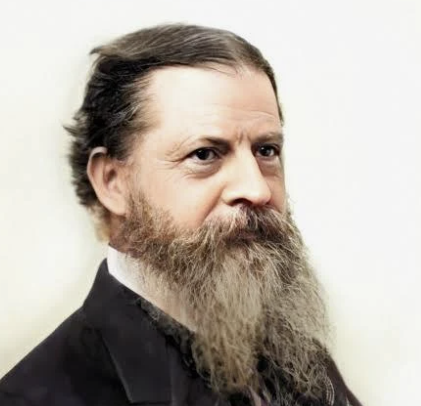
In the case of colors, there is a tridimensional spread of feelings. Originally all feelings may have been connected in the same way, and the presumption is that the number of dimensions was endless. For development essentially involves a limitation of possibilities. But given a number of dimensions of feeling, all possible varieties are obtainable by varying the intensities of the different elements.

3 months 2 weeks ago
In wildness is the preservation of the world. Every tree sends its fibers forth in search of the Wild. The city imports it at any price. Men plow and sail for it. From the forest and wilderness come the tonics and barks which brace mankind.
1 month 1 week ago
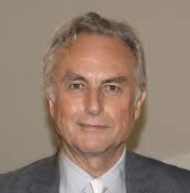
Just because science so far has failed to explain something, such as consciousness, to say it follows that the facile, pathetic explanations which religion has produced somehow by default must win the argument is really quite ridiculous.
▼
Source
source
Steve Paulson, "The flying spaghetti monster" Salon.com
1 month 4 weeks ago
The real importance of Swedenborg lies in the doctrines he taught, which are the reverse of the gloom and hell-fire of other breakaway sects. He rejects the notion that Jesus died on the cross to atone for the sin of Adam, declaring that God is neither vindictive nor petty-minded, and that since he is God, he doesn't need atonement. It is remarkable that this common-sense view had never struck earlier theologians. God is Divine Goodness, and Jesus is Divine Wisdom, and Goodness has to be approached through Wisdom. Whatever one thinks about the extraordinary claims of its founder, it must be acknowledged that there is something very beautiful and healthy about the Swedenborgian religion. Its founder may have not been a great occultist, but he was a great man.
▼
Source
source
p. 280
3 months 2 weeks ago
Truth never turns to rebuke falsehood; her own straightforwardness is the severest correction.
▼
Source
source
Pearls of Thought (1881) p. 264

1 month 2 weeks ago
Seize the moments of happiness, love and be loved! That is the only reality in the world, all else is folly. It is the one thing we are interested in here.
▼
Source
source
Book IV, Ch. 11

1 day ago
Drunkenness is nothing but voluntary madness.
▼
Source
source
Line 18.
1 month 1 week ago
When a man is in a fair way and sees all life open in front of him, he seems to himself to make a very important figure in the world. His horse whinnies to him; the trumpets blow and the girls look out of window as he rides into town before his company; he receives many assurances of trust and regard--sometimes by express in a letter--sometimes face to face, with persons of great consequence falling on his neck. It is not wonderful if his head is turned for a time. But once he is dead, were he as brave as Hercules or as wise as Solomon, he is soon forgotten.
▼
Source
source
The Sire de Maletroit's Door.
3 months 1 week ago
Do not ask who I am and do not ask me to remain the same: leave it to our bureaucrats and our police to see that our papers are in order. At least spare us their morality when we write.
▼
Source
source
The Archaeology of Knowledge (1972), tr. A. M. Sheridan Smith (New York: Pantheon)

3 months 2 weeks ago
Each man is a hero and an oracle to somebody.
▼
Source
source
Quotation and Originality

2 months 3 weeks ago
This reasonable moderator, and equal piece of justice, Death.
▼
Source
source
Section 38
3 months 3 weeks ago
Good sense is, of all things among men, the most equally distributed; for every one thinks himself so abundantly provided with it, that those even who are the most difficult to satisfy in everything else, do not usually desire a larger measure of this quality than they already possess.

3 months 1 week ago
Anytime two human beings find genuine pleasure, joy, and love, the stars smile and the universe is enriched. Yet as long as that pleasure, joy, and love is still predicated on myths of black sexuality, the more fundamental challenge of humane interaction remains unmet.
▼
Source
source
(p85)
2 months 2 weeks ago
The plebeian must expect to find himself neglected and despised in proportion as he is remiss in cultivation the objects of esteem; the lord will always be surrounded with sycophants and slaves. The lord therefore has no motive to industry and exertion; no stimulus to rouse him from the lethargic 'oblivious pool', out of which every human intellect originally arose.
▼
Source
source
Book V, Chapter 10, "Of Hereditary Distinction"
1 month 2 weeks ago
We will never know if an advertisement or opinion poll has had a real influence on individual or collective wills, but we will never know either what would have happened if there had been no opinion poll or advertisement.
2 days ago
If historical experience could teach us anything, it would be that private property is inextricably linked with civilization.
▼
Source
source
Chapter XV. The Market, § 4 The Scope and Method of Catallactics
2 months 2 weeks ago
In the first place, the German is a branch of the Teutonic race. Of the latter it is sufficient to say here that its mission was to combine the social order established in ancient Europe with the true religion preserved in ancient Asia, and in this way to develop in and by itself a new and different age after the ancient world had perished.
▼
Source
source
The Chief Difference Between The Germans And The Other Peoples Of Teutonic Descent.
1 month 1 week ago
[W]hen the ricochets of atomic billiards chance to put together an object that has a certain, seemingly innocent property, something momentous happens in the universe. That property is an ability to self-replicate; that is, the object is able to use the surrounding materials to make exact copies of itself, including replicas of such minor flaws in copying as may occasionally arise. What will follow from this singular occurrence, anywhere in the universe, is Darwinian selection and hence the baroque extravaganza that, on this planet, we call life. Never were so many facts explained by so few assumptions. Not only does the Darwinian theory command superabundant power to explain. Its economy in doing so has a sinewy elegance, a poetic beauty that outclasses even the most haunting of the world's origin myths. Preface
1 month 2 days ago
The student of development finds, not only that the chick commences its existence as an egg, primarily identical, in all essential respects, with that of the Dog, but that the yelk of this egg undergoes division-that the primitive groove arises, and that the contiguous parts of the germ are fashioned, by precisely similar methods into a young chick, which, at one stage of its existence, is so like the nascent Dog, that ordinary inspection would hardly distinguish the two.
▼
Source
source
The history of the development of any other vertebrate animal, Lizard, Snake, Frog, or Fish, tells the same story. Ch.2, p. 79

3 months 2 weeks ago
A young man who wishes to remain a sound Atheist cannot be too careful of his reading. There are traps everywhere... God is, if I may say it, very unscrupulous.
▼
Source
source
p. 191
4 months 2 weeks ago
Parmenides: Whatever the subject of your hypothesis, if you suppose that it is or is not, or that it experiences any other affection, you must consider what happens to it and to any other particular things you may choose, and to a greater number and to all in the same way; and you must consider other things in relation to themselves and to anything else you may choose in any instance, whether you suppose that the subject of your hypothesis exists or does not exist, if you are to train yourself completely to see the truth perfectly.

3 months 2 weeks ago
The love of power is a part of human nature, but power-philosophies are, in a certain precise sense, insane. The existence of the external world, both that of matter and of other human beings, is a datum, which may be humiliating to a certain kind of pride, but can only be denied by a madman. Men who allow their love of power to give them a distorted view of the world are to be found in every asylum: one man will think he is Governor of the Bank of England, another will think he is the King, and yet another will think he is God. Highly similar delusions, if expressed by educated men in obscure language, lead to professorships in philosophy; and if expressed by emotional men in eloquent language, lead to dictatorships. Certified lunatics are shut up because of the proneness to violence when their pretensions are questioned; the uncertified variety are given control of powerful armies, and can inflict death and disaster upon all sane men within their reach.
▼
Source
source
Ch. 16: Power philosophies

4 months 2 weeks ago
We can hope that the ways of peace will attract the Arabic nations, for their territory and opportunities are broad enough for immeasurable advance, if the energies vented in spleen, are turned instead to a modernisation of the technology, a restoration of the soil, and a renovation of the economic, social, and political structure of those great and venerable lands.
3 months 2 weeks ago
I wiped away the weeds and foam, And fetched my sea-born treasures home; But the poor, unsightly, noisome things Had left their beauty on the shore With the sun, and the sand, and the wild uproar.
▼
Source
source
Each and All, st. 3

2 months 1 week ago
The apparatus defeats its own purpose if its purpose is to create a humane existence on the basis of a humanized nature.
▼
Source
source
pp. 145-146

2 months 3 weeks ago
Despotism may govern without faith, but liberty cannot. How is it possible that society should escape destruction if the moral tie is not strengthened in proportion as the political tie is relaxed? And what can be done with a people who are their own masters if they are not submissive to the Deity?
▼
Source
source
Chapter XVII.
3 months 2 weeks ago
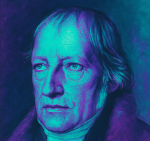
The external embodiment of an act is composed of many parts, and may be regarded as capable of being divided into an infinite number of particulars. An act may be looked on as in the first instance coming into contact with only one of these particulars. But the truth of the particular is the universal. A definite act is not confined in its content to one isolated point of the varied external world, but is universal, including these varied relations within itself. The purpose, which is the product of thought and embraces not the particular only but also the universal side, is intention.
▼
Source
source
Georg Wilhelm Friedrich Hegel, Philosophy of Right translated by SW Dyde Queen's University Canada 1896 p. 114-115

2 months 1 week ago
A heart without music is like beauty without melancholy.
2 months 1 week ago
Blessed are the poor in spirit, for theirs is the kingdom of heaven. Blessed are those who mourn, for they will be comforted. Blessed are the meek, for they will inherit the earth. Blessed are those who hunger and thirst for righteousness, for they will be filled. Blessed are the merciful, for they will be shown mercy. Blessed are the pure in heart, for they will see God. Blessed are the peacemakers, for they will be called sons of God. Blessed are those who are persecuted because of righteousness, for theirs is the kingdom of heaven. Blessed are you when people insult you, persecute you and falsely say all kinds of evil against you because of me. Rejoice and be glad, because great is your reward in heaven, for in the same way they persecuted the prophets who were before you.
▼
Source
source
5:1 12 (NIV) Often referred to as "The Beatitudes" this is the start of "The Sermon on the Mount".
2 months 1 week ago
In that very hour he became overjoyed in the holy spirit and said: “I publicly praise you, Father, Lord of heaven and earth, because you have carefully hidden these things from wise and intellectual ones and have revealed them to young children. Yes, O Father, because this is the way you approved.
▼
Source
source
Luke 10:21, New World Translation of the Holy Scriptures
1 month 2 weeks ago
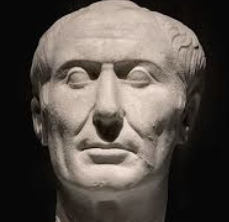
Amid a multitude of projects, no plan is devised.
▼
Source
source
Maxim 319

3 months ago
As touching the gods, I do not know whether they exist or not, nor how they are featured; for there is much to prevent our knowing: the obscurity of the subject and the brevity of human life.
▼
Source
source
Opening lines of Concerning the Gods (DK 80 B4).
4 months 2 days ago
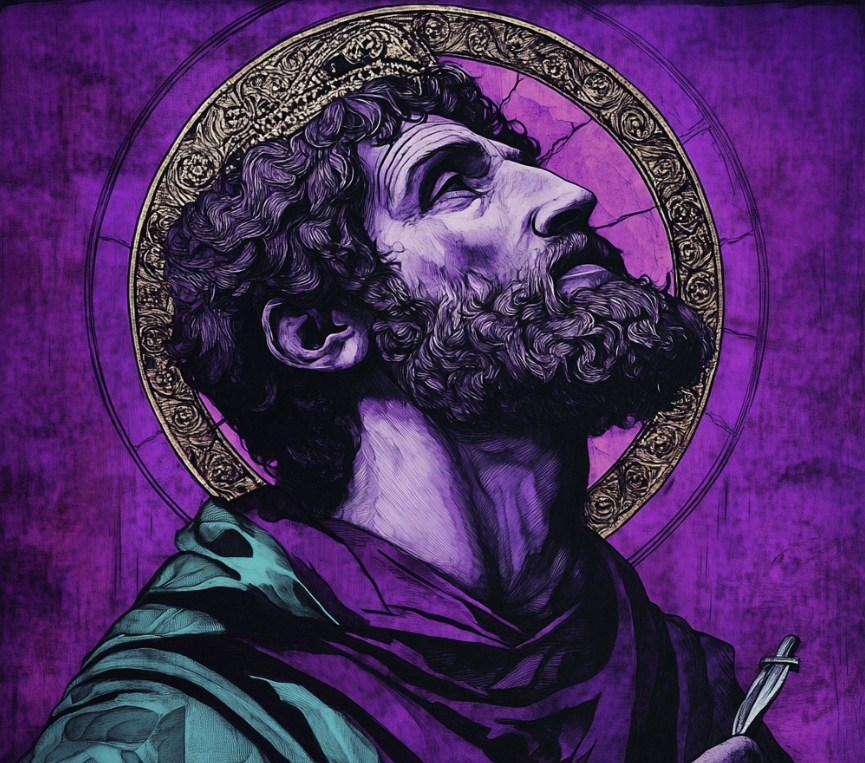
We make a ladder of our vices, if we trample those same vices underfoot.
▼
Source
source
3
2 months 1 week ago
We are born to exist, not to know, to be, not to assert ourselves.
3 months 1 week ago
The domination of the public way in which things have been interpreted has already decided upon even the possibilities of being attuned, that is, about the basic way in which Da-sein lets itself be affected by the world. The they prescribes that attunement, it determines what and how one "sees."
▼
Source
source
Stambaugh translation
1 month 4 weeks ago
That passivity was the essence of the problem. The human being was intended to be passive only in a condition of fatigue, and not always then. Too much passivity of body produced surplus fat, short-windedness, indigestion: passivity of mind produced the same symptoms on the mental level. a feeling of spiritual dyspepsia. Since the average human being has no purposes that are not connected with the activities of keeping alive, the black room was bound to produce passivity, increasing dullness, a state in which the mind is at once awake and static, motionless, stagnant. This sense of dullness was nothing less than the collapse of the sense of reality and of values, the retreat into one's inner world.
▼
Source
source
p. 72
3 months 2 weeks ago
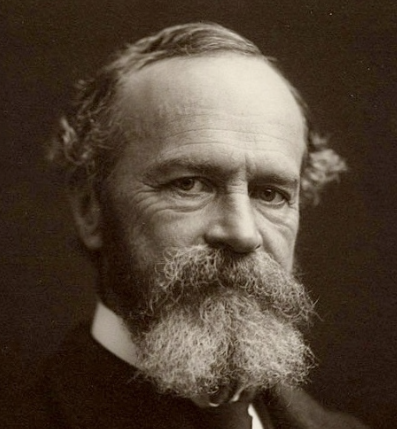
I saw a moving sight the other morning before breakfast in a little hotel where I slept in the dusty fields. The young man of the house shot a little wolf called coyote in the early morning. The little heroic animal lay on the ground, with his big furry ears, and his clean white teeth, and his little cheerful body, but his little brave life was gone. It made me think how brave all living things are. Here little coyote was, without any clothes or house or books or anything, with nothing to pay his way with, and risking his life so cheerfully - and losing it - just to see if he could pick up a meal near the hotel. He was doing his coyote-business like a hero, and you must do your boy-business, and I my man-business bravely, too, or else we won't be worth as much as a little coyote.
▼
Source
source
28-Aug-89
CivilSimian.com created by AxiomaticPanic, CivilSimian, Kalokagathia