


3 months 3 weeks ago
My philosophical views approach somewhat closely those of the late Countess of Conway, and hold a middle position between Plato and Democritus, because I hold that all things take place mechanically as Democritus and Descartes contend against the views of Henry More and his followers, and hold too, nevertheless, that everything takes place according to a living principle and according to final causes - all things are full of life and consciousness, contrary to the views of the Atomists.
▼
Source
source
Letter to Thomas Burnet (1697), as quoted in Platonism, Aristotelianism and Cabalism in the Philosophy of Leibniz (1938) by Joseph Politella, p. 18

3 months 3 weeks ago
So blind is the curiosity by which mortals are possessed, that they often conduct their minds along unexplored routes, having no reason to hope for success, but merely being willing to risk the experiment of finding whether the truth they seek lies there.
▼
Source
source
Rules for the Direction of the Mind: IV
2 months 3 weeks ago
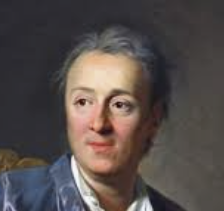
There is not a Musselman alive who would not imagine that he was performing an action pleasing to God and his Holy Prophet by exterminating every Christian on earth, while the Christians are scarcely more tolerant on their side.

3 weeks 3 days ago
For those who live inside a myth, it seems a self-evident fact. Human progress is a fact of this kind. If you accept it you have a place in the grand march of humanity. Humankind is, of course, not marching anywhere. 'Humanity' is a fiction composed from billions of individuals for each of whom life is singular and final. But the myth of progress is extremely potent. When it loses its power those who have lived by it are - as Conrad put it, describing Kayerts and Carlier - 'like those lifelong prisoners who, liberated after many years, do not know what use to make of their freedoms'. When faith in the future is taken from them, so is the image they have of themselves. If they then opt for death, it is because without that faith they can no longer make sense of living.
▼
Source
source
An Old Chaos: The Call of Progress (pp. 6-7)

3 months 3 weeks ago
It cannot be that axioms established by argumentation should avail for the discovery of new works, since the subtlety of nature is greater many times over than the subtlety of argument. But axioms duly and orderly formed from particulars easily discover the way to new particulars, and thus render sciences active.
▼
Source
source
Aphorism 24

3 months 2 weeks ago
The only thing that will redeem mankind is co-operation, and the first step towards co-operation lies in the hearts of individuals.
▼
Source
source
p. 212

3 months 3 weeks ago
Does a man of sense run after every silly tale of hobgoblins or fairies, and canvass particularly the evidence? I never knew anyone, that examined and deliberated about nonsense who did not believe it before the end of his enquiries.
▼
Source
source
Letters
3 months 1 week ago
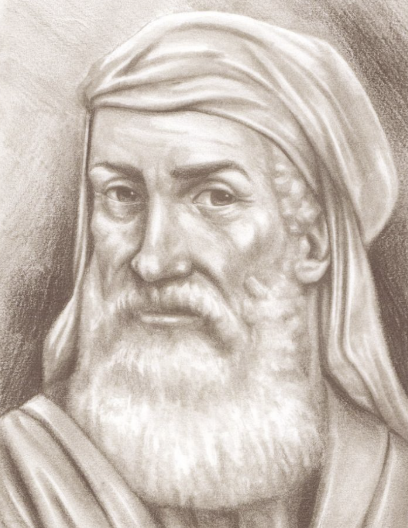
What needs saying is worth saying twice.
▼
Source
source
fr. 25

3 months 2 weeks ago
It is a bad thing to perform menial duties even for the sake of freedom; to fight with pinpricks, instead of with clubs. I have become tired of hypocrisy, stupidity, gross arbitrariness, and of our bowing and scraping, dodging, and hair-splitting over words. Consequently, the government has given me back my freedom.
▼
Source
source
Letter from Marx to Arnold Ruge (25 January 1843)

2 months 1 week ago
When there were gathered together an innumerable multitude of people, insomuch that they trode one upon another, he began to say unto his disciples first of all, Beware ye of the leaven of the Pharisees, which is hypocrisy. For there is nothing covered, that shall not be revealed; neither hid, that shall not be known. Therefore whatsoever ye have spoken in darkness shall be heard in the light; and that which ye have spoken in the ear in closets shall be proclaimed upon the housetops. And I say unto you my friends, Be not afraid of them that kill the body, and after that have no more that they can do. But I will forewarn you whom ye shall fear: Fear him, which after he hath killed hath power to cast into hell; yea, I say unto you, Fear him.
▼
Source
source
12:1-5

2 months ago
It is the private dominion over things that condemns millions of people to be mere nonentities, living corpses without originality or power of initiative, human machines of flesh and blood, who pile up mountains of wealth for others and pay for it with a gray, dull and wretched existence for themselves. I believe that there can be no real wealth, social wealth, so long as it rests on human lives - young lives, old lives and lives in the making.

3 months 2 weeks ago
The Theophilanthropists believe in the existence of God, and the immortality of the soul.
▼
Source
source
Introduction
1 month 1 week ago
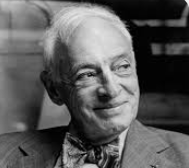
Writers, poets, painters, musicians, philosophers, political thinkers, to name only a few of the categories affected, must woo their readers, viewers, listeners, from distraction. To this we must add, for simple realism demands it, that these same writers, painters, etc., are themselves the children of distraction. As such, they are peculiarly qualified to approach the distracted multitudes. They will have experienced the seductions as well as the destructiveness of the forces we have been considering here. This is the destructive element in which we do not need to be summoned to immerse ourselves, for we were born to it.
▼
Source
source
The Distracted Public (1990), p. 167
1 month 3 weeks ago
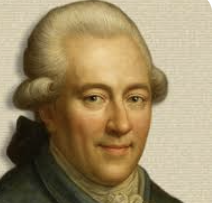
Here take back the stuff that I am, nature, knead it back into the dough of being, make of me a bush, a cloud, whatever you will, even a man, only no longer make me me.
▼
Source
source
B 37 "Speech of a suicide composed shortly before the act."

2 months 1 week ago
I do nothing, granted. But I see the hours pass - which is better than trying to fill them.
3 months 2 weeks ago
The scientific attitude of mind involves a sweeping away of all other desires in the interests of the desire to know-it involves suppression of hopes and fears, loves and hates, and the whole subjective emotional life, until we become subdued to the material, able to see it frankly, without preconceptions, without bias, without any wish except to see it as it is, and without any belief that what it is must be determined by some relation, positive or negative, to what we should like it to be, or to what we can easily imagine it to be.

4 months 2 weeks ago
Of all the books I have ever worked on, I think Asimov's Guide to Shakespeare gave me the most pleasure, day in, day out. For months and months I lived and thought Shakespeare, and I don't see how there can be any greater pleasure in the world, any pleasure, that is, that one can indulge in for as much as ten hours without pause, day after day indefinitely.
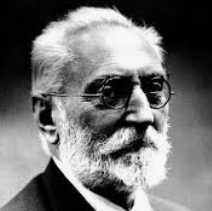
2 months 4 days ago
There are pretenses which are very sincere, and marriage is their school.
▼
Source
source
Tres novelas ejemplares y un prólogo [Three Exemplary Novels and a Prologue] (1920); Two Mothers
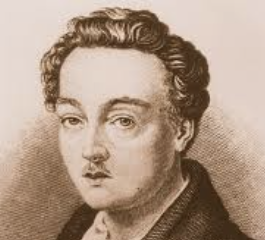
2 months 2 weeks ago
The revolutionary government is the despotism of liberty against tyranny.
▼
Source
source
Act I.
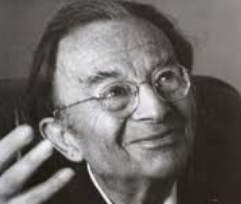
1 month 4 weeks ago
Man's life cannot "be lived" by repeating the pattern of his species; he must live. Man is the only animal that can be bored, that can be discontented, that can feel evicted from paradise. Man is the only animal for whom his own existence is a problem which he has to solve and from which he cannot escape. He cannot go back to the prehuman state of harmony with nature; he must proceed to develop his reason until he becomes the master of nature, and of himself.
▼
Source
source
Ch. 3 "Human Nature and Character

3 months 2 weeks ago
I wish to suggest that a man may be very industrious, and yet not spend his time well. There is no more fatal blunderer than he who consumes the greater part of his life getting his living. All great enterprises are self-supporting. The poet, for instance, must sustain his body by his poetry, as a steam planing-mill feeds its boilers with the shavings it makes. You must get your living by loving.
▼
Source
source
pp. 486-7
2 months 1 week ago
Be of good courage, and if you are discouraged, still take courage over against the various forms of nature. He who has ears to hear, let him hear.
▼
Source
source
Chapter 4.
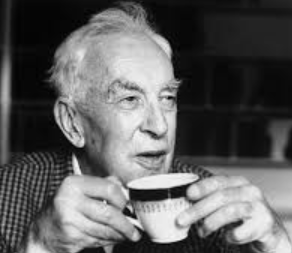
1 month ago
As human beings, we are endowed with this freedom of choice, and we cannot shuffle off our responsibility upon the shoulders of God or nature. We must shoulder it ourselves. It is up to us.
▼
Source
source
Ch. 3: Does History Repeat Itself?

2 months ago
As a way of maintaining relative intellectual independence, having the attitude of an amateur instead of a professional is a better course.
▼
Source
source
p. 87
3 months 2 weeks ago
Who could believe in prophecies of Daniel or of Miller that the world would end this summer, while one milkweed with faith matured its seeds?
3 months 2 weeks ago
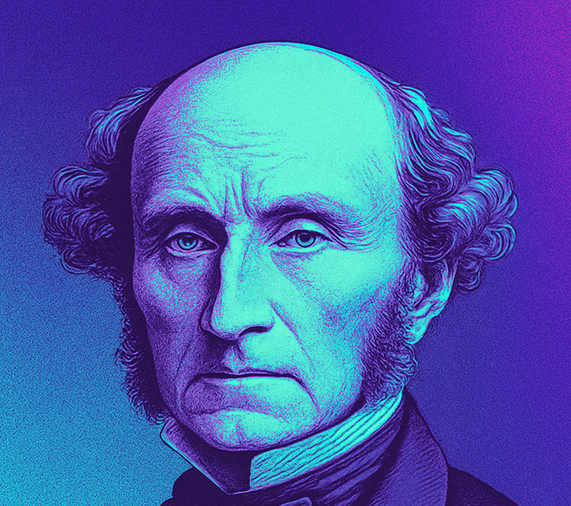
It is evident that this, among many other of the purposes of my father's scheme of education, could not have been accomplished if he had not carefully kept me from having any great amount of intercourse with other boys. He was earnestly bent upon my escaping not only the ordinary corrupting influence which boys exercise over boys, but the contagion of vulgar modes of thought and feeling; and for this he was willing that I should pay the price of inferiority in the accomplishments which schoolboys in all countries chiefly cultivate. The deficiencies in my education were principally in the things which boys learn from being turned out to shift for themselves, and from being brought together in large numbers.
▼
Source
source
(p. 35)
1 month 2 weeks ago
To dissimulate is to pretend not to have what one has. To simulate is to feign to have what one doesn't have. One implies a presence, the other an absence. But it is more complicated than that because simulating is not pretending: "Whoever fakes an illness can simply stay in bed and make everyone believe he is ill. Whoever simulates an illness produces in himself some of the symptoms" (Littré). Therefore, pretending, or dissimulating, leaves the principle of reality intact: the difference is always clear, it is simply masked, whereas simulation threatens the difference between the "true" and the "false," the "real" and the "imaginary."
▼
Source
source
"The Precession of Simulacra," p. 3

2 months 1 day ago
As a black woman interested in feminist movement, I am often asked whether being black is more important than being a woman; whether feminist struggle to end sexist oppression is more important than the struggle to racism or vice versa. All such questions are rooted in competitive either/or thinking, the belief that the self is formed in opposition to an other. ... Most people are socialized to think in terms of opposition rather than compatibility. Rather than seeing anti-racist work as totally compatible with working to end sexist oppression, they often see them as two movements competing for first place.

1 month 2 weeks ago
But one no longer wonders when one realizes that in the higher classes there is an unerring instinct of what tends to maintain and of what tends to destroy the organization by virtue of which they enjoy their privileges. The fashionable lady had certainly not reasoned out that if there were no capitalists and no army to defend them, her husband would have no fortune, and she could not have her entertainments and her ball-dresses. And the artist certainly does not argue that he needs the capitalists and the troops to defend them, so that they may buy his pictures. But instinct, replacing reason in this instance, guides them unerringly. And it is precisely this instinct which leads all men, with few exceptions, to support all the religious, political, and economic institutions which are to their advantage.
▼
Source
source
Chapter XII, Conclusion-Repent Ye, for the Kingdom of Heaven is at Hand

3 months 1 week ago
The friendship of one wise man is better than the friendship of a host of fools.
1 month 2 weeks ago
The judge is condemned when the guilty is absolved.
▼
Source
source
Maxim 407 Adopted by the original Edinburgh Review magazine as its motto.
3 months 1 week ago
Let hopes and sorrows, fears and angers be, and think each day that dawns the last you'll see; For so the hour that greets you unforeseen, will bring with it enjoyment twice as keen.
▼
Source
source
Book I, epistle iv, line 12 (translated by John Conington)
2 months 1 week ago
Maybe suffering has no more justification than life.

2 days ago
Who profits by a sin has done the sin.
2 months 2 weeks ago
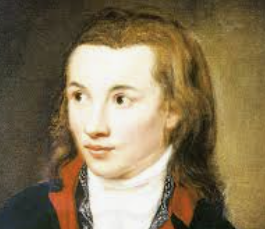
I was still blind, but twinkling stars did dance Throughout my being's limitless expanse, Nothing had yet drawn close, only at distant stages I found myself, a mere suggestion sensed in past and future ages.
▼
Source
source
As quoted in Romantic Vision, Ethical Context: Novalis and Artistic Autonomy (1987) by Géza von Molnár, p. 2

2 months 2 weeks ago
The universal basis of co-operation is the proportioning of benefits received to services rendered.
▼
Source
source
Ch. 8, The Sociological View
3 months 2 weeks ago
The law of causality, I believe, like much that passes muster among philosophers, is a relic of a bygone age, surviving, like the monarchy, only because it is erroneously supposed to do no harm.
▼
Source
source
Ch. 9: On the Notion of Cause

1 month 2 weeks ago
Environment is process, not container.
▼
Source
source
(p. 30)

2 months 1 week ago
A gifted humanity can only produce skeptics, never saints.
1 month 1 week ago
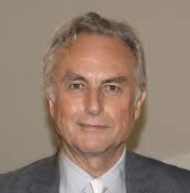
The successful scientist and the raving crank are separated by the quality of their inspirations. But I suspect that this amounts, in practice, to a difference, not so much in ability to notice analogies as in ability to reject foolish analogies and pursue helpful ones.
▼
Source
source
Chapter 8 "Explosions and Spirals" (pp. 195-196)

2 months 4 weeks ago
When a reasonable Soul forsaketh his divine nature, and becometh beast-like, it dieth. For though the substance of the Soul be incorruptible: yet, lacking the use of Reason, it is reputed dead; for it loseth the Intellective Life.

4 months 5 days ago
The highest manifestation of life consists in this: that a being governs its own actions. A being that is always subject to the direction of another is somewhat of a dead thing. Variant translation: Now slavery has a certain likeness to death, hence it is also called civil death. For life is most evident in a thing's moving itself, while what can only be moved by another, seems to be as if dead. But it is manifest that a slave is not moved by himself, but only at his master's command.
▼
Source
source
Chapter 14

2 months 2 weeks ago
Deny them this participation of freedom, and you break that sole bond, which originally made, and must still preserve the unity of the empire.
4 months 2 weeks ago
For it is the chief characteristic of the religion of science, that it works, and that such curses as that of Aporat's are really deadly.
1 month 2 weeks ago
By electricity we have not been driven out of our senses so much as our senses have been driven out of us.
▼
Source
source
(p. 375)

1 week 1 day ago
To me, in these circumstances, that of "Hero-worship" becomes a fact inexpressibly precious; the most solacing fact one sees in the world at present. There is an everlasting hope in it for the management of the world. Had all traditions, arrangements, creeds, societies that men ever instituted, sunk away, this would remain. The certainty of Heroes being sent us; our faculty, our necessity, to reverence Heroes when sent: it shines like a polestar through smoke-clouds, dust-clouds, and all manner of down-rushing and conflagration.

3 months 3 weeks ago
The greatest improvement in the productive powers of labour, and the greatest part of skill, dexterity, and judgment with which it is any where directed, or applied, seem to have been the effects of the division of labour.
▼
Source
source
Chapter I, p. 7
2 months 2 weeks ago
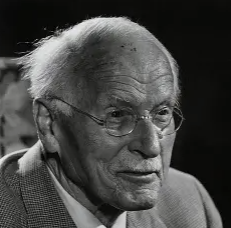
The conscious side of woman corresponds to the emotional side of man, not to his "mind." Mind makes up the soul, or better, the "animus" of woman, and just as the anima of a man consists of inferior relatedness, full of affect, so the animus of woman consists of inferior judgments, or better, opinions.
▼
Source
source
The Secret of the Golden Flower (1931) Commentary by C.G.Jung in CW 13: Alchemical Studies. P. 60

3 months 2 weeks ago
Power and violence are opposites; where the one rules absolutely, the other is absent. Violence appears where power is in jeopardy, but left to its own course it ends in power's disappearance.
▼
Source
source
"On Violence"
CivilSimian.com created by AxiomaticPanic, CivilSimian, Kalokagathia