


2 months 3 weeks ago
I know of no country, indeed, where the love of money has taken stronger hold on the affections of men, and where the profounder contempt is expressed for the theory of the permanent equality of property.
▼
Source
source
Chapter III, Part I.


2 months 2 weeks ago
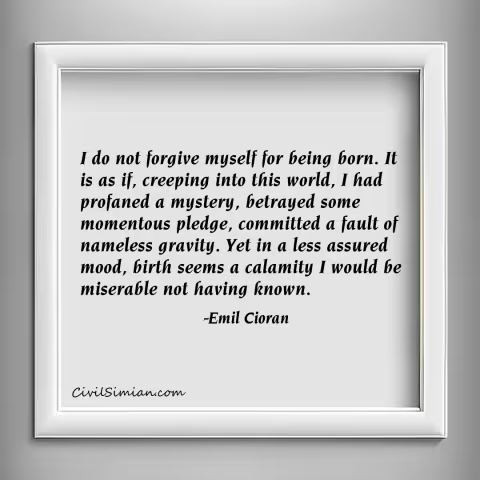
All became so jealous of the rights of their own personality that they did their very utmost to curtail and destroy them in others, and made that the chief thing in their lives. Slavery followed, even voluntary slavery; the weak eagerly submitted to the strong, on condition that the latter aided them to subdue the still weaker. Then there were saints who came to these people, weeping, and talked to them of their pride, of their loss of harmony and due proportion, of their loss of shame. They were laughed at or pelted with stones.
2 months 2 weeks ago
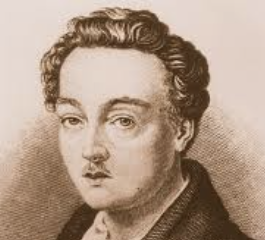
I'll know how to die with courage; that is easier than living.
▼
Source
source
Act II.

3 months 3 weeks ago
But bounty and hospitality very seldom lead to extravagance; though vanity almost always does.
▼
Source
source
Chapter III, Part V, p. 987.
4 months 1 week ago
Greater fates gain greater rewards.
3 months 3 weeks ago
It is unjust that the whole of society should contribute towards an expence of which the benefit is confined to a part of the society.
▼
Source
source
Chapter I, Part IV, Conclusion, p. 881.

3 months 2 weeks ago
There is one very serious defect to my mind in Christ's moral character, and that is that He believed in hell. I do not myself feel that any person who is really profoundly humane can believe in everlasting punishment.
▼
Source
source
"The Moral Problem"

2 weeks ago
Human nature is evil, and goodness is caused by intentional activity.
▼
Source
source
Quoted in: Fayek S. Hourani (2012) Daily Bread for Your Mind and Soul, p. 336

1 month 1 week ago
We should be clear that neither genuine religious nor genuine moral impulses will ever be expressed in terms that tie the two essentially together. If you view religion as necessary for ethics, you've reduced us to the ethical level of 4 year olds. "If you follow these commandments you'll go to heaven, if you don't' you'll burn in hell" is just a spectacular version of the carrots and sticks with which you raise your children.

2 months 3 days ago
We can know only one thing about God - that he is what we are not. Our wretchedness alone is an image of this. The more we contemplate it, the more we contemplate him.
▼
Source
source
p. 216

3 months 2 weeks ago
The study a posteriori of the distribution of consciousness shows it to be exactly such as we might expect in an organ added for the sake of steering a nervous system grown too complex to regulate itself.
▼
Source
source
Ch. 5

2 months 1 week ago
As one advances in life, one realises more and more that the majority of men - and of women - are incapable of any other effort than that strictly imposed on them as a reaction to external compulsion. And for that reason, the few individuals we have come across who are capable of a spontaneous and joyous effort stand out isolated, monumentalised, so to speak, in our experience. These are the select men, the nobles, the only ones who are active and not merely reactive, for whom life is a perpetual striving, an incessant course of training. Training = askesis. These are the ascetics.
▼
Source
source
Chap. VII: Noble Life And Common Life, Or Effort And Inertia

1 month 3 days ago
I really have no claim to rank myself among fatalistic, materialistic, or atheistic philosophers. Not among fatalists, for I take the conception of necessity to have a logical, and not a physical foundation; not among materialists, for I am utterly incapable of conceiving the existence of matter if there is no mind in which to picture that existence; not among atheists, for the problem of the ultimate cause of existence is one which seems to me to be hopelessly out of reach of my poor powers. Of all the senseless babble I have ever had occasion to read, the demonstrations of these philosophers who undertake to tell us all about the nature of God would be the worst, if they were not surpassed by the still greater absurdities of the philosophers who try to prove that there is no God.

3 months 3 weeks ago
Live as long as you please, you will strike nothing off the time you will have to spend dead.
▼
Source
source
Ch. 20. Of the Force of Imagination

1 week 1 day ago
The inventive genius of great England will not forever sit patient with mere wheels and pinions, bobbins, straps and billy-rollers whirring in the head of it. The inventive genius of England is not a Beaver's, or a Spinner's or Spider's genius: it is a Man's genius, I hope, with a God over him!

3 months 2 weeks ago
We live together, we act on, and react to, one another; but always and in all circumstances we are by ourselves. The martyrs go hand in hand into the arena; they are crucified alone. Embraced, the lovers desperately try to fuse their insulated ecstacies into a single self-transcendence; in vain. By its very nature every embodied spirit is doomed to suffer and enjoy in solitude.
▼
Source
source
Page 159
2 days ago
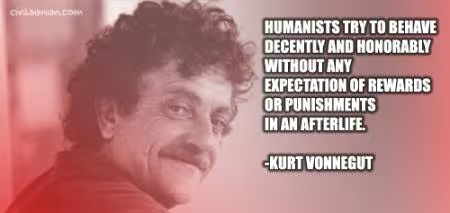
If you have been given a talent, exercise it freely and happily like the sun: give everyone from your splendour.

2 months 1 week ago
Suppose ye that I am come to give peace on earth? I tell you, Nay; but rather division: For from henceforth there shall be five in one house divided, three against two, and two against three. The father shall be divided against the son, and the son against the father; the mother against the daughter, and the daughter against the mother; the mother in law against her daughter in law, and the daughter in law against her mother in law. And he said also to the people, When ye see a cloud rise out of the west, straightway ye say, There cometh a shower; and so it is. And when ye see the south wind blow, ye say, There will be heat; and it cometh to pass. Ye hypocrites, ye can discern the face of the sky and of the earth; but how is it that ye do not discern this time? Yea, and why even of yourselves judge ye not what is right?
▼
Source
source
12:51-57 (KJV) Variant translation of 12:57: Why do you not judge for yourselves what is right?
3 months 1 week ago
One common strategy on which we should all be able to agree is to take steps to reduce the risk of human extinction when those steps are also highly effective in benefiting existing sentient beings. For example, eliminating or decreasing the consumption of animal products will benefit animals, reduce greenhouse gas emissions, and lessen the chances of a pandemic resulting from a virus evolving among the animals crowded into today's factory farms, which are an ideal breeding ground for viruses. That therefore looks like a high-priority strategy.
▼
Source
source
Chapter 15: Preventing Human Extinction (p. 177)
1 week 6 days ago
As for civilization, from which at last we are about to escape, so far from being the social destiny of man, it is only a transient stage - a state of temporary evil with which globes are afflicted during the first ages of their career; it is for the human race a disease of infancy, like teething; but it is a disease which has been prolonged in our globe at least twenty centuries beyond its natural term, owing to the neglect on the part of the ancient philosophy to study association and passional attraction.
2 months 1 week ago
By becoming the pure subject who knows the world objectively, man ultimately realizes that absolute consciousness with respect to which the body and individual existence are no longer anything but objects; death is deprived of meaning. Reduced to the status of object of consciousness, the body could not be conceived as an intermediary between "things" and the consciousness which knows them.
▼
Source
source
p. 204

3 months 1 week ago
Remember Bostrom's definition of existential risk, which refers to the annihilation not of human beings, but of "Earth-originating intelligent life." The replacement of our species by some other form of conscious intelligent life is not in itself, impartially considered, catastrophic. Even if the intelligent machines kill all existing humans, that would be...a very small part of the loss of value that Parfit and Bostrom believe would be brought about by the extinction of Earth-originating intelligent life. The risk posed by the development of AI, therefore, is not so much whether it is friendly to us, but whether it is friendly to the idea of promoting wellbeing in general, for all sentient beings it encounters, itself included.
▼
Source
source
Chapter 15: Preventing Human Extinction (p. 176)
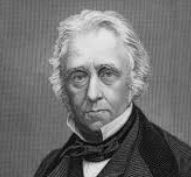
1 month 6 days ago
I shall cheerfully bear the reproach of having descended below the dignity of history if I can succeed in placing before the English of the nineteenth century a true picture of the life of their ancestors.
▼
Source
source
Vol. I, ch. 1
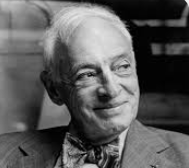
1 month 1 week ago
The book of the world, so richly studied by autodidacts, is being closed by the "learned," who are raising walls of opinions to shut the world out.
▼
Source
source
p. 15
3 months 2 weeks ago
In fact, contempt for happiness is usually contempt for other people's happiness, and is an elegant disguise for hatred of the human race.
▼
Source
source
p. 198
3 days ago
The unhampered market economy is not a system which would seem commendable from the standpoint of the selfish group interests of the entrepreneurs and capitalists. It is not the particular interests of a group or of individual persons that require the market economy, but regard for the common welfare. It is not true that the advocates of the free-market economy are defenders of the selfish interests of the rich. The particular interests of the entrepreneurs and capitalists also demand interventionism to protect them against the competition of more efficient and active men. The free development of the market economy is to be recommended, not in the interest of the rich, but in the interest of the masses of the people.
▼
Source
source
Ch. VII : The Economic, Social, and Political Consequences of Interventionism § 1. The Economic Consequences
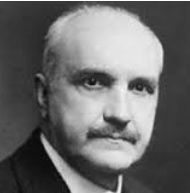
2 months 1 week ago
In the Gospels, for instance, we sometimes find the kingdom of heaven illustrated by principles drawn from observation of this world rather than from an ideal conception of justice; ... They remind us that the God we are seeking is present and active, that he is the living God; they are doubtless necessary if we are to keep religion from passing into a mere idealism and God into the vanishing point of our thought and endeavour.
▼
Source
source
Interpretations of Poetry and Religion (1900), p. 54
2 months 1 week ago
I think being a woman is like being Irish... Everyone says you're important and nice, but you take second place all the same.
▼
Source
source
The Red and the Green (1965), ch. 2, p. 30.

3 months 2 weeks ago
The adjective is the enemy of the substantive.
▼
Source
source
Variants: The adjective is the enemy of the noun. Quote attributed in Arthur Schopenhauer (translated by Mrs Rudolf Dircks), Essays of Schopenhauer (2004), Kessinger Publishing, p. 31

3 months 2 weeks ago
I will not talk about people a thousand miles off, but come as near home as I can. As the time is short, I will leave out all the flattery, and retain all the criticism. Let us consider the way in which we spend our lives.
▼
Source
source
p. 484
1 month 4 weeks ago
What are novels? What is the secret of the charm of every romance that ever was written? The first thing in a good novel is to place the persons together in circumstances which naturally call out the high feelings and thoughts of the character, which afford food for sympathy between them on these points - romantic events they are called. The second is that the heroine has generally no family ties (almost invariably no mother), or, if she has, these do not interfere with her entire independence. These two things constitute the main charm of reading novels.
3 months 2 weeks ago
What a monstrous thing that a University should teach journalism! I thought that was only done at Oxford. This respect for the filthy multitude is ruining civilisation.
▼
Source
source
Letter to Lucy Martin Donnely, July 6, 1902

3 months 3 weeks ago
Jews hate the name of Christ and have a secret and innate rancor against the people among whom they live.
▼
Source
source
See Silent Truth by Mark Edwards

4 months 1 week ago
It is only the individual possessed of the most entire sincerity that can exist under Heaven, who can adjust the great invariable relations of mankind, establish the great fundamental virtues of humanity, and know the transforming and nurturing operations of Heaven and Earth; shall this individual have any being or anything beyond himself on which he depends? Call him man in his ideal, how earnest is he! Call him an abyss, how deep is he! Call him Heaven, how vast is he! Who can know him, but he who is indeed quick in apprehension, clear in discernment, of far-reaching intelligence, and all-embracing knowledge, possessing all Heavenly virtue?

1 month 2 weeks ago
African audiences cannot accept our passive consumer role in the presence of film.
▼
Source
source
(p. 44)

2 months 1 week ago
There is an innate anxiety which supplants in us both knowledge and intuition.

2 months 2 weeks ago
The seat of faith, however, is not consciousness but spontaneous religious experience, which brings the individual's faith into immediate relation with God. Here we must ask: Have I any religious experience and immediate relation to God, and hence that certainty which will keep me, as an individual, from dissolving in the crowd?
▼
Source
source
p 85
2 months 3 weeks ago
An American cannot converse, but he can discuss, and his talk falls into a dissertation. He speaks to you as if he was addressing a meeting; and if he should chance to become warm in the discussion, he will say "Gentlemen" to the person with whom he is conversing.
▼
Source
source
Chapter XIV.
2 months ago
Logos is powerless without the force of eros.
3 months 2 weeks ago
The same law that shapes the earth-star shapes the snow-star. As surely as the petals of a flower are fixed, each of these countless snow-stars comes whirling to earth...these glorious spangles, the sweeping of heaven's floor.
▼
Source
source
January 5, 1856

3 months 3 weeks ago
Holy Christendom has, in my judgment, no better teacher after the apostles than St. Augustine.
▼
Source
source
Luther's Works, American Ed., Robert H. Fischer, Helmut T. Lehman, eds., Concordia Publishing House/Fortress Press, 1959, ISBN 0800603370 (Word and Sacrament III), vol. 37:107

2 months ago
The period of the actual revolution, the so-called transitory stage, must be the introduction, the prelude to the new social conditions. It is the threshold to the NEW LIFE, the new HOUSE OF MAN AND HUMANITY. As such it must be of the spirit of the new life, harmonious with the construction of the new edifice.
3 months 1 week ago
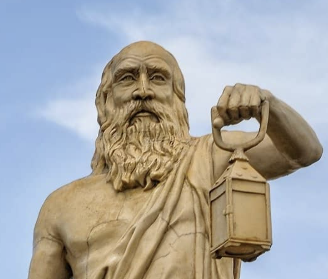
To Xeniades, who had purchased Diogenes at the slave market, he said, "Come, see that you obey orders."
▼
Source
source
Diogenes Laërtius, vi. 36
3 months 3 weeks ago
The souls of emperors and cobblers are cast in the same mould.... The same reason that makes us wrangle with a neighbour causes a war betwixt princes.
▼
Source
source
Book II, Ch. 12. Apology for Raimond Sebond

4 months 2 weeks ago
The next thing you can learn from the woman who was a sinner, something she herself understood, is that with regard to finding forgiveness she is able to do nothing at all.
1 week 2 days ago
For what gives my work its peculiar quality, and what is most remarkable in the present age, is this. Fortune has guided almost all the affairs of the world in one direction and has forced them to incline towards one and the same end; a historian should likewise bring before his readers under one synoptical view the operations by which she has accomplished her general purpose.
CivilSimian.com created by AxiomaticPanic, CivilSimian, Kalokagathia