

2 days ago
To take Macaulay out of literature and society and put him in the House of Commons, is like taking the chief physician out of London during a pestilence.
▼
Source
source
Vol. I, ch. 9, p. 315
2 months ago
Emptiness empties the one seeing into what is seen.
1 month 2 weeks ago
It is a bad plan that admits of no modification.
▼
Source
source
Maxim 469
3 months 2 weeks ago
Conformity to nature has no connection whatever with right and wrong. The idea can never be fitly introduced into ethical discussions at all, except, occasionally and partially, into the question of degrees of culpability. To illustrate this point, let us consider the phrase by which the greatest intensity of condemnatory feeling is conveyed in connection with the idea of nature - the word "unnatural." That a thing is unnatural, in any precise meaning which can be attached to the word, is no argument for its being blamable; since the most criminal actions are to a being like man not more unnatural than most of the virtues.
▼
Source
source
page 62; Broadview Press, page 102

2 months ago
The real pioneers in ideas, in art and in literature have remained aliens to their time, misunderstood and repudiated.
1 month 2 weeks ago
By doing nothing men learn to do ill.
▼
Source
source
Maxim 318 Compare Ecclesiasticus 33:27 (KJV): "idleness teacheth much evil".
3 months 5 days ago
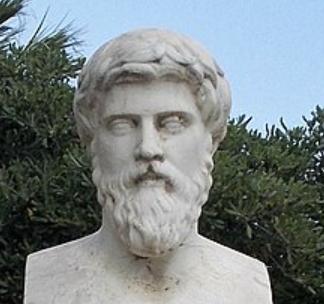
Diogenes the Cynic, when a little before his death he fell into a slumber, and his physician rousing him out of it asked him whether anything ailed him, wisely answered, "Nothing, sir; only one brother anticipates another,-Sleep before Death."

4 months 2 weeks ago
Q. You do not consider your statement a disloyal one? A. No, sir. Scientific truth is beyond loyalty and disloyalty. Q. You are sure that your statement represents scientific truth? A. I am.
2 months 1 week ago
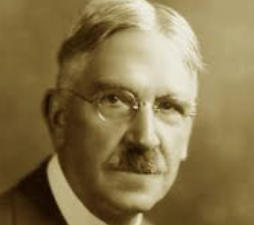
I do not think that the dancing and singing of even little children can be explained wholly on the basis of unlearned and unformed responses to then existing objective conditions. Clearly there must be something in the present to evoke happiness. But the act is expressive only a there is in it a unison of something stored from past experience, something therefore generalized, with present conditions. In the case of expressions of happy children the marriage of past values and present incidents takes place easily; there are few obstructions to be overcome, few wounds to heal, few conflicts to resolve. With maturer persons, the reverse is the case. Accordingly the achievement of complete unison is rare; but when it occurs it is so on a deeper level and with a fuller content of meaning. And then, even though after long incubation and after precedent pangs of labor, the final expression may issue with the spontaneity of the cadenced speech or rhythmic movement of happy childhood.
▼
Source
source
p. 74

3 months 2 weeks ago
I am responsible for everything ... except for my very responsibility, for I am not the foundation of my being. Therefore everything takes place as if I were compelled to be responsible. I am abandoned in the world ... in the sense that I find myself suddenly alone and without help, engaged in a world for which I bear the whole responsibility without being able, whatever I do, to tear myself away from this responsibility for an instant.
▼
Source
source
Part 4, Chapter 1, III
3 months 2 weeks ago
It is an uphill race, and a race against time, for if the American form of democracy overtakes us first, the majority will no more relax their despotism than a single despot would. But our only chance is to come forward as Liberals, carrying out the democratic idea, not as Conservatives, resisting it.
▼
Source
source
Letter to Henry Fawcett (5 February 1860), quoted in Michael St. John Packe, The Life of John Stuart Mill (1954), p. 418
2 months 1 week ago
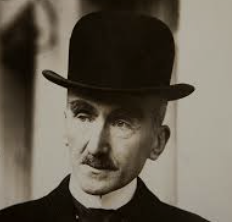
I would say act like a man of thought and think like a man of action.
▼
Source
source
Speech at the Descartes Conference in Paris (1937) Quoted in The Forbes Scrapbook of Thoughts on the Business of Life (1950), p. 442, as "Think like a man of action, act like a man of thought."
4 months 3 days ago
Will is to grace as the horse is to the rider.

2 days ago
Withdraw into yourself, as far as you can. Associate with those who will make a better man of you. Welcome those whom you yourself can improve. The process is mutual; for men learn while they teach.
▼
Source
source
Line 8.
4 months 2 weeks ago
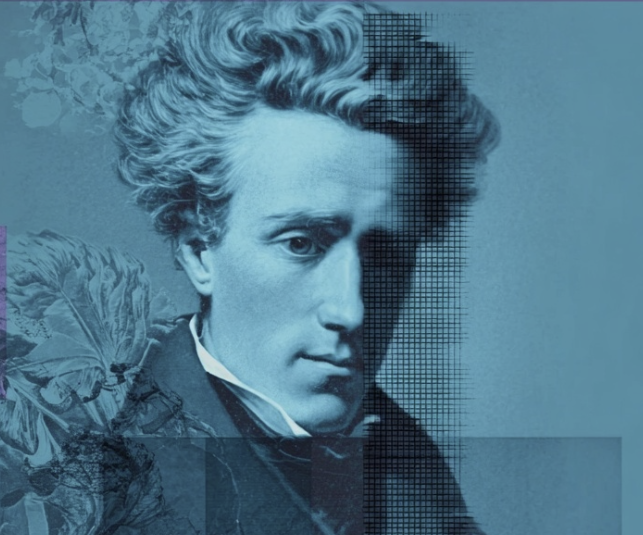
Magister Adler was deeply moved by something higher, but now when he wants to express his thoughts in words, wants to communicate, he confuses the subjective with the objective, his altered subjective state with an external event, the dawning of a light upon him with the coming into existence of something new outside him, the falling of the veil from his eyes with his having had a revelation. Subjectively his emotion is carried to the extreme; he wants to select the most powerful expression to describe it and by means of a mental deception grasps the objective qualification: having had a revelation.

2 months 2 weeks ago
I think I can hardly overrate the malignity of the principles of Protestant ascendancy, as they affect Ireland; or of Indianism, as they affect these countries, and as they affect Asia; or of Jacobinism, as they affect all Europe, and the state of human society itself. The last is the greatest evil.
▼
Source
source
Letter to Sir Hercules Langrishe (26 May 1795), quoted in R. B. McDowell (ed.)

1 week 1 day ago
The more I reflect on it, the more I must admire how completely nature had taught him; how completely he was devoted to his work, to the task of his life, and content to let all pass by unheeded that had not relation to this. It is a singular fact, for example, that though a man of such openness and clearness, he had never, I believe, read three pages of Burns's poems. Not even when all about him became noisy and enthusiastic, I the loudest, on that matter, did he feel it worth while to renew his investigation of it, or once turn his face towards it. The poetry he liked (he did not call it poetry) was truth, and the wisdom of reality. Burns, indeed, could have done nothing for him. As high a greatness hung over his world as over that of Burns - the ever-present greatness of the Infinite itself. Neither was he, like Burns, called to rebel against the world, but to labor patiently at his task there, uniting the possible with the necessary to bring out the real, wherein also lay an ideal.
1 month 1 week ago
Never say, and never take seriously anyone who says, "I cannot believe that so-and-so could have evolved by gradual selection". I have dubbed this kind of fallacy "the Argument from Personal Incredulity". Time and again, it has proven the prelude to an intellectual banana-skin experience.
2 months 1 week ago
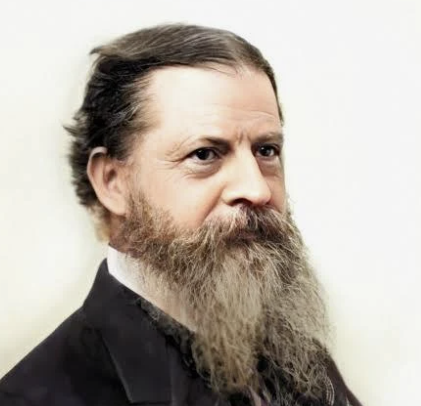
Indeed, even this last moment will be recognized like the rest, at least, be just beginning to be so.

3 months 1 week ago
If God had looked into our minds he would not have been able to see there whom we were speaking of.
▼
Source
source
Pt II, p. 217
2 months 3 weeks ago
Happiest are the people who give most happiness to others.
▼
Source
source
As quoted in Happyology by Harald W. Tietze, p. 28

3 months 2 weeks ago
The plain fact is that men's minds are built, as has been often said, in water-tight compartments. Religious after a fashion, they yet have many other things in them beside their religion, and unholy entanglements and associations inevitably obtain. The basenesses so commonly charged to religion's account are thus, almost all of them, not chargeable at all to religion proper, but rather to religion's wicked practical partner, the spirit of corporate dominion. And the bigotries are most of them in their turn chargeable to religion's wicked intellectual partner, the spirit of dogmatic dominion, the passion for laying down the law in the form of an absolutely closed-in theoretic system. The ecclesiastical spirit in general is the sum of these two spirits of dominion.
▼
Source
source
Lectures XIV and XV, "The Value of Saintliness"
3 months 2 weeks ago
In these frequent talks about the books I read, he used, as opportunity offered, to give me explanations and ideas respecting civilization, government, morality, mental cultivation, which he required me afterwards to restate to him in my own words. He also made me read, and give him a verbal account of, many books which would not have interested me sufficiently to induce me to read them of myself: among others, Millar's Historical View of the English Government, a book of great merit for its time, and which he highly valued; Mosheim's Ecclesiastical History, McCrie's Life of John Knox, and even Sewel's and Rutty's Histories of the Quakers. He was fond of putting into my hands books which exhibited men of energy and resource in unusual circumstances, struggling against difficulties and overcoming them: of such works I remember Beaver's African Memoranda, and Collins's account of the first settlement of New South Wales.
▼
Source
source
(p. 8)

1 week 5 days ago
The liberal world order that emerged, that... has these pragmatic and... moral dimensions has been severely challenged in the last few years, and the sources of this challenge are numerous. One is the rise of overtly authoritarian states like China and Russia. They have consolidated their rule. They seem to be stable internally, and they are increasingly seeking to project their power and influence, their model... across international borders.
▼
Source
source
19:23
2 days ago
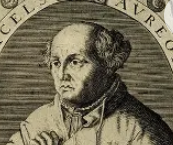
He who conquers his enemy with meekness, wins fame.


2 months 4 days ago
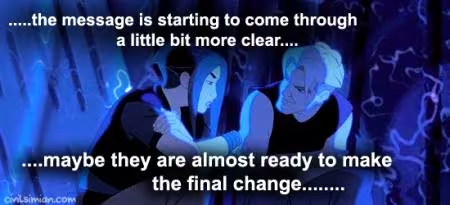
For the mockers are those who die comically, and God laughs at their comic ending, while the nobler part, the part of tragedy, is theirs who endured the mockery.
2 months ago
If life is deprived of any meaningful closure, it will be ended in non-time.

3 months 2 weeks ago
It is a political axiom that power follows property.
▼
Source
source
Chapter 12 (p. 113)
3 months 1 week ago
"I never believed in God before." - that I understand. But not: "I never really believed in Him before."
▼
Source
source
p. 53e
3 months 2 weeks ago
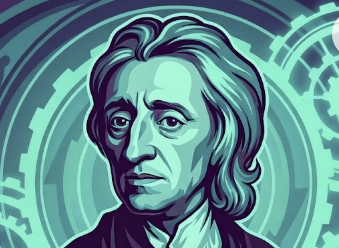
If pains be to be taken to give him a manly air and assurance betimes, it is chiefly as a fence to his virtue when he goes into the world under his own conduct.
▼
Source
source
Sec. 70

2 months 1 week ago
Late at night. I feel like falling into a frenzy, doing some unprecedented thing to release myself, but I don't see against whom, against what...

3 months 2 weeks ago
I believe Buddhism to be a simplification of Hinduism and Islam to be a simplification of Xianity.
▼
Source
source
Letter to Sheldon Vanauken (14 December 1950), quoted in Sleuthing C. S. Lewis (2001) by Kathryn Ann Lindskoog, p. 393
1 week 1 day ago
Truly it is a sad thing for a people, as for a man, to fall into Scepticism, into dilettantism, insincerity; not to know Sincerity when they see it. For this world, and for all worlds, what curse is so fatal?

3 months 3 weeks ago
Silence is the virtue of a fool.
▼
Source
source
Book VI, xxxi
3 months 1 week ago
If you want to go down deep you do not need to travel far; indeed, you don't have to leave your most immediate and familiar surroundings.
▼
Source
source
p. 50e

3 months 1 week ago
Now his principal doctrines were these. That atoms and the vacuum were the beginning of the universe; and that everything else existed only in opinion. (trans. Yonge 1853) The first principles of the universe are atoms and empty space; everything else is merely thought to exist.
▼
Source
source
(trans. by Robert Drew Hicks 1925) Often paraphrased as "Nothing exists except atoms and empty space; everything else is opinion."

1 month 3 weeks ago
To receive applause for works which do not demand all our powers hinders our advance towards a perfecting of our spirit. It usually means that thereafter we stand still.
▼
Source
source
K 42

3 months 2 weeks ago
Our inventions are wont to be pretty toys, which distract our attention from serious things. They are but improved means to an unimproved end, an end which it was already but too easy to arrive at.
▼
Source
source
pp. 60-61
1 month 2 weeks ago
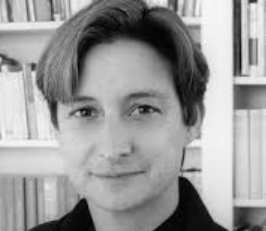
To affirm equality is to affirm a cohabitation defined in part by an interdependency that takes the edge off the individual boundaries of the body, or that works that edge for its social and political potential.
▼
Source
source
p. 148
2 months 1 week ago
Self-knowledge - the bitterest knowledge of all and also the kind we cultivate least: what is the use of catching ourselves out, morning to night, in the act of illusion, pitilessly tracing each act back to its root, and losing case after case before our own tribunal?
1 week 1 day ago
The highest ensign that men ever met and embraced under, the Cross itself, had no meaning save an accidental extrinsic one.
▼
Source
source
Bk. III, ch. 3.
2 months 1 week ago
The society which projects and undertakes the technological transformation of nature alters the base of domination by gradually replacing personal dependence (of the slave on the master, the serf on the lord of the manor, the lord on the donor of the fief, etc.) with dependence on the "objective order of things" (on economic laws, the market etc.).
▼
Source
source
p. 144
2 days ago
Manners are the shadows of virtues; the momentary display of those qualities which our fellow creatures love, and respect.
▼
Source
source
Sermon XII, Sermons
3 weeks 5 days ago
It's easier to be faithful to a restaurant than it is to a woman.
▼
Source
source
Fidelity

3 months 2 weeks ago
The secret of happiness is to face the fact that the world is horrible, horrible, horrible.
▼
Source
source
Said in conversation with Mrs. Alan Wood; quoted in Alan Wood's Bertrand Russell, the Passionate Sceptic (Allen and Unwin, 1957), pp. 236-7
2 months 2 weeks ago
This whole creation is essentially subjective, and the dream is the theater where the dreamer is at once scene, actor, prompter, stage manager, author, audience, and critic.
▼
Source
source
General Aspects of Dream Psychology
2 months ago
Sovereignty, the freedom unto death, is threatening to a society that is organized around work and production.

3 months 2 weeks ago
Indeed, history is nothing more than a tableau of crimes and misfortunes.
▼
Source
source
L'Ingénu, ch.10 (1767) Quoted in The End, part 13 of A Series of Unfortunate Events

2 months 3 weeks ago
It is proof of a base and low mind for one to wish to think with the masses or majority, merely because the majority is the majority. Truth does not change because it is, or is not, believed by a majority of the people.
▼
Source
source
Included as a quotation in The Great Quotations (1977) by George Seldes, p. 35
CivilSimian.com created by AxiomaticPanic, CivilSimian, Kalokagathia