

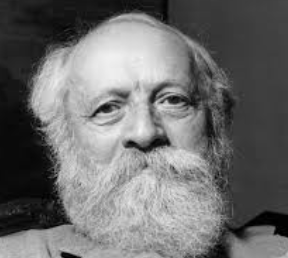
2 months 1 week ago
Avoid melancholy with all your might. It hurts the service of God more than sin. Satan takes less pleasure in sin than in a man's melancholy over having sinned again and so feeling that he is a slave to sin. Thus the Evil One has caught the poor soul in the net of despair.
▼
Source
source
Rabbi Jaacob Yitzchak, p. 7

3 months 2 weeks ago
It is often asserted that discussion is only possible between people who have a common language and accept common basic assumptions. I think that this is a mistake. All that is needed is a readiness to learn from one's partner in the discussion, which includes a genuine wish to understand what he intends to say. If this readiness is there, the discussion will be the more fruitful the more the partner's backgrounds differ.
▼
Source
source
p. 352
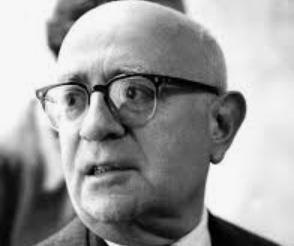
2 months 3 days ago
The conflicts that tear society apart resemble the distinction between the concept and the particular facts subordinated to it. ... Whatever refuses to abide by the unity imposed by the principle of dominion manifests itself not as something indifferent to that principle, but as an infringement of logic: as a contradiction.
▼
Source
source
p. 169

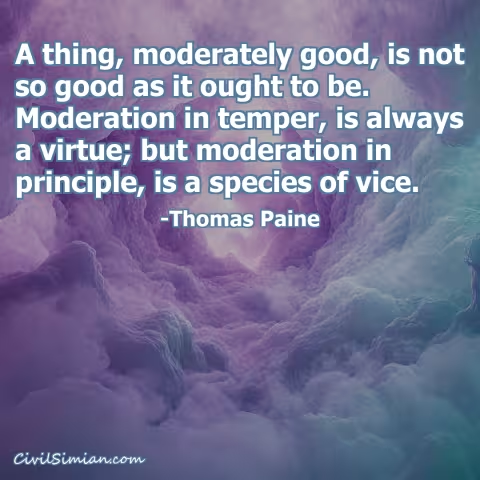

4 months 5 days ago
Man reaches the highest point of his knowledge about God when he knows that he knows him not, inasmuch as he knows that that which is God transcends whatsoever he conceives of him.
▼
Source
source
q. 7, art. 5, ad 14

3 months 2 weeks ago
That what we seek we shall find; what we flee from flees from us.
▼
Source
source
Fate

4 months 2 weeks ago
People are entirely too disbelieving of coincidence. They are far too ready to dismiss it and to build arcane structures of extremely rickety substance in order to avoid it. I, on the other hand, see coincidence everywhere as an inevitable consequence of the laws of probability, according to which having no unusual coincidence is far more unusual than any coincidence could possibly be.
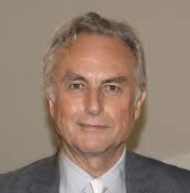
1 month 1 week ago
Genes do indirectly control the manufacture of bodies, and the influence is strictly one way: acquired characteristics are not inherited. No matter how much knowledge and wisdom you acquire during your life, not one jot will be passed on to your children by genetic means. Each new generation starts from scratch.
▼
Source
source
Ch. 3. Immortal Coils

3 months 2 weeks ago
The good life, as I conceive it, is a happy life. I do not mean that if you are good you will be happy; I mean that if you are happy you will be good.
▼
Source
source
Part I: Man and Nature, Ch. 1: Current Perplexities, p. 10

2 months 3 weeks ago
Americans combine to give fêtes, found seminaries, build churches, distribute books, and send missionaries to the antipodes. Hospitals, prisons, and schools take shape in that way. Finally, if they want to proclaim a truth or propagate some feeling by the encouragement of a great example, they form an association. In every case, at the head of any new undertaking, where in France you would find the government or in England some territorial magnate, in the United States you are sure to find an association. I have come across several types of association in America of which, I confess, I had not previously the slightest conception, and I have often admired the extreme skill they show in proposing a common object for the exertions of very many and in inducing them voluntarily to pursue it.
▼
Source
source
Book Two, Chapter V.

2 days ago
All vices sink into our whole being, if we do not crush them before they gain a footing; and in like manner these sad, pitiable, and discordant feelings end by feeding upon their own bitterness, until the unhappy mind takes a sort of morbid delight in grief... In like manner, wounds heal easily when the blood is fresh upon them: they can then be cleared out and brought to the surface, and admit of being probed by the finger: when disease has turned them into malignant ulcers, their cure is more difficult.
2 days ago
Let us now enquire whether anger be in accordance with nature, and whether it be useful and worth entertaining in some measure.

3 months 3 weeks ago
What peculiar privilege has this little agitation of the brain which we call thought, that we must thus make it the model of the whole universe? Our partiality in our own favour does indeed present it on all occasions; but sound philosophy ought carefully to guard against so natural an illusion.
▼
Source
source
Philo to Cleanthes, Part II

1 week 5 days ago
The fundamental political question is why do people obey a government. The answer is that they tend to enslave themselves, to let themselves be governed by tyrants. Freedom from servitude comes not from violent action, but from the refusal to serve. Tyrants fall when the people withdraw their support.
▼
Source
source
This quote is a paraphrase of the contents of the first chapter of Discourse on Voluntary Servitude. The quote appears in an edition titled Politics of Obedience: The Discourse of Voluntary Servitude edited by Murray Rothbard and Harry Kurz (1975), p. 39

2 months 2 weeks ago
Some decent regulated pre-eminence, some preference (not exclusive appropriation) given to birth, is neither unnatural, nor unjust, nor impolitic.

2 months 1 week ago
For a long while I have lived with the notion that I was the most normal being that ever existed. This notion gave me the taste, even the passion for being unproductive: what was the use of being prized in a world inhabited by madmen, a world mired in mania and stupidity? For whom was one to bother, and to what end? It remains to be seen if I have quite freed myself from this certitude, salvation in the absolute, ruin in the immediate.

3 months 3 weeks ago
II. The tax which each individual is bound to pay ought to be certain, and not arbitrary.
▼
Source
source
Chapter II, Part II, p. 892.

3 months 2 weeks ago
Rational and kindly behavior tends to produce good results and these results remain good even when the behavior which produced them was itself produced by a pill.
▼
Source
source
"Brave New World Revisited" (1956), in Moksha: Writings on Psychedelics and the Visionary Experience (1977), p. 99
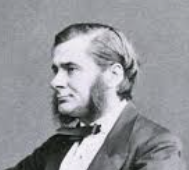
1 month 3 days ago
God give me strength to face a fact though it slay me.
▼
Source
source
As quoted in Nature Vol. 149 (Jan-Jun) 1942 p. 291, and A Philosophy for Our Time (1954) by Bernard Mannes Baruch, p. 13

2 months 1 week ago
In that very hour he became overjoyed in the holy spirit and said: “I publicly praise you, Father, Lord of heaven and earth, because you have carefully hidden these things from wise and intellectual ones and have revealed them to young children. Yes, O Father, because this is the way you approved.
▼
Source
source
Luke 10:21, New World Translation of the Holy Scriptures
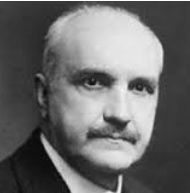
2 months 1 week ago
Our dignity is not in what we do, but in what we understand.
▼
Source
source
p. 50
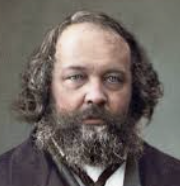
2 months 2 weeks ago
FREEDOM, the realization of freedom: who can deny that this is what today heads the agenda of history? ... Revolutionary propaganda is in its deepest sense the negation of the existing conditions of the State, for, with respect to its innermost nature, it has no other program than the destruction of whatever order prevails at the time.... We must not only act politically, but in our politics act religiously, religiously in the sense of freedom, of which the one true expression is justice and love. Indeed, for us alone, who are called the enemies of the Christian religion, for us alone it is reserved, and even made the highest duty ... really to exercise love, this highest commandment of Christ and this only way to true Christianity.
▼
Source
source
"The Reaction in Germany" (1842), Bakunin's first political writings, under the pseudonym "Jules Elysard"; it was not until 1860 that he began to publicly assert a stance of firm atheism and vigorous rejection of traditional religious institutions.

3 weeks 3 days ago
Against the many Russian thinkers influenced by Hegel who believed that history was governed by universal laws to which one could only submit, Turgenev upheld the freedom of different societies to pursue different paths of development and of individuals to pursue, even in opposition to powerful historical forces, their own goals and values. Here Turgenev endorsed the celebrated dictum of Alexander Herzen, with whom he disagreed on other matters: that history has no libretto. Human history is a realm of contingency and unpredictability, in which each generation faces conflicts that have no ideal solution.
▼
Source
source
'Isaiah Berlin: The Value of Decency' (p.105)
3 months 2 weeks ago
Our conviction that the world is meaningless is due in part to the fact (discussed in a later paragraph) that the philosophy of meaningless lends itself very effectively to furthering the ends of political and erotic passion; in part to a genuine intellectual error - the error of identifying the world of science, a world from which all meaning has deliberately been excluded, with ultimate reality.
▼
Source
source
Ch. 14, p. 309 [2012 reprint]
3 months 2 weeks ago
Rhodora! if the sages ask thee why This charm is wasted on the earth and sky, Tell them, dear, that, if eyes were made for seeing, Then beauty is its own excuse for Being.
▼
Source
source
The Rhodora

3 months 3 weeks ago
An armed insurrection ... would hinder and bring into disrepute this spiritual insurrection.
▼
Source
source
p. 68
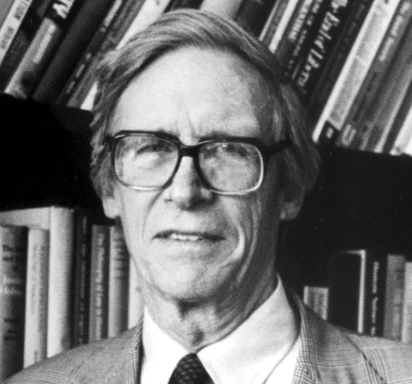
3 months 2 weeks ago
An intolerant sect has no right to complain when it is denied an equal liberty. ... A person's right to complain is limited to principles he acknowledges himself.
▼
Source
source
p. 217
1 month 3 weeks ago
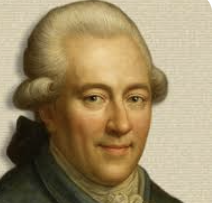
Cautiousness in judgment is nowadays to be recommended to each and every one: if we gained only one incontestable truth every ten years from each of our philosophical writers the harvest we reaped would be sufficient. ... To grow wiser means to learn to know better and better the faults to which this instrument with which we feel and judge can be subject.
▼
Source
source
A 38

2 months 4 weeks ago
Meditate upon my counsels; love them; follow them; To the divine virtues will they know how to lead thee. I swear it by the One who in our hearts engraved The sacred Tetrad, symbol immense and pure, Source of Nature and model of the Gods.
▼
Source
source
As translated by Fabre d'Olivet

3 months 1 week ago
Nothing is so difficult as not deceiving oneself.
▼
Source
source
p. 34e
3 months 2 weeks ago
I have been merely oppressed by the weariness and tedium and vanity of things lately: nothing stirs me, nothing seems worth doing or worth having done: the only thing that I strongly feel worth while would be to murder as many people as possible so as to diminish the amount of consciousness in the world. These times have to be lived through: there is nothing to be done with them.
▼
Source
source
Letter to Gilbert Murray, March 21, 1903

3 months 2 weeks ago
Unjust laws exist: shall we be content to obey them, or shall we endeavor to amend them, and obey them until we have succeeded, or shall we transgress them at once?
3 months 2 weeks ago
Power may be defined as the production of intended effects.
▼
Source
source
Ch. 3: The Forms of Power
2 months ago
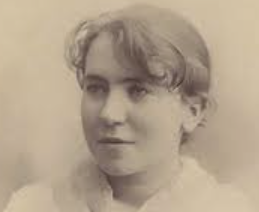
Forty years ago Germany proclaimed the slogan: "Germany above everything. Germany for the Germans, first, last and always. We want peace; therefore we must prepare for war. Only a well armed and thoroughly prepared nation can maintain peace, can command respect, can be sure of its national integrity." And Germany continued to prepare, thereby forcing the other nations to do the same. The terrible European war is only the culminating fruition of the hydra-headed gospel, military preparedness.
3 days ago
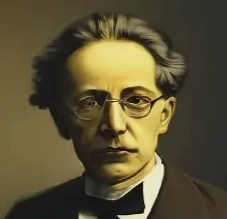
Look upon yourself as more powerful than they give you out for, and you have more power; look upon yourself as more, and you have more.
▼
Source
source
Cambridge 1995, p. 318

4 months 2 weeks ago
Every ideology is contrary to human psychology.

3 weeks 6 days ago
Treat your kid like a darling for the first five years. For the next five years, scold them. By the time they turn sixteen, treat them like a friend. Your grown up children are your best friends.

3 months 2 weeks ago
A witty saying proves nothing.
▼
Source
source
Le dîner du comte de Boulainvilliers (1767): Deuxième Entretien

1 month 2 weeks ago
You will die - and it will all be over. You will die and find out everything - or cease asking.
▼
Source
source
Bk. V, Ch. 1
4 months 2 weeks ago
Every revolutionary ends as an oppressor or a heretic.
1 month 3 days ago
If the hypothesis of evolution is true, living matter must have arisen from non-living matter; for by the hypothesis the condition of the globe was at one time such, that living matter could not have existed in it, life being entirely incompatible with the gaseous state.
▼
Source
source
In the Encyclopaedia Britannica, Ninth edition, (1876) Vol. III, "Biology", p. 689. Also quoted in Joseph Cook (1878), Biology, with Preludes on Current Events, Houghton, Osgood, p. 39
3 months 2 weeks ago
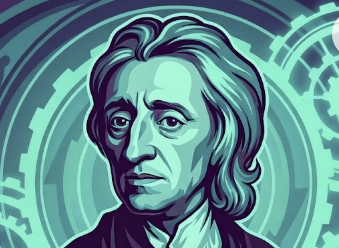
And if he be too forward to venture upon his own strength and skill, and perplexity and trouble of a misadventure now and then, that reaches not his innocence, his health, or reputation, may not be an ill way to teach him more caution.
▼
Source
source
Sec. 94
3 months 3 weeks ago
I thought that I was the only historian, that had at once neglected present power, interest, and authority, and the cry of popular prejudices; and as the subject was suited to every capacity, I expected proportional applause. But miserable was my disappointment: I was assailed by one cry of reproach, disapprobation, and even detestation; English, Scotch, and Irish, Whig and Tory, churchman and sectary, freethinker and religionist, patriot and courtier, united in their rage against the man, who had presumed to shed a generous tear for the fate of Charles I and the Earl of Strafford.
▼
Source
source
My Own Life' (1776), quoted in David Hume, Essays: Moral, Political, and Literary (1741-1777), ed. Eugene Miller (1985), p. xxxvii
2 months 4 weeks ago
Holding fast to these things, you will know the worlds of gods and mortals which permeates and governs everything. And you will know, as is right, nature similar in all respects, so that you will neither entertain unreasonable hopes nor be neglectful of anything.
▼
Source
source
As quoted in Divine Harmony: The Life and Teachings of Pythagoras by John Strohmeier and Peter Westbrook.
1 week 4 days ago
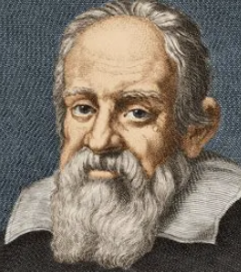
Some years ago, as Your Serene Highness well knows, I discovered in the heavens many things that had not been seen before our own age. The novelty of these things, as well as some consequences which followed from them in contradiction to the physical notions commonly held among academic philosophers, stirred up against me no small number of professors - as if I had placed these things in the sky with my own hands in order to upset nature and overturn the sciences. They seemed to forget that the increase of known truths stimulates the investigation, establishment, and growth of the arts; not their diminution or destruction.
2 months 1 week ago
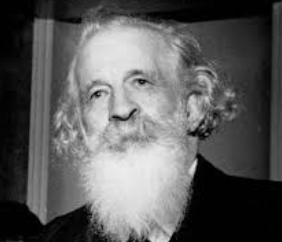
Literary imagination is an aesthetic object offered by a writer to a lover of books.
▼
Source
source
A Retrospective Glance at the Lifework of a Master of Books

1 month 2 weeks ago
Marx shared with economists then and since the inability to make his concepts include innovational processes. It is one thing to spot a new product but quite another to observe the invisible new environments generated by the action of the product on a variety of pre-existing social grounds.
▼
Source
source
(p. 63)
1 month 3 weeks ago
There is no more important rule of conduct in the world than this: attach yourself as much as you can to people who are abler than you and yet not so very different that you cannot understand them.
▼
Source
source
F 81

1 week 1 day ago
All work, even cotton spinning, is noble; work is alone noble ... A life of ease is not for any man, nor for any god.
▼
Source
source
Bk. III, ch. 4.

2 months 3 days ago
I have sometimes told myself that if only there were a notice on church doors forbidding entry to anyone with an income above a certain figure, and a low one, I would be converted at once.
▼
Source
source
Letter to Georges Bernanos (1938), in Seventy Letters, as translated by Richard Rees (Wipf and Stock: 1965), p. 105
CivilSimian.com created by AxiomaticPanic, CivilSimian, Kalokagathia