


4 months 3 weeks ago
There are degrees of justice, Elijah. When the lesser is incompatible with the greater, the lesser must give way.
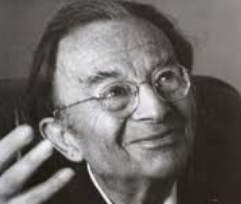
2 months 6 days ago
Among most Christians the Old Testament is little read in comparison to the New Testament. Furthermore, much of what is read is often distorted by prejudice. Frequently the Old Testament is believed to express exclusively the principles of justice and revenge, in contrast to the New Testament, which represents those of love and mercy; even the sentence, "Love your neighbor as yourself," is thought by many to derive from the New, not the Old Testament. Or the Old Testament is believed to have been written exclusively in the spirit of narrow nationalism and to contain nothing of supranational universalism so characteristic of the New Testament.
▼
Source
source
You Shall Be as Gods: A Radical Interpretation of the Old Testament and Its Tradition (1966) "Introduction"
3 months 2 weeks ago
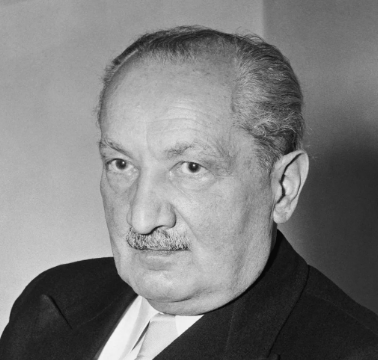
Nevertheless, the ultimate business of philosophy is to preserve the force of the most elemental words in which Dasein expresses itself, and to keep the common understanding from levelling them off to that unintelligibility which functions in turn as a source of pseudo-problems.
▼
Source
source
Macquarrie & Robinson translation



3 months 3 weeks ago
Never read any book that is not a year old.
▼
Source
source
Books

3 months 3 weeks ago
One must care about a world one will not see.
▼
Source
source
Attributed to Russell in The Wordsworth Dictionary of Quotations (1997), p. 450, and in Robertson's Dictionary of Quotations (1998), p. 362, but no specific source is given.

4 months 3 weeks ago
One will rarely err if extreme actions be ascribed to vanity, ordinary actions to habit, and mean actions to fear.


3 months 3 weeks ago
One unscrupulous distortion of the truth tends to beget other and opposite distortions.
▼
Source
source
Ch. 14, p. 316 [2012 reprint]
2 days ago
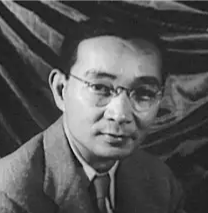
While in the West, the insane are so many that they are put in an asylum, in China the insane are so unusual that we worship them, as anybody who has a knowledge of Chinese literature will testify.
▼
Source
source
Ch. I : The Awakening, p. 3
4 days ago
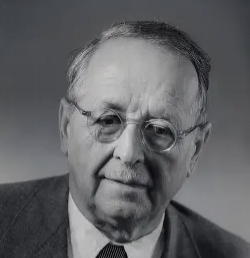
A new development began for relativity theory after 1925 with its absorption into quantum physics. The first great success was scored by Dirac's quantum mechanical equations of the electron, which introduced a new sort of quantities, the spinors, besides the vectors and tensors into our physical theories. ...But difficulties of the gravest kind turned up when one passed from one electron or photon to the interaction among an indeterminate number of such particles. In spite of several advances a final solution of this problem is not yet in sight and may well require a deep modification of the foundation of quantum mechanics, such as would account in the same basic manner for the elementary electric charge e as relativity theory and our present quantum mechanics account for c and h.
▼
Source
source
Preface to the First American Printing (1950) Note: see Paul Dirac, The Principles of Quantum Mechanics
3 months 3 weeks ago
Self-command is the main elegance.
▼
Source
source
p. 205

1 month 3 weeks ago
Environments are invisible. Their groundrules, pervasive structure, and overall patterns elude easy perception.
3 months 3 weeks ago
What a monstrous thing that a University should teach journalism! I thought that was only done at Oxford. This respect for the filthy multitude is ruining civilisation.
▼
Source
source
Letter to Lucy Martin Donnely, July 6, 1902

2 months 1 week ago
It belongs to the self-respect of intellect to pursue every tangle of thought to its final unravelment.
▼
Source
source
Ch. 12: "Religion and Science", p. 258

1 week 2 days ago
I shall never be ashamed of citing a bad author if the line is good.
▼
Source
source
Alternate translation: I shall never be ashamed to go to a bad author for a good quotation. Chapter 11, Section 8

4 months 3 days ago
We are wont to call that human reasoning which we apply to Nature the anticipation of Nature (as being rash and premature) and that which is properly deduced from things the interpretation of Nature.
3 months 3 weeks ago
It is time to be old, To take in sail: - The god of bounds, Who sets to seas a shore, Came to me in his fatal rounds, And said: 'No more!
▼
Source
source
Terminus

3 months 3 weeks ago
The gods we stand by are the gods we need and can use, the gods whose demands on us are reinforcements of our demands on ourselves and on one another. What I then propose to do is, briefly stated, to test saintliness by common sense, to use human standards to help us decide how far the religious life commends itself as an ideal kind of human activity . ... It is but the elimination of the humanly unfit, and the survival of the humanly fittest, applied to religious beliefs; and if we look at history candidly and without prejudice, we have to admit that no religion has ever in the long run established or proved itself in any other way. Religions have approved themselves; they have ministered to sundry vital needs which they found reigning. When they violated other needs too strongly, or when other faiths came which served the same needs better, the first religions were supplanted.
▼
Source
source
Lectures XIV and XV, "The Value of Saintliness"

4 months 3 weeks ago
He kept the middle way, that's all: he was the type of man for whom one has an affection of the mild but steady order - which is the kind that wears best.

2 weeks 1 day ago
But oppression by your Mock-Superiors well shaken off, the grand problem yet remains to solve: That of finding government by your Real-Superiors! Alas, how shall we ever learn the solution of that, benighted, bewildered, sniffing, sneering, godforgetting unfortunates as we are? It is a work for centuries; to be taught us by tribulations, confusions, insurrections, obstructions; who knows if not by conflagration and despair! It is a lesson inclusive of all other lessons; the hardest of all lessons to learn.

4 months 2 days ago
The public weal requires that men should betray and lie and massacre.
▼
Source
source
Book III, Ch. 1. Of Profit and Honesty
2 weeks ago
When the British came there was, throughout India, a system of communal schools, managed by the village communities. The agents of the East India Company destroyed these village communities, and took steps to replace the schools; even today, after a century of effort to restore them, they stand at only 66% of their number a hundred years ago. Hence, the 93 % illiteracy of India.
▼
Source
source
(source: The Case for India - By Will Durant Simon and Schuster, New York. 1930 p.44).

3 months 3 weeks ago
Space is employed as the type even of the concept of time itself, representing it by a line, and its limits - moments - by points. Time, on the other had, approaches more to a universal and rational concept, comprising under its relations all things whatsoever, to wit, space itself, and besides, those accidents which are not comprehended in the relations of space, such as the thoughts of the soul. Again, time, besides this, though it certainly does not dictate the laws of reason, yet constitutes the principal conditions tinder favor of which the mind compares its notions according to the laws of reason. Thus, I cannot judge what is impossible except by predicating a and not-a of the same subject at the same time.
3 months 2 weeks ago
Nowadays, to say that we are clever animals is not to say something philosophical and pessimistic but something political and hopeful - namely, if we can work together, we can make ourselves into whatever we are clever and courageous enough to imagine ourselves becoming. This is to set aside Kant's question "What is man?" and to substitute the question "What sort of world can we prepare for our great grandchildren?"
▼
Source
source
"Human Rights, Rationality, and Sentimentality." Truth and Progress: Philosophical Papers, Volume 3 (1998).

2 months 2 weeks ago
Life creates itself in delirium and is undone in ennui.

3 months 3 weeks ago
I appeal to the philosophers of all countries to unite and never again mention Heidegger or talk to another philosopher who defends Heidegger. This man was a devil. I mean, he behaved like a devil to his beloved teacher, and he has a devilish influence on Germany. ... One has to read Heidegger in the original to see what a swindler he was.
▼
Source
source
As quoted in "At 90, and Still Dynamic : Revisiting Sir Karl Popper and Attending His Birthday Party" by Eugene Yue-Ching Ho, in Intellectus 23
3 months 3 weeks ago
The prospect for the human race is sombre beyond all precedent. Mankind are faced with a clear-cut alternative: either we shall all perish, or we shall have to acquire some slight degree of common sense. A great deal of new political thinking will be necessary if utter disaster is to be averted.

2 months 1 week ago
The devil is an angel too.
▼
Source
source
[Three Exemplary Novels and a Prologue] (1920); Two Mothers

3 months 3 weeks ago
Capitalist production does not exist at all without foreign commerce.
▼
Source
source
Vol. II, Ch. XX, p. 474 (See also...David Ricardo, The Principles of Political Economy and Taxation, Ch. VII, p. 81).

3 months 3 weeks ago
Even in those cities which seem to enjoy the blessings of peace, and where the arts florish, the inhabitants are devoured by envy, cares and anxieties, which are greater plagues than any experienced in a town when it is under siege.
4 months 3 weeks ago
But in the end one needs more courage to live than to kill himself.

1 month 3 weeks ago
Avarice is as destitute of what it has, as what it has not.
▼
Source
source
Maxim 927

3 months 2 weeks ago
The logical picture of the facts is the thought.
▼
Source
source
(3) Original German: Das logische Bild der Tatsachen ist der Gedanke.
4 days ago
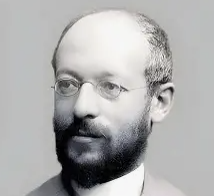
The most profound reason... why the metropolis conduces to the urge for the most individual personal existence... appears to me to be the following: the development of modern culture is characterized by the preponderance of what one may call the "objective spirit" over the "subjective spirit."
▼
Source
source
p. 421 as cited in: Kenneth Allan (2009) Explorations in Classical Sociological Theory: Seeing the Social World. p. 212
3 months 3 weeks ago
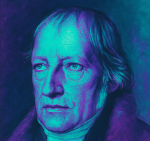
The good is the idea, or unity of the conception of the will with the particular will. Abstract right, well-being, the subjectivity of consciousness, and the contingency of external reality, are in their independent and separate existences superseded in this unity, although in their real essence they are contained in it and preserved. This unity is realized freedom, the absolute final cause of the world. Addition.-Every stage is properly the idea, but the earlier steps contain the idea only in more abstract form. The I, as person, is already the idea, although in its most abstract guise. The good is the idea more completely determined; it is the unity of the conception of will with the particular will. It is not something abstractly right, but has a real content, whose substance constitutes both right and well-being.
▼
Source
source
Georg Wilhelm Friedrich Hegel, Philosophy of Right translated by SW Dyde Queen's University Canada 1896 p. 123

2 months 2 weeks ago
I pride myself on my capacity to perceive the transitory character of everything. An odd gift which has spoiled all my joys; better: all my sensations.
1 week 2 days ago
I never read a book before reviewing it: it prejudices a man so.
▼
Source
source
Reported in Bon-Mots of Sydney Smith and R. Brinsley Sheridan, edited by Walter Jerrold with grotesques by Aubrey Beardsley (London: J. M. Dent and Company, 1893), p. 24

3 months 3 weeks ago
Have no mean hours, but be grateful for every hour, and accept what it brings. The reality will make any sincere record respectable. No day will have been wholly misspent, if one sincere, thoughtful page has been written. Let the daily tide leave some deposit on these pages, as it leaves sand and shells on the shore. So much increase of terra firma. this may be a calendar of the ebbs and flows of the soul; and on these sheets as a beach, the waves may cast up pearls and seaweed.
▼
Source
source
July 6, 1840
1 week 2 days ago
Show me that the good in life does not depend upon life's length, but upon the use we make of it; also, that it is possible, or rather usual, for a man who has lived long to have lived too little. Say to me when I lie down to sleep: "You may not wake again!" And when I have waked: "You may not go to sleep again!" Say to me when I go forth from my house: "You may not return!" And when I return: "You may never go forth again!"
3 months 3 weeks ago
The first thing to realize, if you wish to become a philosopher, is that most people go through life with a whole world of beliefs that have no sort of rational justification, and that one man's world of beliefs is apt to be incompatible with another man's, so that they cannot both be right. People's opinions are mainly designed to make them feel comfortable; truth, for most people is a secondary consideration.
▼
Source
source
"How to Become a Philosopher" (1942), in The Art of Philosophizing, and Other Essays (New York: Philosophical Library, 1968), p. 2
3 months 3 weeks ago
There must be something solemn, serious, and tender about any attitude which we denominate religious. If glad, it must not grin or snicker; if sad, it must not scream or curse. It is precisely as being solemn experiences that I wish to interest you in religious experiences. ... The divine shall mean for us only such a primal reality as the individual feels impelled to respond to solemnly and gravely, and neither by a curse nor a jest.
▼
Source
source
Lecture II, "Circumscription of the Topic"
1 week 2 days ago
He who has injured thee was either stronger or weaker than thee. If weaker, spare him; if stronger, spare thyself.
▼
Source
source
De Ira (On Anger); Book III, Chapter V
1 month 1 week ago
Perhaps no person can be a poet, or even enjoy poetry, without a certain unsoundness of mind.
▼
Source
source
p. 7

3 months 4 weeks ago
The difference between the most dissimilar characters, between a philosopher and a common street porter, for example, seems to arise not so much from nature, as from habit, custom, and education.
▼
Source
source
Chapter II, p. 17.
2 months 1 week ago
It is the furious longing to give finality to the Universe, to make it conscious and personal, that has brought us to believe in God, to wish that God may exist, to create God, in a word. To create Him, yes! This saying ought not to scandalize even the most devout theist. For to believe in God is, in a certain sense, to create Him, although He first creates us. It is He who is continually creating Himself.

3 months 4 weeks ago
Ignorance is the mother of Devotion: A maxim that is proverbial, and confirmed by general experience. Look out for a people, entirely destitute of religion: If you find them at all, be assured, that they are but few degrees removed from brutes. What so pure as some of the morals, included in some theological system? What so corrupt as some of the practices, to which these systems give rise?
▼
Source
source
Part XV - General corollary
3 months 3 weeks ago
Never have so many been manipulated so much by so few.
▼
Source
source
Chapter 3 (pp. 19-20)

2 months 1 week ago
Since we live in a society that promotes faddism and temporary superficial adaptation of different values, we are easily convinced that changes have occurred in arenas where there has been little or no change.
CivilSimian.com created by AxiomaticPanic, CivilSimian, Kalokagathia