

6 days ago
In the field of philosophy Kant was the first to take the next decisive step towards the point of view that not only the qualities revealed by the senses, but also space and spatial characteristics have no objective significance in the absolute sense; in other words, that space, too, is only a form of our perception.
▼
Source
source
Introduction

2 months 1 week ago
Witness the tragic condition of Russia. The methods of State centralization have paralysed individual initiative and effort; the tyranny of the dictatorship has cowed the people into slavish submission and all but extinguished the fires of liberty; organized terrorism has depraved and brutalized the masses and stifled every idealistic aspiration; institutionalized murder has cheapened human life, and all sense of the dignity of man and the value of life has been eliminated; coercion at every step has made effort bitter, labour a punishment, has turned the whole of existence into a scheme of mutual deceit, and has revived the lowest and most brutal instincts of man. A sorry heritage to begin a new life of freedom and brotherhood.

3 months 3 weeks ago
I was seeing what Adam had seen on the morning of his creation - the miracle, moment by moment, of naked existence.
▼
Source
source
Pages 160-61

2 months 3 weeks ago
The law of habit exhibits a striking contrast to all physical laws in the character of its commands. A physical law is absolute. What it requires is an exact relation. Thus, a physical force introduces into a motion a component motion to be combined with the rest by the parallelogram of forces; but the component motion must actually take place exactly as required by the law of force. On the other hand, no exact conformity is required by the mental law. Nay, exact conformity would be in downright conflict with the law ; since it would instantly crystallise thought and prevent all further formation of habit. The law of mind only makes a given feeling more likely to arise. It thus resembles the "non-conservative" forces of physics, such as viscosity and the like, which are due to statistical uniformities in the chance encounters of trillions of molecules.

1 month 4 days ago
If I'm a cruel satirist at least I'm not a hyprocrite: I never judge what other people do. Neither a politician nor a priest, I never censor what others do. Neither a philospher nor a psychiatrist, I never bother trying to analyze or resolve my fears and neuroses.
▼
Source
source
"Hypocrisy"

4 months 3 weeks ago
It seemed to him [Euphemius] it would be a brilliant notion to call in an outside force to fight on his behalf. This same brilliant notion has occurred to participants in civil wars uncounted times in history and it has ended in catastrophe just about every time, since those called in invariably take over for themselves. Of all history's lessons, this seems to be the plainest, and the most frequently ignored.

2 months 2 weeks ago
The chief requirement of the good life... is to live without any image of oneself.
▼
Source
source
The Bell (1958), ch. 9; 2001, p. 119.
3 months 2 weeks ago
Almost as soon as I began to study philosophy, I was impressed by the way in which philosophical problems appeared, disappeared, or changed shape, as a result of new assumptions or vocabularies.
▼
Source
source
Preface
1 week 4 days ago
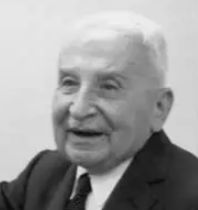
Socialism is the watchword and the catchword of our day. The socialist idea dominates the modem spirit. The masses approve of it. It expresses the thoughts and feelings of all; it has set its seal upon our time. When history comes to tell our story it will write above the chapter "The Epoch of Socialism." As yet, it is true, Socialism has not created a society which can be said to represent its ideal. But for more than a generation the policies of civilized nations have been directed towards nothing less than a gradual realization of Socialism.
▼
Source
source
Introduction : The Success of Socialist Ideas

2 months 3 weeks ago
Well, which is the most rational theory about these ten millions of species? Is it most likely that there have been ten millions of special creations? or is it most likely that, by continual modifications due to change of circumstances, ten millions of varieties have been produced, as varieties are being produced still?

2 months 3 weeks ago
Should it be proved that woman is naturally weaker than man, from whence does it follow that it is natural for her to labour to become still weaker than nature intended her to be? Arguments of this cast are an insult to common sense, and savour of passion. The divine right of husbands, like the divine right of kings, may, it is to be hoped, in this enlightened age, be contested without danger, and though conviction may not silence many boisterous disputants, yet, when any prevailing prejudice is attacked, the wise will consider, and leave the narrow-minded to rail with thoughtless vehemence at innovation.
▼
Source
source
Ch. 3
2 months 3 weeks ago
Second, in the presence of this continuity of feeling, nominalistic maxims appear futile. There is no doubt about one idea affecting another, when we can directly perceive the one generally modified and shaping itself into the other. Nor can there any longer be any difficulty about one idea resembling another, when we can pass along the continuous field of quality from one to the other and back again to the point which we had marked.
3 months 4 weeks ago
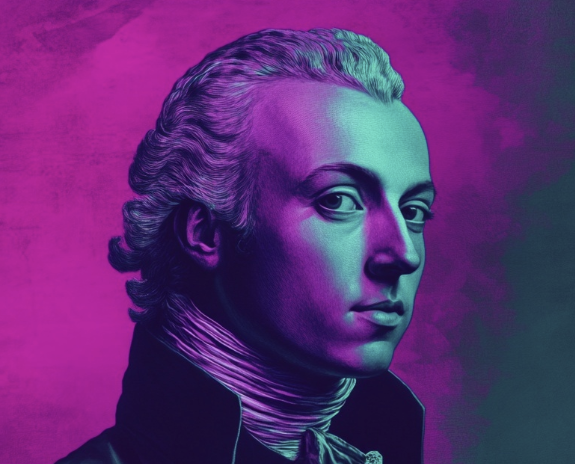
Thoughts without content are empty, intuitions without concepts are blind. The understanding can intuit nothing, the senses can think nothing. Only through their unison can knowledge arise.
▼
Source
source
A 51, B 75

2 months 2 weeks ago
Why tempt ye me, ye hypocrites? Shew me the tribute money.
▼
Source
source
22:18-19 (KJV)

3 months 3 weeks ago
I don't like the spirit of socialism - I think freedom is the basis of everything.
▼
Source
source
Letter to Constance Malleson (Colette), September 29, 1916

2 weeks 2 days ago
To reconcile Despotism with Freedom:-well, is that such a mystery? Do you not already know the way? It is to make your Despotism just. Rigorous as Destiny; but just too, as Destiny and its Laws. The Laws of God: all men obey these, and have no 'Freedom' at all but in obeying them. The way is already known, part of the way;-and courage and some qualities are needed for walking on it!

3 months 2 weeks ago
We rarely find anyone who can say he has lived a happy life, and who, content with his life, can retire from the world like a satisfied guest.
▼
Source
source
Book I, satire i, line 117
2 months 3 weeks ago
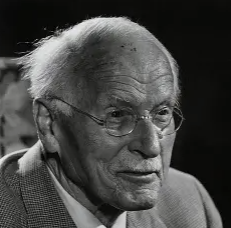
As the animus is partial to argument, he can best be seen at work in disputes where both parties know they are right. Men can argue in a very womanish way, too, when they are anima-possessed and have thus been transformed into the animus of their own anima.
▼
Source
source
Aion (1951). CW 9, Part II: P.29

3 months 3 weeks ago
Thus, while the refugee serfs only wished to be free to develop and assert those conditions of existence which were already there, and hence, in the end, only arrived at free labour, the proletarians, if they are to assert themselves as individuals, will have to abolish the very condition of their existence hitherto (which has, moreover, been that of all society up to the present), namely, labour. Thus they find themselves directly opposed to the form in which, hitherto, the individuals, of which society consists, have given themselves collective expression, that is, the State. In order, therefore, to assert themselves as individuals, they must overthrow the State.
▼
Source
source
"Communism. The Production of the Form of Intercourse Itself", The Marx-Engels Reader
2 months 1 week ago
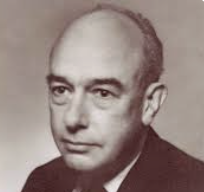
How are we to adjudicate among rival ontologies? Certainly the answer is not provided by the semantical formula "To be is to be the value of a variable"; this formula serves rather, conversely, in testing the conformity of a given remark or doctrine to a prior ontological standard.
▼
Source
source
"On What There Is"
4 days ago
Never express yourself more clearly than you are able to think.
▼
Source
source
As quoted in Values of the Wise : Humanity's Highest Aspirations (2004) by Jason Merchey, p. 63

1 month 3 weeks ago
Adversity shows whether we have friends, or only the shadows of friends.
▼
Source
source
Maxim 35

3 months 3 weeks ago
To think that because those who wield power in society wield in the end that of government, therefore it is of no use to attempt to influence the constitution of the government by acting on opinion, is to forget that opinion is itself one of the greatest active social forces. One person with a belief is a social power equal to ninety-nine who have only interests.
▼
Source
source
Ch. I: To What Extent Forms of Government Are a Matter of Choice (p. 155)
3 months 3 weeks ago
[M]y father's rejection of all that is called religious belief, was not, as many might suppose, primarily a matter of logic and evidence: the grounds of it were moral, still more than intellectual. He found it impossible to believe that a world so full of evil was the work of an Author combining infinite power with perfect goodness and righteousness.
▼
Source
source
(pp. 39-40)
3 months 3 weeks ago
The "through-and-through" universe seems to suffocate me with its infallible impeccable all-pervasiveness. Its necessity, with no possibilities; its relations, with no subjects, make me feel as if I had entered into a contract with no reserved rights ... It seems too buttoned-up and white-chokered and clean-shaven a thing to speak for the vast slow-breathing unconscious Kosmos with its dread abysses and its unknown tides.
▼
Source
source
Essays in Radical Empiricism (1912), Ch. 12 : Absolutism and Empiricism
1 month 4 weeks ago
The end of history is, alas, also the end of the dustbins of history. There are no longer any dustbins for disposing of old ideologies, old regimes, old values. Where are we going to throw Marxism, which actually invented the dustbins of history? (Yet there is some justice here since the very people who invented them have fallen in.) Conclusion: if there are no more dustbins of history, this is because History itself has become a dustbin. It has become its own dustbin, just as the planet itself is becoming its own dustbin.
▼
Source
source
The Illusion of the End (1992) (L'Illision de la Fin) Tr. Chris Turner, 1994, Stanford University Press, ISBN 0804725012, p. 26, "The Event Strike"

1 week 3 days ago
"New friends, however, will not be the same." No, nor will you yourself remain the same; you change with every day and every hour.

2 months 3 weeks ago
Anxiety - or the fanaticism of the worst.
2 months 2 weeks ago
The operations of understanding thus divide the world into numberless polarities, and Hegel uses the expression 'isolated reflection' (isolierte Reflection) to characterize the manner in which understanding forms and connects its polar concepts. The rise and spread of this kind of thinking Hegel connects with the origin and prevalence of crucial relationships in human life. The antagonisms of 'isolated reflections' express real antagonisms. .... Isolation and opposition are not, however, the final state of affairs. The world must not remain a complex of fixed disparates. The unity that underlies the antagonisms must be grasped and realized by reason, which has the task of reconciling the opposites and 'sublimating' them in a true unity.
▼
Source
source
P. 45
2 months 2 weeks ago
It is written, Man shall not live by bread alone, but by every word that proceedeth out of the mouth of God.
▼
Source
source
4:4 (KJV) Said to Satan. The reference is to Deuteronomy 8:3, "... that he might make thee know that man doth not live by bread only, but by every word that proceedeth out of the mouth of the Lord doth man live." (KJV)

3 months 3 weeks ago
The hidden significance of these fables which is sometimes thought to have been detected, the ethics running parallel to the poetry and history, are not so remarkable as the readiness with which they may be made to express a variety of truths. As if they were the skeletons of still older and more universal truths than any whose flesh and blood they are for the time made to wear. It is like striving to make the sun, or the wind, or the sea symbols to signify exclusively the particular thoughts of our day. But what signifies it? In the mythus a superhuman intelligence uses the unconscious thoughts and dreams of men as its hieroglyphics to address men unborn. In the history of the human mind, these glowing and ruddy fables precede the noonday thoughts of men, as Aurora the sun's rays. The matutine intellect of the poet, keeping in advance of the glare of philosophy, always dwells in this auroral atmosphere.
3 weeks ago
As for civilization, from which at last we are about to escape, so far from being the social destiny of man, it is only a transient stage - a state of temporary evil with which globes are afflicted during the first ages of their career; it is for the human race a disease of infancy, like teething; but it is a disease which has been prolonged in our globe at least twenty centuries beyond its natural term, owing to the neglect on the part of the ancient philosophy to study association and passional attraction.

2 months 1 week ago
The Reformation was a popular uprising, and for a century and a half drenched Europe in blood. The beginnings of the Scientific movement were confined to a minority among the intellectual elite.... The worst that happened to men of science was that Galileo suffered an honorable detention and a mild reproof, before dying peacefully in his bed. The way in which the persecution of Galileo has been remembered is a tribute to the quiet commencement of the most intimate change in outlook which the human race had yet encountered. Since a babe was born in a manger, it may be doubted whether so great a thing has happened with so little stir.
▼
Source
source
Ch. 1: "The Origins of Modern Science", pp. 2-3

3 months 3 weeks ago
You must picture me alone in that room in Magdalen, night after night, feeling, whenever my mind lifted even for a second from my work, the steady, unrelenting approach of Him whom I so earnestly desired not to meet. That which I greatly feared had at last come upon me. In the Trinity Term of 1929 I gave in, and admitted that God was God, and knelt and prayed: perhaps, that night, the most dejected and reluctant convert in all England.
4 months 3 weeks ago
Just you think first, and don't bother to speak afterward, either.
2 months 3 weeks ago
An infirmity which affects the whole race, is no proper object for the scorn of an individual who belongs to that race, and who, before he could expose it, must himself have been its slave.
▼
Source
source
p. 12
3 months 3 weeks ago
God cannot give us a happiness and peace apart from Himself, because it is not there. There is no such thing.
▼
Source
source
Book II, Chapter 3, "The Shocking Alternative"

2 months 3 weeks ago
When we speak of the commerce with our [American] colonies, fiction lags after truth, invention is unfruitful, and imagination cold and barren.
2 months 3 weeks ago
Marriage is a union between two persons - one man and one woman. A woman who has given herself up to one, can not give herself up to a second, for her whole dignity requires that she should belong only to this one.
▼
Source
source
p. 406
1 month 1 week ago
Of the twenty or so civilizations known to modern Western historians, all except our own appear to be dead or moribund, and, when we diagnose each case, in extremis or post mortem, we invariably find that the cause of death has been either War or Class or some combination of the two. To date, these two plagues have been deadly enough, in partnership, to kill off nineteen out of twenty representatives of this recently evolved species of human society; but, up to now, the deadliness of these scourges has had a saving limit.
▼
Source
source
Ch. 2: The Present Point in History
2 months 2 weeks ago
The sabbath was made for man, and not man for the sabbath.
▼
Source
source
Mark 2:27 (KJV)

3 months 4 weeks ago
As to the Approbation or Esteem of those Blockheads who call themselves the Public, & whom a Bookseller, a Lord, a Priest, or a Party can guide, I do most heartily despise it.
▼
Source
source
Letter 138, To Gilbert Elliot of Minto; August 9, 1757

3 months 3 weeks ago
I tell you in truth: all men are Prophets or else God does not exist.
▼
Source
source
Act 1

2 months 1 week ago
It is not enough to accept a concept of order and live by it; that is cowardice, and such cowardice cannot result from freedom. Chaos must be faced. Real order must be preceded by a descent into chaos.
▼
Source
source
Chapter Three, The Romantic Outsider
2 months 5 days ago
Man is to be found in reason, God in the passions.
▼
Source
source
K 21
2 months 3 weeks ago
Sometimes I had an overwhelming urge to speak, not about that, but only to hint that there were some curious things about me which no one knew of. I wanted to find out whether other people had undergone similar experiences. I never succeeded in discovering so much as a trace of them in others. As a result, I had the feeling that I was either outlawed or elect, accursed or blessed.
▼
Source
source
p. 41
2 months 5 days ago
Doubt must be no more than vigilance, otherwise it can become dangerous.
▼
Source
source
F 53
2 months 3 weeks ago
It is a universal revolution and will, accordingly, have a universal range.
3 months 3 weeks ago
I hate the world and almost all the people in it. I hate the Labour Congress and the journalists who send men to be slaughtered, and the fathers who feel a smug pride when their sons are killed, and even the pacifists who keep saying human nature is essentially good, in spite of all the daily proofs to the contrary. I hate the planet and the human race - I am ashamed to belong to such a species.
▼
Source
source
Letter to Colette, December 28, 1916
CivilSimian.com created by AxiomaticPanic, CivilSimian, Kalokagathia