


2 months 1 week ago
Everyone is mistaken, everyone lives in illusion. At best, we can admit a scale of fictions, a hierarchy of unrealities, giving preference to one rather than to another; but to choose, no, definitely not that...

4 months 2 weeks ago
The man who does not wish to belong to the mass needs only to cease taking himself easily; let him follow his conscience, which calls to him: Be your self! All you are now doing, thinking, desiring, is not you yourself.
2 months 6 days ago
In the world of action, we know that it is disastrous to treat animals or human beings as though they were stocks and stones. Why should we suppose this treatment to be any less mistaken in the world of ideas?
▼
Source
source
p. 21.

2 months 1 week ago
Go thy way; and as thou hast believed, so be it done unto thee.
▼
Source
source
8:13 (KJV) Said to the officer.

4 months 5 days ago
Natural justice is a symbol or expression of usefulness, to prevent one person from harming or being harmed by another.
3 months 2 weeks ago
I am sure, zeal or love for truth can never permit falsehood to be used in the defence of it.
▼
Source
source
187
4 months ago
When you do anything from a clear judgment that it ought to be done, never shun the being seen to do it, even though the world should make a wrong supposition about it; for, if you don't act right, shun the action itself; but, if you do, why are you afraid of those who censure you wrongly?
▼
Source
source
(35).
3 months 2 weeks ago
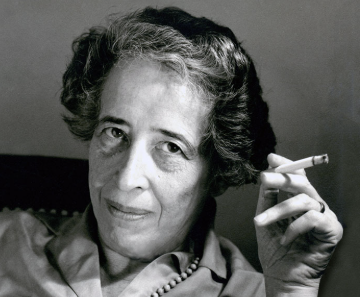
If the inner psychic ground of our individual appearance were not always the same, there could be no science of psychology, which qua science relies on a psychic "inside we are all alike," just as the science of physiology and medicine relies on the sameness of our inner organs. The monstrous sameness and pervasive ugliness so highly characteristic of the findings of modern psychology, and contrasting so obviously with the enormous variety and richness of overt human conduct, witness to the radical difference between the inside and the outside of the human body.
▼
Source
source
pp. 34-35
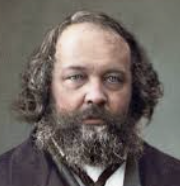
2 months 1 week ago
No theory, no ready-made system, no book that has ever been written will save the world. I cleave to no system. I am a true seeker.
▼
Source
source
As quoted in Michael Bakunin (1937) by E.H. Carr, p. 175
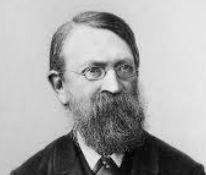
2 months 1 week ago
The aim of research is the discovery of the equations which subsist between the elements of phenomena.
▼
Source
source
p. 205; On aim of research.
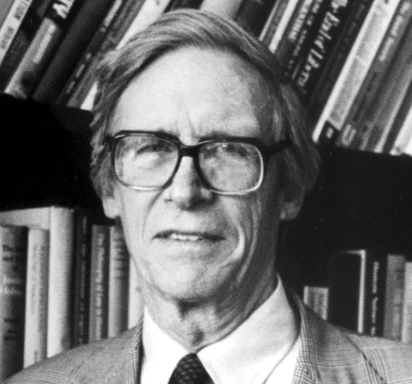
3 months 2 weeks ago
The principles of justice are chosen behind a veil of ignorance.
▼
Source
source
Chapter I, Section 3, pg. 12
2 months 1 week ago
Jesus answered: "Believe me, Barnabas that I cannot weep as much as I ought. For if men had not called me God, I should have seen God here as he will be seen in paradise, and should have been safe not to fear the day of judgment. But God knows that I am innocent, because never have I harboured thought to be held more than a poor slave. No, I tell you that if I had not been called God I should have been carried into paradise when I shall depart from the world, whereas now I shall not go thither until the judgment. Now you see if I have cause to weep."
▼
Source
source
Ch. 112

3 months 2 weeks ago
The effectiveness of political and religious propaganda depends upon the methods employed, not upon the doctrines taught. These doctrines may be true or false, wholesome or pernicious-it makes little or no difference.
▼
Source
source
Chapter 7 (p. 63)
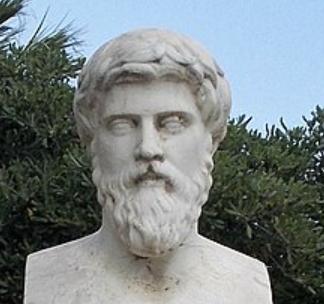
3 months 3 days ago
When Eudæmonidas heard a philosopher arguing that only a wise man can be a good general, "This is a wonderful speech," said he; "but he that saith it never heard the sound of trumpets."
▼
Source
source
62 Eudæmonidas
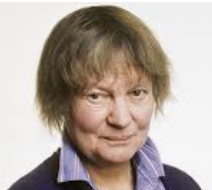
2 months 1 week ago
But fantasy kills imagination, pornography is death to art.
▼
Source
source
The Message to the Planet (1989) p. 43.

2 months 2 weeks ago
Justice is the end of government. It is the end of civil society. It ever has been, and ever will be, pursued until it be obtained, or until liberty be lost in the pursuit.
▼
Source
source
Chapter XV.

3 months 2 weeks ago
"They would say," he answered, "that you do not fail in obedience through lack of love, but have lost love because you never attempted obedience."
▼
Source
source
Ch. 7 : The Pendragon, section 2

3 months 2 weeks ago
My father was as well aware as anyone that Christians do not, in general, undergo the demoralizing consequences which seem inherent in such a creed, in the manner or to the extent which might have been expected from it. The same slovenliness of thought, and subjection of the reason to fears, wishes, and affections, which enable them to accept a theory involving a contradiction in terms, prevents them from perceiving the logical consequences of the theory. Such is the facility with which mankind believe at one and the same time things inconsistent with one another, and so few are those who draw from what they receive as truths, any consequences but those recommended to them by their feelings, that multitudes have held the undoubting belief in an Omnipotent Author of Hell, and have nevertheless identified that being with the best conception they were able to form of perfect goodness.
▼
Source
source
(pp. 41-42)
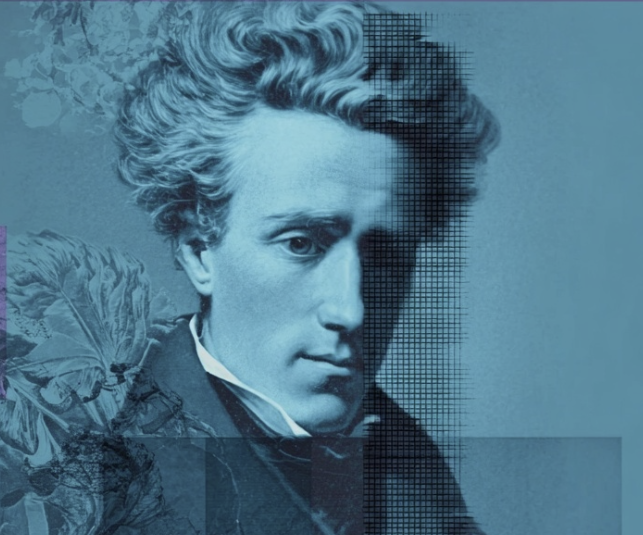
4 months 2 weeks ago
Anxiety and nothing always correspond to each other. As soon as the actuality of freedom and of spirit is posited, anxiety is canceled. But what then does the nothing of anxiety signify more particularly in paganism. This is fate. Fate is a relation to spirit as external. It is the relation between spirit and something else that is not spirit and to which fate nevertheless stands in a spiritual relation. Fate may also signify exactly the opposite, because it is the unity of necessity and accidental. ... A necessity that is not conscious of itself is eo ipso the accidental in relation to the next moment. Fate, then, is the nothing of anxiety.
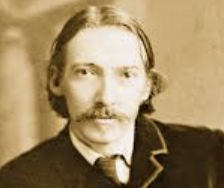
1 month 1 week ago
Times are changed with him who marries; there are no more by-path meadows, where you may innocently linger, but the road lies long and straight and dusty to the grave. Idleness, which is often becoming and even wise in the bachelor, begins to wear a different aspect when you have a wife to support.
▼
Source
source
Virginibus Puerisque, Ch. 2.

3 months 2 weeks ago
I find it wholesome to be alone the greater part of the time. To be in company, even with the best, is soon wearisome and dissipating. I love to be alone. I never found the companion that was so companionable as solitude. We are for the most part more lonely when we go abroad among men than when we stay in our chambers. A man thinking or working is always alone, let him be where he will... The really diligent student... is as solitary as a dervish in the desert. The farmer can work alone in the field or the woods all day, hoeing or chopping, and not feel lonesome.
3 months 2 weeks ago
Both of us victims of the same twentieth-century plague. Not the Black Death, this time; the Grey Life.
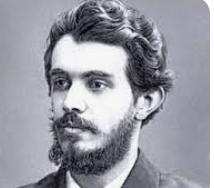
2 months 2 days ago
We used to pay too little attention to utopias, or even disregard them altogether, saying with regret they were impossible of realisation. Now indeed they seem to be able to be brought about far more easily than we supposed, and we are actually faced by an agonising problem of quite another kind: how can we prevent their final realisation? ... Utopias are more realisable than those 'realist politics' that are only the carefully calculated policies of office-holders, and towards utopias we are moving. But it is possible that a new age is already beginning, in which cultured and intelligent people will dream of ways to avoid ideal states and to get back to a society that is less 'perfect' and more free.
▼
Source
source
pp. 187-188. Aldous Huxley used this passage (in French translation) as the epigraph to Brave New World.

2 months 1 day ago
I also am other than what I imagine myself to be. To know this is forgiveness.
▼
Source
source
p. 200

1 month 4 weeks ago
Nietzsche's great concept of Yea-saying gave him a notion of purpose that is seen as positive.
▼
Source
source
Nietzsche, in short, was a religious mystic. p. 275
1 week 1 day ago
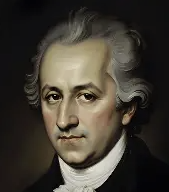
One never goes so far as when one doesn't know where one is going.
▼
Source
source
Letter to Carl Friedrich Zelter

3 months 1 week ago
The world and life are one.
▼
Source
source
(5.621) Original German: Die Welt und das Leben sind Eins.
7 months 3 weeks ago
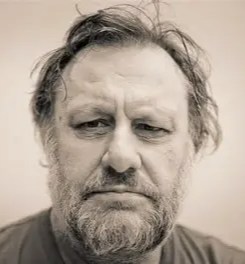
I think that the task of philosophy is not to provide answers, but to show how the way we perceive a problem can be itself part of a problem.

3 months 2 weeks ago
Genius borrows nobly. When Shakespeare is charged with debts to his authors, Landor replies: "Yet he was more original than his originals. He breathed upon dead bodies and brought them into life."
▼
Source
source
Quotation and Originality

3 months 3 weeks ago
You're either excluding the right people or including the wrong people.
▼
Source
source
ComfortDragon
3 months 2 weeks ago
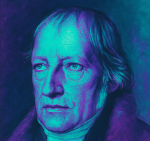
With Leibnitz the extent to which thoughts advance is the extent of the universe; where comprehension ceases, the universe ceases, and God begins: so that later it was even maintained that to be comprehended was derogatory to God, because He was thus degraded into finitude. In that procedure a beginning is made from the determinate, this and that are stated to be necessary; but since in the next place the unity of these moments is not comprehended, it is transferred to God. God is therefore, as it were, the waste channel into which all contradictions flow: Leibnitz's Théodicée is just a popular summing up such as this.
▼
Source
source
Third division, Chapter I. - The Metaphysics of the Understanding Alternate translation: "God is, as it were, the sewer into which all contradictions flow."
2 months 2 days ago
The greater part of Eastern teachers of the Church, from Clement of Alexandria to Maximus the Confessor, were supporters of Apokatastasis, of universal salvation and resurrection. And this is characteristic of (contemporary) Russian religious thought. Orthodox thought has never been suppressed by the idea of Divine justice and it never forgot the idea of Divine love. Chiefly - it did not define man from the point of view of Divine justice but from the idea of transfiguration and Deification of man and cosmos.
▼
Source
source
"The Truth of Orthodoxy" as translated in Vestnik of the Russian West European Patriarchal Exarchate
1 month 1 week ago
Time passes quickly with lovers.
▼
Source
source
The Pavilion on the Links, ch. V.
1 month 4 days ago
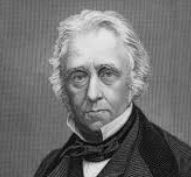
I have no knowledge of either Sanscrit or Arabic. But I have done what I could to form a correct estimate of their value. I have read translations of the most celebrated Arabic and Sanscrit works. I have conversed, both here and at home, with men distinguished by their proficiency in the Eastern tongues. I am quite ready to take the oriental learning at the valuation of the orientalists themselves. I have never found one among them who could deny that a single shelf of a good European library was worth the whole native literature of India and Arabia. The intrinsic superiority of the Western literature is indeed fully admitted by those members of the committee who support the oriental plan of education.


3 months 2 weeks ago
In former days, men sold themselves to the Devil to acquire magical powers. Nowadays they acquire those powers from science, and find themselves compelled to become devils. There is no hope for the world unless power can be tamed, and brought into the service, not of this or that group of fanatical tyrants, but of the whole human race, white and yellow and black, fascist and communist and democrat; for science has made it inevitable that all must live or all must die.
▼
Source
source
Ch. 2: Leaders and Followers
2 months 2 weeks ago
There is something beautiful about virtue, Captain. But I am just a poor guy.
▼
Source
source
Scene VI.

1 week ago
Why, reader, truly, if they asked thee or me, Which way we meant to vote?-were it not our likeliest answer: Neither way! I, as a Tenpound Franchiser, will receive no bribe; but also I will not vote for either of these men. Neither Rigmarole nor Dolittle shall, by furtherance of mine, go and make laws for this country. I will have no hand in such a mission. How dare I! If other men cannot be got in England, a totally other sort of men, different as light is from dark, as star-fire is from street-mud, what is the use of votings, or of Parliaments in England?

1 month 3 weeks ago
Man is always partial and is quite right to be. Even impartiality is partial.
▼
Source
source
F 78
4 months 1 week ago
In order to cease being a doubtful case, one has to cease being, that's all.

2 months 2 days ago
I am dreaming ...? Let me dream, if this dream is my life. Do not awaken me from it. I believe in the immortal origin of this yearning for immortality, which is the very substance of my soul. But do I really believe in it ...? And wherefore do you want to be immortal? you ask me, wherefore? Frankly, I do not understand the question, for it is to ask the reason of the reason, the end of the end, the principle of the principle.
1 month 2 weeks ago
There was a brief moment after 9/11 when Colin Powell said "we should not rush to satisfy the desire for revenge." It was a great moment, an extraordinary moment, because what he was actually asking people to do was to stay with a sense of grief, mournfulness, and vulnerability.
▼
Source
source
Interview with Judith Butler. in: The Believer. May 2003
2 months 1 week ago
There is no substitute for the comfort supplied by the utterly taken-for-granted relationship.
▼
Source
source
A Severed Head (1961); 1976, p. 181.

1 month 2 weeks ago
Reason has discovered the struggle for existence and the law that I must throttle all those who hinder the satisfaction of my desires. That is the deduction reason makes. But the law of loving others could not be discovered by reason, because it is unreasonable.
▼
Source
source
Pt. VIII, ch. 13
3 months 2 weeks ago
This world is but canvas to our imaginations.
6 days ago
What the Universities have mainly done-what I have found the University did for me, was that it taught me to read in various languages and various sciences, so that I could go into the books that treated of these things, and try anything I wanted to make myself master of gradually, as I found it suit me. Whatever you may think of all that, the clearest and most imperative duty lies on every one of you to be assiduous in your reading; and learn to be good readers, which is, perhaps, a more difficult thing than you imagine. Learn to be discriminative in your reading-to read all kinds of things that you have an interest in, and that you find to be really fit for what you are engaged in.
3 months 1 week ago
Courage, not cleverness; not even inspiration, is the grain of mustard that grows up to be a great tree.
▼
Source
source
p. 44e
3 months 3 days ago
"Young men," said Cæsar, "hear an old man to whom old men hearkened when he was young."
▼
Source
source
Cæsar Augustus

1 month 1 week ago
I am extremely pleased by Daniel Fincke's article, which says exactly what I SHOULD have said and, to my regret, didn't make sufficiently clear in my Reason Rally speech. The best way to summarise it would be to modify the quotation from Johann Hari. Johann said, "I respect you too much to respect your ridiculous beliefs". From now on, my version will be, "I respect you too much to accept that you really believe anything so ridiculous as you claim. Please either defend those beliefs and explain why they are not ridiculous, or else declare that you do not hold them and publicly disown the church to which you claim loyalty."
▼
Source
source
comment on Daniel Fincke (2 April 2012), "In Defense of Dawkins's Reason Rally Speech", RichardDawkins.net, retrieved on 1 May 2012
CivilSimian.com created by AxiomaticPanic, CivilSimian, Kalokagathia