


3 months 5 days ago
We have an enemy, to whose virtues we can owe nothing; but on this occasion we are infinitely obliged to one of his vices. We owe more to his insolence than to our own precaution.
▼
Source
source
p.3

4 months 1 week ago
Character means that the person derives his rules of conduct from himself and from the dignity of humanity. Character is the common ruling principle in man in the use of his talents and attributes. Thus it is the nature of his will, and is good or bad. A man who acts without settled principles, with no uniformity, has no character. A man may have a good heart and yet no character, because he is dependent upon impulses and does not act according to maxims. Firmness and unity of principle are essential to character.
▼
Source
source
Part III : Selection on Education from Kant's other Writings, Ch. I Pedagogical Fragments, # 14
1 month 2 weeks ago
Scientific men get an awkward habit - no, I won't call it that, for it is a valuable habit - of believing nothing unless there is evidence for it; and they have a way of looking upon belief which is not based upon evidence, not only as illogical, but as immoral.
▼
Source
source
Thomas Henry Huxley. "Lectures on Evolution Title: This is Essay# 3 from" Science and Hebrew Tradition." (1882); as cited in: William Trufant Foster, (1908) Argumentation and debating, p. 55
2 months 3 weeks ago
In the ice of solitude man becomes most inexorably a question to himself, and just because the question pitilessly summons and draws into play his most secret life he becomes an experience to himself.
▼
Source
source
p. 150

3 months 1 day ago
The discussion of the sexual problem is only a somewhat crude prelude to a far deeper question, and that is the question of the psychological relationship between the sexes. In comparison with this the other pales into insignificance, and with it we enter the real domain of woman. Woman's psychology is founded on the principle of Eros, the great binder and loosener, whereas from ancient times the ruling principle ascribed to man is Logos.
▼
Source
source
P.254
2 weeks 5 days ago
It is the greatest of all mistakes to do nothing because you can only do little.
▼
Source
source
Lecture XIX : On the Conduct of the Understanding, Part II

4 months 4 days ago
If good music has charms to soothe the savage breast, bad music has no less powerful spells for filling the mildest breast with rage, the happiest with horror and disgust. Oh, those mammy songs, those love longings, those loud hilarities! How was it possible that human emotions intrinsically decent could be so ignobly parodied.
▼
Source
source
"Silence is Golden," p. 59


2 months 2 weeks ago
Haikus allow the whole world to appear within things.
2 months 3 weeks ago
Skepticism, like chastity, should not be relinquished too readily.
▼
Source
source
George Santayana, as quoted in Quotations for Our Time (1977) edited by Laurence J. Peter

4 months 5 days ago
Money does not arise by convention, any more than the state does. It arises out of exchange, and arises naturally out of exchange; it is a product of the same.
▼
Source
source
Notebook I, The Chapter on Money, p. 85.
3 months 4 weeks ago
The bourgeois public sphere may be conceived above all as the sphere of private people come together as a public; they soon claimed the public sphere regulated from above against the public authorities themselves, to engage them in a debate over the general rules governing relations in the basically privatized but publicly relevant sphere of commodity exchange and social labor.
▼
Source
source
p. 27
3 months 5 days ago
I hate tyranny, at least I think I do; but I hate it most of all where most are concerned in it. The tyranny of a multitude is a multiplied tyranny. If, as society is constituted in these large countries of France and England, full of unequal property, I must make my choice (which God avert!) between the despotism of a single person, or of the many, my election is made. As much injustice and tyranny has been practised in a few months by a French democracy, as in all the arbitrary monarchies in Europe in the forty years of my observation.
▼
Source
source
Letter to Captain Thomas Mercer (26 February 1790), quoted in Alfred Cobban and Robert A. Smith (eds.), The Correspondence of Edmund Burke, Volume VI: July 1789-December 1791 (1967), p. 96
3 months 5 days ago
Young man, there is America - which at this day serves for little more than to amuse you with stories of savage men and uncouth manners; yet shall, before you taste of death, show itself equal to the whole of that commerce which now attracts the envy of the world.
2 days ago
When we reflect, that the Inquisition, by its restrictions, and authority, would have prevented the French revolution,-it is hard to say, whether the Sovereign, who, wholly, and without reserve, gave up this instrument, would not, in reality, be doing an injury to humanity.
▼
Source
source
p. 31

4 months 1 week ago
A minister of state is excusable for the harm he does when the helm of government has forced his hand in a storm; but in the calm he is guilty of all the good he does not do.
▼
Source
source
Le Siècle de Louis XIV, ch. VI: "État de la France jusqu'à la mort du cardinal Mazarin en 1661" (1752)

2 months 3 weeks ago
Whenever a human being, through the commission of a crime, has become exiled from good, he needs to be reintegrated with it through suffering. The suffering should be inflicted with the aim of bringing the soul to recognize freely some day that its infliction was just. This reintegration with the good is what punishment is. Every man who is innocent, or who has finally expiated guilt, needs to be recognized as honourable to the same extent as anyone else.
2 days ago
External things are not the problem. It's your assessment of them. Which you can erase right now.
▼
Source
source
(Hays translation) VIII, 47

4 months 4 days ago
Existence precedes and rules essence.
▼
Source
source
Part 4, chapter 1

4 months 1 week ago
Now I say this to keep the conscience free from mischievous laws and fictitious sins, and not because I would defend images. Nor would I condemn those who have destroyed them, especially those who destroy divine and idolatrous images. But images for memorial and witness, such as crucifixes and images of saints, are to be tolerated.
▼
Source
source
p. 91
2 weeks 1 day ago
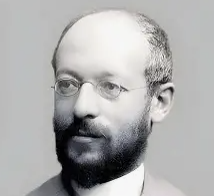
Cities are, first of all, seats of the highest economic division of labor. They produce thereby such extreme phenomena as in Paris the remunerative occupation of the quatorzième. They are persons who identify themselves by signs on their residences and who are ready at the dinner hour in correct attire, so that they can be quickly called upon if a dinner party should consist of thirteen persons. In the measure of its expansion, the city offers more and more the decisive conditions of the division of labor. It offers a circle which through its size can absorb a highly diverse variety of services.
▼
Source
source
p. 420

4 months 5 days ago
Keep cool: it will be all one a hundred years hence.
▼
Source
source
Montaigne; or, The Skeptic

5 months 2 days ago
It is no one's privilege to despise another. It is only a hard-won right after long experience.
2 days ago
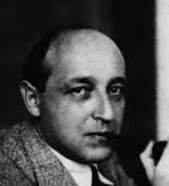
Conflicting intellectual positions may actually come to supplement one another. It is imperative in the present transitional period to make use of the intellectual twilight which dominates our epoch and in which all values and points of view appear in their genuine relativity. We must realize once and for all that the meanings which make up our world are simply an historically determined and continuously developing structure in which man develops, and are in no sense absolute.

1 month 1 day ago
It is no coincidence that the ABM Treaty was signed midway between the delinking of the U.S. dollar from the gold standard in 1971 and the first oil crisis in 1973. These were the years not only of monetary and economic crises but also of both the beginning of the destruction of the welfare state and the shift of the hegemony of economic production from the factory to more social and immaterial sectors. One might think of these various transformations as different faces of one common phenomenon, one grand social transformation.
▼
Source
source
39
2 months 2 weeks ago
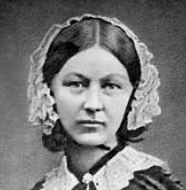
Women are never supposed to have any occupation of sufficient importance not to be interrupted, except "suckling their fools "; and women themselves have accepted this, have written books to support it, and have trained themselves so as to consider whatever they do as not of such value to the world or to others, but that they can throw it up at the first "claim of social life." They have accustomed themselves to consider intellectual occupation as a merely selfish amusement, which it is their " duty " to give up for every trifler more selfish than themselves.

4 days ago
I think we must be careful about too easily accepting, or being too easily grateful for, sacrifices made by others, especially if we have made none ourselves.

2 weeks 6 days ago
A thatched roof once covered free men; under marble and gold dwells slavery.
3 months 5 days ago
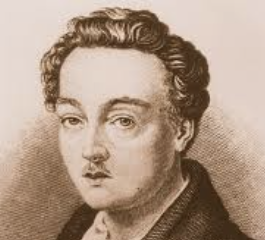
The statue of Freedom has not been cast yet, the furnace is hot, we can all still burn our fingers.
▼
Source
source
Act I.
2 months 2 weeks ago
Chronic boredom - compensated or uncompensated - constitutes one of the major psychopathological phenomena in contemporary technotronic society, although it is only recently that it has found some recognition.
▼
Source
source
p. 273

2 months 3 weeks ago
The species with eyes appears suddenly, capriciously as it were, and it is this species which changes the environment by creating its visible aspect. The eye does not come into being because it is needed. Just the contrary; because the eye appears it can henceforth be applied as a serviceable instrument. Each species builds up its stock of useful habits by selecting among, and taking advantage of, the innumerable useless actions which a living being performs out of sheer exuberance.
▼
Source
source
p. 17

1 month 4 weeks ago
A novel is balanced between a few true impressions and the multitude of false ones that make up most of what we call life. It tells us that for every human being there is a diversity of existences, that the single existence is itself an illusion in part, that these many existences signify something, tend to something, fulfill something; it promises us meaning, harmony, and even justice.
▼
Source
source
Nobel Prize lecture

4 months 6 days ago
Thus, because Christian morals leave animals out of consideration ... therefore in philosophical morals they are of course at once outlawed; they are merely "things," simply means to ends of any sort; and so they are good for vivisection, for deer-stalking, bull-fights, horse-races, etc., and they may be whipped to death as they struggle along with heavy quarry carts. Shame on such a morality ... which fails to recognize the Eternal Reality immanent in everything that has life, and shining forth with inscrutable significance from all eyes that see the sun!
▼
Source
source
Part II, Ch. VI, pp. 94-95
1 month 1 week ago
Whatever the practical origins of aesthetic discernment may have been, it has been used to create great works of art. When the very loftiest human creations are seen to derive from humble origins and functions, what needs revision is not our esteem for these creations but our notion of nobility.
▼
Source
source
The Nature of Rationality (1993), Ch. V : Instrumental Rationality and Its Limits; Rationality's Imagination, p. 181
2 days ago
Put an end once for all to this discussion of what a good man should be, and be one.
▼
Source
source
X. 16,
2 months 3 weeks ago
The simultaneous existence of opposite virtues in the soul - like pincers to catch hold of God.
▼
Source
source
p. 92

2 months 4 days ago
All state obligations are against the conscience of a Christian: the oath of allegiance, taxes, law proceedings and military service.
▼
Source
source
Chapter VII, Significance of Compulsory Service
2 weeks 6 days ago
He knows his own strength; he knows that he was born to carry burdens.

3 months 2 weeks ago
Envy has been, is, and shall be, the destruction of many. What is there, that Envy hath not defamed, or Malice left undefiled? Truly, no good thing.
3 months 2 days ago
Before abstraction everything is one, but one like chaos; after abstraction everything is united again, but this union is a free binding of autonomous, self-determined beings. Out of a mob a society has developed, chaos has been transformed into a manifold world.
▼
Source
source
Fragment No. 95
4 months 1 week ago
Superstition sets the whole world in flames; philosophy quenches them.
▼
Source
source
Dictionnaire philosophique (1822), "Superstition"
4 months 2 weeks ago
God is surrounded with people full of love who demand of him the benefits of love which are in his power: thus he is properly the king of love.

4 months 5 days ago
I am here to plead his cause with you. I plead not for his life, but for his character - his immortal life; and so it becomes your cause wholly, and is not his in the least. Some eighteen hundred years ago Christ was crucified; this morning, perchance, Captain Brown was hung. These are the two ends of a chain which is not without its links. He is not Old Brown any longer; he is an angel of light.
2 months 1 week ago
There is one mistake we got to avoid, and that is the mistake of supposing that if you simulate it, you duplicate it. This is a deep mistake embedded in our popular culture - that simulation is equivalent to duplication, but of course it isn't. A perfect simulation of the brain - say, on a computer - would no longer thereby be conscious than a perfect simulation of a rainstorm on a weather-predicting computer will leave us all wet.
2 weeks 2 days ago
But what we've got going wrong is we've got a kind of bifurcation in cultural development:You take your classified telephone directory, and open up "Churches", and have a ruler in your hand. And you will find that the longest space is occupied by authoritarian, Bible-banging churches. And these people are barbarians, who take the written word of the Bible literally. Because they need terribly, they have a personal need, for something to depend on. ... The government realizes that there is a very large number of people like that; and therefore, to keep their votes, they have to pander to those kind of people. And these are the boys who never grew up; they always need Papa. ... The trouble is that the boys who need Papa, are violent. They have the guns. And they are the types of people who like to be soldiers, policemen-tough guys. And therefore they have a great deal of power.
▼
Source
source
Interviewed on Les Hixon's show "In The Spirit" on WBAI New York
2 months 3 weeks ago
Both are torn halves of an integral freedom, to which however they do not add up.
▼
Source
source
On high culture and popular culture, in a letter to Walter Benjamin

4 months 6 days ago
Philosophy, if it cannot answer so many questions as we could wish, has at least the power of asking questions which increase the interest of the world, and show the strangeness and wonder lying just below the surface even in the commonest things of daily life.

4 months 1 week ago
The oldest and best known evil was ever more supportable than one that was new and untried.
▼
Source
source
Book III, Ch. 9. Of Vanity
5 months 5 days ago
Again, it is possible to fail in many ways (for evil belongs to the class of the unlimited ... and good to that of the limited), while to succeed is possible only in one way (for which reason also one is easy and the other difficult—to miss the mark easy, to hit it difficult); for these reasons also, then, excess and defect are characteristic of vice, and the mean of virtue; For men are good in but one way, but bad in many.
CivilSimian.com created by AxiomaticPanic, CivilSimian, Kalokagathia