


6 months 3 weeks ago
I used to ask myself, over a coffin: "What good did it do the occupant to be born?," I now put the same question about anyone alive.
4 months 3 weeks ago
By now it may be clear that the position I'm developing is a sort of post-Darwinian Kantianism.
▼
Source
source
p. 104; from "The Road since Structure"

6 months 3 weeks ago
Art is not the possession of the few who are recognized writers, painters, musicians; it is the authentic expression of any and all individuality. Those who have the gift of creative expression in unusually large measure disclose the meaning of the individuality of others to those others. In participating in the work of art, they become artists in their activity. They learn to know and honor individuality in whatever form it appears. The fountains of creative activity are discovered and released. The free individuality which is the source of art is also the final source of creative development in time.

8 months ago
A totally unmystical world would be a world totally blind and insane.
▼
Source
source
Grey Eminence, 1940

8 months 1 day ago
And the cost of a thing it will be remembered as the amount of life it requires to be exchanged for it.
▼
Source
source
After December 6, 1845
6 months 2 weeks ago
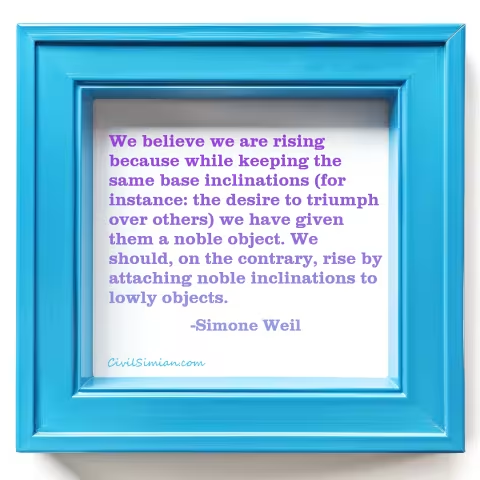
No human being escapes the necessity of conceiving some good outside himself towards which his thought turns in a movement of desire, supplication, and hope. consequently, the only choice is between worshipping the true God or an idol. Every atheist is an idolater - unless he is worshipping the true God in his impersonal aspect. The majority of the pious are idolaters.
▼
Source
source
Last Notebook (1942) p. 308
4 months ago
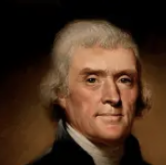
There is no act, however virtuous, for which ingenuity may not find some bad motive.
▼
Source
source
Letter to Edward Dowse
8 months 1 day ago
You can hardly convince a man of an error in a lifetime, but must content yourself with the reflection that the progress of science is slow. If he is not convinced, his grandchildren may be.

4 months 3 weeks ago
What the Universities have mainly done-what I have found the University did for me, was that it taught me to read in various languages and various sciences, so that I could go into the books that treated of these things, and try anything I wanted to make myself master of gradually, as I found it suit me. Whatever you may think of all that, the clearest and most imperative duty lies on every one of you to be assiduous in your reading; and learn to be good readers, which is, perhaps, a more difficult thing than you imagine. Learn to be discriminative in your reading-to read all kinds of things that you have an interest in, and that you find to be really fit for what you are engaged in.


6 months 1 week ago
The very proclaimers of "America first" have long before this betrayed the fundamental principles of real Americanism...the other truly great Americans who aimed to make of this country a haven of refuge, who hoped that all the disinherited and oppressed people in coming to these shores would give character, quality and meaning to the country.

8 months 1 week ago
Certainly it is true that Christians, so far as they themselves are concerned, are subject neither to law nor sword, and have need of neither. But take heed and first fill the world with real Christians before you attempt to rule it in a Christian and evangelical manner. This you will never accomplish; for the world and the masses are and always will be un-Christian, even if they are all baptized and Christian in name.
▼
Source
source
p. 91

3 months 4 weeks ago
Imagination is the soul, since it plays all the roles of the soul.
8 months 2 weeks ago
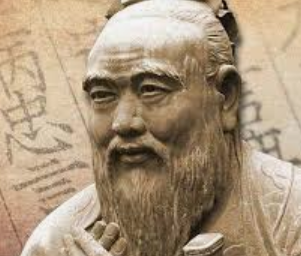
The superior man has neither anxiety nor fear. When internal examination discovers nothing wrong, what is there to be anxious about, what is there to fear?

8 months 2 days ago
Where danger shews it self, apprehension cannot, without stupidity, be wanting; where danger is, sense of danger should be; and so much fear as should keep us awake, and excite our attention, industry, and vigour; but not to disturb the calm use of our reason, nor hinder the execution of what that dictates.
▼
Source
source
Sec. 115
6 months 3 weeks ago
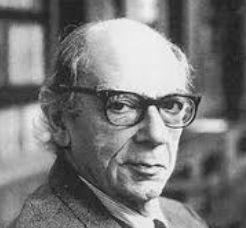
This they do in the service of an imaginary science; and, like the astrologers and soothsayers whom they have succeeded, cast up their eyes to the clouds, and speak in immense, unsubstantiated images and similes, in deeply misleading metaphors and allegories, and make use of hypnotic formulae with little regard for experience, or rational argument, or tests of proven reliability. Thereby they throw dust in their own eyes as well as in ours, obstruct our vision of the real world, and further confuse an already sufficiently bewildered public about the relations of morality to politics, and about the nature and methods of the natural sciences and historical studies alike.
8 months 3 weeks ago
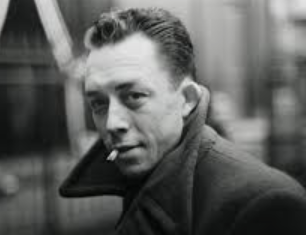
Homer tells us also that Sisyphus had put Death in chains. Pluto could not endure the sight of his deserted, silent empire. He dispatched the god of war, who liberated Death from the hands of her conqueror.

8 months 1 day ago
The conviction that it is important to believe this or that, even if a free inquiry would not support the belief, is one which is common to almost all religions and which inspires all systems of state education. The consequence is that the minds of the young are stunted and are filled with fanatical hostility both to those who have other fanaticisms, and, even more virulently, to those who object to all fanaticisms.
▼
Source
source
preface xxiii
7 months 3 weeks ago
For a thinking man is where Wisdom is at home.
▼
Source
source
Ahunuvaiti Gatha; Yasna 30, 9.
6 months 2 weeks ago
Above all our thought should be empty, waiting, not seeking anything, but ready to receive in its naked truth the object that is to penetrate it. All wrong translations, all absurdities in geometry problems, all clumsiness of style, and all faulty connection of ideas in compositions and essays, all such things are due to the fact that thought has seized upon some idea too hastily, and being thus prematurely blocked, is not open to the truth.
7 months 3 weeks ago
Even if I could by gradual degrees be transformed into a bat, nothing in my present constitution enables me to imagine what the experiences of such a future stage of myself thus metamorphosed would be like. The best evidence would come from the experience of bats, if we only knew what they were like.
▼
Source
source
p. 169.

7 months 4 weeks ago
We Britons should rejoice that we have contrived to reach much legal democracy (we still need more of the economic) without losing our ceremonial Monarchy. For there, right in the midst of our lives, is that which satisfies the craving for inequality, and acts as a permanent reminder that medicine is not food. Hence a man's reaction to Monarchy is a kind of test. Monarchy can easily be "debunked", but watch the faces, mark well the accents of the debunkers. These are the men whose taproot in Eden has been cut - whom no rumor of the polyphony, the dance, can reach - men to whom pebbles laid in a row are more beautiful than an arch. Yet even if they desire mere equality they cannot reach it. Where men are forbidden to honor a king they honor millionaires, athletes, or film-stars instead - even famous prostitutes or gangsters. For spiritual nature, like bodily nature, will be served - deny it food and it will gobble poison.
6 months 3 weeks ago
Once the philosophical foundation of democracy has collapsed, the statement that dictatorship is bad is rationally valid only for those who are not its beneficiaries, and there is no theoretical obstacle to the transformation of this statement into its opposite.
▼
Source
source
p. 29.
9 months 1 day ago
Socrates did not stop with a philosophical consideration of mankind; he addressed himself to each one individually, wrested everything from him, and sent him away empty-handed.
5 months 1 week ago
What right have humans to impose our values on members of another race or species? The charge is seductive but misplaced. There is no anthropomorphism here, no imposition of human values on alien minds. Human and nonhuman animals are alike in an ethically critical respect. The pleasure-pain axis is universal to sentient life. No sentient being wants to be harmed - to be asphyxiated, dismembered, or eaten alive. The wishes of a terrified toddler or a fleeing zebra to flourish unmolested are not open to doubt even in the absence of the verbal capacity to say so.
▼
Source
source
"The Radical Plan to Phase out Earth's Predatory Species", io9, 30 Jul. 2014
8 months 1 day ago
Suppose atomic bombs had reduced the population of the world to one brother and one sister, should they let the human race die out? I do not know the answer, but I do not think it can be in the affirmative merely on the ground that incest is wicked.
▼
Source
source
p. 47

8 months 1 day ago
Hence money may be dirt, although dirt is not money.
▼
Source
source
Vol. I, Ch. 3, Section 2, pg. 123.
8 months 1 day ago
Money is itself a product of circulation.
▼
Source
source
Notebook VI, The Chapter on Capital, p. 579.
4 months 1 day ago
From every joy and pain a hope leaps out eternally to escape this pain and to widen joy. And again the ascent begins - which is pain - and joy is reborn and new hope springs up once more. The circle never closes. It is not a circle, but a spiral which ascends eternally, ever widening, enfolding and unfolding the triune struggle.
6 months 2 days ago
I am much more open about categories of gender, and my feminism has been about women's safety from violence, increased literacy, decreased poverty and more equality. I was never against the category of men. "As a Jew, I was taught it was ethically imperative to speak up" in Haaretz.
▼
Source
source
24-Feb-10
8 months 3 weeks ago
"In the light, the earth remains our first and our last love. Our brothers are breathing under the same sky as we; justice is a living thing. Now is born that strange joy which helps one live and die, and which we shall never again postpone to a later time."
6 months 3 weeks ago
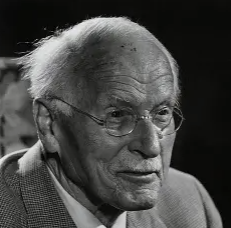
For it all depends on how we look at things, and not on how they are in themselves. The least of things with a meaning is worth more in life than the greatest of things without it.
▼
Source
source
p. 67
8 months 2 days ago
Sophistry is only fit to make men more conceited in their ignorance.
6 months 1 week ago
The poor, stupid, free American citizen! Free to starve, free to tramp the highways of this great country, he enjoys universal suffrage, and, by that right, he has forged chains about his limbs. The reward that he receives is stringent labor laws prohibiting the right of boycott, of picketing, in fact, of everything, except the right to be robbed of the fruits of his labor.

4 months 2 weeks ago
Nothing lasts forever, few things even last for long: all are susceptible of decay in one way or another; moreover all that begins also ends.
▼
Source
source
From Ad Polybium De Consolatione (Of Consolation, To Polybius), chap. I; translation based on work of Aubrey Stewart

6 months 3 weeks ago
Moses because of the hardness of your hearts suffered you to put away your wives: but from the beginning it was not so. And I say unto you, Whosoever shall put away his wife, except it be for fornication, and shall marry another, committeth adultery: and whoso marrieth her which is put away doth commit adultery.
▼
Source
source
19:8-9 (KJV)
8 months 4 weeks ago
It's funny the respectable names you can give to superstition.
8 months ago
Speed, it seems to me, provides the one genuinely modern pleasure.
▼
Source
source
Wanted, A New Pleasure
7 months ago
Idea or Vision, in its sensuous meaning, would be something that could be perceived only by the bodily eye and not by any other sense such as taste, hearing, etc.; it would be such a thing as a rainbow, or the forms which pass before us in dreams. Idea or Vision, in its supersensuous meaning, would denote, first of all, in conformity with the sphere in which the word is to be valid, something that cannot be perceived by the body at all, but only by the mind; and then, something that cannot, as many other things can, be perceived by the dim feeling of the mind, but only by the eye of the mind, by clear perception.
▼
Source
source
The Chief Difference Between The Germans And The Other Peoples Of Teutonic Descent p. 59
8 months 3 weeks ago
Everything considered, a determined soul will always manage.
7 months 4 weeks ago
There are two equal and opposite errors into which our race can fall about the devils. One is to disbelieve in their existence. The other is to believe, and to feel an excessive and unhealthy interest in them. They themselves are equally pleased by both errors and hail a materialist or a magician with the same delight.
▼
Source
source
Preface

7 months 4 weeks ago
For those who want 'to change life", 'to reinvent love,' God is nothing but a hindrance.
▼
Source
source
p. 500
4 months 3 weeks ago
Alas! such is the miseducation of these days, it is only among those that are called the uneducated classes - those educated by experience - that you can look for a Man. Even among these, such a sight is growing daily rarer. My father, in several respects, has not, that I can think of, left his fellow. Perhaps among Scottish peasants what Samuel Johnson was among English authors. I have a sacred pride in my peasant father, and would not exchange him, even now, for any king known to me. Gold and the guinea stamp - the Man and the clothes of the man. Let me thank God for that greatest of blessings, and strive to live worthily of it.
4 months 1 week ago
We have the right to conclude from this that syndicalist violence, perpetrated in the course of strikes by proletarians who desire the overthrow of the State, must not be confused with the acts of savagery which the superstition of the State suggested to the revolutionaries of 1793, when they had power in their hands and were able to oppress the conquered - following the principles which they had received from the Church and from the monarchy.
▼
Source
source
p. 108
7 months 4 weeks ago
I mistrust illuminations: what we take for a discovery is very often only a familiar thought that we have not recognized.
▼
Source
source
p. 439
CivilSimian.com created by AxiomaticPanic, CivilSimian, Kalokagathia