

6 months 4 weeks ago
You need to know enough of the natural sciences so that you are not a stranger in the world.
7 months 1 week ago
Among most Christians the Old Testament is little read in comparison to the New Testament. Furthermore, much of what is read is often distorted by prejudice. Frequently the Old Testament is believed to express exclusively the principles of justice and revenge, in contrast to the New Testament, which represents those of love and mercy; even the sentence, "Love your neighbor as yourself," is thought by many to derive from the New, not the Old Testament. Or the Old Testament is believed to have been written exclusively in the spirit of narrow nationalism and to contain nothing of supranational universalism so characteristic of the New Testament.
▼
Source
source
You Shall Be as Gods: A Radical Interpretation of the Old Testament and Its Tradition (1966) "Introduction"



4 months 3 weeks ago
I would rather be exposed to the inconveniences attending too much liberty, than those attending too small a degree of it.
▼
Source
source
Letter to Archibald Stuart , Philadelphia
5 months 2 weeks ago
Now what is science? ...it is before all a classification, a manner of bringing together facts which appearances separate, though they are bound together by some natural and hidden kinship. Science, in other words, is a system of relations. ...it is in relations alone that objectivity must be sought. ...it is relations alone which can be regarded as objective.External objects... are really objects and not fleeting and fugitive appearances, because they are not only groups of sensations, but groups cemented by a constant bond. It is this bond, and this bond alone, which is the object in itself, and this bond is a relation.
7 months 2 weeks ago
The happy consciousness is shaky enough-a thin surface over fear, frustration, and disgust.
▼
Source
source
p. 76
9 months 3 weeks ago
Hope is the dream of a waking man.
7 months 3 weeks ago
Just as Marx used to say about the French Marxists of the late 'seventies: All I know is that I am not a Marxist.
▼
Source
source
Letter to Conrad Schmidt
9 months ago
I thought that I was the only historian, that had at once neglected present power, interest, and authority, and the cry of popular prejudices; and as the subject was suited to every capacity, I expected proportional applause. But miserable was my disappointment: I was assailed by one cry of reproach, disapprobation, and even detestation; English, Scotch, and Irish, Whig and Tory, churchman and sectary, freethinker and religionist, patriot and courtier, united in their rage against the man, who had presumed to shed a generous tear for the fate of Charles I and the Earl of Strafford.
▼
Source
source
My Own Life' (1776), quoted in David Hume, Essays: Moral, Political, and Literary (1741-1777), ed. Eugene Miller (1985), p. xxxvii
9 months ago
Though the principles of the banking trade may appear somewhat abstruse, the practice is capable of being reduced to strict rules. To depart upon any occasion from these rules, in consequence of some flattering speculation of extraordinary gain, is almost always extremely dangerous, and frequently fatal to the banking company which attempts it.
▼
Source
source
Chapter I, Part III, p. 820.

8 months 3 weeks ago
Poetry teaches the enormous force of a few words, and, in proportion to the inspiration, checks loquacity.
▼
Source
source
Parnassus (1874) Preface
7 months 1 week ago
In a general way, the literature of the twentieth century is essentially psychological; and psychology consists of describing states of the soul by displaying them all on the same plane, without any discrimination of value, as though good and evil were external to them, as though the effort toward the good could be absent at any moment from the thought of any man.
▼
Source
source
"The responsibility of writers," p. 168

8 months 3 weeks ago
"And your education! Is not that also social, and determined by the social conditions under which you educate, by the intervention, direct or indirect, of society, by means of schools, etc.? The Communists have not invented the intervention of society in education; they do but seek to alter the character of that intervention, and to rescue education from the influence of the ruling class."
▼
Source
source
As quoted in The Communist Manifesto (21 February 1848), p19-20.
4 months 2 weeks ago
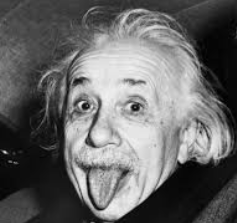
We Jews have been too adaptable. We have been too eager to sacrifice our idiosyncrasies for the sake of social conformity. ... Even in modern civilization, the Jew is most happy if he remains a Jew.

7 months 3 weeks ago
When one considers the sublime disposition underlying the tmly universal educatiOn (of traditional India) ... then what IS or has been called religion in Europe seems to us to be scarcely deserving of that name. And one feels compelled to advise those who Wish to witness religion to travel to India for that purpose ....
▼
Source
source
quoted in Londhe, S. (2008). A tribute to Hinduism: Thoughts and wisdom spanning continents and time about India and her culture. New Delhi: Pragun Publication.
7 months 1 week ago
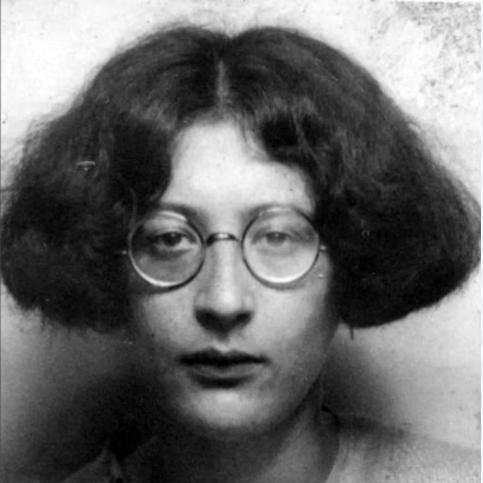
From the power to transform him into a thing by killing him there proceeds another power, and much more prodigious, that which makes a thing of him while he still lives.
▼
Source
source
in The Simone Weil Reader, p. 155
7 months 5 days ago
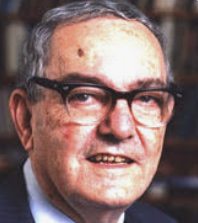
Roughly speaking, rationality is concerned with the selection of preferred behavior alternatives in terms of some system of values, whereby the consequences of behavior can be evaluated.
▼
Source
source
p. 84.
4 months 3 weeks ago
Blessed are those eyes that have seen more water than any man! Blessed be that haughty mind that aimed at the greatest hope! May you be blessed who row the current your life longand now with dry unfreshened lips descend to Hadesto find the hidden deathless springs and slake your thirst! My son, it's death who keeps and pours the deathless waters.
▼
Source
source
Voice of the Nile, from Odysseus' story, Book VIII, line 1290 (the first line is taken from an Egyptian hieroglyph.)
7 months 3 weeks ago
Loneliness does not come from having no people about one, but from being unable to communicate the things that seem important to oneself, or from holding certain views which others find inadmissible.
▼
Source
source
p.356

7 months 1 week ago
Militarism, the destroyer of youth, the raper of women, the annihilator of the best in the race, the very mower of life.
7 months 2 weeks ago
Bereavement is a darkness impenetrable to the imagination of the unbereaved.
▼
Source
source
The Sacred and Profane Love Machine (1974) p. 37.

6 months 3 weeks ago
If we sit and talk in a dark room, words suddenly acquire new meanings and different textures...and on the radio. Given only the sound of a play, we have to fill in all of the senses, not just the sight of the action. So much do-it-yourself, or completion and "closure" of action, develops a kind of independent isolation in the young that makes them remote and inaccessible.
▼
Source
source
(p. 264)
8 months 3 weeks ago
No text in the tradition seems as lucid concerning the way in which the political is becoming worldwide. concerning the irreducibility of the technical and the media in the current of the most thinking thought-and this goes beyond the railroad and the newspapers of the time whose powers were analyzed in such an incomparable way in the Manifesto. And few texts have shed so much light on law. international law. and nationalism.
▼
Source
source
Injunctions of Marx
6 months 3 weeks ago
One touch of nature makes the whole world tin.
6 months 5 days ago
More controversially, technology can accelerate the transition from harming to helping free-living sentient beings: mankind's fitfully expanding "circle of compassion". The civilising process needn't be species-specific but instead extend to free-living dwellers in tomorrow's wildlife parks. Every cubic metre of the biosphere will soon be computationally accessible to surveillance, micro-management and control. Fertility regulation via immunocontraception can replace Darwinian ecosystems governed by starvation and predation. Any species of obligate carnivore we choose to preserve can be genetically and behaviourally tweaked into harmlessness. Asphyxiation, disembowelling, and agonies of being eaten alive can pass into the dustbin of history.
▼
Source
source
High-tech Jainism, The World Transformed, Jul. 2014
4 months 3 weeks ago
Since a great part of those Learned Men, especially Physicians who have discerned the defects of the vulgar Philosophy, but are not yet come to understand and relish the Corpuscularian, have slid into the Doctrine of the Chymists; and since the Spagyrists are wont to pretend to make out all the Qualities of bodies from the Predominancy of some one of their three Hypostatical Principles, I suppose it may both keep my opinion from appearing too presumptuous, and (which is far more considerable) may make way for the fairer Reception of the Mechanical Hypothesis about Qualities, if I here intimate (though but briefly and in general) some of those defects, that I have observed in Chymists Explications of Qualities.
4 months 3 weeks ago
My new trade of nail-making is to me in this country what an additional title of nobility or the ensigns of a new order are in Europe.
▼
Source
source
As quoted in The Dark Side of Thomas Jefferson, by Henry Wiencek, Smithsonian Magazine,
8 months 3 weeks ago
Long hours of labour seem to be the secret of the rational and healthful processes, which are to raise the condition of the labourer by an improvement of his mental and moral powers and to make a rational consumer out of him.
▼
Source
source
Vol. II, Ch. XXI, p. 520.

9 months ago
Man can, indeed, act contrarily to the decrees of God, as far as they have been written like laws in the minds of ourselves or the prophets, but against that eternal decree of God, which is written in universal nature, and has regard to the course of nature as a whole, he can do nothing.
▼
Source
source
Ch. 2, Of Natural Right

7 months 2 weeks ago
Be of good courage, and if you are discouraged, still take courage over against the various forms of nature. He who has ears to hear, let him hear.
▼
Source
source
Chapter 4.
7 months 4 days ago
When land and its tillage are the basis of taxation, one need not care exactly how many people there are.
▼
Source
source
Chapter 12, Political Arithmetic, p. 103.

7 months 1 week ago
The huge laugh is a most extreme expression of freedom.
5 months 2 weeks ago
Some years ago, as Your Serene Highness well knows, I discovered in the heavens many things that had not been seen before our own age. The novelty of these things, as well as some consequences which followed from them in contradiction to the physical notions commonly held among academic philosophers, stirred up against me no small number of professors - as if I had placed these things in the sky with my own hands in order to upset nature and overturn the sciences. They seemed to forget that the increase of known truths stimulates the investigation, establishment, and growth of the arts; not their diminution or destruction.
9 months 5 days ago
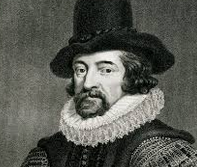
But the best demonstration by far is experience, if it go not beyond the actual experiment.
▼
Source
source
Aphorism 70

8 months 3 days ago
The Divine light is always in man, presenting itself to the senses and to the comprehension, but man rejects it.
▼
Source
source
As quoted in Life and Teachings of Giordano Bruno : Philosopher, Martyr, Mystic 1548 - 1600 (1913) by Coulson Turnbull
7 months 3 weeks ago
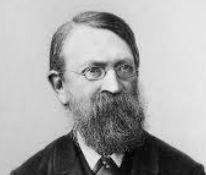
There was a loud echo of Hume in Mach's work, as both emphasized the tangibility of all knowledge-ultimately, all knowledge is based in the senses. Mach also emphasized the internal nature of all knowledge, in that it is experienced in the mind. Finally, he emphasized the importance of quantitative and mathematical methods and models to understand sensory experience.
▼
Source
source
Alan Ebenstein, Hayek's Journey" The Mind of Friedrich Hayek (2003), Ch. 10 : Epistemology, Psychology, and Methodology

9 months 4 days ago
There can be no doubt that the Virgin Mary is in heaven. How it happened we do not know.
▼
Source
source
Weimar edition of Martin Luther's Works (Translation by William J. Cole) Vol. 10, p. 268
6 months 1 week ago
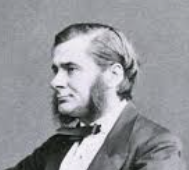
These examples... show that, in whatever proportion of its limbs the Gorilla differs from Man, the other Apes depart still more widely from the Gorilla and that, consequently, such differences of proportion can have no ordinal value.
▼
Source
source
Ch.2, p. 89
9 months 2 weeks ago
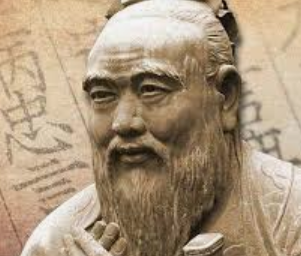
It is only he who is possessed of the most complete sincerity that can exist under heaven, who can give its full development to his nature. Able to give its full development to his own nature, he can do the same to the nature of other men. Able to give its full development to the nature of other men, he can give their full development to the natures of animals and things. Able to give their full development to the natures of creatures and things, he can assist the transforming and nourishing powers of Heaven and Earth. Able to assist the transforming and nourishing powers of Heaven and Earth, he may with Heaven and Earth form a ternion.
5 months 3 weeks ago
The newspaper is in all its literalness the bible of democracy, the book out of which a people determines its conduct.
▼
Source
source
What Modern Liberty Means, p. 47. Essay first published in The Atlantic (November 1919).

8 months 3 weeks ago
The believers in the non-natural character of sudden conversion have had practically to admit that there is no unmistakable class-mark distinctive of all true converts. The super-normal incidents, such as voices and visions and overpowering impressions of the meaning of suddenly presented scripture texts, the melting emotions and tumultuous affections connected with the crisis of change, may all come by way of nature, or worse still, be counterfeited by Satan. The real witness of the spirit to the second birth is to be found only in the disposition of the genuine child of God, the permanently patient heart, the love of self eradicated. And this, it has to be admitted, is also found in those who pass no crisis, and may even be found outside of Christianity altogether.
▼
Source
source
Lecture X, "Conversion, concluded"
9 months 4 weeks ago
He who thinks a great deal is not suited to be a party man: he thinks his way through the party and out the other side too soon.
9 months ago
The Hudson's Bay Company, before their misfortunes in the late war, had been much more fortunate than the Royal African Company.
▼
Source
source
Chapter I, Part III, p. 806.
6 months 3 weeks ago
When Fortune is on our side, popular favor bears her company.
▼
Source
source
Maxim 275
9 months 3 weeks ago
Accepting the absurdity of everything around us is one step, a necessary experience: it should not become a dead end. It arouses a revolt that can become fruitful.
7 months 2 weeks ago
The Spirit of the Lord is on me, because he has anointed me to proclaim good news to the poor. He has sent me to proclaim freedom for the prisoners and recovery of sight for the blind, to set the oppressed free, to proclaim the year of the Lord's favor.
▼
Source
source
Luke 4:18-19 NIV

8 months 3 weeks ago
Friendship is the greatest of worldly goods. Certainly to me it is the chief happiness of life. If I had to give a piece of advice to a young man about a place to live, I think I shd. say, 'sacrifice almost everything to live where you can be near your friends.
▼
Source
source
Letter to Arthur Greeves (29 December 1935) - in They Stand Together: The Letters of C. S. Lewis to Arthur Greeves (1914-1963) (1979), p. 477


7 months 3 weeks ago
A certain maxim of Logic which I have called Pragmatism has recommended itself to me for diverse reasons and on sundry considerations. Having taken it as my guide for most of my thought, I find that as the years of my knowledge of it lengthen, my sense of the importance of it presses upon me more and more. If it is only true, it is certainly a wonderfully efficient instrument. It is not to philosophy only that it is applicable. I have found it of signal service in every branch of science that I have studied. My want of skill in practical affairs does not prevent me from perceiving the advantage of being well imbued with pragmatism in the conduct of life.
▼
Source
source
Lecture I : Pragmatism : The Normative Sciences, CP 5.14
CivilSimian.com created by AxiomaticPanic, CivilSimian, Kalokagathia