


9 months 3 weeks ago
At the very beginning of my fevers and sicknesses that cast me down, whilst still entire, and but little, disordered in health, I reconcile myself to Almighty God by the last Christian, offices, and find myself by so doing less oppressed and more easy, and have got, methinks, so much the better of my disease. And I have yet less need of a notary or counsellor than of a physician.
▼
Source
source
Ch. 9
8 months 1 week ago
The development of the human mind has practically extinguished all feelings, except a few sporadic kinds, like sound, colors, smells, warmth, etc., which now appear to be disconnected and separate.
7 months 2 weeks ago
In cloning, the Father and the Mother have disappeared, not in the service of an aleatory liberty of the subject, but in the service of a matrix called code.
▼
Source
source
"Clone Story," p. 96



9 months 2 weeks ago
The right of voting for representatives is the primary right by which other rights are protected. To take away this right is to reduce a man to slavery, for slavery consists in being subject to the will of another, and he that has not a vote in the election of representatives is in this case.

9 months 2 weeks ago
A man's face as a rule says more, and more interesting things, than his mouth, for it is a compendium of everything his mouth will ever say, in that it is the monogram of all this man's thoughts and aspirations.
▼
Source
source
Vol. 2, Ch. 29, § 377

10 months 2 days ago
Life is one long struggle in the dark.
▼
Source
source
Book II, line 54 (tr. Rouse)
5 months 4 weeks ago
It is the fate of every truth to be an object of ridicule when it is first acclaimed. It was once considered foolish to suppose that black men were really human beings and ought to be treated as such. What was once foolish has now become a recognized truth. Today it is considered as exaggeration to proclaim constant respect for every form of life as being the serious demand of a rational ethic. But the time is coming when people will be amazed that the human race existed so long before it recognized that thoughtless injury to life is incompatible with real ethics. Ethics is in its unqualified form extended responsibility to everything that has life.

9 months 1 week ago
Generally speaking, all the authorities exercising individual control function according to a double mode; that of binary division and branding (mad/sane; dangerous/harmless; normal/abnormal); and that of coercive assignment, of differential distribution (who he is; where he must be; how he is to be characterized' how he is to be recognized' how a constant surveillance is to be exercised over him in a individual way, etc.).
▼
Source
source
Part Four, Complete and austere institutions
7 months 2 weeks ago
Practice is the best of all instructors.
▼
Source
source
Maxim 439

9 months 2 weeks ago
Passing from quantity to quality of population, we come to the question of eugenics. We may perhaps assume that, if people grow less superstitious, government will acquire the right to sterilize those who are not considered desirable as parents. This power will be used, at first, to diminish imbecility, a most desirable object. But probably, in time, opposition to the government will be taken to prove imbecility, so that rebels of all kinds will be sterilized. Epileptics, consumptives, dipsomaniacs and so on will gradually be included; in the end, there will be a tendency to include all who fail to pass the usual school examinations. The result will be to increase the average intelligence; in the long run, it may be greatly increased. But probably the effect upon really exceptional intelligence will be bad. Mr. Micawber, who was Dickens's father, would hardly have been regarded as a desirable parent. How many imbeciles ought to outweigh one Dickens I do not profess to know.

8 months 1 week ago
Whoever believes and is baptized will be saved, but whoever does not believe will be condemned. And these signs will accompany those who believe: In my name they will drive out demons; they will speak in new tongues; they will pick up snakes with their hands; and when they drink deadly poison, it will not hurt them at all; they will place their hands on sick people, and they will get well.
▼
Source
source
Jesus, Mark 16:16-18
7 months 2 weeks ago
I have wanted to give Iraq a lesson in democracy - because we're experienced with it, you know. And, in democracy, after a hundred years, you have to let your slaves go. And, after a hundred and fifty years, you have to let your women vote. And, at the beginning of democracy, is that quite a bit of genocide and ethnic cleansing is quite okay. And that's what's going on now.
▼
Source
source
Interviewed by Jon Stewart on The Daily Show

5 months 2 weeks ago
How many together with whom I came into the world are already gone out of it.
▼
Source
source
VI, 56
9 months 2 weeks ago
Obscenity is whatever happens to shock some elderly and ignorant magistrate.
▼
Source
source
Quoted in Look (New York, 23 February 1954). Cf. Russell (1928), Sceptical Essays

8 months 1 week ago
Sudden Glory, is the passion which maketh those Grimaces called LAUGHTER.
▼
Source
source
The First Part, Chapter 6, p. 27 (italics and spelling as per text)
6 months 1 week ago
But the philosophy that killed off truth proclaims unlimited tolerance for the "language games" (i.e., opinions, beliefs and doctrines) that people find useful. The outcome is expressed in the words of Karl Kraus: "Alles ist wahr und auch das Gegenteil." "Everything is true, and also its opposite."
▼
Source
source
"Our Merry Apocalypse" (1997), as quoted in Is God Happy? Selected Essays (Basic Books, 2013), p. 318
9 months 1 week ago
The sight of both eyes becomes one.
▼
Source
source
fr. 88
8 months 2 weeks ago
If you want to influence him at all, you must do more than merely talk to him ; you must fashion him, and fashion him in such a way that he simply cannot will otherwise than you wish him to will.
▼
Source
source
Addresses to the German Nation (1807), Second Address : "The General Nature of the New Education". Chicago and London, The Open Court Publishing Company, 1922, p. 21
5 months 1 week ago
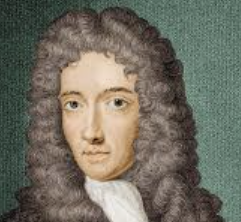
And that you may know... what kind of writings I mean, I shall name to you the learned Gassendus his little Syntagma of Epicurus's philosophy, and that most ingenious gentleman Monsieur Descartes his principles of philosophy. For though I purposely refrained, though not altogether from transiently consulting about a few particulars, yet from seriously and orderly reading over those excellent (though disagreeing) books, or so much as Sir Francis Bacon's Novum Organum, that I might not be prepossessed with any theory or principles, till I had spent some time in trying what things themselves would incline me to think; yet beginning now to allow myself to read those excellent books, I find by the little I have read in them already, that if I had read them before I began to write, I might have enriched the ensuing essays with divers truths, which they now want, and have explicated divers things much better than I fear I have done.
7 months 1 week ago
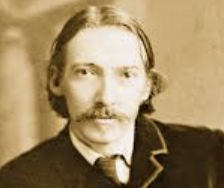
Is there anything in life so disenchanting as attainment?
▼
Source
source
The Suicide Club, The Adventure of the Hansom Cabs.

9 months 2 weeks ago
When all is said and done, we are in the end absolutely dependent on the universe; and into sacrifices and surrenders of some sort, deliberately looked at and accepted, we are drawn and pressed as into our only permanent positions of repose. Now in those states of mind which fall short of religion, the surrender is submitted to as an imposition of necessity, and the sacrifice is undergone at the very best without complaint. In the religious life, on the contrary, surrender and sacrifice are positively espoused: even unnecessary givings-up are added in order that the happiness may increase. Religion thus makes easy and felicitous what in any case is necessary; and if it be the only agency that can accomplish this result, its vital importance as a human faculty stands vindicated beyond dispute. It becomes an essential organ of our life, performing a function which no other portion of our nature can so successfully fulfill.
▼
Source
source
Lecture II, "Circumscription of the Topic"
6 months 2 days ago
As the French say, there are three sexes - men, women, and clergymen.
▼
Source
source
Vol. I, ch. 9, p. 313

5 months 2 weeks ago
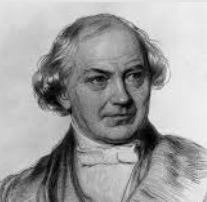
The solution is, that we do not see the image on the retina at all, we only see by means of it.

9 months 2 weeks ago
A house may be large or small; as long as the neighboring houses are likewise small, it satisfies all social requirement for a residence. But let there arise next to the little house a palace, and the little house shrinks to a hut. The little house now makes it clear that its inmate has no social position at all to maintain, or but a very insignificant one; and however high it may shoot up in the course of civilization, if the neighboring palace rises in equal or even in greater measure, the occupant of the relatively little house will always find himself more uncomfortable, more dissatisfied, more cramped within his four walls.
▼
Source
source
Wage Labour and Capital (December 1847), in Marx Engels Selected Works, Volume I, p. 163.

8 months 3 days ago
Even a statement very close to the periphery can be held true in the face of recalcitrant experience by pleading hallucination or by amending certain statements of the kind called logical laws. Conversely, by the same token, no statement is immune to revision. Revision even of the logical law of the excluded middle has been proposed as a means of simplifying quantum mechanics; and what difference is there in principle between such a shift and the shift whereby Kepler superseded Ptolemy, or Einstein Newton, or Darwin Aristotle?
▼
Source
source
"Two Dogmas of Empiricism"
5 months 4 weeks ago
We do not "come into" this world; we come out of it, as leaves from a tree. As the ocean "waves," the universe "peoples." Every individual is an expression of the whole realm of nature, a unique action of the total universe. This fact is rarely, if ever, experienced by most individuals. Even those who know it to be true in theory do not sense or feel it, but continue to be aware of themselves as isolated "egos" inside bags of skin.
▼
Source
source
Inside Information
7 months 2 weeks ago
Dying is nothing. You have to know how to disappear. Dying comes down to a biological chance and that is of no consequence. Disappearing is of a far higher order of necessity. You must not leave it to biology to decide when you will disappear. To disappear is to pass into an enigmatic state which is neither life nor death. Some animals know how to do this, as do savages, who withdraw while still alive, from the sight of their own people.
9 months 2 weeks ago
We assert then that nothing has been accomplished without interest on the part of the actors; and - if interest be called passion, inasmuch as the whole individuality, to the neglect of all other actual or possible interests and claims, is devoted to an object with every fibre of volition, concentrating all its desires and powers upon it - we may affirm absolutely that nothing great in the World has been accomplished without passion. Often abbreviated to: Nothing great in the World has been accomplished without passion. Variant translation: We may affirm absolutely that nothing great in the world has ever been accomplished without enthusiasm.
5 months 2 weeks ago
A cucumber is bitter. Throw it away. There are briars in the road. Turn aside from them. This is enough. Do not add, "And why were such things made in the world?"
▼
Source
source
VIII. 50, trans. George Long

8 months 1 week ago
All they that take the sword shall perish with the sword.
▼
Source
source
Matthew 26:52 (KJV)

7 months 2 weeks ago
"What's this? Am I falling? My legs are giving way under me," he thought, and fell on his back. He opened his eyes, hoping to see how the struggle of the French soldiers with the artilleryman was ending, and eager to know whether the red-haired gunner artilleryman was killed or not, whether the cannons had been taken or saved. But he saw nothing of all that. Above him there was nothing but the sky - the lofty sky, not clear, but still immeasurably lofty, with gray clouds creeping quietly over it.
▼
Source
source
Bk. III, Ch. 16
8 months ago
The 'intense life' advertised by the neoliberal regime is in truth simply a life of intense consumption.



9 months 2 weeks ago
Never aim at more precision than... required by the problem...

7 months 2 weeks ago
Each new technology is a reprogramming of sensory life.
▼
Source
source
(p. 33)
5 months 4 weeks ago
For us in Russia, communism is a dead dog, while, for many people in the West, it is still a living lion.
▼
Source
source
BBC Radio broadcast, Russian service, as quoted in The Listener
10 months 2 weeks ago
Nothing can discourage the appetite for divinity in the heart of man.
9 months 2 weeks ago
The universe is the bible of a true Theophilanthropist. It is there that he reads of God. It is there that the proofs of his existence are to be sought and to be found. As to written or printed books, by whatever name they are called, they are the works of man's hands, and carry no evidence in themselves that God is the author of any of them. It must be in something that man could not make, that we must seek evidence for our belief, and that something is the universe; the true bible; the inimitable word, of God.
▼
Source
source
A Discourse, &c. &c.

8 months 1 week ago
Go thy way; and as thou hast believed, so be it done unto thee.
▼
Source
source
8:13 (KJV) Said to the officer.

9 months 1 week ago
A proposition is completely logically analyzed if its grammar is made completely clear: no matter what idiom it may be written or expressed in...
▼
Source
source
Philosophical Remarks (1930), Part I (1)

6 months 1 week ago
I knew Robert Burns, and I knew my father. Yet were you to ask me which had the greater natural faculty, I might perhaps actually pause before replying. Burns had an infinitely wider education, my father a far wholesomer. Besides, the one was a man of musical utterance; the other wholly a man of action, with speech subservient thereto. Never, of all the men I have seen, has one come personally in my way in whom the endowment from nature and the arena from fortune were so utterly out of all proportion. I have said this often, and partly know it. As a man of speculation - had culture ever unfolded him - he must have gone wild and desperate as Burns; hut he was a man of conduct, and work keeps all right. What strange shapable creatures we are!
7 months 2 weeks ago
There is no single speech nor article in which it is not said that the purpose of all these orgies is the peace of Europe. At a dinner given by the representatives of French literature, all breathe of peace. M. Zola, who, a short time previously, had written that war was inevitable, and even serviceable; M. de Vogue, who more than once has stated the same in print, say, neither of them, a word as to war, but speak only of peace. The sessions of Parliament open with speeches upon the past festivities; the speakers mention that such festivities are an assurance of peace to Europe. It is as if a man should come into a peaceful company, and commence energetically to assure everyone present that he has not the least intention to knock out anyone's teeth, blacken their eyes, or break their arms, but has only the most peaceful ideas for passing the evening.
▼
Source
source
Ch. 1

9 months 2 weeks ago
To different minds, the same world is a hell, and a heaven.
▼
Source
source
December 20, 1822
CivilSimian.com created by AxiomaticPanic, CivilSimian, Kalokagathia