I think it's important to add that we can become wise by the knowledge of other men, as well as learn from the mistakes of other men. The intelligent will do that. The not so intelligent will unknowingly wait for it to happen to them.



Of my grandfather Verus I have learned to be gentle and meek, and to refrain from all anger and passion... I have learned both shamefastness and manlike behaviour. Of my mother I have learned to be religious, and bountiful; and to forbear, not only to do, but to intend any evil; to content myself with a spare diet, and to fly all such excess as is incidental to great wealth.
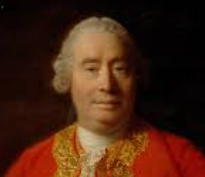
Heaven and Hell suppose two distinct species of men, the good and the bad; but the greatest part of mankind float betwixt vice and virtue. -- Were one to go round the world with an intention of giving a good supper to the righteous, and a sound drubbing to the wicked, he would frequently be embarrassed in his choice, and would find that the merits and the demerits of most men and women scarcely amount to the value of either.

The "interface" of the Renaissance was the meeting of medieval pluralism and modern homogeneity and mechanism - a formula for blitz and metamorphosis.
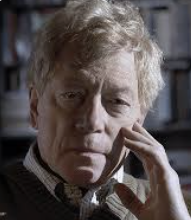
In all the areas of life where people have sought and found consolation through forbidding their desires-sex in particular, and taste in general-the habit of judgment is now to be stamped out.
It would be silly, of course, to be either 'for' or 'against' modernity tout court, not only because it is pointless to try to stop the development of technology, science, and economic rationality, but because both modernity and antimodernity may be expressed in barbarous and antihuman terms.

...the impossible must be supposed in order to explain the superdetermination of the event
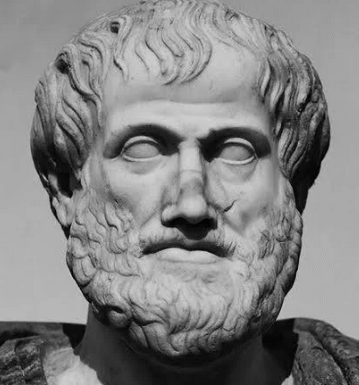
For the things we have to learn before we can do, we learn by doing.

If a man has not, by the time he is 30, yielded to the fascination of every form of extremism, I don't know if he is to be admired or scorned - a saint or a corpse.

History a distillation of Rumour.
Man is a tool-using animal...Without tools he is nothing, with tools he is all.

It is time to be old, To take in sail: - The god of bounds, Who sets to seas a shore, Came to me in his fatal rounds, And said: 'No more!
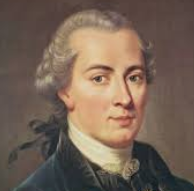
If you punish a child for being naughty, and reward him for being good, he will do right merely for the sake of the reward; and when he goes out into the world and finds that goodness is not always rewarded, nor wickedness always punished, he will grow into a man who only thinks about how he may get on in the world, and does right or wrong according as he finds either of advantage to himself.

I do not know whether I shall make progress; but I should prefer to lack success rather than to lack faith.
But it is clear there is a difference in the ends proposed: for in some cases they are activities, and in others results beyond the mere activities, and where there are certain ends beyond and beside the actions, the results are naturally superior to the activities. Now, as there are numerous kinds of actions and numerous arts and sciences, it follows that the ends are also various. Thus the end of the healing art is health, of ship-building ships, of strategy victory, of economy wealth.
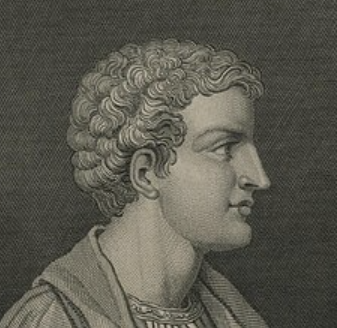
Death takes the mean man with the proud; The fatal urn has room for all.
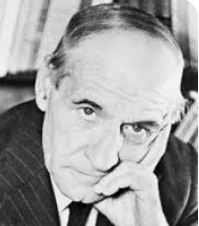
The State is always, whatever be its form - primitive, ancient, medieval, modern - an invitation issued by one group of men to other human groups to carry out some enterprise in common. That enterprise, be its intermediate processes what they may, consists in the long run in the organisation of a certain type of common life. ... [As Renan says,] "To have common glories in the past, a common will in the present; to have done great things together; to wish to do greater; these are the essential conditions which make up a people.... In the past, an inheritance of glories and regrets; in the future, one and the same programme to carry out.... The existence of a nation is a daily plebiscite."

Just as the performance of the vilest and most wicked deeds requires spirit and talent, so even the greatest demand a certain insensitivity which under other circumstances we would call stupidity.

It shews the anxiety of the great men who influenced the conduct of affairs at that great event, to make the Revolution a parent of settlement, and not a nursery of future revolutions.
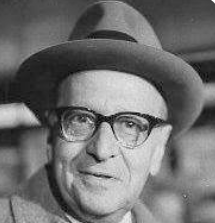
The French symbolists had a special term to express their love for things that had lost their objective significance, namely, 'spleen.' The conscious, challenging arbitrariness in the choice of objects, its 'absurdity' and 'perverseness,' as if by a silent gesture discloses the irrationality of utilitarian logic, which it then slaps in the face in order to demonstrate its inadequacy with regard to human experience. And while making it conscious, by this shock, of the fact that it forgets the subject, the gesture simultaneously expresses the subject's sorrow over his inability to achieve an objective order. Twentieth-century society is not troubled by such inconsistencies. For it, meaning can be achieved in only one way-service for a purpose.

I have no patience with those who say that sexual excitement is shameful and that venereal stimuli have their origin not in nature, but in sin. Nothing is so far from the truth. As if marriage, whose function cannot be fulfilled without these incitements, did not rise above blame. In other living creatures, where do these incitements come from? From nature or from sin? From nature, of course. It must borne in mind that in the apetites of the body there is very little difference between man and other living creatures. Finally, we defile by our imagination what of its own nature is fair and holy. If we were willing to evaluate things not according to the opinion of the crowd, but according to nature itself, how is it less repulsive to eat, chew, digest, evacuate, and sleep after the fashion of dumb animals, than to enjoy lawful and permitted carnal relations?
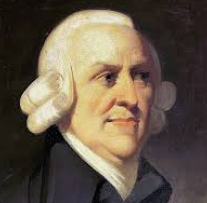
Civil government, so far as it is instituted for the security of property, is in reality instituted for the defence of the rich against the poor, or of those who have some property against those who have none at all.
The more you are a victim of contradictory impulses, the less you know which to yield to. To lack character - precisely that and nothing more.
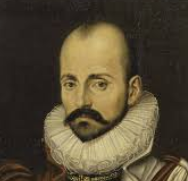
I know well what I am fleeing from but not what I am in search of.

I am here to plead his cause with you. I plead not for his life, but for his character - his immortal life; and so it becomes your cause wholly, and is not his in the least. Some eighteen hundred years ago Christ was crucified; this morning, perchance, Captain Brown was hung. These are the two ends of a chain which is not without its links. He is not Old Brown any longer; he is an angel of light.
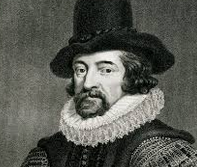
This misplacing hath caused a deficience, or at least a great improficience in the sciences themselves. For the handling of final causes, mixed with the rest in physical inquiries, hath intercepted the severe and diligent inquiry of all real and physical causes, and given men the occasion to stay upon these satisfactory and specious causes, to the great arrest and prejudice of further discovery. For this I find done not only by Plato, who ever anchoreth upon that shore, but by Aristotle, Galen, and others which do usually likewise fall upon these flats of discoursing causes.
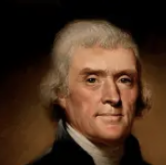
We shall divert through our own Country a branch of commerce which the European States have thought worthy of the most important struggles and sacrifices, and in the event of peace... we shall form to the American union a barrier against the dangerous extension of the British Province of Canada and add to the Empire of liberty an extensive and fertile Country thereby converting dangerous Enemies into valuable friends.
But men must know that in this theater of man's life it is reserved only for God and angels to be lookers on.
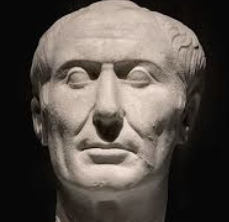
Either be silent or say something better than silence.
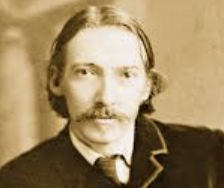
To be what we are, and to become what we are capable of becoming, is the only end of life.
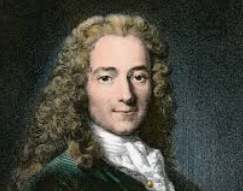
The king Frederic has sent me some of his dirty linen to wash; I will wash yours another time.
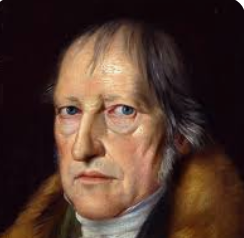
Philosophy is by its nature something esoteric, neither made for the mob nor capable of being prepared for the mob.
Let me suggest a theme for you: to state to yourself precisely and completely what that walk over the mountains amounted to for you, - returning to this essay again and again, until you are satisfied that all that was important in your experience is in it. Give this good reason to yourself for having gone over the mountains, for mankind is ever going over a mountain. Don't suppose that you can tell it precisely the first dozen times you try, but at 'em again, especially when, after a sufficient pause, you suspect that you are touching the heart or summit of the matter, reiterate your blows there, and account for the mountain to yourself. Not that the story need be long, but it will take a long while to make it short.
Gentlemen, the melancholy event of yesterday reads to us an awful lesson against being too much troubled about any of the objects of ordinary ambition. The worthy gentleman, who has been snatched from us at the moment of the election, and in the middle of contest, whilst his desires were as warm, and his hopes as eager as ours, has feelingly told us, what shadows we are, and what shadows we pursue.
The Perception of Time involves a constant and latent kind of memory, which may be termed a 'Sense of Succession'. The Perception of Number also involves this Sense of Succession, although in small numbers we appear to apprehend the units simultaneously and not successively.
Let your life be pleasing to the multitude, and it can not be so to yourself.

I have often admired the mystical way of Pythagoras, and the secret Magic of numbers.
The more I see of the world, the more I am convinced that civilisation is a blessing not sufficiently estimated by those who have not traced its progress; for it not only refines our enjoyments, but produces a variety which enables us to retain the primitive delicacy of our sensations. Without the aid of the imagination all the pleasures of the senses must sink into grossness, unless continual novelty serve as a substitute for the imagination, which, being impossible, it was to this weariness, I suppose, that Solomon alluded when he declared that there was nothing new under the sun!
One crime has to be concealed by another.
Thus Mr. Sale informs me, the old Arab Tribes would gather in liveliest gaudeamus, and sing, and kindle bonfires, and wreathe crowns of honour, and solemnly thank the gods that, in their Tribe too, a Poet had shewn himself. As indeed they well might; for what usefuller, I say not nobler and heavenlier thing could the gods, doing their very kindest, send to any Tribe or Nation, in any time or circumstances?
Much has been said of Mahomet's propagating his Religion by the sword. It is no doubt far nobler what we have to boast of the Christian Religion, that it propagated itself peaceably in the way of preaching and conviction. Yet withal, if we take this for an argument of the truth or falsehood of a religion, there is a radical mistake in it. The sword indeed: but where will you get your sword! Every new opinion, at its starting, is precisely in a minority of one. In one man's head alone, there it dwells as yet. One man alone of the whole world believes it; there is one man against all men. That he take a sword, and try to propagate with that, will do little for him. You must first get your sword! On the whole, a thing will propagate itself as it can. We do not find, of the Christian Religion either, that it always disdained the sword, when once it had got one.

My life - I had lived in its heights and its depths, in bitter sorrow and ecstatic joy, in black despair and fervent hope. I had drunk the cup to the last drop. I had lived my life. Would I had the gift to paint the life I had lived!

The doctrine of Right and Wrong, is perpetually disputed, both by Pen and the Sword: Whereas the doctrine of Lines, and Figures, is not so; because men care not, in that subject what be truth, as a thing that crosses no mans ambition, profit, or lust. For I doubt not, but if it had been a thing contrary to any mans right of dominion, or to the interest of men that have dominion, That the three Angles of a Triangle, should be equall to two Angles of a Square; that doctrine should have been, if not disputed, yet by the burning of all books of Geometry, suppressed, as far as he whom it concerned was able.
CivilSimian.com created by AxiomaticPanic, CivilSimian, Kalokagathia