
10 months 2 weeks ago
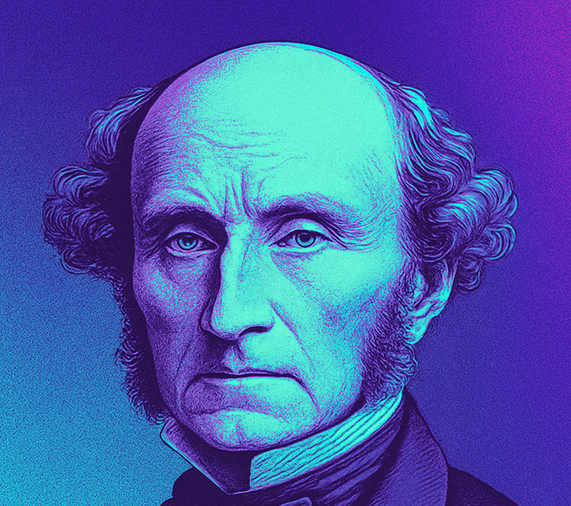
In this third period (as it may be termed) of my mental progress, which now went hand in hand with hers, my opinions gained equally in breadth and depth, I understood more things, and those which I had understood before, I now understood more thoroughly. I had now completely turned back from what there had been of excess in my reaction against Benthamism. I had, at the height of that reaction, certainly become much more indulgent to the common opinions of society and the world, and more willing to be content with seconding the superficial improvement which had begun to take place in those common opinions, than became one whose convictions on so many points, differed fundamentally from them. I was much more inclined, than I can now approve, to put in abeyance the more decidedly heretical part of my opinions, which I now look upon as almost the only ones, the assertion of which tends in any way to regenerate society.
▼
Source
(p. 229)
11 months 2 weeks ago
He is a dreamer of ancient times, or rather, of the myths of what ancient times used to be. Such men are harmless in themselves, but their queer lack of realism makes them fools for others.
▼
Source
1 year 2 months ago
What is at stake here is precisely the problem of the fulfillment of desire: when we encounter in reality an object which has all the properties of the fantasized object of desire, we are nevertheless necessarily somewhat disappointed; we experience a certain this is not it; it becomes evident that the finally found real object is not the reference of desire even though it possesses all the required properties.
▼
Source
1 year 2 months ago
The analysis achieves its end when the patient is able to recognize, in the Real of his symptom, the only support of his being. That is how we must read Freud's 'wo we war, soll ich werden:' you, the subject, must identify yourself with the place where your symptom already was; in its pathological particularity you must recognize the element which gives consistency to your being.
▼
Source

5 months 1 week ago
The most destructive kinds of narrative are those that present themselves as universal, but uphold an extreme, undefined in-group through a sadistic othering.
The biggest problem is not the exclusion of any single group, but a complete exclusion of all but us.
Affirming a universal kills this possibility and meets life's true necessity.
▼
Source
6 months 1 week ago
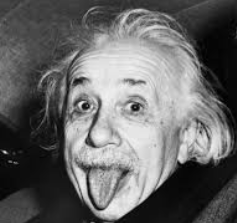
Physical concepts are free creations of the human mind, and are not, however it may seem, uniquely determined by the external world. In our endeavor to understand reality we are somewhat like a man trying to understand the mechanism of a closed watch. He sees the face and the moving hands, even hears its ticking, but he has no way of opening the case. If he is ingenious he may form some picture of a mechanism which could be responsible for all the things he observes, but he may never be quite sure his picture is the only one which could explain his observations. He will never be able to compare his picture with the real mechanism and he cannot even imagine the possibility or the meaning of such a comparison. But he certainly believes that, as his knowledge increases, his picture of reality will become simpler and simpler and will explain a wider and wider range of his sensuous impressions. He may also believe in the existence of the ideal limit of knowledge and that it is approached by the human mind. He may call this ideal limit the objective truth.
▼
Source
6 months 1 week ago
I never think of the future. It comes soon enough.
▼
Source
6 months 1 week ago
There are certain occupations, even in modern society, which entail living in isolation and do not require great physical or intellectual effort. Such occupations as the service of lighthouses and lightships come to mind. Would it not be possible to place young people who wish to think about scientific problems, especially of a mathematical or philosophical nature, in such occupations? Very few young people with such ambitions have, even during the most productive period of their lives, the opportunity to devote themselves undisturbed for any length of time to problems of a scientific nature.
▼
Source
6 months 1 week ago
I am happy because I want nothing from anyone. I do not care about money. Decorations, titles or distinctions mean nothing to me. I do not crave praise. The only thing that gives me pleasure, apart from my work, my violin, and my sailboat, is the appreciation of my fellow workers.
▼
Source
6 months 1 week ago
Much reading after a certain age diverts the mind from its creative pursuits. Any man who reads too much and uses his own brain too little falls into lazy habits of thinking, just as the man who spends too much time in the theaters is apt to be content with living vicariously instead of living his own life.
▼
Source
6 months 1 week ago
As an eminent pioneer in the realm of high frequency currents... I congratulate you on the great successes of your life's work.
▼
Source
6 months 1 week ago
Fundamental ideas play the most essential role in forming a physical theory. Books on physics are full of complicated mathematical formulae. But thought and ideas, not formulae, are the beginning of every physical theory. The ideas must later take the mathematical form of a quantitative theory, to make possible the comparison with experiment.
▼
Source
6 months 1 week ago
Besides agreeing with the aims of vegetarianism for aesthetic and moral reasons, it is my view that a vegetarian manner of living by its purely physical effect on the human temperament would most beneficially influence a lot of mankind.
▼
Source
6 months 1 week ago
I never failed in mathematics. Before I was fifteen I had mastered differential and integral calculus.
▼
Source
6 months 1 week ago
I claim credit for nothing. Everything is determined, the beginning as well as the end, by forces over which we have no control. It is determined for the insect as well as for the star. Human beings, vegetables or cosmic dust, we all dance to a mysterious tune, intoned in the distance by an invisible player.
▼
Source
6 months 1 week ago
I have only two rules which I regard as principles of conduct. The first is: Have no rules. The second is: Be independent of the opinion of others.
▼
Source
6 months 1 week ago
What the inventive genius of mankind has bestowed upon us in the last hundred years could have made human life care free and happy if the development of the organizing power of man had been able to keep step with his technical advances. As it is, the hardly bought achievements of the machine age in the hands of our generation are as dangerous as a razor in the hands of a three-year-old child. The possession of wonderful means of production has not brought freedom-only care and hunger.
▼
Source
6 months 1 week ago
No one can read the Gospels without feeling the actual presence of Jesus. His personality pulsates in every word. No myth is filled with such life.
▼
Source
6 months 1 week ago
The moral decline we are compelled to witness and the suffering it engenders are so oppressive that one cannot ignore them even for a moment. No matter how deeply one immerses oneself in work, a haunting feeling of inescapable tragedy persists. Still, there are moments when one feels free from one's own identification with human limitations and inadequacies. At such moments, one imagines that one stands on some spot of a small planet, gazing in amazement at the cold yet profoundly moving beauty of the eternal, the unfathomable: life and death flow into one, and there is neither evolution nor destiny; only being.
▼
Source
6 months 1 week ago
The scientific organization and comprehensive exposition in accessible form of the Talmud has a twofold importance for us Jews. It is important in the first place that the high cultural values of the Talmud should not be lost to modern minds among the Jewish people nor to science, but should operate further as a living force. In the second place, The Talmud must be made an open book to the world, in order to cut the ground from under certain malevolent attacks, of anti-Semitic origin, which borrow countenance from the obscurity and inaccessibility of certain passages in the Talmud. To support this cultural work would thus mean an important achievement for the Jewish people.
▼
Source
6 months 1 week ago
The whole of science is nothing more than a refinement of every day thinking.
▼
Source
6 months 1 week ago
I am not an Atheist. I do not know if I can define myself as a Pantheist. The problem involved is too vast for our limited minds. May I not reply with a parable? The human mind, no matter how highly trained, cannot grasp the universe. We are in the position of a little child, entering a huge library whose walls are covered to the ceiling with books in many different tongues. The child knows that someone must have written those books. It does not know who or how. It does not understand the languages in which they are written. The child notes a definite plan in the arrangement of the books, a mysterious order, which it does not comprehend, but only dimly suspects. That, it seems to me, is the attitude of the human mind, even the greatest and most cultured, toward God. We see a universe marvelously arranged, obeying certain laws, but we understand the laws only dimly. Our limited minds cannot grasp the mysterious force that sways the constellations. I am fascinated by Spinoza's Pantheism. I admire even more his contributions to modern thought. Spinoza is the greatest of modern philosophers because he is the first philosopher who deals with the soul and the body as one, not as two separate things.
▼
Source
6 months 1 week ago
The longing for guidance, for love and succor, provides the stimulus for the growth of a social or moral conception of God. This is the God of Providence, who protects, decides, rewards and punishes. This is the God who, according to man's widening horizon, loves and provides for the life of the race, or of mankind, or who even loves life itself. He is the comforter in unhappiness and in unsatisfied longing, the protector of the souls of the dead. This is the social or moral idea of God.
▼
Source
6 months 1 week ago
Without disarmament there can be no lasting peace. On the contrary, the continuation of military armaments in their present extent will with certainty lead to new catastrophies...For the creation of this public opinion in favor of disarmament every person living shares the responsibility, through ever deed and every word.
▼
Source
6 months 1 week ago
It is quite possible to be both. I look upon myself as a man. Nationalism is an infantile disease. It is the measles of mankind.
▼
Source
6 months 1 week ago
The standard bearers have grown weak in the defense of their priceless heritage, and the powers of darkness have been strengthened thereby. Weakness of attitude becomes weakness of character; it becomes lack of power to act with courage proportionate to danger. All this must lead to the destruction of our intellectual life unless the danger summons up strong personalities able to fill the lukewarm and discouraged with new strength and resolution.
▼
Source
6 months 1 week ago
Why does this magnificent applied science which saves work and makes life easier bring us so little happiness? The simple answer runs: Because we have not yet learned to make sensible use of it. In war it serves that we may poison and mutilate each other. In peace it has made our lives hurried and uncertain. Instead of freeing us in great measure from spiritually exhausting labor, it has made men into slaves of machinery, who for the most part complete their monotonous long day's work with disgust and must continually tremble for their poor rations. ... It is not enough that you should understand about applied science in order that your work may increase man's blessings. Concern for the man himself and his fate must always form the chief interest of all technical endeavours; concern for the great unsolved problems of the organization of labor and the distribution of goods in order that the creations of our mind shall be a blessing and not a curse to mankind. Never forget this in the midst of your diagrams and equations.
▼
Source
6 months 1 week ago
It has often been said, and certainly not without justification, that the man of science is a poor philosopher. Why then should it not be the right thing for the physicist to let the philosopher do the philosophizing? Such might indeed be the right thing to do at a time when the physicist believes he has at his disposal a rigid system of fundamental laws which are so well established that waves of doubt can't reach them; but it cannot be right at a time when the very foundations of physics itself have become problematic as they are now. At a time like the present, when experience forces us to seek a newer and more solid foundation, the physicist cannot simply surrender to the philosopher the critical contemplation of theoretical foundations; for he himself knows best and feels more surely where the shoe pinches. In looking for an new foundation, he must try to make clear in his own mind just how far the concepts which he uses are justified, and are necessities.
▼
Source
6 months 1 week ago
Life is like riding a bicycle. To keep your balance you must keep moving.
▼
Source
6 months 1 week ago
It is easy to follow in the sacred writings of the Jewish people the development of the religion of fear into the moral religion, which is carried further in the New Testament. The religions of all civilized peoples, especially those of the Orient, are principally moral religions. An important advance in the life of a people is the transformation of the religion of fear into the moral religion. But one must avoid the prejudice that regards the religions of primitive peoples as pure fear religions and those of the civilized races as pure moral religions. All are mixed forms, though the moral element predominates in the higher levels of social life.
▼
Source
6 months 1 week ago
Only a life lived for others is a life worthwhile.
▼
Source
6 months 1 week ago
We Jews have been too adaptable. We have been too eager to sacrifice our idiosyncrasies for the sake of social conformity. ... Even in modern civilization, the Jew is most happy if he remains a Jew.
▼
Source
6 months 1 week ago
Generations to come, it may well be, will scarce believe that such a man as this one ever in flesh and blood walked upon this Earth.
▼
Source
6 months 1 week ago
I believe in intuition and inspiration. ... At times I feel certain I am right while not knowing the reason. When the eclipse of 1919 confirmed my intuition, I was not in the least surprised. In fact I would have been astonished had it turned out otherwise. Imagination is more important than knowledge. For knowledge is limited, whereas imagination embraces the entire world, stimulating progress, giving birth to evolution. It is, strictly speaking, a real factor in scientific research.
▼
Source
6 months 1 week ago
One may say "the eternal mystery of the world is its comprehensibility."
▼
Source
6 months 1 week ago
I believe that whatever we do or live for has its causality; it is good, however, that we cannot see through to it.
▼
Source
6 months 1 week ago
How can this cosmic religious experience be communicated from man to man, if it cannot lead to a definite conception of God or to a theology? It seems to me that the most important function of art and of science is to arouse and keep alive this feeling in those who are receptive.
▼
Source
6 months 1 week ago
It can scarcely be denied that the supreme goal of all theory is to make the irreducible basic elements as simple and as few as possible without having to surrender the adequate representation of a single datum of experience.
▼
Source
6 months 1 week ago
I do not think that religion is the most important element. We are held together rather by a body of tradition, handed down from father to son, which the child imbibes with his mother's milk. The atmosphere of our infancy predetermines our idiosyncrasies and predilections.
▼
Source
6 months 1 week ago
Every man knows that in his work he does best and accomplishes most when he has attained a proficiency that enables him to work intuitively. That is, there are things which we come to know so well that we do not know how we know them. So it seems to me in matters of principle. Perhaps we live best and do things best when we are not too conscious of how and why we do them.
▼
Source
6 months 1 week ago
Everyone sits in the prison of his own ideas; he must burst it open, and that in his youth, and so try to test his ideas on reality.
▼
Source
6 months 1 week ago
Everyone who is seriously involved in the pursuit of science becomes convinced that some spirit is manifest in the laws of the universe, one that is vastly superior to that of man.
▼
Source
6 months 1 week ago
The really good music, whether of the East or of the West, cannot be analyzed.
▼
Source
6 months 1 week ago
It is, therefore, quite natural that the churches have always fought against science and have persecuted its supporters. But, on the other hand, I assert that the cosmic religious experience is the strongest and noblest driving force behind scientific research. No one who does not appreciate the terrific exertions, and, above all, the devotion without which pioneer creations in scientific thought cannot come into being, can judge the strength of the feeling out of which alone such work, turned away as it is from immediate practical life, can grow. What a deep faith in the rationality of the structure of the world and what a longing to understand even a small glimpse of the reason revealed in the world there must have been in Kepler and Newton to enable them to unravel the mechanism of the heavens in long years of lonely work! Any one who only knows scientific research in its practical applications may easily come to a wrong interpretation of the state of mind of the men who, surrounded by skeptical contemporaries, have shown the way to kindred spirits scattered over all countries in all centuries. Only those who have dedicated their lives to similar ends can have a living conception of the inspiration which gave these men the power to remain loyal to their purpose in spite of countless failures. It is the cosmic religious sense which grants this power. A contemporary has rightly said that the only deeply religious people of our largely materialistic age are the earnest men of research.
▼
Source
6 months 1 week ago
Our experience hitherto justifies us in trusting that nature is the realization of the simplest that is mathematically conceivable. I am convinced that purely mathematical construction enables us to find those concepts and those lawlike connections between them that provide the key to the understanding of natural phenomena. Useful mathematical concepts may well be suggested by experience, but in no way can they be derived from it. Experience naturally remains the sole criterion of the usefulness of a mathematical construction for physics. But the actual creative principle lies in mathematics. Thus, in a certain sense, I take it to be true that pure thought can grasp the real, as the ancients had dreamed.
▼
Source
6 months 1 week ago
But to return to the Jewish question. Other groups and nations cultivate their individual traditions. There is no reason why we should sacrifice ours. Standardization robs life of its spice. To deprive every ethnic group of its special traditions is to convert the world into a huge Ford plant. I believe in standardizing automobiles. I do not believe in standardizing human beings. Standardization is a great peril which threatens American culture.
▼
Source
6 months 1 week ago
I do not believe in a God who maliciously or arbitrarily interferes in the personal affairs of mankind. My religion consists of a humble admiration for the vast power which manifests itself in that small part of the universe which our poor, weak minds can grasp!
▼
Source
6 months 1 week ago
I see a clock, but I cannot envision the clockmaker. The human mind is unable to conceive of the four dimensions, so how can it conceive of a God, before whom a thousand years and a thousand dimensions are as one?
▼
Source
6 months 1 week ago
The supreme task of the physicist is to arrive at those universal elementary laws from which the cosmos can be built up by pure deduction. There is no logical path to these laws; only intuition, resting on sympathetic understanding of experience, can reach them. In this methodological uncertainty, one might suppose that there were any number of possible systems of theoretical physics all equally well justified; and this opinion is no doubt correct, theoretically. But the development of physics has shown that at any given moment, out of all conceivable constructions, a single one has always proved itself decidedly superior to all the rest.
▼
Source
6 months 1 week ago
As a child, I received instruction both in the Bible and in the Talmud. I am a Jew, but I am enthralled by the luminous figure of the Nazarene.
▼
Source
CivilSimian.com created by AxiomaticPanic, CivilSimian, Kalokagathia