

9 months 2 weeks ago
He was free, free in every way, free to behave like a fool or a machine, free to accept, free to refuse, free to equivocate; to marry, to give up the game, to drag this death weight about with him for years to come. He could do what he liked, no one had the right to advise him, there would be for him no Good or Evil unless he thought them into being.
▼
Source
source
L'âge de raison (The Age of Reason)
8 months 1 week ago
You do not attain to knowledge by remaining on the shore and watching the foaming waves, you must make the venture and cast yourself in, you must swim, alert and with all your force, even if a moment comes when you think you are losing consciousness; in this way, and in no other, do you reach anthropological insight.
▼
Source
source
p. 148
5 months 3 weeks ago
As for the beauty of the gods, not even Hermes tried to describe it in his tale; he said that it transcended description, and must be comprehended by the eye of the mind; for in words it was hard to portray and impossible to convey to mortal ears. Never indeed will there be or appear an orator so gifted that he could describe such surpassing beauty as shines forth on the countenance of the gods.
5 months 2 weeks ago
All my life I struggled to stretch my mind to the breaking point, until it began to creak, in order to create a great thought which might be able to give a new meaning to life, a new meaning to death, and to console mankind.
▼
Source
source
"Odyssey of Faith" in TIME magazine

8 months 3 weeks ago
After having thus successively taken each member of the community in its powerful grasp and fashioned him at will, the government then extends its arm over the whole community. It covers the surface of society with a network of small, complicated rules, minute and uniform, through which the most original minds and the most energetic characters cannot penetrate, to rise above the crowd. The will of man is not shattered, but softened, bent, and guided; men are seldom forced by it to act, but they are constantly restrained from acting. Such a power does not destroy, but it prevents existence: it does not tyrannize, but it compresses, enervates, extinguishes, and stupefies a people, till each nation is reduced to nothing better than a flock of timid and industrious animals, of which the government is the shepherd.
▼
Source
source
Book Four, Chapter VI.
8 months 2 weeks ago
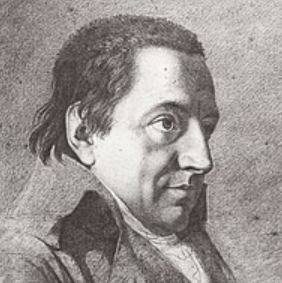
When one rational being affects another rational being as mere matter, then the lower sense of that being is also affected, it is true, and is so affected necessarily and altogether independently of the freedom of that being, (as the lower sense is indeed always affected;) but it is not to be assumed that this affection was in the intention of the person who produced it. His intention was merely to attain his purpose, to express his conception in matter, and he never took into consideration whether that matter would feel it or not. Hence, the reciprocal influence of rational beings upon each other, as such, always occurs by means of the higher sense; for only the higher sense is one which cannot be affected without having been presupposed. Our criterion of this reciprocal influence remains, therefore, correct.
▼
Source
source
P. 108
9 months 2 weeks ago
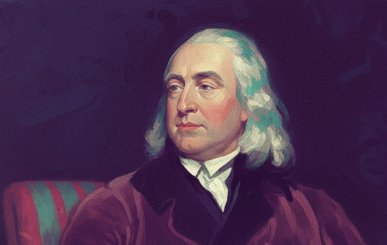
In principle and in practice, in a right track and in a wrong one, the rarest of all human qualities is consistency.
▼
Source
source
Ch. 1: Of the Principle of Utility
6 months 2 days ago
We have Divine Wisdom in the mortal body.Whatever does harm to the body, ruins the House of the Eternal.

8 months 1 week ago
Every act of courage is the work of an unbalanced man. Animals, normal by definition, are always cowardly except when they know themselves to be stronger, which is cowardice itself.
9 months 1 week ago
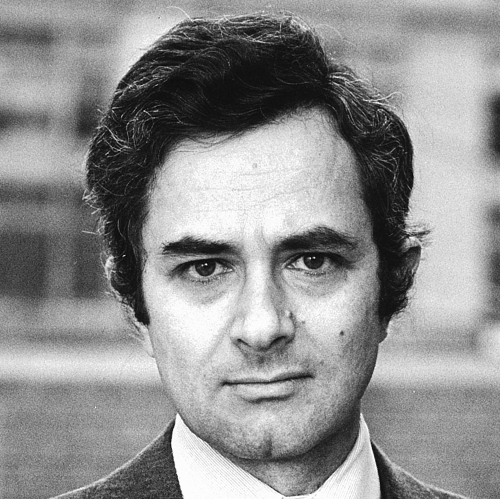
Consciousness is what makes the mind-body problem really intractable.
▼
Source
source
p. 165.
8 months 1 week ago
The truth is cruel, but it can be loved, and it makes free those who have loved it.
▼
Source
source
p. 107
6 months 3 days ago
The proof of a theory is in its reasoning, not in its sponsorship.
8 months 2 weeks ago
The dream is the small hidden door in the deepest and most intimate sanctum of the soul, which opens to that primeval cosmic night that was soul long before there was conscious ego and will be soul far beyond what a conscious ego could ever reach.
▼
Source
source
The Meaning of Psychology for Modern Man

6 months 2 days ago
Friendship is always helpful, but love sometimes even does harm

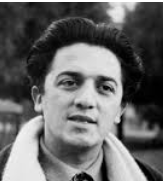
6 months 3 weeks ago
Cinema is an old whore, like circus and variety, who knows how to give many kinds of pleasure. Besides, you can't teach old fleas new dogs.
▼
Source
source
As quoted in in The Atlantic

8 months 1 week ago
For it is not the bare Words, but the Scope of the writer that giveth true light, by which any writing is to bee interpreted; and they that insist upon single Texts, without considering the main Designe, can derive no thing from them clearly; but rather by casting atomes of Scripture, as dust before mens eyes, make everything more obscure than it is; an ordinary artifice of those who seek not the truth, but their own advantage.
▼
Source
source
The Third Part, Chapter 43, p. 331

5 months 2 weeks ago
Never have nations been civilized, except by religion.
▼
Source
source
XXXIII, p. 99
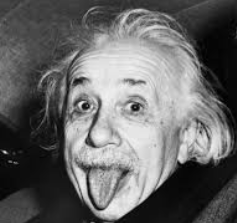
5 months 1 week ago
May they not forget to keep pure the great heritage that puts them ahead of the West: the artistic configuration of life, the simplicity and modesty of personal needs, and the purity and serenity of the Japanese soul.
▼
Source
source
Comment made after a six-week trip to Japan in November-December 1922, published in Kaizo 5, no. 1 (January 1923), 339. Einstein Archive 36-477.1. Appears in The New Quotable Einstein by Alice Calaprice (2005), p. 269
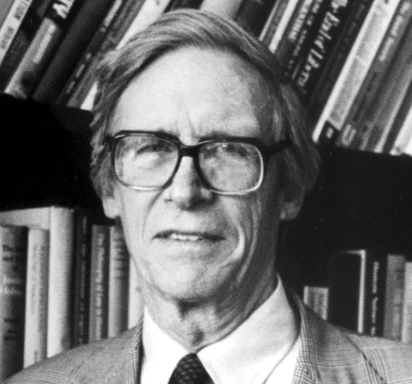
9 months 2 weeks ago
We may suppose that everyone has in himself the whole form of a moral conception.
▼
Source
source
Chapter I, Section 9, pg. 50
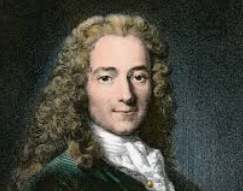
9 months 2 weeks ago
Religion may be purified. This great work was begun two hundred years ago: but men can only bear light to come in upon them by degrees.
▼
Source
source
The critical review, or annals of literature, Volume XXVI, by A Society of Gentlemen (1768) p. 450

9 months 2 weeks ago
Natural science is throughout either a pure or an applied doctrine of motion.
▼
Source
source
Preface, Tr. Bax, 1883

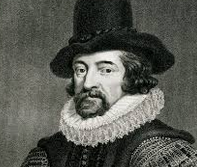
9 months 3 weeks ago
As we divided natural philosophy in general into the inquiry of causes, and productions of effects: so that part which concerneth the inquiry of causes we do subdivide according to the received and sound division of causes. The one part, which is physic, inquireth and handleth the material and efficient causes; and the other, which is metaphysic, handleth the formal and final causes.
▼
Source
source
Book VII, 3

8 months 2 weeks ago
How it could come to pass I do not know, but I remember it clearly. The dream embraced thousands of years and left in me only a sense of the whole. I only know that I was the cause of their sin and downfall. Like a vile trichina, like a germ of the plague infecting whole kingdoms, so I contaminated all this earth, so happy and sinless before my coming. They learnt to lie, grew fond of lying, and discovered the charm of falsehood.
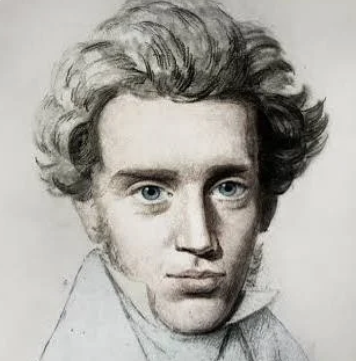
10 months 2 weeks ago
If it were so, as conceited sagacity, proud of not being deceived, thinks, that we should believe nothing that we cannot see with our physical eyes, then we first and foremost ought to give up believing in love. ... We can be deceived by believing what is untrue, but we certainly are also deceived by not believing what is true. ... Which deception is more dangerous?

5 months 2 weeks ago
I had rather be shut up in a very modest cottage with my books, my family and a few old friends, dining on simple bacon, and letting the world roll on as it liked, than to occupy the most splendid post, which any human power can give.
▼
Source
source
Letter to Alexander Donald
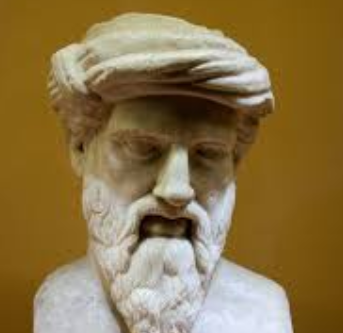
8 months 4 weeks ago
As soon as laws are necessary for men, they are no longer fit for freedom.
▼
Source
source
As quoted in Short Sayings of Great Men: With Historical and Explanatory Notes (1882) by Samuel Arthur Bent, p. 454
5 months 1 week ago
Everyone who is seriously involved in the pursuit of science becomes convinced that some spirit is manifest in the laws of the universe, one that is vastly superior to that of man.
8 months 1 week ago
At the edge of life you feel that you are no longer master of the life within you, that subjectivity is an illusion, and that uncontrollable forces are seething inside you, evolving with no relation to a personal center or a definite, individual rhythm.
▼
Source
source
essay 2 - On not wanting to live

5 months 2 weeks ago
People try to get away from it all-to the country, to the beach, to the mountains. You always wish that you could too. Which is idiotic: you can get away from it anytime you like. By going within. Nowhere you can go is more peaceful-more free of interruptions-than your own soul.
▼
Source
source
(Hays translation) IV, 4
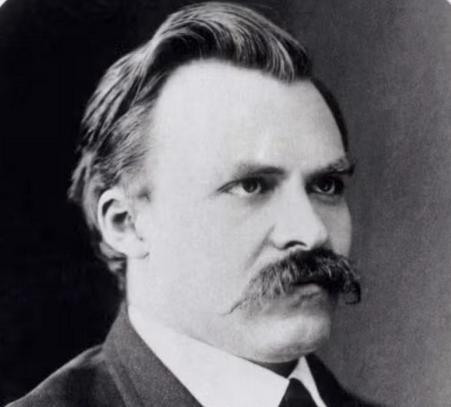
10 months 2 weeks ago
...and woe betide fateful curiosity should it ever succeed in peering through a crack in the chamber of consciousness, out and down into the depths, and thus gain an intimation of the fact that humanity, in the indifference of its ignorance, rests on the pitiless, the greedy, the insatiable, the murderous clinging in dreams, as it were, to the back of a tiger.
8 months 1 week ago
Progress is the injustice each generation commits with regard to its predecessor.
9 months 2 weeks ago
The suppression of liberty is always likely to be irrational.
▼
Source
source
Chapter IV, Section 33, p. 210

8 months ago
Religion, mysticism and magic all spring from the same basic 'feeling' about the universe: a sudden feeling of meaning, which human beings sometimes 'pick up' accidentally, as your radio might pick up some unknown station. Poets feel that we are cut off from meaning by a thick, lead wall, and that sometimes for no reason we can understand the wall seems to vanish and we are suddenly overwhelmed with a sense of the infinite interestingness of things.
▼
Source
source
p. 28

8 months 4 days ago
To all this, someone is sure to object that life ought to subject itself to reason, to which we will reply that nobody ought to do what he is unable to do, and life cannot subject itself to reason. "Ought, therefore can," some Kantian will retort. To which we shall demur: "Cannot, therefore ought not." And life cannot submit itself to reason, because the end of life is living and not understanding.
10 months 2 days ago
The essence of the good is a certain kind of moral purpose, and that of the evil is a certain kind of moral purpose.
▼
Source
source
Book I, ch. 29, 1
6 months 1 week ago
We have not a direct intuition of the equality of two intervals of time.
7 months ago
I have been overcome by the beauty and richness of our life together, those early mornings setting out, those evenings gleaming with rivers and lakes below us, still holding the last light. ... Those fields of daisies we landed on, and dusty fields and desert stretches. Memories of many skies and earths beneath us - many days, many nights of stars.

9 months 3 weeks ago
The human being, corrupted to the root, can neither desire nor perform anything but evil.
▼
Source
source
The Making of Martin Luther, By Richard Rex, p66

9 months 2 weeks ago
Diversity makes critical argument fruitful. ...[P]artners in an argument must share ...the wish to know, and the readiness to learn from the other ...by severely criticizing his views... and hearing... [the] reply. ...the so-called method of science consists in this kind of criticism.
5 months 3 weeks ago
I go into the Upanishads to ask questions.
▼
Source
source
As quoted in God Is Not One : The Eight Rival Religions That Run the World and Why Their Differences Matter (2010), by Stephen Prothero, Ch, 4 : Hinduism : The Way of Devotion, p. 144

8 months 1 day ago
The struggle to end sexist oppression that focuses on destroying the cultural basis for such domination strengthens other liberation struggles. Individuals who fight for the eradication of sexism without struggles to end racism or classism undermine their own efforts. Individuals who fight for the eradication of racism or classism while supporting sexist oppression are helping to maintain the cultural basis of all forms of group oppression.

9 months 2 weeks ago
In politics, love is a stranger, and when it intrudes upon it nothing is being achieved except hypocrisy. All the characteristics you stress in the Negro people: their beauty, their capacity for joy, their warmth, and their humanity, are well-known characteristics of all oppressed people. They grow out of suffering and they are the proudest possession of all pariahs. Unfortunately, they have never survived the hour of liberation by even five minutes. Hatred and love belong together, and they are both destructive; you can afford them only in private and, as a people, only so long as you are not free.
▼
Source
source
Letter to James Baldwin
8 months 1 week ago
Even the most inspired verse, which boasts not without a relative justification to be immortal, becomes in the course of ages a scarcely legible hieroglyphic; the language it was written in dies, a learned education and an imaginative effort are requisite to catch even a vestige of its original force. Nothing is so irrevocable as mind.

9 months 1 week ago
There are two forms of knowledge, one genuine, one obscure. To the obscure belong all of the following: sight, hearing, smell, taste, feeling. The other form is the genuine, and is quite distinct from this. [And then distinguishing the genuine from the obscure, he continues:] Whenever the obscure [way of knowing] has reached the minimum sensibile of hearing, smell, taste, and touch, and when the investigation must be carried farther into that which is still finer, then arises the genuine way of knowing, which has a finer organ of thought.
5 months 2 weeks ago
Enough of this miserable, whining life. Stop monkeying around! Why are you troubled? What's new here? What's so confounding? The one responsible? Take a good look. Or just the matter itself? Then look at that. There's nothing else to look at. And as far as the gods go, by now you could try being more straightforward and kind. It's the same, whether you've examined these things for a hundred years, or only three.
▼
Source
source
IX. 37:205
5 months 2 weeks ago
Though thou be destined to live three thousand years and as many myriads besides, yet remember that no man loseth other life than that which he liveth, nor liveth other than that which he loseth.
▼
Source
source
II, 14
9 months 1 week ago
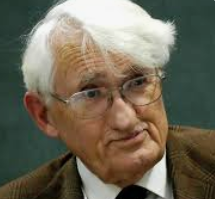
Science can only be comprehended epistemologically, which means as one category of possible knowledge, as long as knowledge is not equated either effusively with the absolute knowledge of a great philosophy or blindly with scientistic self-understanding of the actual business of research.
▼
Source
source
p. 4
CivilSimian.com created by AxiomaticPanic, CivilSimian, Kalokagathia