

7 months 1 week ago
Alas! in the clothes of the greatest potentate, what is there but a man?
▼
Source
source
The Suicide Club, Story of the Young Man with the Cream Tarts.

9 months 2 weeks ago
Hitch your wagon to a star.
▼
Source
source
Civilization

7 months 2 weeks ago
Patience is a remedy for every sorrow.
▼
Source
source
Maxim 170
8 months 4 weeks ago
The wind is blowing, adore the wind.
▼
Source
source
Symbol 8

9 months 2 weeks ago
Abjection is a methodological conversion, like Cartesian doubt and Husserlian epoche: it establishes the world as a closed system which consciousness regards from without, in the manner of divine understanding.
▼
Source
source
p. 141
10 months 2 weeks ago
My doubt goes like this: How could the Loving One have the heart to let human beings become so guilty that they got his murder on their consciences?

8 months ago
Once again, I experienced that overwhelming joy in the universe that I had felt in London outside the V and A. But this time, my consciousness of the world seemed larger, more complex. It was the mystic's sensation of oneness, of everything blending into everything else. Everything I looked at reminded me of something else, which also became present to my consciousness, as if I were simultaneously seeing a million worlds and smelling a million scents and hearing a million sounds-- not mixed up, but each separate and clear. I was overwhelmed with a sense of my smallness in the face of this vast, beautiful, objective universe, this universe whose chief miracle is that it exists, as well as myself. It is no dream, but a great garden in which life is trying to obtain a foothold. I experienced a desire to burst into tears of gratitude; then I controlled it, and the feeling subsided into a calm sense of immense, infinite beauty.
▼
Source
source
pp. 237-238

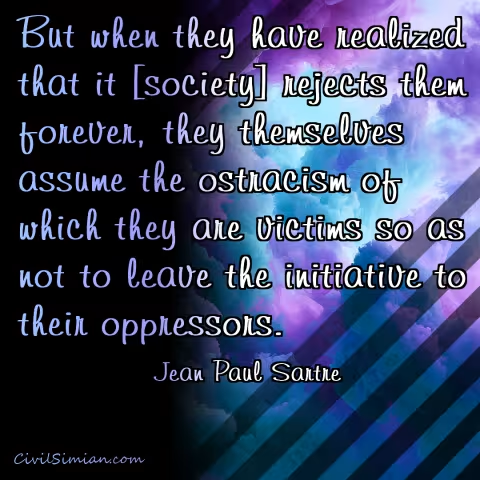
9 months 2 weeks ago
The live dead-man is dead as a producer and alive insofar as he consumes.
▼
Source
source
p. 139
6 months 3 days ago
I have no need to take up each thing that wants to throw its cause on us and show that it is occupied only with itself, not with us, only with its good, not with ours. Look at the rest for yourselves. Do truth, freedom, humanity, justice, desire anything else than that you grow enthusiastic and serve them?
▼
Source
source
Cambridge 1995, p. 6
5 months 2 weeks ago
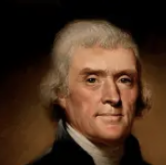
I agree with you that there is a natural aristocracy among men. The grounds of this are virtue and talents... The natural aristocracy I consider as the most precious gift of nature, for the instruction, the trusts, and government of society... Every one, by his property, or by his satisfactory situation, is interested in the support of law and order. And such men may safely and advantageously reserve to themselves a wholesome control over their public affairs, and a degree of freedom, which, in the hands of the canaille [the masses] of the cities of Europe, would be instantly perverted to the demolition and destruction of everything public and private.
▼
Source
source
Letter to John Adams

8 months 3 weeks ago
To keep our eyes open longer were but to set our Antipodes. The Huntsmen are up in America, and they are already past their first sleep in Persia. But who can be drowsy at that hour which freed us from everlasting sleep? or have slumbering thoughts at that time, when sleep itself must end, and as some conjecture all shall awake again?
▼
Source
source
Ch. 5
10 months 2 weeks ago
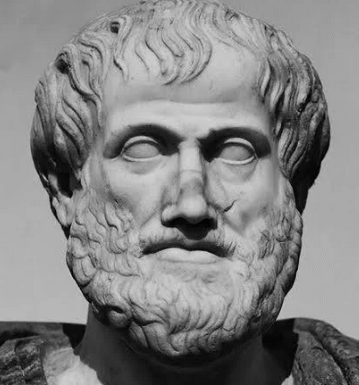
It is impossible that each of the elements should be infinite. For that is body which has interval on all sides; and that is infinite which has extension without bound.

6 months 2 days ago
No man can suffer both severely and for a long time; Nature, who loves us most tenderly, has so constituted us as to make pain either endurable or short.

8 months 2 weeks ago
The science of government being, therefore, so practical in itself, and intended for such practical purposes, a matter which requires experience, and even more experience than any person can gain in his whole life, however sagacious and observing he may be, it is with infinite caution that any man ought to venture upon pulling down an edifice which has answered in any tolerable degree for ages the common purposes of society, or on building it up again without having models and patterns of approved utility before his eyes.
10 months 1 week ago
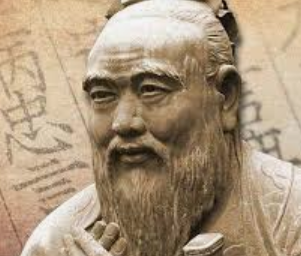
There is nothing more visible than what is secret, and nothing more manifest than what is minute. Therefore the superior man is watchful over himself, when he is alone.
8 months 1 week ago
No, you cannot expect people to understand the higher reaches of philosophy. Culture should be taken out of the hands of the dollar chasers. We need a national subsidy for literature. It is disgraceful that artists are treated like peddlers and that art works have to be sold like soap.
8 months 3 weeks ago
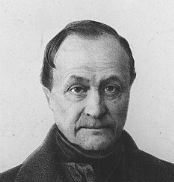
Reorganisation, irrespectively of God or king, by the worship of Humanity, systematically adopted. Man's only right is to do his duty. The Intellect should always be the servant of the Heart, and should never be its slave.
▼
Source
source
Title Page
8 months 2 weeks ago
Learning will be cast into the mire and trodden down under the hoofs of a swinish multitude.
▼
Source
source
Volume iii, p. 335

8 months 1 week ago
Do not block the way of inquiry.
▼
Source
source
Vol. I, par. 135

8 months 2 weeks ago
The education of the child must accord both in mode and arrangement with the education of mankind, considered historically. In other words, the genesis of knowledge in the individual, must follow the same course as the genesis of knowledge in the race. In strictness, this principle may be considered as already expressed by implication; since both being processes of evolution, must conform to those same general laws of evolution... and must therefore agree with each other. Nevertheless this particular parallelism is of value for the specific guidance it affords. To M. Comte we believe society owes the enunciation of it; and we may accept this item of his philosophy without at all committing ourselves to the rest.
5 months 2 weeks ago
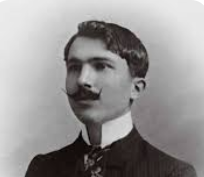
This is our epoch, good or bad, beautiful or ugly, rich or poor - we did not choose it. This is our epoch, the air we breathe, the mud given us, the bread, the fire, the spirit! Let us accept Necessity courageously. It is our lot to have fallen on fighting times. Let us tighten our belts, let us arm our hearts, our minds, and our bodies. Let us take our place in battle!

9 months 2 weeks ago
Nothing contributes more to nourish elevation of sentiments in a people, than the large and free character of their habitations.
▼
Source
source
(p. 55)
10 months 2 weeks ago
This fact, that the opposite of sin is by no means virtue, has been overlooked. The latter is partly a pagan view, which is content with a merely human standard, and which for that very reason does not know what sin is, that all sin is before God. No, the opposite of sin is faith.
8 months 3 weeks ago
Times before you, when even the living men were Antiquities; when the living might exceed the dead, and to depart this world, could not be properly said, to go unto the greater number. Dedication
8 months ago
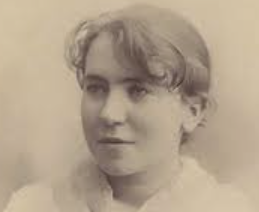
The student of the history of progressive thought is well aware that every idea in its early stages has been misrepresented, and the adherents of such ideas have been maligned and persecuted...The history of progress is written in the blood of men and women who have dared to espouse an unpopular cause, as, for instance, the black man's right to his body, or woman's right to her soul. If, then, from time immemorial, the New has met with opposition and condemnation, why should my beliefs be exempt from a crown of thorns?
8 months 1 week ago
Persons who feel themselves to be exiles in this world-and what noble mind, from Empedocles down, has not had that feeling?-are mightily inclined to believe themselves citizens of another.
▼
Source
source
pp. 39-40
6 months 3 days ago
Liberty of the people is not my liberty!
▼
Source
source
Cambridge 1995, p. 190
7 months 2 weeks ago
For him who loves labor, there is always something to do.
▼
Source
source
Maxim 219

9 months 2 weeks ago
A man cannot become a child again, or he becomes childish.
▼
Source
source
Introduction, p. 31.

6 months 1 week ago
No Dilettantism in this Mahomet; it is a business of Reprobation and Salvation with him, of Time and Eternity: he is in deadly earnest about it! Dilettantism, hypothesis, speculation, a kind of amateur-search for Truth, toying and coquetting with Truth: this is the sorest sin. The root of all other imaginable sins. It consists in the heart and soul of the man never having been open to Truth; - "living in a vain show." Such a man not only utters and produces falsehoods, but is himself a falsehood. The rational moral principle, spark of the Divinity, is sunk deep in him, in quiet paralysis of life-death.
6 months 2 days ago
Fire tries gold, misfortune tries brave men.
▼
Source
source
De Providentia (On Providence), 5.9, translated by Aubrey Stewart Alternate translation: Fire is the test of gold; adversity, of strong men. (translator unknown).

7 months 2 weeks ago
Having acknowledged the measure of the good to be pleasure, i.e., beauty, the European upper classes went back in their comprehension of art to the gross conception of the primitive Greeks which Plato had already condemned. And with this understanding of life, a theory of art was formulated.
6 months 1 week ago
The subject of a gestalt demonstration knows that his perception has shifted because he can make it shift back and forth repeatedly while he holds the same book or piece of paper in his hands. Aware that nothing in his environment has changed, he directs his attention increasingly not to the figure (duck or rabbit) but to the lines of the paper he is looking at. Ultimately he may even learn to see those lines without seeing either of the figures, and he may then say (what he could not legitimately have said earlier) that it is these lines that he really sees but that he sees them alternately as a duck and as a rabbit. ...As in all similar psychological experiments, the effectiveness of the demonstration depends upon its being analyzable in this way. Unless there were an external standard with respect to which a switch of vision could be demonstrated, no conclusion about alternate perceptual possibilities could be drawn.
▼
Source
source
p. 114 (3rd edn.)
9 months 3 weeks ago
The only good histories are those that have been written by the persons themselves who commanded in the affairs whereof they write.
▼
Source
source
Book II, Ch. 10. Of Books

10 months 2 days ago
So far as it goes, a small thing may give an analogy of great things, and show the tracks of knowledge.
▼
Source
source
Book II, lines 123-124 (tr. Rouse)
9 months 1 week ago
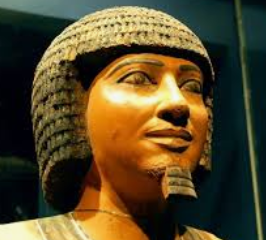
The pleasure is only for a little moment, and it [passes] like a dream, and a man at the end thereof finds death through knowing it.
▼
Source
source
Maxim no. 18. Translated by Sir E. A. Wallis Budge, Teaching Of Amenem Apt Son Of Kanekht (London: Martin Hopkinson and Company Ltd, 1924) p. 58
5 months 2 weeks ago
The States should be urged to concede to the General Government, with a saving of chartered rights, the exclusive power of establishing banks of discount for paper.
▼
Source
source
ME 13:431
5 months 3 weeks ago
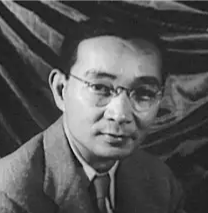
While in the West, the insane are so many that they are put in an asylum, in China the insane are so unusual that we worship them, as anybody who has a knowledge of Chinese literature will testify.
▼
Source
source
Ch. I : The Awakening, p. 3

8 months 4 days ago
Is there not therefore rational necessity, but vital anguish that impels us to believe in God. And to believe in God - I must reiterate it yet again - is, before all and above all, to feel a hunger for God, a hunger for divinity, to be sensible to his lack and absence, to wish that God may exist. And it is the wish to save the human finality of the Universe. For one might even come to resign oneself to being absorbed by God, if it be that our consciousness is based upon Consciousness, if consciousness is the end of the Universe.

9 months 2 weeks ago
I do not think that the real reason why people accept religion has anything to do with argumentation. They accept religion on emotional grounds. One is often told that it is a very wrong thing to attack religion, because religion makes men virtuous. So I am told; I have not noticed it.
▼
Source
source
"The Emotional Factor"
7 months 3 weeks ago
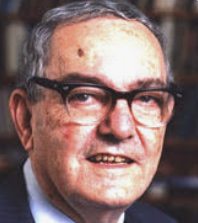
A major task in organizing is to determine, first, where the knowledge is located that can provide the various kinds of factual premises that decisions require.
▼
Source
source
p. 24.
9 months 2 weeks ago
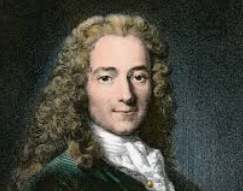
If God has made us in his image, we have returned him the favor.
▼
Source
source
Notebooks, c.1735-c.1750
9 months 2 weeks ago
Owing to the identification of religion with virtue, together with the fact that the most religious men are not the most intelligent, a religious education gives courage to the stupid to resist the authority of educated men, as has happened, for example, where the teaching of evolution has been made illegal. So far as I can remember, there is not one word in the Gospels in praise of intelligence; and in this respect ministers of religion follow gospel authority more closely than in some others.
▼
Source
source
p. 110
6 months 2 days ago
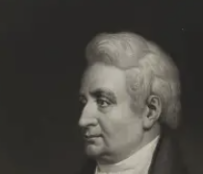
It is the safest to be moderately base - to be flexible in shame, and to be always ready for what is generous, good, and just, when anything is to be gained by virtue.
▼
Source
source
"Catholics", published in The Edinburgh Review (1827). See The Works of the Rev. Sydney Smith. 2. 1859. p. 134.
CivilSimian.com created by AxiomaticPanic, CivilSimian, Kalokagathia