


8 months 1 week ago
Half our days we pass in the shadow of the earth; and the brother of death exacteth a third part of our lives.

9 months 3 weeks ago
The essence of the good is a certain kind of moral purpose, and that of the evil is a certain kind of moral purpose.
▼
Source
source
Book I, ch. 29, 1
5 months 6 days ago
The solution is, that we do not see the image on the retina at all, we only see by means of it.


4 months 3 weeks ago
Fundamental ideas play the most essential role in forming a physical theory. Books on physics are full of complicated mathematical formulae. But thought and ideas, not formulae, are the beginning of every physical theory. The ideas must later take the mathematical form of a quantitative theory, to make possible the comparison with experiment.
7 months ago
The working classes may be injuriously degraded and oppressed in three ways: 1st - When they are neglected in infancy 2nd - When they are overworked by their employer, and are thus rendered incompetent from ignorance to make a good use of high wages when they can procure them. 3rd - When they are paid low wages for their labour.
▼
Source
source
Two Memorials on Behalf of the Working Classes

8 months 4 days ago
It is vain to expect virtue from women till they are in some degree independent of men; nay, it is vain to expect that strength of natural affection which would make them good wives and mothers. Whilst they are absolutely dependent on their husbands they will be cunning, mean, and selfish.
▼
Source
source
Ch. 9
9 months 1 week ago
Truth is a standard both of itself and of falsity.
▼
Source
source
Part II, Prop. XLIII, Scholium

9 months 2 weeks ago
Of how much more passion than reason has Jupiter composed us? putting in, as one would say, "scarce half an ounce to a pound."

9 months 1 week ago
For an author to write as he speaks is just as reprehensible as the opposite fault, to speak as he writes; for this gives a pedantic effect to what he says, and at the same time makes him hardly intelligible.
▼
Source
source
The Art of Literature
9 months 3 weeks ago
A true friend will partake of the wants and sorrows of his friend, as if they were his own; if he be in want, he will relieve him; if he be in prison, he will visit him; if he be sick, he will come to him; nay-situations may occur, in which he would not scruple to die for him. It cannot then be doubted, that friendship is one of the most useful means of procuring a secure, tranquil, and happy life.

7 months 3 weeks ago
The essential characteristic of the first half of the twentieth century is the growing weakness, and almost the disappearance, of the idea of value.
▼
Source
source
"The responsibility of writers," p. 167
9 months 1 week ago
My basis is supported by the authority of the greatest moralist of modern times; for such, undoubtedly, J. J. Rousseau is,-that profound reader of the human heart, who drew his wisdom not from books, but from life, and intended his doctrine not for the professorial chair, but for humanity; he, the foe of all prejudice, the foster-child of nature, whom alone she endowed with the gift of being able to moralise without tediousness, because he hit the truth and stirred the heart.
▼
Source
source
Part III, Ch. VIII, 9, p. 230
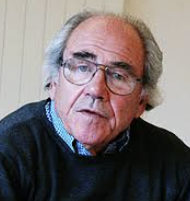
7 months 1 week ago
A series of accidents creates a positively lighthearted state.
▼
Source
source
Chapter 4
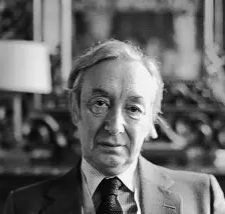
8 months 3 days ago
There never comes a point where a theory can be said to be true. The most that one can claim for any theory is that it has shared the successes of all its rivals and that it has passed at least one test which they have failed.
▼
Source
source
Philosophy in the Twentieth Century (1982) p. 133.
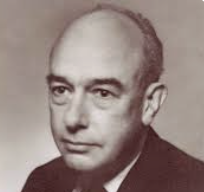
7 months 3 weeks ago
Logic chases truth up the tree of grammar.
▼
Source
source
Philosophy of Logic

7 months 4 days ago
Prose is private drama; poetry is corporate drama.
▼
Source
source
(p. 275)
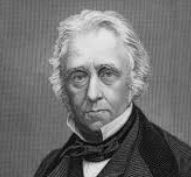
6 months 3 weeks ago
The Puritan hated bear-baiting, not because it gave pain to the bear, but because it gave pleasure to the spectators.
▼
Source
source
Vol. I, ch. 3

9 months 6 days ago
The trouble with fiction... is that it makes too much sense. Reality never makes sense.
▼
Source
source
"John Rivers" in The Genius and the Goddess, 1955

9 months 6 days ago
A thing forgotten on one day will be remembered on the next. Something we have made the most strenuous efforts to recall, but all in vain, will, soon after... saunter into the mind... The sphere of possible recollection may be wider than we think, and... apparent oblivion is no proof against possible recall under other conditions.
▼
Source
source
Ch. 16
8 months 2 days ago
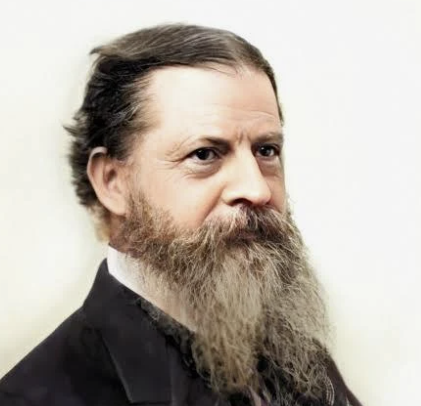
Feeling which has not yet emerged into immediate consciousness is already affectible and already affected. In fact, this is habit, by virtue of which an idea is brought up into the present consciousness by a bond that has already been established between it and another idea while it was still in futuro.

9 months 3 weeks ago
Shut out the evil love of the world, that you may be filled with the love of God. You are a vessel that was already full: you must pour away what you have, that you may take in what you have not.
▼
Source
source
Second Homily, as translated by John Burnaby (1955), p. 274
10 months 1 week ago
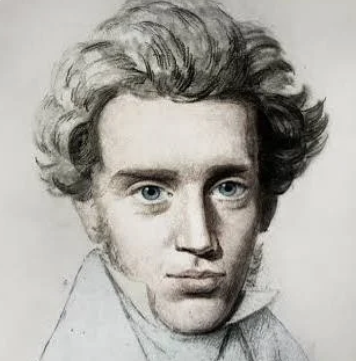
The truth is always in the minority, and the minority is always stronger than the majority, because as a rule the minority is made up of those who actually have an opinion, while the strength of the majority is illusory, formed of that crowd which has no opinion - and which therefore the next moment (when it becomes clear that the minority is the stronger) adopts the latter's opinion, which now is in the majority, i.e. becomes rubbish by having the whole retinue and numerousness on its side, while the truth is again in a new minority.

7 months 1 week ago
Whatever it may be, animals have always had, until our era, a divine or sacrificial nobility that all mythologies recount. Even murder by hunting is still a symbolic relation, as opposed to an experimental dissection. Even domestication is still a symbolic relation, as opposed to industrial breeding. One only has to look at the status of animals in peasant society. And the status of domestication, which presupposes land, a clan, a system of parentage of which the animals are a part, must not be confused with the status of the domestic pet-the only type of animals that are left to us outside reserves and breeding stations-dogs, cats, birds, hamsters, all packed together in the affection of their master. The trajectory animals have followed, from divine sacrifice to dog cemeteries with atmospheric music, from sacred defiance to ecological sentimentality, speaks loudly enough of the vulgarization of the status of man himself.
▼
Source
source
"The Animals: Territory and Metamorphoses," p. 134
7 months 4 days ago
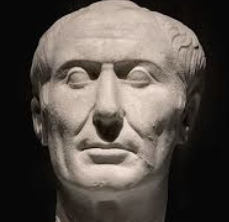
It takes a long time to bring excellence to maturity.
▼
Source
source
Maxim 780
9 months 3 weeks ago
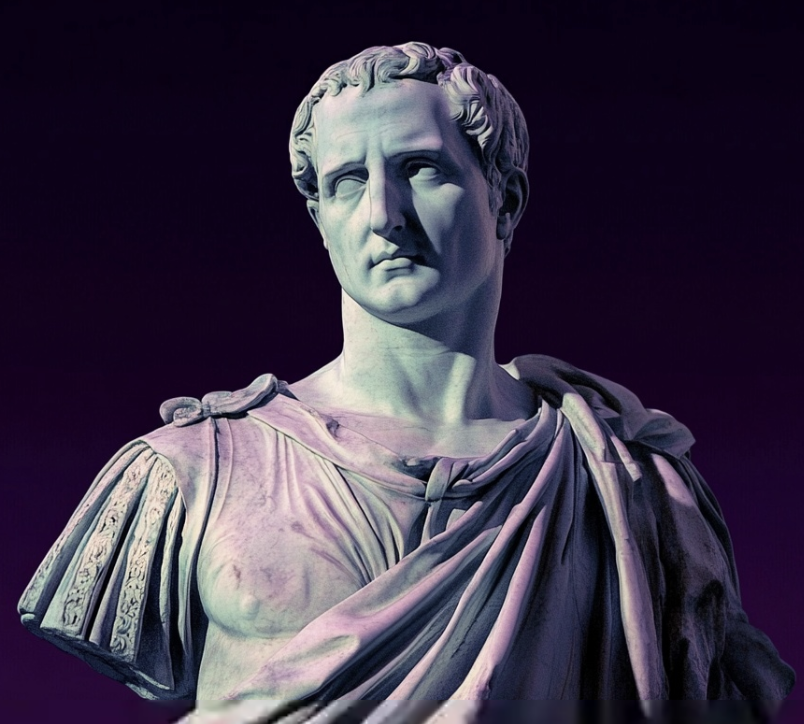
I will speak in a low voice, just so as to let the judges hear me. For men are not wanting who would be glad to excite that people against me and against every eminent man; and I will not assist them and enable them to do so more easily.
▼
Source
source
Cicero, The Orations of Marcus Tullius Cicero; Translation by C.D. Yonge., 1856.


8 months 1 week ago
He was as great as a man can be without morality.
▼
Source
source
Said of Napoleon (1842)

5 months 3 days ago
Not to feel exasperated, or defeated, or despondent because your days aren't packed with wise and moral actions. But to get back up when you fail, to celebrate behaving like a human--however imperfectly--and fully embrace the pursuit that you've embarked on. (Hays translation) Flinch not, neither give up nor despair, if the achieving of every act in accordance with right principle is not always continuous with thee.
▼
Source
source
V, 9

9 months 1 week ago
To fear love is to fear life, and those who fear life are already three parts dead.
10 months 1 week ago
Old age realizes the dreams of youth: look at Dean Swift; in his youth he built an asylum for the insane, in his old age he was himself an inmate.

9 months 1 week ago
Since labour is motion, time is its natural measure.
▼
Source
source
Notebook I, The Chapter on Money, p. 125.

9 months 6 days ago
I have heard with admiring submission the experience of the lady who declared "that the sense of being perfectly well-dressed gives a feeling of inward tranquility which religion is powerless to bestow".
▼
Source
source
Social Aims

7 months 2 weeks ago
It is a sign of sovereignty to risk one's life, that is, to turn life into a game.

7 months 1 week ago
We do not have to love one another to be obligated to build a world in which all lives are sustainable. The right to persist can only be understood as a social right, as the subjective instance of a social and global obligation we bear toward one another.
▼
Source
source
p. 64
9 months 3 weeks ago
Is God willing to prevent evil, but not able? Then he is not omnipotent. Is he able, but not willing? Then he is malevolent. Is he both able and willing? Then whence cometh evil? Is he neither able nor willing? Then why call him God?

9 months 5 days ago
If a victory is told in detail, one can no longer distinguish it from a defeat.
▼
Source
source
Act 1
9 months 1 week ago
The brain may be regarded as a kind of parasite of the organism, a pensioner, as it were, who dwells with the body.

7 months 3 weeks ago
Even a statement very close to the periphery can be held true in the face of recalcitrant experience by pleading hallucination or by amending certain statements of the kind called logical laws. Conversely, by the same token, no statement is immune to revision. Revision even of the logical law of the excluded middle has been proposed as a means of simplifying quantum mechanics; and what difference is there in principle between such a shift and the shift whereby Kepler superseded Ptolemy, or Einstein Newton, or Darwin Aristotle?
▼
Source
source
"Two Dogmas of Empiricism"
5 months 2 weeks ago
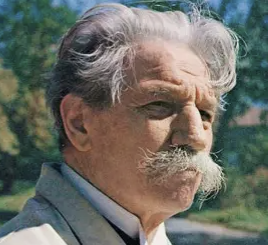
The awareness that we are all human beings together has become lost in war and through politics. We have reached the point of regarding each other only as members of a people either allied with us or against us and our approach; prejudice, sympathy, or antipathy are all conditioned on that. Now we must rediscover the fact that we - all together - are human beings, and that we must strive to concede to each other what moral capacity we have. Only in this way can we begin to believe that in other peoples as well as in ourselves there will arise the need for a new spirit which can be the beginning of a feeling of mutual trustworthiness toward each other.
▼
Source
source
Radio appeal for peace, Oslo, Norway (30 March 1958); also in Peace or Atomic War (1958) Three Appeals Broadcast from Oslo, Norway, on April 28, 29, and 30, 1958.
4 months 3 weeks ago
In Lenin I honor a man, who in total sacrifice of his own person has committed his entire energy to realizing social justice. I do not find his methods advisable. One thing is certain, however: men like him are the guardians and renewers [Erneuerer] of mankind's conscience.

5 months 2 weeks ago
When the mirror meets with an ugly woman, when a rare ink-stone finds a vulgar owner, and when a good sword is in the hands of a common general, there is utterly nothing to be done about it.
▼
Source
source
p. 317
7 months 2 weeks ago
The fear of being alone, or of being unloved, had caused women of all races to passively accept sexism and sexist oppression.
CivilSimian.com created by AxiomaticPanic, CivilSimian, Kalokagathia