
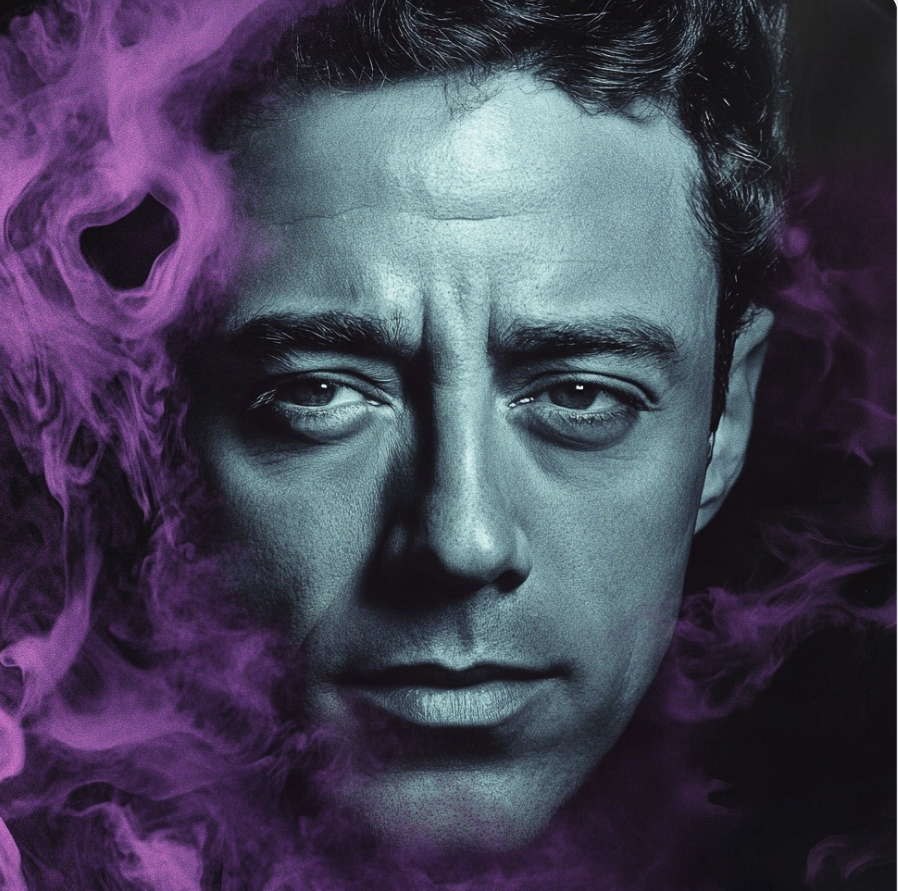
Albert Camus — The Absurd, Revolt, and the Mediterranean Humanism Against Nihilism (1913–1960)
Albert Camus was a French-Algerian philosopher, novelist, playwright, and journalist — born in Mondovi, French Algeria on 7 November 1913, the second son of a farm laborer who was killed at the Battle of the Marne in 1914 when Albert was less than a year old, leaving a deaf and illiterate mother to raise him and his brother in poverty in a two-room apartment in Belcourt, Algiers, without running water or electricity. His primary school teacher Louis Germain recognized his gifts and fought to get him a scholarship to the lycée — the intervention Camus acknowledged in his Nobel Prize acceptance speech as having changed everything. He studied philosophy at the University of Algiers, was prevented by tuberculosis from taking the agrégation, worked as a journalist, actor, director, and playwright in Algiers, moved to Paris in 1940, joined the French Resistance during the occupation, served as editor-in-chief of the underground newspaper Combat from 1944 to 1947, and published in 1942 — simultaneously — the novel "The Stranger" and the philosophical essay "The Myth of Sisyphus," which established him at twenty-nine as the most distinctive new philosophical voice in France. He was awarded the Nobel Prize in Literature in 1957 — the second youngest recipient in history at forty-four. He died on 4 January 1960, in a car accident near Villeblevin, France, at the age of forty-six, as a passenger in the Facel Vega of his friend and publisher Michel Gallimard. An unused train ticket was found in his coat pocket.
He consistently refused the label "existentialist" — "No, I am not an existentialist. Sartre and I are always surprised to see our names linked" — preferring to describe himself as a thinker of the absurd and of revolt, in the tradition of Mediterranean classical humanism rather than German phenomenology. His major philosophical works were "The Myth of Sisyphus" (1942) and "The Rebel" (1951). His major fiction was "The Stranger" (1942), "The Plague" (1947), and "The Fall" (1956).
His central concern, the thread from the poverty of Belcourt through the Resistance, the Cold War, and the Algerian crisis: that human beings confronted a universe indifferent to their desire for meaning — that this confrontation was the permanent condition of human existence — and that the only honest response was neither despair nor false consolation but lucid, passionate revolt: the refusal to give up on life or on justice, in full knowledge of the universe's silence.
Algeria — The Formation That Never Left Him
Camus's philosophy cannot be understood without Algeria — the landscape, the poverty, the sun, the sea, the colonial situation, and the particular form of Mediterranean sensibility that shaped everything he wrote. He grew up poor in a way that was constitutively different from European intellectual poverty: the poverty of a North African working-class family in a colonial city where French Algerians (Pieds-Noirs) occupied a position at once privileged relative to Arab Algerians and marginal relative to metropolitan French. The Algerian landscape — the Mediterranean light, the sea, the heat, the physical immediacy of bodily existence in the sun — gave his philosophy its sensory ground. Where Sartre's existentialism was Parisian, interior, philosophical-abstractly, Camus's absurdism was Algerian, exterior, incarnate. And the colonial situation — which he could neither ignore nor fully confront with the categories available to him — gave his later work its most painful unresolved tension.
"In the middle of winter, I at last discovered that there was in me an invincible summer."
— Albert Camus
The Absurd — The Confrontation That Cannot Be Resolved
The absurd — Camus's central concept — was not a property of the world alone or of human consciousness alone, but the product of the confrontation between them: the clash between the human desire for clarity, meaning, and coherence and the world's radical silence in response to that desire. The world was not inherently meaningless in itself — it simply was, opaque and indifferent. Human consciousness was not inherently absurd in itself — it simply demanded what the world could not provide. The absurd was the gap between demand and response, the tension between what we needed and what we got, the collision that produced neither resolution nor annihilation but a permanent, irreducible confrontation.
"The Myth of Sisyphus" opened with what Camus called "the only truly serious philosophical question": whether life was worth living. This was not a counsel of despair but a methodological starting point — the question that philosophy had to answer honestly before it could proceed to anything else. His argument: the three available responses to the absurd — physical suicide (killing oneself), philosophical suicide (fleeing into religion or ideology that denied the absurd), or revolt (living in full awareness of the absurd without surrendering to it) — were not equally honest. Only revolt maintained the confrontation without falsifying it. "One must imagine Sisyphus happy" — not because his situation was not wretched, but because the defiance of his continued effort, despite full knowledge of its futility, was itself a form of human dignity.
"There is but one truly serious philosophical problem, and that is suicide. Judging whether life is or is not worth living amounts to answering the fundamental question of philosophy. All the rest — whether or not the world has three dimensions, whether the mind has nine or twelve categories — comes afterwards."
— Camus, The Myth of Sisyphus
Against Philosophical Suicide — The Critique of Existentialism
"The Myth of Sisyphus" was written explicitly against the existentialists — against Kierkegaard, Jaspers, Shestov, and Heidegger — not because they had failed to recognize the absurd but because they had responded to it with what Camus called "philosophical suicide": the leap into faith, into transcendence, into systems of meaning that dissolved the absurd rather than living with it. Kierkegaard had recognized the absurd and then leaped to God. The existentialists had recognized the freedom of consciousness and then leaped to authentic projects, commitment, and purpose-creation. Both moves, for Camus, were evasions — ways of escaping the confrontation with the world's silence by substituting a human construction (faith, meaning, authenticity) for the reality of the confrontation itself. Genuine philosophical honesty required maintaining the tension without resolving it, living in the absurd without transcending it.
"The absurd man thus catches sight of a burning and frigid, transparent and limited universe in which nothing is possible but everything is given, and beyond which all is collapse and nothingness. He can then decide to accept such a universe and draw from it his strength, his refusal to hope, and the unyielding evidence of a life without consolation."
— Camus, The Myth of Sisyphus
The Rebel — Against Revolutionary Terror
"The Rebel" (1951) extended the absurdist analysis from the individual confrontation with meaninglessness to the political confrontation with historical violence and ideology. His argument: if the absurdist logic led to individual revolt — the refusal to give up on life — then the same logic applied collectively led to a specific form of political revolt: the refusal to accept injustice, combined with the refusal to justify any violence in the name of historical necessity or future utopia. Revolutionary ideologies — particularly Marxism-Leninism — had made the same error as religious ideologies: they had posited a transcendent goal (historical liberation, the classless society) that justified present violence in the name of a future that could never arrive. They had, in other words, committed historical suicide — sacrificing the concrete persons of the present to an abstract humanity of the future.
This was the argument that destroyed his friendship with Sartre. Sartre and the French left were still defending Soviet communism or at least refusing to condemn it unconditionally; Camus argued that any political position that allowed the murder of real people in the name of historical progress had betrayed the only solid ground of morality: the concrete, present, living human being. "The slave begins by demanding justice and ends by wanting to wear a crown. He must dominate in his turn." The public rupture between Camus and Sartre in 1952 — conducted through the pages of "Les Temps Modernes" — was the most consequential philosophical quarrel in postwar France.
"To say that life is absurd, the conscience must be alive. The final conclusion of absurdist reasoning is the rejection of suicide and the maintenance of that desperate encounter between human questioning and the silence of the universe. Suicide would mean the end of the encounter. Revolt keeps it alive."
— Camus, The Rebel
The Plague — Solidarity as the Only Adequate Response
"The Plague" (1947) was Camus's most widely read novel — an allegory of the Nazi occupation in the form of a bubonic plague that descends on the Algerian city of Oran, told through the experiences of a doctor, a journalist, a bureaucrat, a priest, and a criminal who respond to the catastrophe in different ways. Its philosophical argument was not explicit but structural: the plague — like the absurd — was a fact that could not be argued away, explained, or transcended. The only adequate response was solidarity — the refusal to abandon those who suffered, the willingness to keep fighting even when the outcome was uncertain, the persistence of human connection in the face of collective catastrophe. Dr. Rieux, the novel's center, was neither heroic nor religious — he simply continued to do what could be done, without consolation and without self-congratulation.
"What's natural is the microbe. All the rest — health, integrity, purity (if you like) — is a product of the human will, of a vigilance that must never falter. The good man, the man who infects hardly anyone, is the man who has the fewest lapses of attention."
— Camus, The Plague
Algeria — The Unresolved Wound
Camus's position on Algerian independence was the most personally agonizing of his public commitments and the one that most clearly exposed the limits of his framework. He opposed French colonialism in principle and documented colonial injustice as a journalist in the 1930s. He also could not bring himself to endorse Algerian independence in the terms the FLN demanded — partly because he feared the violence it would require, partly because he could not accept the frame that placed French Algerians purely as oppressors when he had grown up among them as one of the poor. His attempt to defend a federalist solution — an Algeria shared by all its peoples — satisfied nobody and was overtaken by the war's logic. His famous remark — "I believe in justice, but I will defend my mother before justice" — was taken as a betrayal by Algerian intellectuals who had expected more from the man who had won the Nobel Prize. It was, whatever else it was, honest about the limits of abstract political principle when it collided with personal loyalty.
"I believe in justice, but I will defend my mother before justice."
— Camus, during a press conference in Stockholm, 1957
Legacy — The Philosopher Who Said No
Camus's legacy has proved more durable than Sartre's — partly because his positions were often right when Sartre's were wrong, partly because his style was more beautiful, partly because his humanism was warmer and less abstract. His insistence that concrete human lives could not be sacrificed to historical necessity — made in 1951, when this was deeply unfashionable — has been vindicated by everything that followed. His insistence that revolt had to remain in touch with its origin — the suffering of real, present human beings — and could never become the vehicle for new forms of domination is the most practically important political lesson in his work. He died with a manuscript of "The First Man" — his most autobiographical novel — in his briefcase. It was published posthumously in 1994 and widely regarded as the finest thing he ever wrote.
On CivSim he belongs at the center — his philosophy is the closest thing to Universal Humanism available in the Western philosophical canon. The preservation of concrete, present human life as the non-negotiable ground — the refusal to sacrifice real persons to abstract futures — the insistence that revolt must remain in solidarity with the suffering it opposes — these are the structural commitments of Universal Humanism stated in the most honest available form: without the consolation of transcendence, without the comfort of historical necessity, in full awareness of the universe's silence, and with the full force of a human will that refuses to mistake that silence for permission. "One must imagine Sisyphus happy."
"One must imagine Sisyphus happy."
— Albert Camus, The Myth of Sisyphus
CivilSimian.com created by AxiomaticPanic, CivilSimian, Kalokagathia