Caring about others....all you need to know....



Even to have come forth is something, since I see that being able to conquer is placed in the hands of fate. However, there was in me, whatever I was able to do, that which no future century will deny to be mine, that which a victor could have for his own: Not to have feared to die, not to have yielded to any equal in firmness of nature, and to have preferred a courageous death to a noncombatant life.

An utterance can have Intentionality, just as a belief has Intentionality, but whereas the Intentionality of the belief is intrinsic the Intentionality of the utterance is derived.

Children should from the beginning be bred up in an abhorrence of killing or tormenting any living creature; and be taught not to spoil or destroy any thing, unless it be for the preservation or advantage of some other that is nobler.

You know I am not born to tread in the beaten track - the peculiar bent of my nature pushes me on.

Nothing is more indispensable to true religiosity than a mediator that links us with divinity.

It seems to me, that if the matter of our sun and planets and all the matter of the universe, were evenly scattered throughout all the heavens, and every particle had an innate gravity towards all the rest, and the whole of space throughout which this matter was scattered was but finite, the matter on [toward] the outside of this space would, by its gravity, tend towards all the matter on the inside, and, by consequence, fall down into the middle of the whole space, and there compose one great spherical mass. But if the matter was evenly disposed throughout an infinite space it could never convene into one mass; but some of it would convene into one mass and some into another, so as to make an infinite number of great masses, scattered at great distances from one another throughout all that infinite space.
When we consider the being and substance of that universe in which we are immutably set, we shall discover that neither we ourselves nor any substance doth suffer death; for nothing is in fact diminished in its substance, but all things, wandering through infinite space, undergo change of aspect.

The eye may see for the hand, but not for the mind.

We witness a strange inversion: on the one hand, the endeavor to turn the social contract into a less calculating and more feeling connection among its members; on the other hand, the endeavor to turn the erotic relationship into a contractual one.

I had rather be shut up in a very modest cottage with my books, my family and a few old friends, dining on simple bacon, and letting the world roll on as it liked, than to occupy the most splendid post, which any human power can give.
There are people into whose heads it never enters to conceive of any better state of society than that which now exists.

Often, writers on historical events tend to consider ... a loss of willingness to fight as a sign of "decadence," as though there were something despicable about not being a bully and not being willing to engage in mass murder. Perhaps we ought to feel instead that to cease to be warlike means to begin to be civilized and decent.

A man who is so exceedingly civil that for the sake of quietude and a peaceable name will silently see the community imposed upon, or their rights invaded, may, in his principles, be a good man, but cannot be stiled a useful one, neither does he come up to the full mark of his duty; for silence becomes a kind of crime when it operates as a cover or an encouragement to the guilty.
Music is associated not only with speculation but with morality. When rhythms and modes reach an intellect through the ear, they doubtless affect and reshape that mind according to their particular character.

We do not have to make self- sacrifice a necessary element of altruism. We can regard people as altruists because of the kind of interests they have rather than because they are sacrificing their interests.

In fact we do not know anything infallibly, but only that which changes according to the condition of our body and of the [influences] that reach and impinge upon it.
Men may one day feel that they are partakers of a common nature, and that true freedom and perfect equity, like food and air, are pregnant with benefit to every constitution.

Revolution is like the daughters of Pelias: it cuts humanity to pieces in order to rejuvenate it.
Christianity set itself the goal of fulfilling man's unattainable desires, but for that very reason ignored his attainable desires. By promising man eternal life, it deprived him of temporal life, by teaching him to trust in God's help it took away his trust in his own powers; by giving him faith in a better life in heaven, it destroyed his faith in a better life on earth and his striving to attain such a life. Christianity gave man what his imagination desires, but for that very reason failed to give him what he really and truly desires.
Everything predicted by the enemies of banks, in the beginning, is now coming to pass. We are to be ruined now by the deluge of bank paper. It is cruel that such revolutions in private fortunes should be at the mercy of avaricious adventurers, who, instead of employing their capital, if any they have, in manufactures, commerce, and other useful pursuits, make it an instrument to burden all the interchanges of property with their swindling profits, profits which are the price of no useful industry of theirs.

People are not aware how entirely, in former ages, the law of superior strength was the rule of life; how publicly and openly it was avowed, I do not say cynically or shamelessly - for these words imply a feeling that there was something in it to be ashamed of, and no such notion could find a place in the faculties of any person in those ages, except a philosopher or a saint.

As a rule, all heroism is due to a lack of reflection, and thus it is necessary to maintain a mass of imbeciles. If they once understand themselves the ruling men will be lost.

The art of progress is to preserve order amid change, and to preserve change amid order.

All the time that he can spare from the adornment of his person, he devotes to the neglect of his duties.
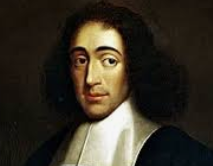
This endeavour to do a thing or leave it undone, solely in order to please men, we call ambition, especially when we so eagerly endeavour to please the vulgar, that we do or omit certain things to our own or another's hurt : in other cases it is generally called kindliness.
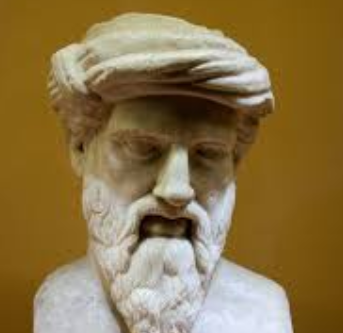
A good Soul hath neither too great joy, nor too great sorrow: for it rejoiceth in goodness; and it sorroweth in wickedness. By the means whereof, when it beholdeth all things, and seeth the good and bad so mingled together, it can neither rejoice greatly; nor be grieved with over much sorrow.

As surgeons keep their instruments and knives always at hand for cases requiring immediate treatment, so shouldst thou have thy thoughts ready to understand things divine and human, remembering in thy every act, even the smallest, how close is the bond that unites the two.
I do not believe that I am now dreaming, but I cannot prove that I am not. I am, however, quite certain that I am having certain experiences, whether they be those of a dream or those of waking life.
It might be said to the agitator, "However convinced you were of the justice of your cause and the truth of your convictions, you ought not to have made a public attack upon any man's character until you had examined the evidence on both sides with the utmost patience and care." In the first place, let us admit that, so far as it goes, this view of the case is right and necessary; right, because even when a man's belief is so fixed that he cannot think otherwise, he still has a choice in the action suggested by it, and so cannot escape the duty of investigating on the ground of the strength of his convictions; and necessary, because those who are not yet capable of controlling their feelings and thoughts must have a plain rule dealing with overt acts.
'Tis a grievous thing to be subject to an inferior.
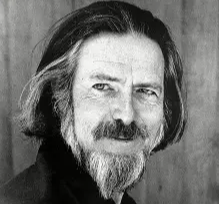
When you tell a girl how beautiful she is, she will say, "Now isn't that just like a man! All you men think about is bodies. OK, so I'm beautiful, but I got my body from my parents and it was just luck. I prefer to be admired for myself, not my chassis." Poor little chauffeur! All she is saying is that she has lost touch with her own astonishing wisdom and ingenuity, and wants to be admired for some trivial tricks that she can perform with her conscious attention. And we are all in the same situation, having dissociated ourselves from our bodies and from the whole network of forces in which bodies can come to birth and live.
What need is there of suspicious fear, since it is in thy power to inquire what ought to be done? And if thy seest clear, go by this way content, without turning back: but if thy dost not see clear, stop and take the best advisers. But if any other things oppose thee, go on according to thy powers with due consideration, keeping to that which appears to be just. For it is best to reach this object, and if thou dost fail, let thy failure be in attempting this. He who follows reason in all things is both tranquil and active at the same time, and also cheerful and collected.
Rejoice not in another man's misfortune!

I have no idea of a liberty unconnected with honesty and justice. Nor do I believe, that any good constitutions of government, or of freedom, can find it necessary for their security to doom any part of the people to a permanent slavery. Such a constitution of freedom, if such can be, is in effect no more than another name for the tyranny of the strongest faction; and factions in republics have been, and are, full as capable as monarchs, of the most cruel oppression and injustice.

I believe that political power also exercises itself through the mediation of a certain number of institutions that seem to have nothing in common with political power, that have the appearance of being independent, but are not.

We inherit the warlike type; and for most of the capacities of heroism that the human race is full of we have to thank this cruel history. Dead men tell no tales, and if there were any tribes of other type than this they have left no survivors. Our ancestors have bred pugnacity into our bone and marrow, and thousands of years of peace won't breed it out of us. The popular imagination fairly fattens on the thought of wars. Let public opinion once reach a certain fighting pitch, and no ruler can withstand it. In the Boer war both governments began with bluff, but they couldn't stay there; the military tension was too much for them.
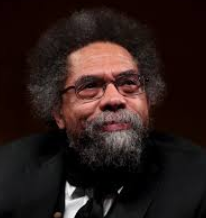
This market way of life promotes addictions to stimulation and obsessions with comfort and convenience.
This is that which I think great readers are apt to be mistaken in; those who have read of everything, are thought to understand everything too; but it is not always so. Reading furnishes the mind only with materials of knowledge; it is thinking that makes what we read ours. We are of the ruminating kind, and it is not enough to cram ourselves with a great load of collections ; unless we chew them over again, they will not give us strength and nourishment.
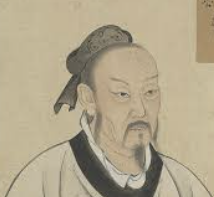
The straightening board was created because of warped wood, and the plumb line came into being because of things that are not straight. Rulers are established and ritual and rightness are illuminated because the nature is evil.
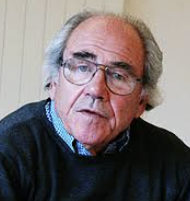
So-called "realist" photography does not capture the "what is." Instead, it is preoccupied with what should not be, like the reality of suffering for example.

""You do not love the mind of your race, nor the body. Any kind of creature will please you if only it is begotten by your kind as they now are. It seems to me, Thick One, what you really love is no completed creature but the very seed itself: for that is all that is left".
CivilSimian.com created by AxiomaticPanic, CivilSimian, Kalokagathia