


1 month 1 week ago
The criminal, like the artist, is a social explorer.
▼
Source
source
quoted in "Marshall McLuhan, Author, Dies; Declared 'Medium Is the Message'" by Alden Whitman, The New York Times, January 1, 1981
3 months 1 week ago
Every philosophy is complete in itself and, like a genuine work of art, contains the totality. Just as the works of Apelles and Sophocles, if Raphael and Shakespeare had known them, should not have appeared to them as mere preliminary exercises for their own work, but rather as a kindred force of the spirit, so, too reason cannot find in its own earlier forms mere useful preliminary exercises for itself.
▼
Source
source
Difference of the Fichtean and Schellingean System of Philosophy, cited in W. Kaufmann, Hegel (1966), p. 49
3 weeks 3 days ago
As human beings, we are endowed with this freedom of choice, and we cannot shuffle off our responsibility upon the shoulders of God or nature. We must shoulder it ourselves. It is up to us.
▼
Source
source
Ch. 3: Does History Repeat Itself?

4 months 2 weeks ago
The reasons and purposes for habits are always lies that are added only after some people begin to attack these habits and to ask for reasons and purposes. At this point the conservatives of all ages are thoroughly dishonest: they add lies.
3 months 1 day ago
Being asked what learning is the most necessary, he replied, "How to get rid of having anything to unlearn.
▼
Source
source
" § 7
1 month 1 week ago
Patience is a remedy for every sorrow.
▼
Source
source
Maxim 170

3 months 6 days ago
I sit astride life like a bad rider on a horse. I only owe it to the horse's good nature that I am not thrown off at this very moment.
▼
Source
source
p. 36e

3 months 1 week ago
First of all: what is work? Work is of two kinds: first, altering the position of matter at or near the earth's surface relatively to other such matter; second, telling other people to do so. The first kind is unpleasant and ill paid; the second is pleasant and highly paid.
▼
Source
source
Ch. 1: In Praise of Idleness

3 months 1 day ago
Commit no slander; so that infamy and wickedness may not happen unto thee.
▼
Source
source
(p. 59)

1 month 4 weeks ago
And yet this might not necessarily involve the conversion of the Trinity into a Quaternity. If... in Greek, spirit, instead of being neuter had been feminine, who can say that the Virgin Mary might not already have become an incarnation or humanization of the Holy Spirit? ...And thus a dogmatic evolution would have been effected parallel to that of the divinization of Jesus, the Son, and his identification with the Word.

1 month 1 week ago
Fiction is to the grown man what play is to the child; it is there that he changes the atmosphere and tenor of his life.
▼
Source
source
A Gossip on Romance, printed in Longman's Magazine (November 1882).
3 months 1 week ago
Change is one thing, progress is another.

6 days ago
Finally, and... somewhat belatedly, there is the growing of a left that... has now been energized and is increasingly vocal... in certain quarters of the cultural community, in the arts and the universities, in Hollywood, in the media... where in some versions it also engages in a kind of illiberal... politics.
▼
Source
source
20:21
3 months 1 day ago
Do you count your birthdays with gratitude?
▼
Source
source
Book II, epistle ii, line 210

3 months 1 week ago
The collective name for the ripe fruits of religion in a character is Saintliness. The saintly character is the character for which spiritual emotions are the habitual centre of the personal energy; and there is a certain composite photograph of universal saintliness, the same in all religions, of which the features can easily be traced.
▼
Source
source
Lectures XI, XII, AND XIII : "Saintliness"

3 months 3 weeks ago
What once sprung from earth sinks back into the earth.
▼
Source
source
Book II, lines 999-1000 (tr. Bailey)

3 months 1 week ago
Is not marriage an open question, when it is alleged, from the beginning of the world, that such as are in the institution wish to get out, and such as are out wish to get in?
▼
Source
source
Montaigne; or, The Skeptic

4 months 1 week ago
While both are dear, Piety requires us to honor truth above our friends.
2 months 3 days ago
The passion of laughter is nothing else but a sudden glory arising from sudden conception of some eminency in ourselves, by comparison with the infirmities of others, or with our own formerly...
▼
Source
source
The Elements of Law, Natural and Politic Pt. I Human Nature (1640) Ch. 9

3 months 1 week ago
To love truth for truth's sake is the principal part of human perfection in this world, and the seed-plot of all other virtues.
▼
Source
source
Letter to Anthony Collins, 29 October 1703
1 month 2 weeks ago
Rationality requires a choice among all possible alternative behaviors. In actual behavior, only a very few of all these possible alternatives come to mind.
3 months 5 days ago
In the Greek conception of parrhesia... truth-having is guaranteed by the possession of... moral qualities... required... to know... and... convey such truth...

2 months 1 week ago
Aion is a child at play, gambling; a child's is the kingship. Telesphorus traverses the dark places of the world, like a star flashing from the deep, leading the way to the gates of the sun and the land of dreams.
▼
Source
source
Combining fragments of Heraclitus and Homer
2 months 3 days ago
The notion that one can discover large patterns or regularities in the procession of historical events is naturally attractive to those who are impressed by the success of the natural sciences in classifying, correlating, and above all predicting.
2 months 1 week ago
Till society is very differently constituted, parents, I fear, will still insist on being obeyed, because they will be obeyed, and constantly endeavour to settle that power on a Divine right, which will not bear the investigation of reason.
▼
Source
source
Ch. 11
3 months 4 weeks ago
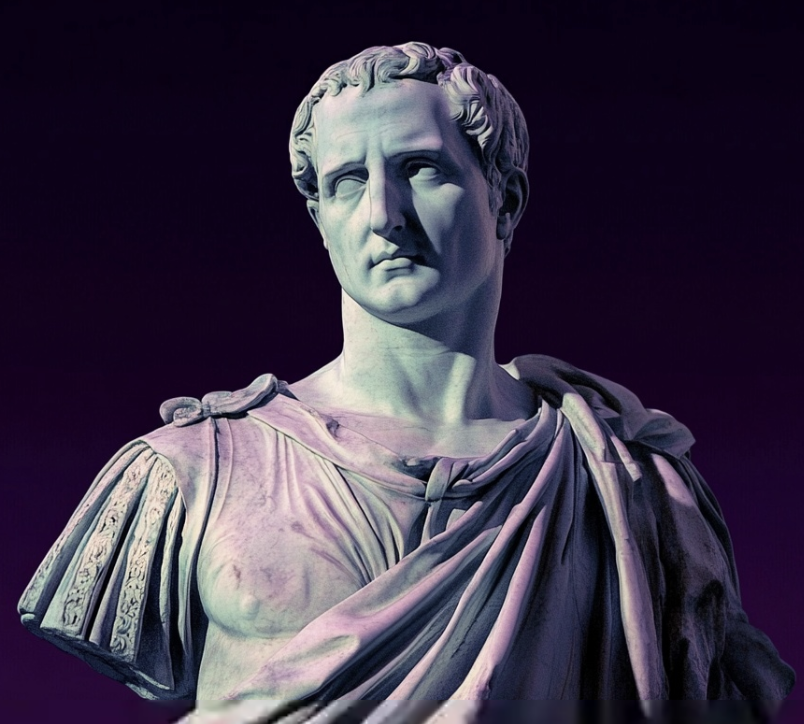
I am a Roman citizen.
▼
Source
source
Against Verres [In Verrem], part 2, book 5, section 57; reported in Cicero, The Verrine Orations, trans. L. H. G. Greenwood (1935), vol. 2, p. 629

3 months 1 week ago
Money does not arise by convention, any more than the state does. It arises out of exchange, and arises naturally out of exchange; it is a product of the same.
▼
Source
source
Notebook I, The Chapter on Money, p. 85.
3 months 1 week ago
The days .... come and go like muffled and veiled figures, sent from a distant friendly party; but they say nothing, and if we do not use the gifts they bring, they carry them as silently away.
▼
Source
source
Works and Days
1 month 4 days ago
Europe owes its greatness to the fact that the primary loyalties of the European people have been detached from religion and re-attached to the land. Those who believe that the division of Europe into nations has been the primary cause of European wars should remember the devastating wars of religion that national loyalties finally brought to an end. And they should study our art and literature for its inner meaning. In almost every case, they will discover, it is an art and literature not of war but of peace, an invocation of home and the routines of home, of gentleness, everydayness and enduring settlement.

4 months 1 week ago
That a woman is presented as a teacher, as a prototype of piety, cannot amaze anyone who knows that piety or godliness is fundamentally womanliness. ... from a woman you learn concern for the one thing needful, from Mary, sister of Lazarus, who sat silent at Christ's feet with her heart's choice: the one thing needful.

3 months 1 week ago
The finest manners in the world are awkwardness and fatuity, when contrasted with a finer intelligence.
▼
Source
source
p. 493
6 days ago
Culture is a much better predictor of populist sentiment than economics. ...The average Trump voter in 2016 had a higher per capita income than the average Hillary Clinton voter, and if you look at the people in the January 6th riot, the vast majority... were comfortable middle class people with good jobs... There is a core... white working class base to Trumpism, but... a lot of the people that are aligned with that movement are there for cultural reasons. They really don't like the kind of identity politics that's being... put forward by the progressive left... A lot of Hispanic voters, for example, don't like socialism, and they don't like the fact that the Democrats are using the word socialism as if it's a perfectly normal set of economic choices.
▼
Source
source
51:36:00
3 months 1 day ago
Poverty is a virtue which one can teach oneself.
▼
Source
source
Stobaeus, iv. 32a. 19

2 months 1 week ago
So it is that after each night, facing a new day, the impossible necessity of dealing with it fills us with dread; exiled in light as if the world had just started, inventing the sun, we flee from tears-just one of which would be enough to wash us out of time.
1 month 1 week ago
Descartes may have made a lot of mistakes, but he was right about this: you cannot doubt the existence of your own consciousness. That's the first feature of consciousness, it's real and irreducible. You cannot get rid of it by showing that it's an illusion in a way that you can with other standard illusions.

2 months 2 weeks ago
Muhammad brought down from heaven and put into the Koran not religious doctrines only, but political maxims, criminal and civil laws, and scientific theories. The Gospels, on the other hand, deal only with the general relations between man and God and between man and man. Beyond that, they teach nothing and do not oblige people to believe anything. That alone, among a thousand reasons, is enough to show that Islam will not be able to hold its power long in ages of enlightenment and democracy, while Christianity is destined to reign in such ages, as in all others.
▼
Source
source
Book One, Chapter V.

3 months 1 week ago
Life is a task to be done. It is a fine thing to say defunctus est; it means that the man has done his task.
▼
Source
source
"On the Sufferings of the World"
1 month 2 weeks ago
Global rationality, the rationality of neoclassical theory, assumes that the decision maker has a comprehensive, consistent utility function, knows all the alternatives that are available for choice, can compute the expected value of utility associated with each alternative, and chooses the alternative that maximizes expected utility. Bounded rationality, a rationality that is consistent with our knowledge of actual human choice behavior, assumes that the decision maker must search for alternatives, has egregiously incomplete and inaccurate knowledge about the consequences of actions, and chooses actions that are expected to be satisfactory (attain targets while satisfying constraints).
▼
Source
source
Simon (1997, p. 17); As cited in: Gustavo Barros (2010, p. 460).
3 months 1 week ago
To those who inquire as to the purpose of mathematics, the usual answer will be that it facilitates the making of machines, the travelling from place to place, and the victory over foreign nations, whether in war or commerce. ... The reasoning faculty itself is generally conceived, by those who urge its cultivation, as merely a means for the avoidance of pitfalls and a help in the discovery of rules for the guidance of practical life.

1 month 1 week ago
Genuine religion is not about speculating about God or the soul or about what happened in the past or will happen in the future; it cares only about one thing-finding out exactly what should or should not be done in this lifetime.
▼
Source
source
p. 3
1 month 2 weeks ago
At the time of its initial publication, Public Administration helped to define this field of study and practice by introducing two major new emphases: an orientation toward human behavior and human relations in organizations, and an emphasis on the interaction between administration, politics, and policy. Without neglecting more traditional concerns with organization structure, Simon, Thompson, and Smithburg viewed administration in its behavioral and political contexts. The viewpoints they express still are at the center of public administration's concerns.
▼
Source
source
Book abstract, 1991

3 months 3 weeks ago
Whatever you would make habitual, practice it; and if you would not make a thing habitual, do not practice it, but accustom yourself to something else.
▼
Source
source
Book II, ch. 18, 4.

2 months 3 days ago
In the form of the oeuvre, the actual circumstances are placed in another dimension where the given reality shows itself as that which it is. Thus it tells the truth about itself; its language ceases to be that of deception, ignorance, and submission. Fiction calls the facts by their name and their reign collapses; fiction subverts everyday experience and shows it to be mutilated and false.
▼
Source
source
p. 62

3 months 3 weeks ago
I have read in Plato and Cicero sayings that are very wise and very beautiful; but I never read in either of them, "Come unto me, all ye that labor and are heavy laden."
▼
Source
source
p. 62

3 months 2 weeks ago
A wise man's kingdom is his own breast: or, if he ever looks farther, it will only be to the judgment of a select few, who are free from prejudices, and capable of examining his work. Nothing indeed can be a stronger presumption of falsehood than the approbation of the multitude; and Phocion, you know, always suspected himself of some blunder when he was attended with the applauses of the populace.
▼
Source
source
Playfully ironic letter to Adam Smith regarding the positive reception of "The Theory of Moral Sentiments"
2 months 1 week ago
Life is possible only by the deficiencies of our imagination and memory.
3 months 1 day ago
People are enticed by a desire which continually cheats them.'Nothing is enough,' they say, 'for you're only worth what you have.'
▼
Source
source
Book I, satire i, lines 61-62, as translated by N. Rudd

3 weeks 6 days ago
The whole analogy of natural operations furnishes so complete and crushing an argument against the intervention of any but what are termed secondary causes, in the production of all the phenomena of the universe; that, in view of the intimate relations between Man and the rest of the living world; and between the forces exerted by the latter and all other forces, I can see no excuse for doubting that all are co-ordinated terms of Nature's great progression, from the formless to the formed-from the inorganic to the organic-from blind force to conscious intellect and will.
▼
Source
source
Ch.2, p. 128

4 months 1 week ago
Private profit is often hidden under a careful coating of great patriotism.

2 months 1 week ago
I have distinctly announced the grounds upon which I regard the Apostle John as the only teacher of true Christianity:-namely, that the Apostle Paul and his party, as the authors of the opposite system of Christianity, remained half Jews, and left unaltered the fundamental error of Judaism as well as of Heathenism, which we must afterwards notice. For the present the following may be enough: -It is only with John that the philosopher can deal, for he alone has respect for Reason, and appeals to that evidence which alone has weight with the philosopher-the internal. "If any man will do the will of him that sent me, he shall know of the doctrine, whether it be of God." But this Will of God, accord ing to John, is, that we should truly believe in God, and in Jesus Christ whom he hath sent. The other promulgators of Christianity, however, rely upon the external evidence of Miracle, which, to us at least, proves nothing.
▼
Source
source
P. 96-97
CivilSimian.com created by AxiomaticPanic, CivilSimian, Kalokagathia