
Is attributed to Jesus in the Gospel of Thomas, which is a non-canonical early Christian text


The fact is that I've never called myself a genius, and I think the term has been cheapened by overuse into meaninglessness. If other people want to call me that, that's their problem.

We can open our hearts to God, but only with Divine help.
If the people have no faith in their rulers, there is no standing for the state.
Look now, this is the starting point of philosophy: the recognition that different people have conflicting opinions, the rejection of mere opinion so that it comes to be viewed with mistrust, an investigation of opinion to determine whether it is rightly held, and the discovery of a standard of judgement, comparable to the balance that we have devised for the determining of weights, or the carpenter's rule for determining whether things are straight or crooked.

The real discovery is the one which enables me to stop doing philosophy when I want to. The one that gives philosophy peace, so that it is no longer tormented by questions which bring itself into question.

The cult of the Virgin, Mariolatry, which by the gradual elevation of the divine element in the Virgin has led almost to her deification, answers merely to the feeling that God should be a perfect man, that God should include in his nature the feminine element. The progressive exaltation of the Virgin Mary, the work of Catholic piety, having its beginning in the expression Mother of God, ...has culminated in attributing to her the status of co-redeemer and in the dogmatic declaration of her conception without the stain of original sin. Hence she now occupies a position between Humanity and Divinity and nearer Divinity than Humanity. And it has been surmised that in course of time she may perhaps even come to be regarded as yet another personal manifestation of the Godhead.

Omnipresence has become an ordinary human dimension.
It is the worst of all quaint and of all cheap ways of life that they bring us at last to the pinch of some humiliation.

Despotic government supports itself by abject civilization, in which debasement of the human mind, and wretchedness in the mass of the people, are the chief criterions. Such governments consider man merely as an animal; that the exercise of intellectual faculty is not his privilege; that he has nothing to do with the laws but to obey them; and they politically depend more upon breaking the spirit of the people by poverty, than they fear enraging it by desperation.
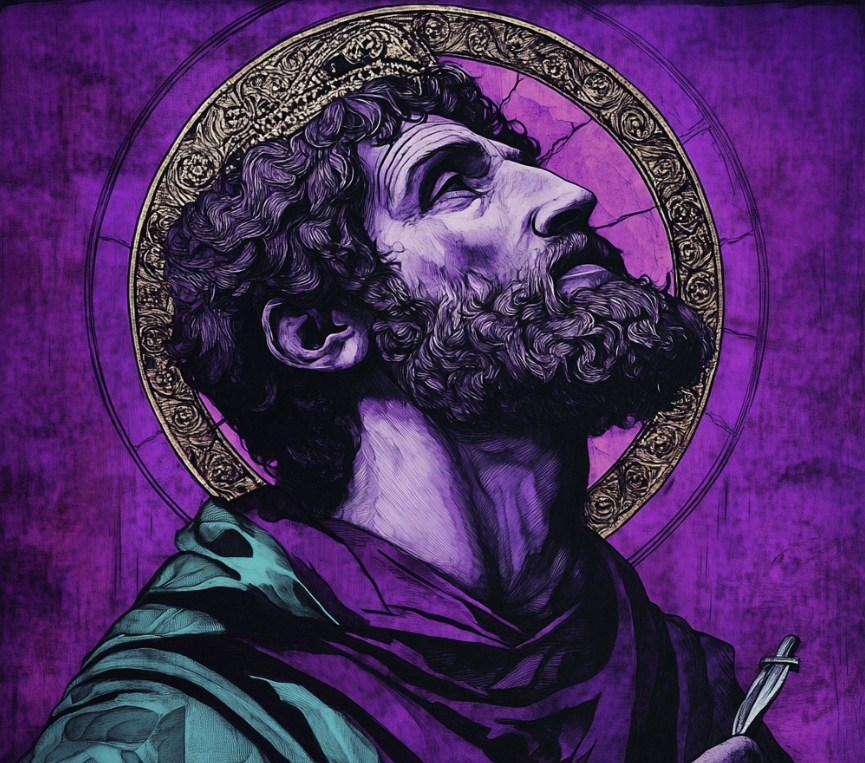
By faithfulness we are collected and wound up into unity within ourselves, whereas we had been scattered abroad in multiplicity.
Not only can logos be seen in absolutely all animals, but in many of them it has the groundwork for being perfected.

Early and provident fear is the mother of safety.

When I say that children should be told about sex, I do not mean that they should be told only the bare physiological facts; they should be told whatever they wish to know. There should be no attempt to represent adults as more virtuous than they are, or sex as occurring only in marriage. There is no excuse for deceiving children. And when, as must happen in conventional families, they find that their parents have lied, they lose confidence in them, and feel justified in lying to them.
Beating is the worst, and therefore the last means to be us'd in the correction of children, and that only in the cases of extremity, after all gently ways have been try'd, and proved unsuccessful; which, if well observ'd, there will very seldom be any need of blows.

History shows that the thinkers who mounted on the top of the ladder of questions, who set their foot on the last rung, that of the absurd, have bequeathed to posterity only an example of sterility.
Even more than in a poem, it is the aphorism that the word is god.

Many people today hold to a Gnostic view of things without realizing the fact. Believing that human beings can be fully understood in the terms of scientific materialism, they reject any idea of free will. But they cannot give up hope of being masters of their destiny. So they have come to believe that science will somehow enable the human mind to escape the limitations that shape its natural condition. Throughout much of the world, and particularly in western countries, the Gnostic faith that knowledge can give humans a freedom no other creature can possess has become the predominant religion.
Religious minds, which are distrustful of philosophic dogmas, fall into the error - inculcated by philosophy - of supposing that Providence is limited in its action; that is does not extend to the social world or the social relations of mankind, and that God has not determined upon any plan of social organization for the regulation of those relations. If they had a PROFOUND FAITH IN THE UNIVERSALITY OF PROVIDENCE, they would be convinced that all human needs must have been foreseen and provided for, and especially that the most urgent of them all could not have been overlooked - namely, the need of a social order for the regulation of our industrial and social relations.
It is impossible that evils should be done away with, for there must always be something opposed to the good; and they must inevitably hover about mortal nature and this earth. Therefore we ought to try to escape from earth to the dwelling of the gods as quickly as we can; and to escape is to become like God, so far as this is possible, God is in no wise and in no manner unrighteous, but utterly and perfectly righteous, and there is nothing so like him as that one of us who in turn becomes most nearly perfect in righteousness.
Of all kind of authors there are none I despise more than compilers, who search every where for shreds of other men's works, which they join to their own, like so many pieces of green turf in a garden: they are not at all superior to compositors in a printing house, who range the types, which, collected together, make a book, towards which they contribute nothing but the labours of the hand. I would have original writers respected, and it seems to me a kind of profanation to take those pieces from the sanctuary in which they reside, and to expose them to a contempt they do not deserve. When a man hath nothing new to say, why does not he hold his tongue? What business have we with this double employment?"
There is but One Principle that proceeds from God; and thus, in consequence of the unity of the Power, it is possible for each Individual to schematise his World of Sense in accordance with the law of that original harmony; - and every Individual, under the condition of being found on the way towards the recognition of the Imperative, must so schematise it. I might say: - Every Individual can and must, under the given condition, construct the True World of Sense, - for this indeed has beyond the universal and formal laws above deduced, no other Truth and Reality than this universal harmony.
Use harms and even destroys beauty. The noblest function of an object is to be contemplated.
Impenetrable in their dissimulation, cruel in their vengeance, tenacious in their purposes, unscrupulous as to their methods, animated by profound and hidden hatred for the tyranny of man - it is as though there exists among them an ever-present conspiracy toward domination, a sort of alliance like that subsisting among the priests of every country.
A great revolution is on the point of being accomplished. It is a revolution not in human affairs, but in man himself.

Other vices can be concealed and cherished in secret; anger shows itself openly and appears in the countenance, and the greater it is, the more plainly it boils forth. Do you not see how in all animals certain signs appear before they proceed to mischief, and how their entire bodies put off their usual quiet appearance and stir up their ferocity? Boars foam at the mouth and sharpen their teeth by rubbing them against trees, bulls toss their horns in the air and scatter the sand with blows of their feet
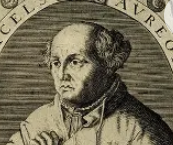
He who conquers his enemy with meekness, wins fame.

Having departed from your house, turn not back; for the furies will be your attendants.
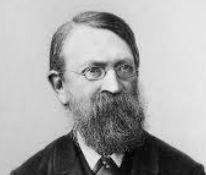
The mental operation by which one achieves new concepts and which one denotes generally by the inadequate name of induction is not a simple but rather a very complicated process. Above all, it is not a logical process although such processes can be inserted as intermediary and auxiliary links. The principle effort that leads to the discovery of new knowledge is due to abstraction and imagination.

Properties perceived in nature will depend on how one looks and how one looks depends on the economic interest one has in the resources of nature. The value of profit maximization is thus linked to reductionist systems, while the value of life and the maintenance of life is linked to holistic and ecological systems.

The average mind is slow in grasping a truth, but when the most thoroughly organized, centralized institution, maintained at an excessive national expense, has proven a complete social failure, the dullest must begin to question its right to exist. The time is past when we can be content with our social fabric merely because it is "ordained by divine right," or by the majesty of the law.
Americans need rest, but do not know it. I believe this to be a large part of the explanation of the crime wave in the United States.
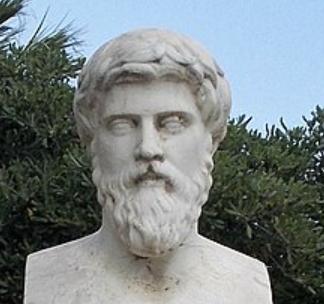
When Darius offered him ten thousand talents, and to divide Asia equally with him, "I would accept it," said Parmenio, "were I Alexander." "And so truly would I," said Alexander, "if I were Parmenio." But he answered Darius that the earth could not bear two suns, nor Asia two kings.
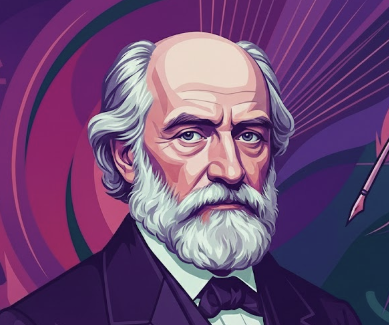
If a big diamond is cut up into pieces, it immediately loses its value as a whole; or if an army is scattered or divided into small bodies, it loses all its power; and in the same way a great intellect has no more power than an ordinary one as soon as it is interrupted, disturbed, distracted, or diverted; for its superiority entails that it concentrates all its strength on one point and object, just as a concave mirror concentrates all the rays of light thrown upon it. Noisy interruption prevents this concentration. This is why the most eminent intellects have always been strongly averse to any kind of disturbance, interruption and distraction, and above everything to that violent interruption which is caused by noise; other people do not take any particular notice of this sort of thing.
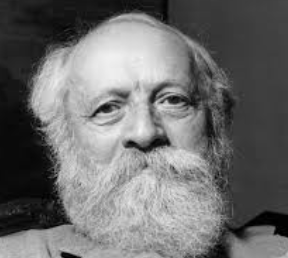
To win a truly great life for the people of Israel, a great peace is necessary, not a fictitious peace, the dwarfish peace that is no more than a feeble intermission, but a true peace with the neighboring peoples, which alone can render possible a common development of this portion of the earth as the vanguard of the awakening Near East.
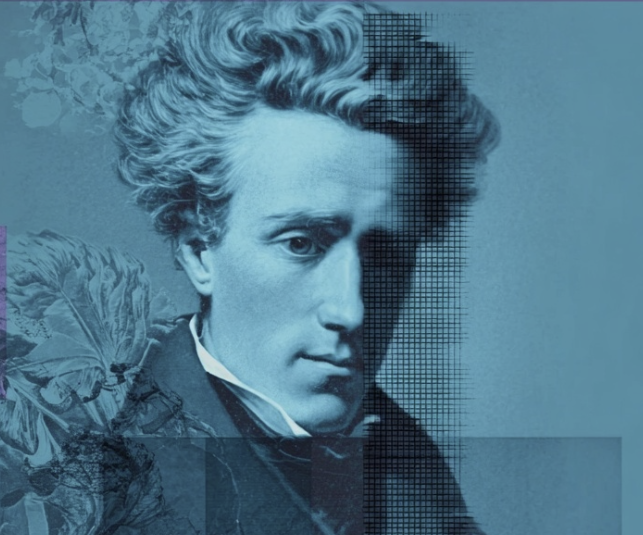
I have needed God every day to defend myself against the abundance of thoughts.
Them that die will be the lucky ones!
Systems, scientific and philosophic, come and go. Each method of limited understanding is at length exhausted. In its prime each system is a triumphant success: in its decay it is an obstructive nuisance.

There must then be something that is better, and that must be God. When you see a stately and stupendous edifice, though you do not know who is the owner of it, you would yet conclude it was not built for rats. And this divine structure, that we behold of the celestial palace, have we not reason to believe that it is the residence of some possessor, who is much greater than we?
Good and evil, reward and punishment, are the only motives to a rational creature: these are the spur and reins whereby all mankind are set on work, and guided.

The assertion fallacy ... is the fallacy of confusing the conditions for the performance of the speech act of assertion with the analysis of the meaning of particular words occurring in certain assertions.

If they drive God from the earth, we shall shelter Him underground.
This was once revealed to me in a dream.
Enjoin him to play so many hours every day, and look that he do it; and you shall see he will quickly be sick of it; and willing to leave it. By this means making the recreations you dislike a business to him, he will of himself with delight betake himself to those things you would have him do, especially if they be proposed as rewards for having performed the task in that play which is commanded of him.
Some impose upon the world that they believe that which they do not; others, more in number, make themselves believe that they believe, not being able to penetrate into what it is to believe.
We are all a sort of camelions, that still take a tincture from things near us; nor is it to be wonder'd at in children, who better understand what they see than what they hear.
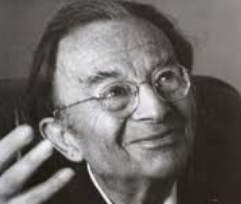
I believe that man is the product of natural evolution that is born from the conflict of being a prisoner and separated from nature, and from the need to find unity and harmony with it.

Those who cannot find moral clarity are likely to settle for the far more dangerous simplicity, or purity, instead.
CivilSimian.com created by AxiomaticPanic, CivilSimian, Kalokagathia