

3 months 4 days ago
By virtue of its innermost intention, and like all questions about language, structuralism escapes the classical history of ideas which already supposes structuralism's possibility, for the latter naively belongs to the province of language and propounds itself within it.Nevertheless, by virtue of an irreducible region of irreflection and spontaneity within it, by virtue of the essential shadow of the undeclared, the structuralist phenomenon will deserve examination by the historian of ideas. For better or for worse. Everything within this phenomenon that does not in itself transparently belong to the question of the sign will merit this scrutiny; as will everything within it that is methodologically effective, thereby possessing the kind of infallibil-ity now ascribed to sleepwalkers and formerly attributed to instinct, which was said to be as certain as it was blind.
▼
Source
source
Force and Signification

2 months 6 days ago
A minimum of unconsciousness is necessary if one wants to stay inside history. To act is one thing; to know one is acting is another. When lucidity invests the action, insinuates itself into it, action is undone, and with it, prejudice, whose function consists, precisely, in subordinating, in enslaving consciousness to action. The man who unmasks his fictions renounces his own resources and, in a sense, himself. Consequently, he will accept other fictions which will deny him, since they will not have cropped up from his own depths. No man concerned with his equilibrium may exceed a certain degree of lucidity and analysis.

2 months 1 week ago
Yes - you, you alone must pay for everything because you turned up like this, because I'm a scoundrel, because I'm the nastiest, most ridiculous, pettiest, stupidest, and most envious worm of all those living on earth who're no better than me in any way, but who, the devil knows why, never get embarrassed, while all my life I have to endure insults from every louse - that's my fate. What do I care that you do not understand any of this?
▼
Source
source
Part 2, Chapter 9

2 weeks 3 days ago
For those who live inside a myth, it seems a self-evident fact. Human progress is a fact of this kind. If you accept it you have a place in the grand march of humanity. Humankind is, of course, not marching anywhere. 'Humanity' is a fiction composed from billions of individuals for each of whom life is singular and final. But the myth of progress is extremely potent. When it loses its power those who have lived by it are - as Conrad put it, describing Kayerts and Carlier - 'like those lifelong prisoners who, liberated after many years, do not know what use to make of their freedoms'. When faith in the future is taken from them, so is the image they have of themselves. If they then opt for death, it is because without that faith they can no longer make sense of living.
▼
Source
source
An Old Chaos: The Call of Progress (pp. 6-7)

1 month 1 week ago
The hardware world tends to move into software form at the speed of light.

1 month 3 weeks ago
What nationalist educators often fail to recognize is that merely being taught by teachers who are black has not and will not solve the problem if the teachers have been socialized to internalize racist thinking.

4 months 1 week ago
How close men, despite all their knowledge, usually live to madness? What is truth but to live for an idea? When all is said and done, everything is based on a postulate; but not until it no longer stands on the outside, not until one lives in it, does it cease to be a postulate.

3 months 2 weeks ago
The unassisted hand and the understanding left to itself possess but little power. Effects are produced by the means of instruments and helps, which the understanding requires no less than the hand; and as instruments either promote or regulate the motion of the hand, so those that are applied to the mind prompt or protect the understanding.
▼
Source
source
Aphorism 2

3 months 1 week ago
He thought it happier to be dead, To die for Beauty, than live for bread.
▼
Source
source
Beauty

2 months 3 weeks ago
The Platonic doctrine of Ideas has been, in all ages, the derision of the vulgar, and the admiration of the wife. Indeed, if we consider that ideas are the most sublime objects of speculation, and that their nature is no less bright in itself, than difficult to investigate, this opposition in the conduct of mankind will be natural and necessary; for, from our connection with a material nature, our intellectual eye, previous to the irradiations of science, is as ill adapted to objects the most splendid of all, "as the eyes of bats to the light of day.
▼
Source
source
A Dissertation on the Doctrine of Ideas, &c." Footnote: see second book of Aristotle's Metaphysics.
2 months ago
We are sorely deficient in talking with each other and listening to each other. We lack mobility, criticism and self-criticism. We incline to doctrinism. What makes it worse is that so many people do not really want to think. They want only slogans and obedience. They ask no questions and they give no answers, except by repeating drilled-in phrases. They can only assert and obey, neither probe nor apprehend. Thus they cannot be convinced, either. How shall we talk with people who will not go where others probe and think, where men seek independence in insight and conviction?
3 months ago
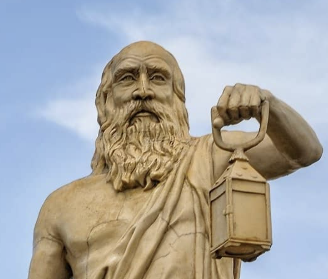
When Alexander the Great addressed him with greetings, and asked if he wanted anything, Diogenes replied "Yes, stand a little out of my sunshine."
▼
Source
source
From Plutarch, Alexander, 14. Cf. Diogenes Laërtius, vi. 38, Cicero, Tusculan Disputations, v. 32
2 months 1 week ago
The divine origin of man, as taught by Vedanta, IS continually inculcated, to stimulate his efforts to return, to animate him in the struggle, and incite him to consider a reunion and reincorporation with Divinity as the one primary object of every action and reaction. Even the loftiest philosophy of the European, the idealism of reason as it is set forth by the Greek philosophers, appears in comparison with the abundant light and vigor of Oriental idealism like a feeble Promethean spark in the full flood of heavenly glory of the noonday sun, faltering and feeble and ever ready to be extinguished.
▼
Source
source
quoted in Londhe, S. (2008). A tribute to Hinduism: Thoughts and wisdom spanning continents and time about India and her culture. New Delhi: Pragun Publication.

3 months 1 week ago
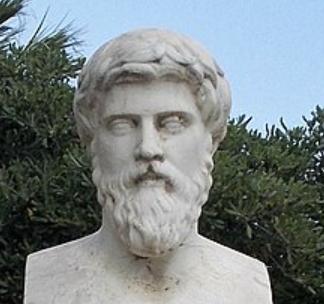
Two conflicting types of educational systems spring from these conflicting aims. One is public and common to many, the other private and domestic. If you wish to know what is meant by public education, read Plato's Republic. Those who merely judge books by their titles take this for a treatise on politics, but it is the finest treatise on education ever written. In popular estimation the Platonic Institute stands for all that is fanciful and unreal. For my own part I should have thought the system of Lycurgus far more impracticable had he merely committed it to writing. Plato only sought to purge man's heart; Lycurgus turned it from its natural course. The public institute does not and cannot exist, for there is neither country nor patriot. The very words should be struck out of our language. The reason does not concern us at present, so that though I know it I refrain from stating it.
2 months 3 weeks ago
After he routed Pharnaces Ponticus at the first assault, he wrote thus to his friends: "I came, I saw, I conquered."
▼
Source
source
Cæsar

1 day ago
The eye of the intellect "sees in all objects what it brought with it the means of seeing."
▼
Source
source
Varnhagen von Ense's Memoirs.

3 months 1 week ago
In the United States of North America, every independent movement of the workers was paralysed so long as slavery disfigured a part of the Republic. Labour cannot emancipate itself in the white skin where in the black it is branded.
▼
Source
source
Vol. I, Ch. 10, Section 7, pg. 329.

2 months 2 weeks ago
I should have loved freedom, I believe, at all times, but in the time in which we live I am ready to worship it.
▼
Source
source
Book Four, Chapter VII.

1 month 3 weeks ago
The Fathers of the Church can well afford to preach the gospel of Christ. It contains nothing dangerous to the regime of authority and wealth; it stands for self-denial and self-abnegation, for penance and regret, and is absolutely inert in the face of every indignity, every outrage imposed upon mankind.
2 months 2 days ago
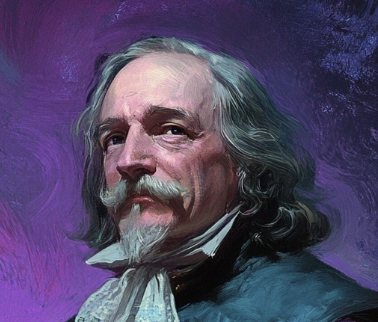
But Aversion wee have for things, not only which we know have hurt us; but also that we do not know whether they will hurt us, or not.
▼
Source
source
The First Part, Chapter 6, p. 24

2 months 2 days ago
The kingdom of heaven is like unto leaven, which a woman took, and hid in three measures of meal, till the whole was leavened.
▼
Source
source
13:33 (KJV)
3 weeks 4 days ago
Missionaries, whether of philosophy or of religion, rarely make rapid way, unless their preachings fall in with the prepossessions of the multitude of shallow thinkers, or can be made to serve as a stalking-horse for the promotion of the practical aims of the still larger multitude, who do not profess to think much, but are quite certain they want a great deal.

3 months 1 week ago
As there were black swans, though civilized people had existed for three thousand years on the earth without meeting with them...The uniform experience, therefore, of the inhabitants of the known world, agreeing in a common result, without one known instance of deviation from that result, is not always sufficient to establish a general conclusion.

1 month 1 week ago
The loss which is unknown is no loss at all.
▼
Source
source
Maxim 38

2 months 2 days ago
All liberation depends on the consciousness of servitude, and the emergence of this consciousness is always hampered by the predominance of needs and satisfactions which, to a great extent, have become the individual's own.
▼
Source
source
p. 7

3 months 1 week ago
Take the question whether other people exist. ...It is plain that it makes for happiness to believe that they exist - for even the greatest misanthropist would not wish to be deprived of the objects of his hate. Hence the belief that other people exist is, pragmatically, a true belief. But if I am troubled by solipsism, the discovery that a belief in the existence of others is 'true' in the pragmatist's sense is not enough to allay my sense of loneliness: the perception that I should profit by rejecting solipsism is not alone sufficient to make me reject it. For what I desire is not that the belief in solipsism should be false in the pragmatic sense, but that other people should in fact exist. And with the pragmatist's meaning of truth, these two do not necessarily go together. The belief in solipsism might be false even if I were the only person or thing in the universe.
▼
Source
source
"William James's Conception of Truth" , published in Philosophical Essays, London, 1910
3 months 1 week ago
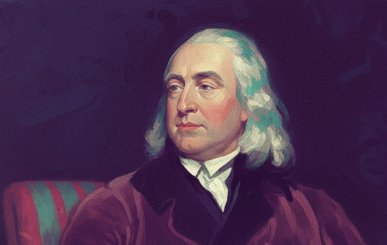
That which has no existence cannot be destroyed - that which cannot be destroyed cannot require anything to preserve it from destruction. Natural rights is simple nonsense: natural and imprescriptible rights, rhetorical nonsense - nonsense upon stilts. But this rhetorical nonsense ends in the old strain of mischievous nonsense for immediately a list of these pretended natural rights is given, and those are so expressed as to present to view legal rights. And of these rights, whatever they are, there is not, it seems, any one of which any government can, upon any occasion whatever, abrogate the smallest particle. The often-quoted phrase 'nonsense upon stilts' is often modernised to 'nonsense on stilts'.
2 months 1 week ago
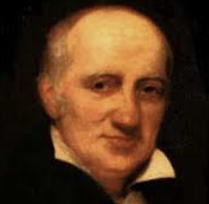
I am myself deeply convinced that imagination is the basis of a sound reason. It is by dint of feeling, and of putting ourselves in fancy into the place of other men, that we can learn how we ought to treat them, and be moved to treat them as we ought. Man, to express the thing in familiar language, is a complex being, made up of a head and a heart. So far as we are employed in heaping up facts and in reasoning upon them merely, we are a species of machine; it is our impulses and our sentiments, that are the glory of our nature.
▼
Source
source
Of Religion (1818), quoted in Political and Philosophical Writings of William Godwin, Volume 7: Religious Writings, ed. Mark Philp

2 months 1 week ago
Architecture, sculpture, painting, music, and poetry, may truly be called the efflorescence of civilised life.
▼
Source
source
Education: What Knowledge Is of Most Worth?
2 weeks 5 days ago
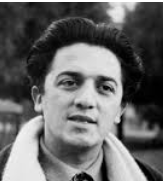
All art is autobiographical; the pearl is the oyster's autobiography.
▼
Source
source
On the autobiographical nature of his films, in The Atlantic
2 months 6 days ago
Thanks to depression - that alpinism of the indolent - we scale every summit and daydream over every precipice from our bed.
1 month 3 weeks ago
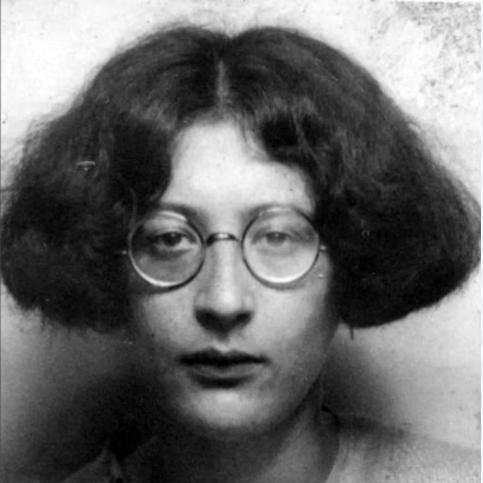
The human soul has need of truth and of freedom of expression. The need for truth requires that intellectual culture should be universally accessible, and that it should be able to be acquired in an environment neither physically remote nor psychologically alien.


2 months 2 days ago
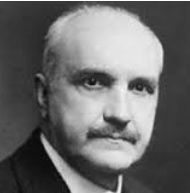
Beauty is a pledge of the possible conformity between the soul and nature, and consequently a ground of faith in the supremacy of the good.
▼
Source
source
Pt. IV, Expression; § 67: "Conclusion.", p. 270
3 months 1 week ago
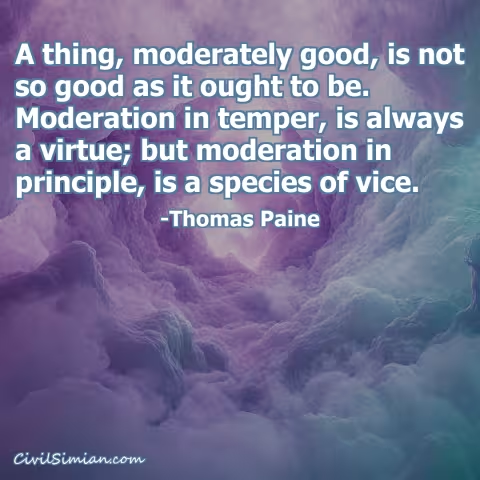
His imperial muse tosses the creation like a bauble from hand to hand to embody any capricious thought that is uppermost in her mind. The remotest spaces of nature are visited, and the farthest sundered things are brought together by a subtle spiritual connection.
▼
Source
source
p. 237
1 day ago
Our grand business undoubtedly is, not to see what lies dimly at a distance, but to do what lies clearly at hand.

3 months 1 week ago
"Everything is both a trap and a display; the secret reality of the object is what the Other makes of it."

1 month 3 weeks ago
Give us back our suffering, we cry to Heaven in our hearts - suffering rather than indifferentism; for out of nothing comes nothing. But out of suffering may come the cure. Better have pain than paralysis! A hundred struggle and drown in the breakers. One discovers the new world. But rather, ten times rather, die in the surf, heralding the way to that new world, than stand idly on the shore!
6 days ago
The newspaper is in all its literalness the bible of democracy, the book out of which a people determines its conduct.
▼
Source
source
What Modern Liberty Means, p. 47. Essay first published in The Atlantic (November 1919).

1 month 1 week ago
Just then another visitor entered the drawing room: Prince Andrew Bolkónski, the little princess' husband. He was a very handsome young man, of medium height, with firm, clearcut features. Everything about him, from his weary, bored expression to his quiet, measured step, offered a most striking contrast to his quiet, little wife. It was evident that he not only knew everyone in the drawing room, but had found them to be so tiresome that it wearied him to look at or listen to them. And among all these faces that he found so tedious, none seemed to bore him so much as that of his pretty wife. He turned away from her with a grimace that distorted his handsome face, kissed Anna Pávlovna's hand, and screwing up his eyes scanned the whole company.
▼
Source
source
Bk. I, Ch. IV
3 months 1 week ago
Rights are, then, the fruits of the law, and of the law alone. There are no rights without law-no rights contrary to the law-no rights anterior to the law. Before the existence of laws there may be reasons for wishing that there were laws-and doubtless such reasons cannot be wanting, and those of the strongest kind;-but a reason for wishing that we possessed a right, does not constitute a right. To confound the existence of a reason for wishing that we possessed a right, with the existence of the right itself, is to confound the existence of a want with the means of relieving it. It is the same as if one should say, everybody is subject to hunger, therefore everybody has something to eat.
▼
Source
source
Pannomial Fragments (c. 1831), quoted in The Works of Jeremy Bentham, Vol. III (1838), p. 221
3 months 1 week ago
At best the principles that economists have supposed the choices of rational individuals to satisfy can be presented as guidelines for us to consider when we make our decisions.
▼
Source
source
Chapter IX, Section 84, p. 558
1 month 1 week ago
One of the many effects of television on radio has been to shift radio from an entertainment medium into a kind of nervous information system.
▼
Source
source
(p. 298)
3 months ago
When the individual finds in her conscience beliefs that are relevant to public policy but incapable of the defense on the basis of beliefs common to her fellow citizens, she must sacrifice her conscience on the altar of public expediency.
1 month 1 week ago
Let a fool hold his tongue and he will pass for a sage.
▼
Source
source
Maxim 914
2 months 6 days ago
The poor, by thinking unceasingly of money, reach the point of losing the spiritual advantages of non-possession, thereby sinking as low as the rich.

3 months 3 weeks ago
O slavish man! will you not bear with your own brother, who has God for his Father, as being a son from the same stock, and of the same high descent? But if you chance to be placed in some superior station, will you presently set yourself up for a tyrant?
▼
Source
source
Book I, ch. 13, 3, 4.
3 months 1 week ago
In all affairs - love, religion, politics, or business - it's a healthy idea, now and then, to hang a question mark on the things you have long taken for granted.
▼
Source
source
As quoted in The Reader's Digest, Vol. 37 (1940), p. 90; no specific source given.
3 months 1 week ago
Eh bien, continuons... Well, let's get on with it.
CivilSimian.com created by AxiomaticPanic, CivilSimian, Kalokagathia