


2 months 2 days ago
Operational analysis ... cannot raise the decisive question whether the consent itself was not the work of manipulation-a question for which the actual state of affairs provides ample justification. The analysis cannot raise it because it would transcend its terms toward transitive meaning-toward a concept of democracy which would reveal the democratic election as a rather limited democratic process. Precisely such a non-operational concept is the one rejected by the authors as "unrealistic" because it defines democracy on too articulate a level as the clear-cut control of representation by the electorate-popular control as popular sovereignty.
▼
Source
source
p. 116

1 month 5 days ago
Think about the two qualities that a virus, or any sort of parasitic replicator, demands of a friendly medium, the two qualities that make cellular machinery so friendly towards parasitic DNA, and that make computers so friendly towards computer viruses. These qualities are, firstly, a readiness to replicate information accurately, perhaps with some mistakes that are subsequently reproduced accurately; and, secondly, a readiness to obey instructions encoded in the information so replicated.

3 months 1 week ago
Dissimulation is innate in woman, and almost as much a quality of the stupid as of the clever.
▼
Source
source
"Of Women"

3 months 1 week ago
"They have an engine called the Press whereby the people are deceived."
▼
Source
source
Ch. 13 : They Have Pulled Down Deep Heaven on Their Heads

2 months ago
Human life, by its very nature, has to be dedicated to something, an enterprise glorious or humble, a destiny illustrious or trivial. We are faced with a condition, strange but inexorable, involved in our very existence.
▼
Source
source
Chapter XIV: Who Rules The World?

3 months 2 weeks ago
Heretics cannot themselves appear good unless they depict the Church as evil, false, and mendacious. They alone wish to be esteemed as the good, but the Church must be made to appear evil in every respect.
▼
Source
source
Dictata super Psalterium (Dictations on the Psalter). This is Luther's first major work from the years 1513 to 1515.

3 months 3 weeks ago
Let each look to his own heart: let him not keep hatred against his brother for any hard word; on account of earthly contention let him not become earth.
▼
Source
source
First Homily, Paragraph 11, as translated by H. Browne, Nicene and Post-Nicene Fathers, First Series, Vol. 7 (1888)

3 months 1 week ago
It was the period of my mental progress which I have now reached that I formed the friendship which has been the honour and chief blessing of my existence, as well as the source of a great part of all that I have attempted to do, or hope to effect hereafter, for human improvement. My first introduction to the lady who, after a friendship of twenty years, consented to become my wife, was in 1830, when I was in my twenty-fifth and she in her twenty-third year.
▼
Source
source
(p. 184)

2 months 1 week ago
To tax and to please, no more than to love and to be wise, is not given to men.

1 month 1 week ago
Error is the force that welds men together; truth is communicated to men only by deeds of truth. Only deeds of truth, by introducing light into the conscience of each individual, can dissolve the cohesion of error, and detach men one by one from the mass united together by the cohesion of error.
▼
Source
source
My Religion (1884), Ch. 12

3 months 2 weeks ago
Some books are to be tasted, others to be swallowed, and some few to be chewed and digested; that is, some books are to be read only in parts; others to be read, but not curiously; and some few to be read wholly, and with diligence and attention.
▼
Source
source
Of Studies

Just now
I care little about the sword: I will allow a thing to struggle for itself in this world, with any sword or tongue or implement it has, or can lay hold of. We will let it preach, and pamphleteer, and fight, and to the uttermost bestir itself, and do, beak and claws, whatsoever is in it; very sure that it will, in the long-run, conquer nothing which does not deserve to be conquered. What is better than itself, it cannot put away, but only what is worse. In this great Duel, Nature herself is umpire, and can do no wrong: the thing which is deepest-rooted in Nature, what we call truest, that thing and not the other will be found growing at last.
3 months 3 weeks ago
One of the principal reasons that diverts those who are entering upon this knowledge so much from the true path which they should follow, is the fancy that they take at the outset that good things are inaccessible, giving them the name great, lofty, elevated, sublime. This destroys everything. I would call them low, common, familiar: these names suit it better; I hate such inflated expressions.

3 months 1 week ago
Wherever Law ends, Tyranny begins.
▼
Source
source
Second Treatise of Government, Sec. 202
2 months ago
No one is guiltless...But no one is beyond the pale of human existence, provided he pays for his guilt.

3 months 1 week ago
Three o'clock is always too late or too early for anything you want to do.
3 months 1 week ago
My basis is supported by the authority of the greatest moralist of modern times; for such, undoubtedly, J. J. Rousseau is,-that profound reader of the human heart, who drew his wisdom not from books, but from life, and intended his doctrine not for the professorial chair, but for humanity; he, the foe of all prejudice, the foster-child of nature, whom alone she endowed with the gift of being able to moralise without tediousness, because he hit the truth and stirred the heart.
▼
Source
source
Part III, Ch. VIII, 9, p. 230
1 month 1 week ago
They pass peaceful lives who ignore mine and thine.
▼
Source
source
Maxim 790

3 months 2 weeks ago
And to bring in a new word by the head and shoulders, they leave out the old one.
▼
Source
source
Book III, Ch. 5. Upon some Verses of Virgil

3 months 1 week ago
What the cinema can do better than literature or the spoken drama is to be fantastic.
▼
Source
source
"Where are the Movies Moving?" in Essays Old and New, 1926
2 months ago
I am I and my circumstance, and if I don't save it I don't save myself.
2 months 1 day ago
Only lies and evil come from letting people off.
▼
Source
source
A Severed Head (1961); 1976, p. 61.

3 months 1 week ago
In manufactures, a very small advantage will enable foreigners to undersell our own workmen, even in the home market. It will require a very great one to enable them to do so in the rude produce of the soil. If the free importation of foreign manufactures were permitted, several of the home manufactures would probably suffer, and some of them, perhaps, go to ruin altogether, and a considerable part of the stock and industry at present employed in them, would be forced to find out some other employment. But the freest importation of the rude produce of the soil could have no such effect upon the agriculture of the country.
▼
Source
source
Chapter II

1 month 3 weeks ago
What so impressed me on that first reading was the self-containedness of Tolkien's world. I suppose there are a few novelists who have created worlds that are uniquely their own -- Faulkner, for example, or Dickens. But since their world is fairly close to the actual world, it cannot really be called a unique creation. The only parallel that occurs to me is the Wagner Ring cycle, that one can only enter as if taking a holiday on a strange planet.
▼
Source
source
pp. 8-9

1 month 2 weeks ago
Affectation is a very good word when someone does not wish to confess to what he would none the less like to believe of himself.
▼
Source
source
F 149

3 months 1 week ago
In this distribution of functions, the scholar is the delegated intellect. In the right state, he is, Man Thinking. In the degenerate state, when the victim of society, he tends to become a mere thinker, or, still worse, the parrot of other men's thinking.
▼
Source
source
pars. 7-8

4 days ago
Let us pardon him his hope of a vain apocalypse, and of a second coming in great triumph upon the clouds of heaven. Perhaps these were the errors of others rather than his own; and if it be true that he himself shared the general illusion, what matters it, since his dream rendered him strong against death, and sustained him in a struggle to which he might otherwise have been unequal?
▼
Source
source
Ch. 17.
2 months 1 week ago
Men must be governed by those laws which they love. Where thirty millions are to be governed by a few thousand men, the government must be established by consent, and must be congenial to the feelings and to the habits of the people. That which creates tyranny is the imposition of a form of government contrary to the will of the governed: and even a free and equal plan of government, would be considered as despotic by those who desired to have their old laws and their ancient system.
▼
Source
source
Speech in the House of Commons on India (27 June 1781), quoted in The Parliamentary Register: Or, History of the Proceedings and Debates of the House of Commons, Volume III (1782), pp. 666-667
3 days ago
What is objective must be common to many minds and consequently transmissible from one to the other, and as this transmission can only come about by... discourse... we are even forced to conclude: no discourse no objectivity.

3 months 1 week ago
Be not afraid of life. Believe that life is worth living, and your belief will help create the fact.
▼
Source
source
"Is Life Worth Living?"
1 month 3 weeks ago
If the passion for truthfulness is merely controlled and stilled without being satisfied, it will kill the activities it is supposed to support. This may be one of the reasons why, at the present time, the study of the humanities runs a risk of sliding from professional seriousness, through professionalization, to a finally disenchanted careerism.
▼
Source
source
p. 3

2 months 2 days ago
The range of socially permissible and desirable satisfaction is greatly enlarged, but through this satisfaction, the Pleasure Principle is reduced-deprived of the claims which are irreconcilable with the established society. Pleasure, thus adjusted, generates submission.
▼
Source
source
p. 75
3 months 2 weeks ago
Is Christ only to be adored? Or is the holy Mother of God rather not to be honoured? This is the woman who crushed the Serpent's head. Hear us. For your Son denies you nothing.
▼
Source
source
Weimar edition of Martin Luther's Works, English translation edited by J. Pelikan [Concordia: St. Louis], Vol. 51, 128-129

3 months 1 week ago
I have in this treatise followed the mathematical method, if not with all strictness, at least imitatively, not in order, by a display of profundity, to procure a better reception for it, but because I believe such a system to be quite capable of it, and that perfection may in time be obtained by a cleverer hand, if stimulated by this sketch, mathematical investigators of nature should find it not unimportant to treat the metaphysical portion, which anyway cannot be got rid of, as a special fundamental department of general physics, and to bring it into unison with the mathematical doctrine of motion.
▼
Source
source
Preface, Tr. Bax, 1883
2 days ago
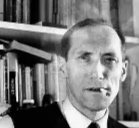
When I collect my experiences, I notice that fascist is a person who holds one of the following beliefs (by way of example): 1) That people should wash themselves, rather than go dirty; 2) that freedom of the press in America is preferable to the ownership of the whole press by one ruling party; 3) that people should not be jailed for their opinions. both communist and anti-communist - 4), that racial criteria, in favour of either whites or blacks, are inadvisable in admission to Universities; 5 ) that torture is condemnable, no matter who applies it. (Roughly speaking "fascist" was the same as "liberal".) Fascist was, by definition, a person who happened to have been in jail in a communist country. The refugees from Czechoslovakia in 1968 were sometimes met in Germany by very progressive and absolutely revolutionary leftists with placards saying "fascism will not pass".
▼
Source
source
My Correct Views on Everything
4 weeks ago
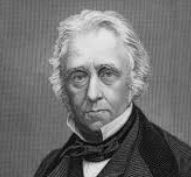
To the Whigs of the seventeenth century we owe it that we have a House of Commons. To the Whigs of the nineteenth century we owe it that the House of Commons has been purified. The abolition of the slave trade, the abolition of colonial slavery, the extension of popular education, the mitigation of the rigour of the penal code, all, all were effected by that party; and of that party, I repeat, I am a member. I look with pride on all that the Whigs have done for the cause of human freedom and of human happiness. I see them now hard pressed, struggling with difficulties, but still fighting the good fight. At their head I see men who have inherited the spirit and the virtues, as well as the blood, of old champions and martyrs of freedom... While one shred of the old banner is flying, by that banner will I at least be found.
▼
Source
source
Speech in Edinburgh (29 May 1839), quoted in Speeches of the Right Honourable T. B. Macaulay, M.P. (1854), pp. 183-184

3 months 1 week ago
The criminal law has, from the point of view of thwarted virtue, the merit of allowing an outlet for those impulses of aggression which cowardice, disguised as morality, restrains in their more spontaneous forms. War has the same merit. You must not kill you neighbor, whom perhaps you genuinely hate, but by a little propaganda this hate can be transferred to some foreign nation, against whom all your murderous impulses become patriotic heroism.
▼
Source
source
Part III: Man and Himself, Ch. 17: Fear, p. 175

3 months 1 week ago
The circulation of capital realizes value, while living labour creates value.
▼
Source
source
Notebook V, The Chapter on Capital, p. 463.

2 months 2 days ago
Do not tell lies, and do not do what you hate, for all things are plain in the sight of Heaven. For nothing hidden will not become manifest, and nothing covered will remain without being uncovered.

1 month 5 days ago
Just now, when every one is bound, under pain of a decree in absence convicting them of lèse-respectability, to enter on some lucrative profession, and labour therein with something not far short of enthusiasm, a cry from the opposite party, who are content when they have enough.
▼
Source
source
An Apology for Idlers.
3 months 1 week ago
A physicist looks for causes; that does not necessarily imply that there are causes everywhere. A man may look for gold without assuming that there is gold everywhere; if he finds gold, well and good, if he doesn't he's had bad luck. The same is true when the physicists look for causes.
▼
Source
source
BBC Radio Debate on the Existence of God, Russell vs. Copleston, 1948
2 months ago
Even the most elevated psychological understanding is not a loving understanding.
3 months 1 week ago
There are some simple maxims [...] which I think might be commanded to writers of expository prose. First: never use a long word if a short word will do. Second: if you want to make a statement with a great many qualifications, put some of the qualifications in separate sentences. Third: do not let the beginning of your sentence lead the reader to an expectation which is contradicted by the end.
▼
Source
source
"How I Write", The Writer, September 1954
2 months 1 week ago
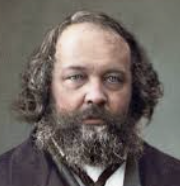
At the present time a serious, strong state can have but one sound foundation - military and bureaucratic centralization. Between a monarchy and the most democratic republic there is only one essential difference: in the former, the world of officialdom oppresses and robs the people for the greater profit of the privileged and propertied classes, as well as to line its own pockets, in the name of the monarch; in the latter, it oppresses and robs the people in exactly the same way, for the benefit of the same classes and the same pockets, but in the name of the people's will. In a republic a fictitious people, the "legal nation" supposedly represented by the state, smothers the real, live people. But it will scarcely be any easier on the people if the cudgel with which they are beaten is called the people's cudgel.

1 month 3 weeks ago
Reason, that which we call reason, reflex and reflective knowledge, the distinguishing mark of man, is a social product.

2 months 5 days ago
Though we may prefer ourselves to the universe, we nonetheless loathe ourselves much more than we suspect. If the wise man is so rare a phenomenon, it is because he seems unshaken by the aversion which, like all beings, he must feel for himself.
2 months 1 week ago
People will not look forward to posterity, who never look backward to their ancestors.
▼
Source
source
Volume iii, p. 274

1 month 3 weeks ago
Without doubt, if we are to go back to that ultimate, integral experience, unwarped by the sophistications of theory, that experience whose elucidation is the final aim of philosophy, the flux of things is one ultimate generalization around which we must weave our philosophical system.
▼
Source
source
Pt. II, ch. 10, sec. 1.
CivilSimian.com created by AxiomaticPanic, CivilSimian, Kalokagathia