

3 months 3 weeks ago
For this too is a very pleasant strand woven into the Cynic's pattern of life; he must needs be flogged like an ass, and while he is being flogged he must love the men who flog him, as though he were the father or brother of them all.
▼
Source
source
Book III, ch. 22, 54
3 weeks 4 days ago
The extent of the region of the uncertain, the number of the problems the investigation of which ends in a verdict of not proven, will vary according to the knowledge and the intellectual habits of the individual agnostic. I do not very much care to speak of anything as unknowable. What I am sure about is that there are many topics about which I know nothing, and which, so far as I can see, are out of reach of my faculties. But whether these things are knowable by any one else is exactly one of those matters which is beyond my knowledge, though I may have a tolerably strong opinion as to the probabilities of the case.
1 month 6 days ago
It's obvious that in an intelligent educated audience such as this university, I stress this university. Who saw fit to give them accreditation? At Randolph-Macon Woman's College, (23 October 2006) Broadcasted by C-SPAN2

3 months 2 weeks ago
Not to be a proud and haughty person, you have to follow the old proverb and "know thyself." That is to say, you must regard your special talents, whatever beauty or fame you have, as gifts from God, and not as things you earned for yourself. Whatever is low and mean is not God's doing, however. Here you can only blame yourself. Remember the squalor of your birth and how naked and poor you were when you crawled into the light of day like a little animal.
▼
Source
source
p.154

2 months 5 days ago
The world begins and ends with us. Only our consciousness exists, it is everything, and this everything vanishes with it. Dying, we leave nothing. Then why so much fuss around an event that is no such thing?
2 months 6 days ago
While moral rules may be propounded by authority the fact that these were so propounded would not validate them.
▼
Source
source
"The Meaning of Life".
1 month 1 week ago
People no longer look at each other, but there are institutes for that. They no longer touch each other, but there is contactotherapy. They no longer walk, but they go jogging, etc. Everywhere one recycles lost faculties, or lost bodies, or lost sociality, or the lost taste for food.
▼
Source
source
"The Precession of Simulacra," p. 13

1 month 3 weeks ago
No artist can develop without increasing his self-knowledge; but self-knowledge supposes a certain preoccupation with the meaning of human life and the destiny of man. A definite set of beliefs - Methodist Christianity, for example - may only be a hindrance to development; but it is not more so than Beckett's refusal to think at all. Shaw says somewhere that all intelligent men must be preoccupied with either religion, politics, or sex. (He seems to attribute T. E. Lawrence's tragedy to his refusal to come to grips with any of them.) It is hard to see how an artist could hope to achieve any degree of self-knowledge without being deeply concerned with at least one of the three.
▼
Source
source
p. 197
2 months ago
I do not accept any absolute formulas for living. No preconceived code can see ahead to everything that can happen in a man's life. As we live, we grow and our beliefs change. They must change. So I think we should live with this constant discovery. We should be open to this adventure in heightened awareness of living. We should stake our whole existence on our willingness to explore and experience.
▼
Source
source
As quoted in Martin Buber : An Intimate Portrait (1971), p. 56

3 months 1 week ago
To choose this or that is to affirm at the same time the value of what we choose, because we can never choose evil. We always choose the good, and nothing can be good for us without being good for all.
▼
Source
source
Existentialism and Human Emotions
3 months 5 days ago
It is said that "being" is the most universal and the emptiest concept. As such it resists every attempt at definition. Nor does this most universal and thus indefinable concept need any definition. Everybody uses it constantly and also already understands what is meant by it.
▼
Source
source
Introduction: The Exposition of the Question of the Meaning of Being (Stambaugh translation)

3 months 1 week ago
Jehovah, Allah, the Trinity, Jesus, Buddha, are names for a great variety of human virtues, human mystical experiences, human remorses, human compensatory fantasies, human terrors, human cruelties. If all men were alike, all the world would worship the same God.
▼
Source
source
"One and Many," p. 3

2 months 2 days ago
Get thee hence, Satan: for it is written, Thou shalt worship the Lord thy God, and him only shalt thou serve.
▼
Source
source
4:10 (KJV) Said to Satan.

4 months 1 week ago
It is very likely that there are many, many planets carrying life, even intelligent life, throughout the universe, because there are so many stars. By sheer chance, even if those chances are small, a great many life forms and a great many intelligences may exist.
2 months 1 week ago
What man is to be, he must become; and as he is to be a being for himself, must become through himself. Nature completed all her works; only from man did she withdraw her hands, and precisely thereby gave him over to himself. Cultivability, as such, is the character of mankind. The impossibility of subsuming to the human form any other conception than that of his own Ego, is it, which forces every man inwardly to consider every other man as his equal.
▼
Source
source
P. 119

1 month 1 week ago
The good is the everlasting, the pinnacle of our life. ... life is striving towards the good, toward God. The good is the most basic idea ... an idea not definable by reason ... yet is the postulate from which all else follows. But the beautiful ... is just that which is pleasing. The idea of beauty is not an alignment to the good, but is its opposite, because for most part, the good aids in our victory over our predilections, while beauty is the motive of our predilections. The more we succumb to beauty, the further we are displaced from the good. ...the usual response is that there exists a moral and spiritual beauty ... we mean simply the good. Spiritual beauty or the good, generally not only does not coincide with the typical meaning of beauty, it is its opposite.
2 months 6 days ago
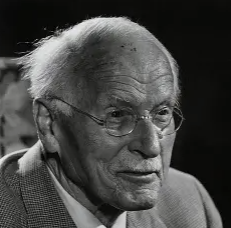
Because we cannot discover God's throne in the sky with a radiotelescope or establish (for certain) that a beloved father or mother is still about in a more or less corporeal form, people assume that such ideas are "not true." I would rather say that they are not "true" enough, for these are conceptions of a kind that have accompanied human life from prehistoric times, and that still break through into consciousness at any provocation.
2 weeks 4 days ago
The functional regions of the brain which subserve physical agony, the "pain centres", and the mainly limbic substrates of emotion, appear in phylogenetic terms to be remarkably constant in the vertebrate line. The neural pathways involving serotonin, the periaquaductal grey matter, bradykinin, dynorphin, ATP receptors, the major opioid families, substance P etc all existed long before hominids walked the earth. Not merely is the biochemistry of suffering disturbingly similar where not effectively type-identical across a wide spectrum of vertebrate (and even some invertebrate) species. It is at least possible that members of any species whose members have more pain cells exhibiting greater synaptic density than humans sometimes suffer more atrociously than we do, whatever their notional "intelligence".
▼
Source
source
1.9 The Taste of Depravity
2 months 5 days ago
We have lost, being born, as much as we shall lose, dying. Everything.
1 month 1 week ago
If you want to be happy, be.
▼
Source
source
Attributed in Wisdom for the Soul : Five Millennia of Prescriptions for Spiritual Healing (2006) by Larry Chang, p. 352
1 month 3 weeks ago
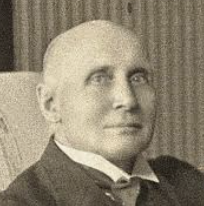
Heaven knows what seeming nonsense may not to-morrow be demonstrated truth.
▼
Source
source
Ch. 7: "Relativity", p. 161

1 month 1 week ago
Although the medium is the message, the controls go beyond programming. The restraints are always directed to the "content," which is always another medium. The content of the press is literary statement, as the content of the book is speech, and the content of the movie is the novel. So the effects of radio are quite independent of its programming.
▼
Source
source
(p. 267)
4 months 1 week ago
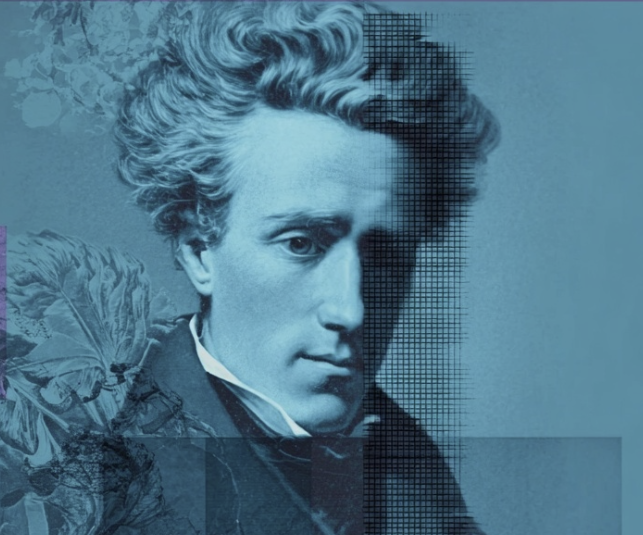
Anxiety may be compared with dizziness. He whose eye happens to look down into the yawning abyss becomes dizzy. But what is the reason for this? It is just as much in his own eye as in the abyss, for suppose he had not looked down. Hence, anxiety is the dizziness of freedom, which emerges when the spirit wants to posit the synthesis and freedom looks down into its own possibility, laying hold of finiteness to support itself. Freedom succumbs to dizziness. Further than this, psychology cannot and will not go. In that very moment everything is changed, and freedom, when it again rises, sees that it is guilty. Between these two moments lies the leap, which no science has explained and which no science can explain. He who becomes guilty in anxiety becomes as ambiguously guilty as it is possible to become.

3 months 1 week ago
I am convinced that the unwritten knowledge scattered among men of different callings surpasses in quantity and in importance anything we find in books, and that the greater part of our wealth has yet to be recorded.
▼
Source
source
1688-1690

3 months 1 week ago
The whole mystery of commodities, all the magic and necromancy that surrounds the products of labor as long as they take the form of commodities, vanishes therefore, so soon as we come to other forms of production.
▼
Source
source
Vol. I, ch.1, section 4.
2 months 2 weeks ago
Morals are in all countries the result of legislation and government; they are not African or Asian or European: they are good or bad.
1 month 3 weeks ago
Life is complex in its expression, involving more than percipience, namely desire, emotion, will, and feeling. ... identification of rhythm as the causal counterpart of life; wherever there is some life, only perceptible to us when the analogies are sufficiently close ... The rhythm is then the life, in the sense in which it can be said to be included within nature.
▼
Source
source
p. 197

3 months 1 week ago
To be ignorant of the past is to remain a child.
▼
Source
source
Cicero

2 months 2 weeks ago
"The will of the nation" is one of those expressions which have been most profusely abused by the wily and the despotic of every age.
▼
Source
source
Chapter IV.
2 months 1 day ago
So we are always esthetically disappointed when the sensuous qualities and the intellectual properties of an object do not coalesce.
▼
Source
source
p. 7

3 months 1 week ago
Of all the things that are beyond my power, I value nothing more highly than to be allowed the honor of entering into bonds of friendship with people who sincerely love truth. For, of things beyond our power, I believe there is nothing in the world which we can love with tranquility except such men.
▼
Source
source
Spinoza, Correspondence, 146, Letter xix

2 months 1 week ago
And what is it in us that is mellowed by civilization? All it does, I'd say, is to develop in man a capacity to feel a greater variety of sensations. And nothing, absolutely nothing else. And through this development, man will yet learn how to enjoy bloodshed. Why, it has already happened....Civilization has made man, if not always more bloodthirsty, at least more viciously, more horribly bloodthirsty.
▼
Source
source
Part 1, Chapter 7
1 month 1 week ago
Driving is a spectacular form of amnesia. Everything is to be discovered, everything to be obliterated. Admittedly, there is the primal shock of the deserts and the dazzle of California, but when this is gone, the secondary brilliance of the journey begins, that of the excessive, pitiless distance, the infinity of anonymous faces and distances, or of certain miraculous geological formations, which ultimately testify to no human will, while keeping intact an image of upheaval. This form of travel admits of no exceptions: when it runs up against a known face, a familiar landscape, or some decipherable message, the spell is broken: the amnesic, ascetic, asymptotic charm of disappearance succumbs to affect and worldly semiology.
▼
Source
source
Vanishing Point (pp. 9-10)
2 months 5 days ago
By far the most valuable things, which we know or can imagine, are certain states of consciousness, which may roughly be described as the pleasures of human intercourse and the enjoyment of beautiful objects. No one, probably, who has asked himself the question, has ever doubted that personal affection and the appreciation of what is beautiful in Art or Nature, are good in themselves; nor, if we consider strictly what things are worth having purely for their own sakes, does it appear probable that any one will think that anything else has nearly so much value as the things which are included under these two heads.
▼
Source
source
Principia Ethica (1903; revised edition, Cambridge University Press, 1993).
2 months 5 days ago
Try to be free: you will die of hunger.
3 months 1 week ago
The greatest problem for the human race, to the solution of which Nature drives man, is the achievement of a universal civic society which administers law among men.
▼
Source
source
Fifth Thesis

3 months 1 week ago
Ancient histories, as one of our wits has said, are but fables that have been agreed upon.
▼
Source
source
Jeannot et Colin, 1764

3 months 1 week ago
The moral things I wish to say to future generations is very simple. I should say love is wise hatred is foolish. In this world which is getting more and more closely interconnected, we have to learn to tolerate each other. We have to learn to put up with the fact that some people say things that we don't like. We can only live together in that way, and if we are to live together and not die together we must learn the kind of charity and kind of tolerance which is absolutely vital to the continuation of human life on this planet.
3 months 1 week ago
It appears then, that capitalist production comprises conditions independent of good or bad will, conditions which permit the working-class to enjoy that relative prosperity only momentarily, and at that always only as the harbinger of a coming crisis.
▼
Source
source
Vol. II, Ch. XX, p. 415.
3 months 1 week ago
The scene should be gently open'd, and his entrance made step by step, and the dangers pointed out that attend him from several degrees, tempers, designs, and clubs of men. He should be prepared to be shocked by some, and caress'd by others; warned who are like to oppose, who to mislead, who to undermine him, and who to serve him. He should be instructed how to know and distinguish them; where he should let them see, and when dissemble the knowledge of them and their aims and workings.
▼
Source
source
Sec. 94
2 months 6 days ago
The problem of induction is, roughly speaking, the problem of finding a way to prove that certain empirical generalizations which are derived from past experience will hold good also in the future. There are only two ways of approaching this problem on the assumption that it is a genuine problem, and it is easy to see that neither of them can lead to its solution.
▼
Source
source
p. 49.

2 months 2 weeks ago
Despotism may govern without faith, but liberty cannot. How is it possible that society should escape destruction if the moral tie is not strengthened in proportion as the political tie is relaxed? And what can be done with a people who are their own masters if they are not submissive to the Deity?
▼
Source
source
Chapter XVII.
2 months 5 days ago
Even in childhood I watched the hours flow, independent of any reference, any action, any event, the disjunction of time from what was not itself, its autonomous existence, its special status, its empire, its tyranny. I remember quite clearly that afternoon when, for the first time, confronting the empty universe, I was no more than a passage of moments reluctant to go on playing their proper parts. Time was coming unstuck from being - at my expense.
Just now
Somehow, the practice of astronomy, physics, chemistry or biology normally fails to evoke the controversies over fundamentals that today seem endemic among, say, psychologists or sociologists. Attempting to discover the source of that difference led me to recognize the role in scientific research of what I have since called "paradigms." These I take to be universally recognized scientific achievements that for a time provide model problems and solutions for a community of practitioners.
▼
Source
source
p. xiii
3 months 4 weeks ago
I do not open up the truth to one who is not eager to get knowledge, nor help out any one who is not anxious to explain himself. When I have presented one corner of a subject to any one, and he cannot from it learn the other three, I do not repeat my lesson.
1 month 3 weeks ago
Sabbath rest does not follow creation; it brings creation to completion.

3 months 5 days ago
To obey a rule, to make a report, to give an order, to play a game of chess, are customs.
▼
Source
source
(uses, institutions) § 199
4 months 1 week ago
There must have been many who had a relationship to Jesus similar to that of Barabbas (his name was Jesus Barrabas). The Danish "Barrabas" is about the same as "N.N." [Mr. X or John Doe], filius patris, his father's son. - It is too bad, however, that we do not know anything more about Barrabas; it seems to me that in many ways he could have become a counterpart to the Wandering Jew. The rest of his life must have taken a singular turn. God knows whether or not he became a Christian. - It would be a poetic motif to have him, gripped by Christ's divine power, step forward and witness for him.
CivilSimian.com created by AxiomaticPanic, CivilSimian, Kalokagathia