


Just now
Behold therefore, this England of the Year 1200 was no chimerical vacuity or dreamland, peopled with mere vaporous Fantasms, Rymer's Foedera, and Doctrines of the Constitution, but a green solid place, that grew corn and several other things. The Sun shone on it; the vicissitude of seasons and human fortunes. Cloth was woven and worn; ditches were dug, furrowfields ploughed, and houses built. Day by day all men and cattle rose to labour, and night by night returned home weary to their several lairs. In wondrous Dualism, then as now, lived nations of breathing men; alternating, in all ways, between Light and Dark; between joy and sorrow, between rest and toil, between hope, hope reaching high as Heaven, and fear deep as very Hell. Not vapour Fantasms, Rymer's Foedera at all!

1 month 1 week ago
The specialist is one who never makes small mistakes while moving towards the grand fallacy.
▼
Source
source
(p. 154)

2 months 1 week ago
We must not always judge of the generality of the opinion by the noise of the acclamation.
▼
Source
source
No. 1
1 month 1 week ago
One reason an egalitarian approach to the value of life is important is that it draws from ideals of radical democracy at the same time that it enters into ethical considerations about how best to practice nonviolence. The institutional life of violence will not be brought down by a prohibition, but only by a counter-institutional ethos and practice.
▼
Source
source
p. 61

3 months 1 week ago
France has done more for even English history than England has.
▼
Source
source
John Stuart Mill. Michelet.On the writing of English history. Complete Works Vol 20. Page 221.

2 months 2 days ago
The soul, too, has her virginity and must bleed a little before bearing fruit.
▼
Source
source
"Normal Madness," Ch. 3, P. 56
2 months 2 days ago
A man is a man to the extent that he is a superman. A man should be defined by the sum of those tendencies which impel him to surpass the human condition.
▼
Source
source
Introduction
3 months 2 weeks ago
It ought to be remembered that there is nothing more difficult to take in hand, more perilous to conduct, or more uncertain in its success, than to take the lead in the introduction of a new order of things. Because the innovator has for enemies all those who have done well under the old conditions, and lukewarm defenders in those who may do well under the new. This coolness arises partly from fear of the opponents, who have the laws on their side, and partly from the incredulity of men, who do not readily believe in new things until they have had a long experience of them.
▼
Source
source
The Prince (1513), Ch. 6; translated by W. K. Marriott
1 month 2 weeks ago
It is certainly not a matter of indifference whether I learn something without effort or finally arrive at it myself through my system of thought. In the latter case everything has roots, in the former it is merely superficial.
▼
Source
source
F154

3 months 1 week ago
Earth laughs in flowers to see her boastful boys Earth-proud, proud of the earth which is not theirs; Who steer the plough, but can not steer their feet Clear of the grave.
▼
Source
source
Hamatreya

2 months 5 days ago
Mind, even more deadly to empires than to individuals, erodes them, compromises their solidity.

3 months 1 week ago
The Ideal Man of the eighteenth century was the Rationalist; of the seventeenth, the Christian Stoic; of the Renaissance, the Free Individual; of the Middle Ages, the Contemplative Saint. And what is our Ideal Man? On what grand and luminous mythological figure does contemporary humanity attempt to model itself? The question is embarrassing. Nobody knows. And, in spite of all the laudable efforts of the Institute for Intellectual Co-operation to fabricate an acceptable Ideal Man for the use of Ministers of Education, nobody, I suspect, will know until such time as a major poet appears upon the scene with the unmistakable revelation. Meanwhile, one must be content to go on piping up for reason and realism and a certain decency.
▼
Source
source
p. 5
1 month 3 weeks ago
No artist can develop without increasing his self-knowledge; but self-knowledge supposes a certain preoccupation with the meaning of human life and the destiny of man. A definite set of beliefs - Methodist Christianity, for example - may only be a hindrance to development; but it is not more so than Beckett's refusal to think at all. Shaw says somewhere that all intelligent men must be preoccupied with either religion, politics, or sex. (He seems to attribute T. E. Lawrence's tragedy to his refusal to come to grips with any of them.) It is hard to see how an artist could hope to achieve any degree of self-knowledge without being deeply concerned with at least one of the three.
▼
Source
source
p. 197
1 month 6 days ago
In one way or another, all my books have been devoted to expounding and exploring the almost limitless power of the Darwinian principle-power unleashed whenever and wherever there is enough time for the consequences of primordial self-replication to unfold. Preface
2 months 6 days ago
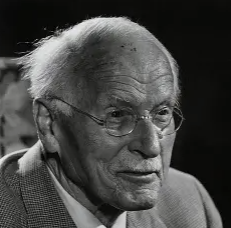
We Shall Naturally look round in vain the macrophysical world for acausal events, for the simple reason that we cannot imagine events that are connected non-causally and are capable of a non-causal explanation. But that does not mean that such events do not exist... The so-called "scientific view of the world" based on this can hardly be anything more than a psychologically biased partial view which misses out all those by no means unimportant aspects that cannot be grasped statistically.
▼
Source
source
p. 5

2 months 2 weeks ago
There is surely a Physiognomy, which those experienced and Master Mendicants observe... For there are mystically in our faces certain Characters that carry in them the motto of our Souls, wherein he that cannot read A.B.C. may read our natures.
▼
Source
source
Section 2
2 months 2 days ago
Although a poem be not made by counting of syllables upon the fingers, yet "numbers" is the most poetical synonym we have for verse, and "measure" the most significant equivalent for beauty, for goodness, and perhaps even for truth. Those early and profound philosophers, the followers of Pythagoras, saw the essence of all things in number, and it was by weight, measure, and number, as we read in the Bible, that the Creator first brought Nature out of the void.
▼
Source
source
Interpretations of Poetry and Religion (1900), p. 251

3 months 1 week ago
Our cause is never more in danger than when a human, no longer desiring, but still intending to do our Enemy's will, looks round upon a universe from which every trace of Him seems to have vanished, and asks why he has been forsaken, and still obeys.
▼
Source
source
Letter VIII
1 month 3 weeks ago
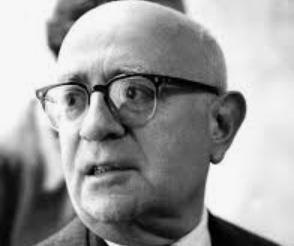
The jargon of authenticity ... is a trademark of societalized chosenness, ... sub-language as superior language.
▼
Source
source
pp. 5-6
3 days ago
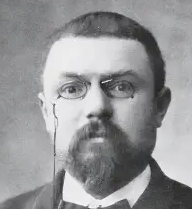
Point set topology is a disease from which the human race will soon recover.
▼
Source
source
Quoted in D MacHale, Comic Sections

3 months 1 week ago
If I had as clear an idea of ghosts, as I have of a triangle or a circle, I should not in the least hesitate to affirm that they had been created by God; but as the idea I possess of them is just like the ideas, which my imagination forms of harpies, gryphons, hydras, &c., I cannot consider them as anything but dreams, which differ from God as totally as that which is not differs from that which is.
▼
Source
source
Letter to Hugo Boxel (October 1674) The Chief Works of Benedict de Spinoza (1891) Tr. R. H. M. Elwes, Vol. 2, Letter 58 (54).

1 month 3 weeks ago
If love does not know how to give and take without restrictions, it is not love, but a transaction that never fails to lay stress on a plus and a minus.
Just now
There is endless merit in a man's knowing when to have done.
▼
Source
source
Dr. Francia (1845).

1 month 1 week ago
There is no single speech nor article in which it is not said that the purpose of all these orgies is the peace of Europe. At a dinner given by the representatives of French literature, all breathe of peace. M. Zola, who, a short time previously, had written that war was inevitable, and even serviceable; M. de Vogue, who more than once has stated the same in print, say, neither of them, a word as to war, but speak only of peace. The sessions of Parliament open with speeches upon the past festivities; the speakers mention that such festivities are an assurance of peace to Europe. It is as if a man should come into a peaceful company, and commence energetically to assure everyone present that he has not the least intention to knock out anyone's teeth, blacken their eyes, or break their arms, but has only the most peaceful ideas for passing the evening.
▼
Source
source
Ch. 1
3 months 1 week ago
Four snakes gliding up and down a hollow for no purpose that I could see - not to eat, not for love, but only gliding.
▼
Source
source
April 11, 1834
2 months 4 weeks ago
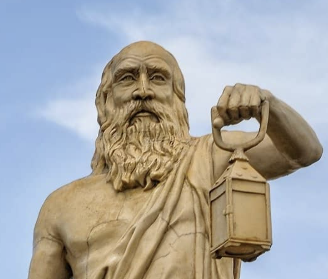
On reaching Athens he fell in with Antisthenes. Being repulsed by him, because he never welcomed pupils, by sheer persistence Diogenes wore him out. Once when he stretched out his staff against him, the pupil offered his head with the words, "Strike, for you will find no wood hard enough to keep me away from you, so long as I think you've something to say."
▼
Source
source
Diogenes Laërtius, vi. 21,
3 months 1 week ago
The man who comes back through the Door in the Wall will never be quite the same as the man who went out. He will be wiser but less cocksure, happier but less self-satisfied, humbler in acknowledging his ignorance yet better equipped to understand the relationship of words to things, of systematic reasoning to the unfathomable Mystery which it tries, forever vainly, to comprehend.
▼
Source
source
Page 191

3 months 5 days ago
Philosophy is a battle against the bewitchment of our intelligence by means of our language.
▼
Source
source
§ 109

3 months 4 days ago
From Plato's Republic... the primary danger of liberty and free speech in a democracy is what results when everyone has his own... style of life... For then there can be no common logos, no possible unity, for the city.

3 months 3 weeks ago
The highest manifestation of life consists in this: that a being governs its own actions. A being that is always subject to the direction of another is somewhat of a dead thing. Variant translation: Now slavery has a certain likeness to death, hence it is also called civil death. For life is most evident in a thing's moving itself, while what can only be moved by another, seems to be as if dead. But it is manifest that a slave is not moved by himself, but only at his master's command.
▼
Source
source
Chapter 14
Just now
Our English careers to born genius are twofold. There is the silent or unlearned career of the Industrialisms, which are very many among us; and there is the articulate or learned career of the three professions, Medicine, Law (under which we may include Politics), and the Church. Your born genius, therefore, will first have to ask himself, Whether he can hold his tongue or cannot? True, all human talent, especially all deep talent, is a talent to do, and is intrinsically of silent nature; inaudible, like the Sphere Harmonies and Eternal Melodies, of which it is an incarnated fraction.

4 months 1 week ago
Now any dogma, based primarily on faith and emotionalism, is a dangerous weapon to use on others, since it is almost impossible to guarantee that the weapon will never be turned on the user.
1 month 3 weeks ago
Today's mic-hogging, fast-talking, contentious young (and old) lefties continue to hawk little books and pamphlets on revolution, always with choice words or documents from Marx, Mao, even Malcolm. But I've never seen a broadside with "A Black Feminist Statement or even the writings of Angela Davis or June Jordan or Barbara Omolade or Flo Kennedy or Audre Lorde or bell hooks or Michelle Wallace, at least not from the groups who call themselves leftist. These women's collective wisdom has provided the richest insights into American radicalism's most fundamental questions: How can we build a multiracial movement? Who are the working class and what do they desire? How do we resolve the Negro Question and the Woman Question? What is freedom?
▼
Source
source
Robin Kelley Freedom Dreams

3 months 2 weeks ago
He who establishes his argument by noise and command shows that his reason is weak.

3 months 1 week ago
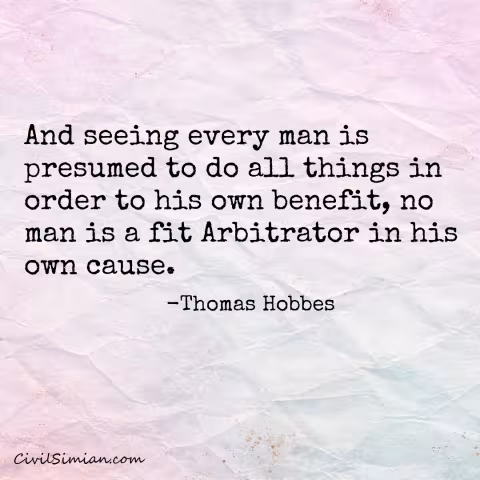
Whenever the legislature attempts to regulate the differences between masters and their workmen, its counsellors are always the masters. When the regulation, therefore, is in favor of the workmen, it is always just and equitable; but it is sometimes otherwise when in favor of the masters.
▼
Source
source
Chapter x, Part II, p. 168.
3 months 3 weeks ago
Force overcome by force.
▼
Source
source
Pro Milone, Chapter XI, section 30 Variant translation: Violence conquered by violence.

4 months 1 week ago
Art furnishes us with eyes and hands and above all the good conscience to be able to turn ourselves into such a phenomenon.
2 months 1 day ago
I daresay anything can be made holy by being sincerely worshipped.
▼
Source
source
The Message to the Planet (1989) p. 322.
2 months 2 days ago
The methods of logical procedure are very different in ancient and modem logic, but behind all difference is the construction of a universally valid order of thought, neutral with respect to material content. Long before technological man and technological nature emerged as the objects of rational control and calculation, the mind was made susceptible to abstract generalization. Terms which could be organized into a coherent logical system, free from contradiction or with manageable contradiction, were separated from those which could not. Distinction was made between the universal, calculable, "objective" and the particular, incalculable, subjective dimension of thought.
▼
Source
source
pp. 137-138
1 month 2 weeks ago
If an angel were ever to tell us anything of his philosophy I believe many propositions would sound like 2 times 2 equals 13.
▼
Source
source
B 44
2 months 2 weeks ago
The heart of man is the place the devil dwells in; I feel sometimes a hell within myself.
▼
Source
source
Section 51
1 month 2 weeks ago
Here take back the stuff that I am, nature, knead it back into the dough of being, make of me a bush, a cloud, whatever you will, even a man, only no longer make me me.
▼
Source
source
B 37 "Speech of a suicide composed shortly before the act."
2 months 2 days ago
Fact be vertuous, or vicious, as Fortune pleaseth.
▼
Source
source
The Second Part, Chapter 27, p. 153

2 months 2 weeks ago
Perchance you who pronounce my sentence are in greater fear than I who receive it.
▼
Source
source
His famous response to his judges upon his conviction as a heretic, prior to his transfer to the civil authorities for execution. (16 February 1600); as quoted by Gaspar Schopp of Breslau in a letter to Conrad Rittershausen
1 month 6 days ago
I would mind more if I could claim that The Selfish Gene had become severely outmoded and superseded. Unfortunately (from one point of view) I cannot. Details have changed and factual examples burgeoned mightily. But, with an exception that I shall discuss in a moment, there is little in the book that I would rush to take back now, or apologize for.
▼
Source
source
Arthur Cain, late Professor of Zoology at Liverpool and one of my inspiring tutors at Oxford in the sixties, described The Selfish Gene in 1976 as a 'young man's book'.
1 month 2 weeks ago
These papers are all written from what is called a realist perspective. The statements of science are in my view either true or false (although it is often the case that we don't know which) and their truth or falsity does not consist in their being highly derived ways of describing regularities in human experience. Reality is not a part of the human mind; rather the human mind is a part - and a small part at that - of reality.
▼
Source
source
"Introduction: Science as approximation to truth"
4 months 1 week ago
Life is, after all, not a product of morality.
3 months 1 week ago
The child must be brought up free (that he allow others to be free). He must learn to endure the restraint to which freedom subjects itself for its own preservation (experience no subordination to his command). Thus he must be disciplined. This precedes instruction. Training must continue without interruption. He must learn to do without things and to be cheerful about it. He must not be obliged to dissimulate, he must acquire immediate horror of lies, must learn so to respect the rights of men that they become an insurmountable wall for him. His instruction must be more negative. He must not learn religion before he knows morality. He must be refined, but not spoiled (pampered). He must learn to speak frankly, and must assume no false shame. Before adolescence he must not learn fine manners ; thoroughness is the chief thing. Thus he is crude longer, but earlier useful and capable.
▼
Source
source
Part III : Selection on Education from Kant's other Writings, Ch. I Pedagogical Fragments, # 3
1 month 1 week ago
The move from a structuralist account in which capital is understood to structure social relations in relatively homologous ways to a view of hegemony in which power relations are subject to repetition, convergence, and rearticulation brought the question of temporality into the thinking of structure, and marked a shift from a form of Althusserian theory that takes structural totalities as theoretical objects to one in which the insights into the contingent possibility of structure inaugurate a renewed conception of hegemony as bound up with the contingent sites and strategies of the rearticulation of power.
▼
Source
source
"Further Reflections on the Conversations of Our Time" (1997), which received first place in the Philosophy and Literature Bad Writing Contest
CivilSimian.com created by AxiomaticPanic, CivilSimian, Kalokagathia