

2 months 6 days ago
It is important to understand what I mean by semiosis. All dynamic action, or action of brute force, physical or psychical, either takes place between two subjects, - whether they react equally upon each other, or one is agent and the other patient, entirely or partially, - or at any rate is a resultant of such actions between pairs. But by "semiosis" I mean, on the contrary, an action, or influence, which is, or involves, a cooperation of three subjects, such as a sign, its object, and its interpretant, this tri-relative influence not being in any way resolvable into actions between pairs.
▼
Source
source
"Pragmatism" (1907) in The Essential Peirce : Selected Philosophical Writings (1998) edited by the Peirce Edition Project, Vol. 2, p. 411, Indiana University Press.

2 months 1 week ago
The unbought grace of life, the cheap defence of nations, the nurse of manly sentiment and heroic enterprise, is gone!
▼
Source
source
Volume iii, p. 331
1 month 3 weeks ago
Man's biological weakness is the condition of human culture.
▼
Source
source
Ch. 2

1 month 3 weeks ago
Because the book became a freak 'bestseller', because I found myself bracketed with the 'Angry Young Men' of the period, I found myself carried to 'fame' on a wave of publicity -- only to discover that this kind of fame is one of the subtlest forms of obscurity. Everybody knew who I was, and nobody knew what I stood for. The public image meant that nobody was interested in what I had to say, for everyone was convinced that they already knew. I could talk until I was blue in the face about my attempt to revise the pessimistic existentialism of Heidegger, Camus and Sartre; as far as most people were concerned, I was an autodidact who was angry about something or other.
▼
Source
source
p. 188, George Bernard Shaw: A personal view

1 month 3 weeks ago
I feel sure that the police are helping us more than I could do in ten years. They are making more anarchists than the most prominent people connected with the anarchist cause could make in ten years. If they will only continue I shall be very grateful; they will save me lots of work.
▼
Source
source
As quoted in "Arrest in Chicago of Emma Goldman, Preacher of Anarchy", The San Francisco Call
1 month 5 days ago
Times are changed with him who marries; there are no more by-path meadows, where you may innocently linger, but the road lies long and straight and dusty to the grave. Idleness, which is often becoming and even wise in the bachelor, begins to wear a different aspect when you have a wife to support.
▼
Source
source
Virginibus Puerisque, Ch. 2.
1 month 1 week ago
Confidence is the only bond of friendship.
▼
Source
source
Maxim 34
1 month 1 week ago
Even when there is no law, there is conscience.
▼
Source
source
Maxim 237

3 months 3 weeks ago
The inclination to seek the truth is safer than the presumption which regards unknown things as known.
▼
Source
source
(Cambridge: 2002), Book 9, Chapter 1, p. 24

3 months 4 days ago
There is little in common between the organised parading of madness in the eighteenth century and the freedom with which madness came to the fore during the Renaissance. The earlier age had found it everywhere, an integral element of each experience, both in images and in real life dangers. During the classical period, it was also on public view, but behind bars. When it manifested itself it was at a carefully controlled distance, under the watchful eye of a reason that denied all kinship with it, and felt quite unthreatened by any hint of resemblance. Madness had become a thing to be observed, no longer the monster within, but an animal moved by strange mechanisms, more beast than man, where all humanity had long since disappeared.
▼
Source
source
Part One: 5. The Insane

3 months 1 week ago
The great thing, then, in all education, is to make our nervous system our ally instead of our enemy.
▼
Source
source
Ch. 4
3 months 1 week ago
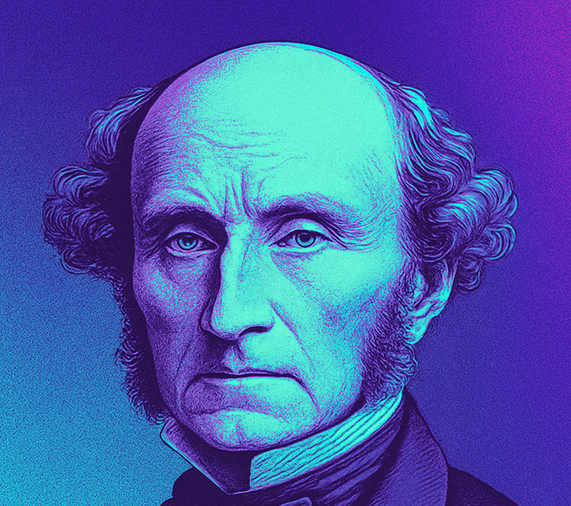
I have learned to seek my happiness by limiting my desires, rather than in attempting to satisfy them.
▼
Source
source
Attributed to John Stuart Mill in The Phrenological Journal and Science of Health, Vol. LXXXV (September 1887), p. 170
3 months 1 week ago
If it be said, that an Omnipotent Creator, though under no necessity of employing contrivances such as man must use, thought fit to use them in order to leave traces that would enable man to recognize his creative hand, the answer is that this equally implies a limit to his omnipotence. For if he wanted men to know that they themselves and the world are his work, he, being omnipotent, had only to will that they should be aware of it.
▼
Source
source
pages 177-178;Early Modern Texts page 16
1 month 2 weeks ago
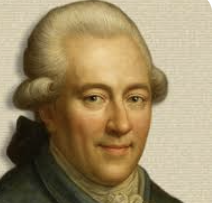
What concerns me alone I only think, what concerns my friends I tell them, what can be of interest to only a limited public I write, and what the world ought to know is printed...
▼
Source
source
B 52
2 months 6 days ago
A certain maxim of Logic which I have called Pragmatism has recommended itself to me for diverse reasons and on sundry considerations. Having taken it as my guide for most of my thought, I find that as the years of my knowledge of it lengthen, my sense of the importance of it presses upon me more and more. If it is only true, it is certainly a wonderfully efficient instrument. It is not to philosophy only that it is applicable. I have found it of signal service in every branch of science that I have studied. My want of skill in practical affairs does not prevent me from perceiving the advantage of being well imbued with pragmatism in the conduct of life.
▼
Source
source
Lecture I : Pragmatism : The Normative Sciences, CP 5.14

3 months 4 days ago
It has no sense and cannot just unless it comes to terms with death. Mine as (well as) that of the other. Between life and death, then, this is indeed the place of a sententious injunction that always feigns to speak the just.
▼
Source
source
Exordium

3 months 1 week ago
To fear love is to fear life, and those who fear life are already three parts dead.

3 months 1 week ago
Undoubtedly we have no questions to ask which are unanswerable. We must trust the perfection of the creation so far, as to believe that whatever curiosity the order of things has awakened in our minds, the order of things can satisfy. Every man's condition is a solution in hieroglyphic to those inquiries he would put. He acts it as life, before he apprehends it as truth.
▼
Source
source
Introduction

2 months 6 days ago
Try as I will, I don't see what might exist...

1 month 1 week ago
Schizophrenia may be a necessary consequence of literacy.
▼
Source
source
(p. 26)
3 months 1 week ago
Great men, great nations, have not been boasters and buffoons, but perceivers of the terror of life, and have manned themselves to face it.
▼
Source
source
Fate

3 months ago
Thus to the Lord doth Asha, the Truth, reply:"No guide is known who can shelter the world from woe, None who knows what moves and works Thy lofty plans."
▼
Source
source
Ahunuvaiti Gatha; Yasna 29, 3.
2 months 6 days ago
Never to have occasion to take a position, to make up one's mind, or to define oneself - there is no wish I make more often.
3 months 1 week ago
Religion...is a man's total reaction upon life.
▼
Source
source
Lecture II, "Circumscription of the Topic"
3 months 1 week ago
It is easy to live for others; everybody does. I call on you to live for yourselves.
▼
Source
source
May 3, 1845
3 months 1 week ago
The world is his, who has money to go over it.
▼
Source
source
Wealth

2 weeks 4 days ago
Everyone knows that time is Death, that Death hides in clocks. Imposing another time powered by the Clock of the Imagination, however, can refuse his law. Here, freed of the Grim Reaper's scythe, we learn that pain is knowledge and all knowledge pain.
▼
Source
source
"Death"

3 months 2 weeks ago
In the same manner as we are cautioned by religion to show our faith by our works we may very properly apply the principle to philosophy, and judge of it by its works; accounting that to be futile which is unproductive, and still more so, if instead of grapes and olives it yield but the thistle and thorns of dispute and contention.
▼
Source
source
Aphorism 73

3 months 1 week ago
The South may keep her pine-apples, and we will be content with our strawberries, which are, as it were, pine-apples with "going a-strawberrying" stirred into them, infinitely enhancing their flavor.
3 months 4 days ago
All these present struggles revolve around the question: Who are we? They are a refusal of these abstractions, of economic and ideological state violence, which ignore who we are individually, and also a refusal of a scientific or administrative inquisition which determines who one is.
▼
Source
source
p. 781
1 month 5 days ago
Quiet minds cannot be perplexed or frightened but go on in fortune or misfortune at their own private pace, like a clock during a thunderstorm.
▼
Source
source
'La Fère of Cursed Memory', 15th vignette of An Inland Voyage (1878), in Collected Memoirs, Travel Sketches and Island Literature of Robert Louis Stevenson, Stevenson, e-artnow
3 months 3 weeks ago
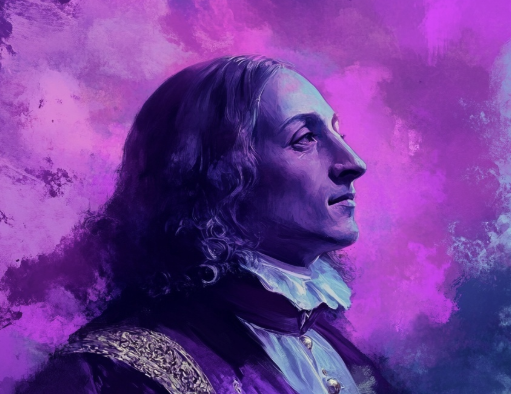
Rules necessary for demonstrations. To prove all propositions, and to employ nothing for their proof but axioms fully evident of themselves, or propositions already demonstrated or admitted; Never to take advantage of the ambiguity of terms by failing mentally to substitute definitions that restrict or explain them.

2 months 2 weeks ago
Shakespeare's fault is not the greatest into which a poet may fall. It merely indicates a deficiency of taste.

3 months 1 week ago
I do not say this, that I think there should be no difference of opinions in conversation, nor opposition in men's discourses... 'Tis not the owning one's dissent from another, that I speak against, but the manner of doing it.
▼
Source
source
Sec. 145
3 months 3 weeks ago
The method of not erring is sought by all the world. The logicians profess to guide it, the geometricians alone attain it, and apart from science, and the imitations of it, there are no true demonstrations.

3 months 1 week ago
When we run over libraries, persuaded of these principles, what havoc must we make? If we take in our hand any volume; of divinity or school metaphysics, for instance; let us ask, Does it contain any abstract reasoning concerning quantity or number? No. Does it contain any experimental reasoning concerning matter of fact and existence? No. Commit it then to the flames: For it can contain nothing but sophistry and illusion.
▼
Source
source
Section 12 : Of the Academical or Sceptical Philosophy Pt. 3


Just now
War is a quarrel between two thieves too cowardly to fight their own battle; therefore they take boys from one village and another village, stick them into uniforms, equip them with guns, and let them loose like wild beasts against each other.
▼
Source
source
Quoted by Emma Goldman in her essay, "Patriotism: A Menace to Liberty", chapter five of Anarchism and Other Essays (2nd revised edition, 1911).
2 months 2 days ago
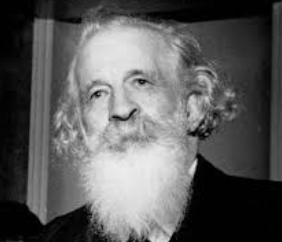
Words ... are little houses, each with its cellar and garret. Common sense lives on the ground floor, always ready to engage in 'foreign commerce' on the same level as the others, as the passers-by, who are never dreamers. To go upstairs in the word house is to withdraw step by step; while to go down to the cellar is to dream, it is losing oneself in the distant corridors of an obscure etymology, looking for treasures that cannot be found in words. To mount and descend in the words themselves-this is a poet's life. To mount too high or descend too low is allowed in the case of poets, who bring earth and sky together.
▼
Source
source
Ch. 6

2 months 2 weeks ago
All things are in the Universe, and the universe is in all things: we in it, and it in us; in this way everything concurs in a perfect unity.

3 weeks 2 days ago
When Bill Gates pours money into Africa for feeding the poor in Africa and preventing famine, he's pushing the failed Green Revolution, he's pushing chemicals, pushing GMOs, pushing patterns.
▼
Source
source
On Bill Gate's philanthropic activities, from "Bill Gates is continuing the work of Monsanto, Vandana Shiva tells France24" France24

3 months 1 week ago
Man ought to be content, it is said; but with what?
▼
Source
source
Pensées, Remarques, et Observations de Voltaire; ouvrage posthume (1802)
1 month 2 weeks ago
The Greeks possessed a knowledge of human nature we seem hardly able to attain to without passing through the strengthening hibernation of a new barbarism.
▼
Source
source
F 44
2 months 1 week ago
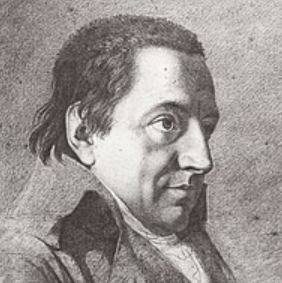
The Age of Empty Freedom ... does not know that man must first through labour, industry, and art, learn how to know; but it has a certain fixed standard for all conceptions, and an established Common Sense of Mankind always ready and at hand, innate within itself and there present without trouble on its part;-and those conceptions and this Common Sense are to it the measure of the efficient and the real. It has this great advantage over the Age of Science, that it knows all things without having learned anything; and can pass judgment upon whatever comes before it at once and without hesitation,-without needing any preliminary evidence:-'That which I do not immediately comprehend by the conceptions which dwell within me, is nothing,'-says Empty Freedom.
▼
Source
source
p. 20
1 month 6 days ago
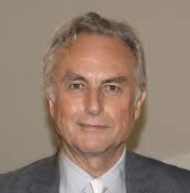
I think it is not helpful to apply Darwinian language too widely. Conquest of nation by nation is too distant for Darwinian explanations to be helpful. Darwinism is the differential survival of self-replicating genes in a gene pool, usually as manifested by individual behaviour, morphology, and phenotypes. Group selection of any kind is not Darwinism as Darwin understood it nor as I understand it. There is a very vague analogy between group selection and conquest of a nation by another nation, but I don't think it's a very helpful analogy. So I would prefer not to invoke Darwinian language for that kind of historical interpretation.
3 months 1 week ago
His character does not appear more extraordinary and unusual by the mixture of so much absurdity with so much penetration, than by his tempering such violent ambition, and such enraged fanaticism with so much regard to justice and humanity.
▼
Source
source
Volume III, Chapter LXI; referring to Oliver Cromwell

3 months 1 week ago
England, it is true, in causing a social revolution in Hindostan, was actuated only by the vilest interests, and was stupid in her manner of enforcing them. But that is not the question. The question is, can mankind fulfil its destiny without a fundamental revolution in the social state of Asia? If not, whatever may have been the crimes of England she was the unconscious tool of history in bringing about that revolution.
▼
Source
source
"The British Rule in India," New York Daily Tribune, 10 June 1853.
1 month 3 weeks ago
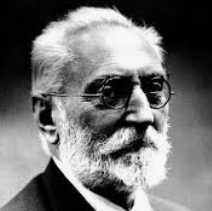
These terrible sociologists, who are the astrologers and alchemists of our twentieth century.
▼
Source
source
Fanatical Skepticism
CivilSimian.com created by AxiomaticPanic, CivilSimian, Kalokagathia