


3 months 1 week ago
There is much pleasure to be gained from useless knowledge.
▼
Source
source
Ch. 2: 'Useless' Knowledge
1 month 4 weeks ago
Few new truths have ever won their way against the resistance of established ideas save by being overstated.
▼
Source
source
As quoted in Communications and History : Theories of Knowledge, Media and Civilization (1988) by Paul Heyer, p. 125

2 months 4 days ago
"What is truth?" is a fundamental question. But what is it compared to "How to endure life?" And even this one pales beside the next: "How to endure oneself?" - That is the crucial question in which no one is in a position to give us an answer.

2 months 4 weeks ago
The pleasures that give most joy are the ones that most rarely come.
3 months 1 week ago
Every man, wherever he goes, is encompassed by a cloud of comforting convictions, which move with him like flies on a summer day.
▼
Source
source
Ch. 2: Dreams and Facts

2 months 2 weeks ago
It is not proper either to have a blunt sword or to use freedom of speech ineffectually. Neither is the sun to be taken from the world, nor freedom of speech from erudition.
▼
Source
source
As quoted in the translation of Thomas Taylor

2 months ago
All they that take the sword shall perish with the sword.
▼
Source
source
Matthew 26:52 (KJV)

1 month 1 week ago
If a poor person envies a rich person, he is no better than the rich person.
▼
Source
source
p. 89

3 weeks 2 days ago
The known is finite, the unknown infinite; intellectually we stand on an islet in the midst of an illimitable ocean of inexplicability. Our business in every generation is to reclaim a little more land, to add something to the extent and the solidity of our possessions.
1 month 2 weeks ago
Only the person who has faith in himself is able to be faithful to others.
▼
Source
source
Ch. 4

1 month 5 days ago
Literacy, in translating man out of the closed world of tribal depth and resonance, gave man an eye for an ear and ushered him into a visual open world of specialized and divided consciousness.
3 months 2 weeks ago
Five [of the above] rules are of absolute necessity, and cannot be dispensed with without essential defect and often without error.

1 month 3 weeks ago
It is not in a person's nature to desire what he already has. Desire is a tendency, the start of a movement toward something, toward a point from which one is absent. If, at the very outset, this movement doubles back on itself toward its point of departure, a person turns round and round like a squirrel in a cage or a prisoner in a condemned cell. Constant turning soon produces revulsion. All workers, especially though not exclusively those who work under inhumane conditions, are easily the victims of revulsion, exhaustion and disgust and the strongest are often the worst affected.
▼
Source
source
p. 245

1 month 3 weeks ago
Conduct, practice, is the proof of doctrine, theory. "If any man will do His will - the will of Him that sent me," said Jesus, "he shall know of the doctrine, whether it be of God or whether I speak of myself" (John vii. 17); and there is a well known saying of Pascal: "Begin by taking holy water and you will end by becoming a believer." And pursuing a similar train of thought, Johann Jakob Moser, the pietist, was of the opinion that no atheist or naturalist had the right to regard the Christian religion as void of truth so long as he had not put it to the proof by keeping its precepts and commandments.
▼
Source
source
(Ritschl, Geschichte des Pietismus, book viii., 43)

4 months 4 days ago
Then we understand that rebellion cannot exist without a strange form of love. Those who find no rest in God or in history are condemned to live for those who, like themselves, cannot live; in fact, for the humiliated.
2 months 4 days ago
In the fact of being born there is such an absence of necessity that when you think about it a little more than usual, you are left...with a foolish grin.
1 month 2 weeks ago
Body and soul: a horse harnessed beside an ox.
▼
Source
source
D 103

3 months 1 week ago
After silence that which comes nearest to expressing the inexpressible is music.
▼
Source
source
"The Rest is Silence"
4 months 5 days ago
You want to know whether I can make a long speech, such as you are in the habit of hearing; but that is not my way. Socrates speaking to Alcibiades

3 months 1 week ago
All those to whom I looked up, were of opinion that the pleasure of sympathy with human beings, and the feelings which made the good of others, and especially of mankind on a large scale, the object of existence, were the greatest and surest sources of happiness. Of the truth of this I was convinced, but to know that a feeling would make me happy if I had it, did not give me the feeling.
▼
Source
source
(p. 138)

2 months 1 week ago
The unbought grace of life, the cheap defence of nations, the nurse of manly sentiment and heroic enterprise, is gone!
▼
Source
source
Volume iii, p. 331
2 months 4 days ago
In every man sleeps a prophet, and when he wakes there is a little more evil in the world

3 months 1 week ago
It is only by risking our persons from one hour to another that we live at all. And often enough our faith beforehand in an uncertified result is the only thing that makes the result come true.
▼
Source
source
"Is Life Worth Living?"

3 months 1 week ago
To love at all is to be vulnerable. Love anything, and your heart will certainly be wrung and possibly be broken. If you want to make sure of keeping it intact, you must give your heart to no one, not even to an animal. Wrap it carefully round with hobbies and little luxuries; avoid all entanglements; lock it up safe in the casket or coffin of your selfishness. But in that casket - safe, dark, motionless, airless - it will change. It will not be broken; it will become unbreakable, impenetrable, irredeemable. The alternative to tragedy, or at least to the risk of tragedy, is damnation. The only place outside of Heaven where you can be perfectly safe from all the dangers and perturbations of love is Hell.
3 months 1 week ago
Possibilities that fail to get realized are, for determinism, pure illusions: they never were possibilities at all. There is nothing inchoate, it says, about this universe of ours, all that was or is or shall be actual having been from eternity virtually there. The cloud of alternatives our minds escort this mass of actuality withal is a cloud of sheer deceptions, to which 'impossibilities' is the only name that rightfully belongs.
▼
Source
source
The Dilemma of Determinism in "The Will to Believe" p. 151
1 week ago
Of course, not everything old is beautiful, any more than everything black, or everything white, or everything young. But the notion that old means ugly is every bit as harmful as the prejudice that black is ugly. In one way it is even more pernicious. The notion that only what is new and young is beautiful poisons our relationship to the past and to our own future. It keeps us from understanding our roots and the greatest works of our culture and other cultures. It also makes us dread what lies ahead of us and leads many to shirk reality.
▼
Source
source
Time is an Artist (1978) Epilogue : Old is Beautiful
3 months 2 days ago
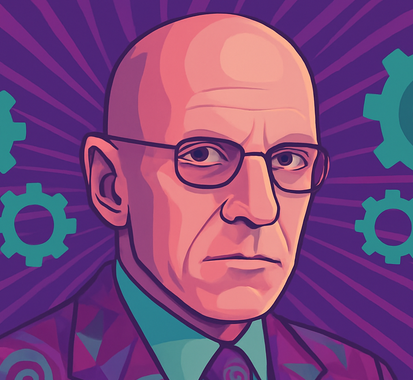
The constitution of madness as mental illness, at the end of the eighteenth century, bears witness to a rupture in a dialogue, gives the separation as already enacted, and expels from the memory all those imperfect words, of no fixed syntax, spoken falteringly, in which the exchange between madness and reason was carried out. The language of psychiatry, which is a monologue by reason about madness, could only have come into existence in such a silence.
▼
Source
source
Preface to 1961 edition
1 month 2 weeks ago
So long as one can use scented candy to abate the foul breath of hypocrisy, Puritanism is triumphant.

2 months 1 week ago
If there is no immortality, there is no virtue. ... Without God and immortal life? All things are lawful then, they can do what they like?
▼
Source
source
Quoted in M. M. Bakhtin, Problems of Dostoevsky's Poetics, trans. R. W. Rotsel (Ann Arbor, MI: Ardis, 1973) p. 70

3 months 2 weeks ago
Nothing is so firmly believed as what we least know.
▼
Source
source
Ch. 31. Of Divine Ordinances, tr. Cotton, rev. W. Hazlitt, 1842

3 months 1 week ago
Supply and demand constantly determine the prices of commodities; never balance, or only coincidentally; but the cost of production, for its part, determines the oscillations of supply and demand.
▼
Source
source
Notebook I, The Chapter on Money, p. 58.
3 months 2 days ago
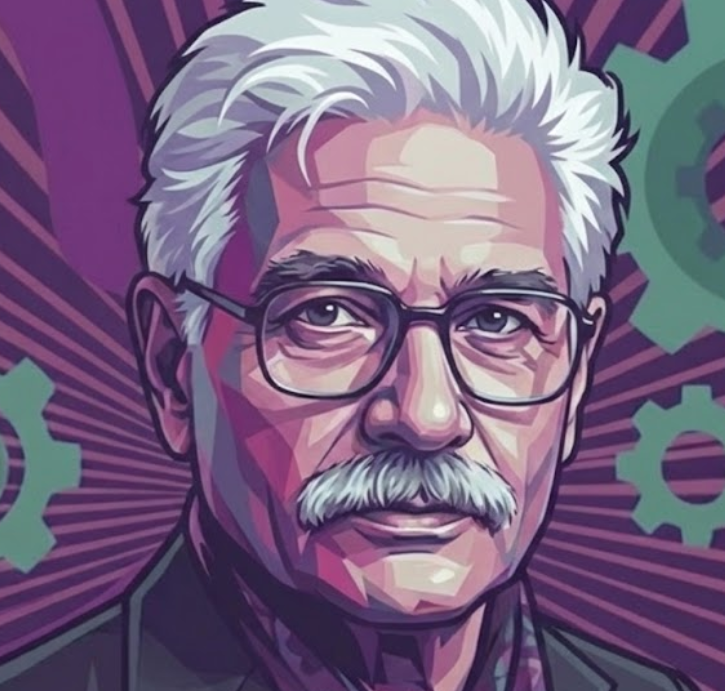
The history of metaphysics, like the history of the West, is the history of these metaphors and metonymies. It's matrix-If you will pardon me for demonstrating so little and for being elliptical in order to come more quickly to my principle theme-is the determination of Being as presence in all sense of this word.
▼
Source
source
Structure, Sign and Play
3 months 3 weeks ago
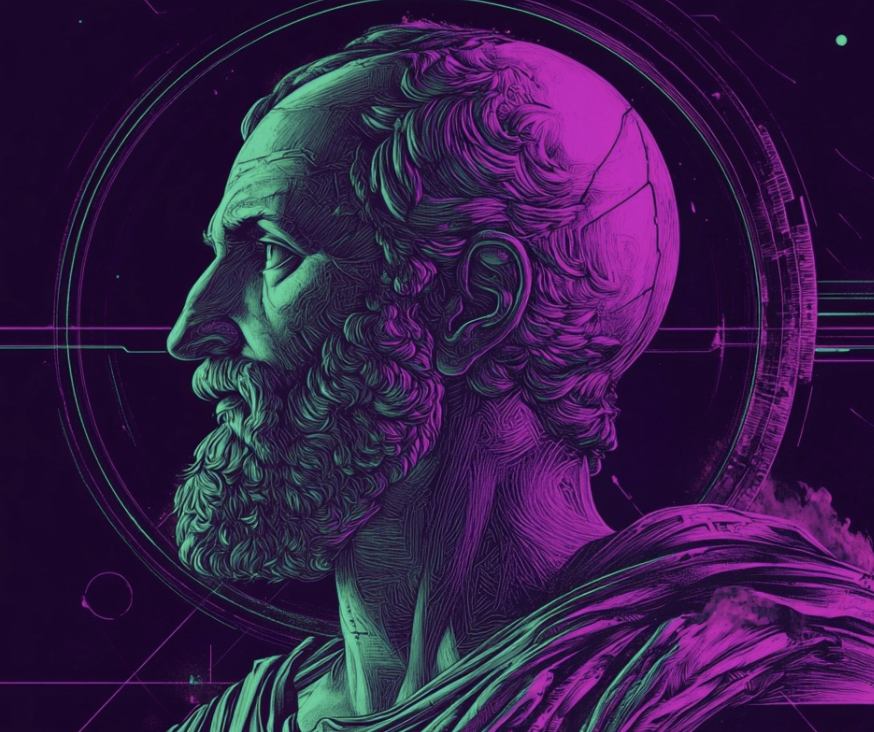
Pleasure and distress, fear and courage, desire and aversion, where have these affections and experiences their seat? Clearly, either in the Soul alone, or in the Soul as employing the body, or in some third entity deriving from both. And for this third entity, again, there are two possible modes: it might be either a blend or a distinct form due to the blending.
1 month 2 weeks ago
The natural impulse of the primitive man to strike back, to avenge a wrong, is out of date. Instead, the civilized man, stripped of courage and daring, has delegated to an organized machinery the duty of avenging his wrongs, in the foolish belief that the State is justified in doing what he no longer has the manhood or consistency to do.
4 months 4 days ago
What must be remembered in any case is that secret complicity that joins the logical and the everyday to the tragic.

3 months 6 days ago
In speaking of sociological laws or natural laws of social life I have in mind such laws as are formulated by modern economic theories, for instance, the theory of international trade, or the theory of the trade cycle. These and other important sociological laws are connected with the functioning of social institutions. These laws play a role in our social life corresponding to the role played in mechanical engineering by, say, the principle of the lever. For institutions, like levers, are needed if we want to achieve anything which goes beyond the power of our muscles. Like machines, institutions multiply our power for good or evil. Like machines, they need intelligent supervision by someone who understands their way of functioning and, most of all, their purpose, since we cannot build them so that they work entirely automatically.
▼
Source
source
Karl Popper, The Open Society and its Enemies, Vol I Plato Chapter 5: Nature and Convention. P. 67

4 months 1 week ago
No one talks more passionately about his rights than he who in the depths of his soul doubts whether he has any. By enlisting passion on his side he wants to stifle his reason and its doubts: thus he will acquire a good conscience and with it success among his fellow men.
3 months 3 weeks ago
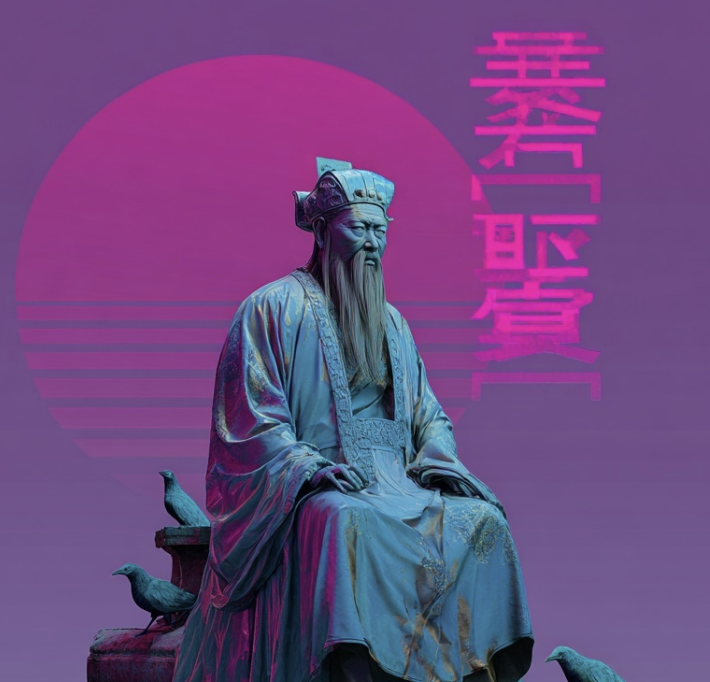
The way of the superior man may be compared to what takes place in traveling, when to go to a distance we must first traverse the space that is near, and in ascending a height, when we must begin from the lower ground.
2 months 4 weeks ago
If one choose the goods of the soul, he chooses the diviner [portion]; if the goods of the body, the merely mortal.
3 weeks 2 days ago
Becky Sharp's acute remark that it is not difficult to be virtuous on ten thousand a year, has its application to nations; and it is futile to expect a hungry and squalid population to be anything but violent and gross.
▼
Source
source
"Joseph Priestley"
2 months 1 week ago
Evil always turns up in this world through some genius or other.
▼
Source
source
As quoted in Dictionary of Foreign Quotations (1980) by Mary Collison, Robert L. Collison, p. 98

1 month 3 weeks ago
The main importance of Francis Bacon's influence does not lie in any peculiar theory of inductive reasoning which he happened to express, but in the revolt against second-hand information of which he was a leader.
1 month 4 weeks ago
As we shall see later, the most important factor in the training of good mental habits consists in acquiring the attitude of suspended conclusion, and in mastering the various methods of searching for new materials to corroborate or to refute the first suggestions that occur. To maintain the state of doubt and to carry on systematic and protracted inquiry ― these are the essentials of thinking.
▼
Source
source
Chapter 1: "What Is Thought?"
2 months 1 week ago
Mere parsimony is not economy. Expense, and great expense, may be an essential part in true economy.

4 months 5 days ago
In the world of today can there be peace anywhere until there is peace everywhere?
2 months 4 days ago
Buddhism calls anger "corruption of the mind," Manicheism "root of the tree of death." I know this, but what good does it do me to know?

3 months 1 week ago
There is more of good nature than of good sense at the bottom of most marriages.
▼
Source
source
Pearls of Thought (1881) p. 170
2 months 5 days ago
We must make a very precise distinction between the official and consequently dictatorial prerogatives of society organized as a state, and of the natural influence and action of the members of a non-official, non-artificial society.
1 month 3 weeks ago
When, as a result of what was called Enlightenment in the eighteenth century, the priests had in fact almost entirely lost this function of guidance. Their place was taken by writers and scientists. In both cases it is equally absurd. Mathematics, physics, and biology are as remote from spiritual guidance as the art of arranging words. When that function is usurped by literature and science it proves there is no longer any spiritual life.
▼
Source
source
"Morality and literature," pp. 164-165
CivilSimian.com created by AxiomaticPanic, CivilSimian, Kalokagathia