
test


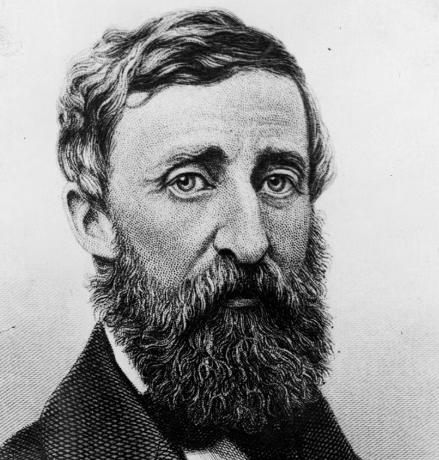
The savage in man is never quite eradicated.

A further threat to liberalism has to do with the mode of cognition that we call modern natural science. The early liberals were very closely aligned with the founders of modern natural science, people like Bacon and Descartes and Newton, who believed that there was an objective world beyond our subjective consciousnesses, that we could perceive this world through the experimental method, and then come to manipulate it. Natural science gave us technology... that made the world much more habitable, by conquering disease, by inventing things that vastly increased human productivity. So... it's closely related to the wealth, and... the safety and comfort of a modern economically developed world.

Only the great generalizations survive. The sharp words of the Declaration of Independence, lampooned then and since as 'glittering generalities,' have turned out blazing ubiquities that will burn forever and ever.
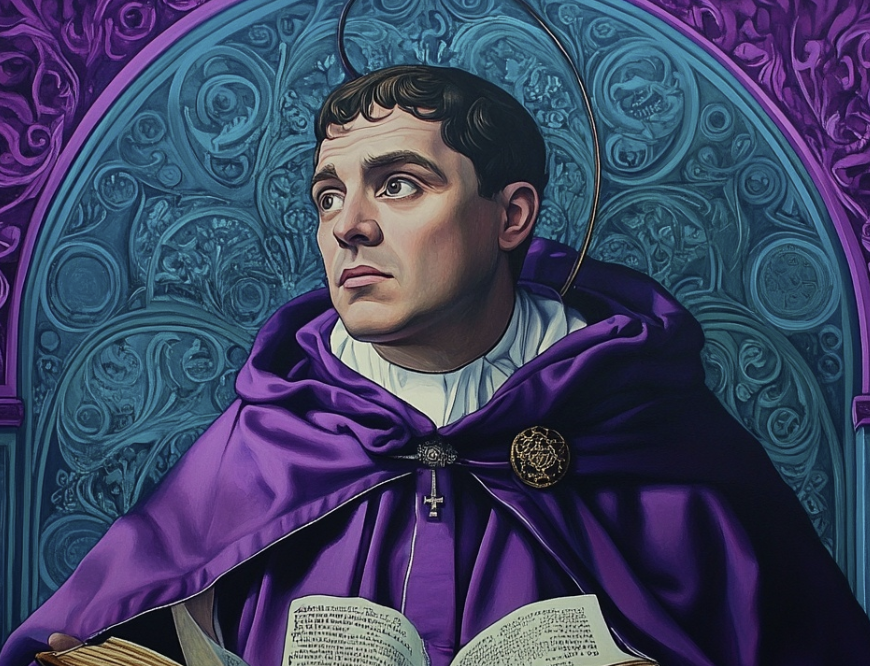
O saving Victim, opening wideThe gate of heaven to man below,Our foes press on from every side,Thine aid supply, Thy strength bestow.
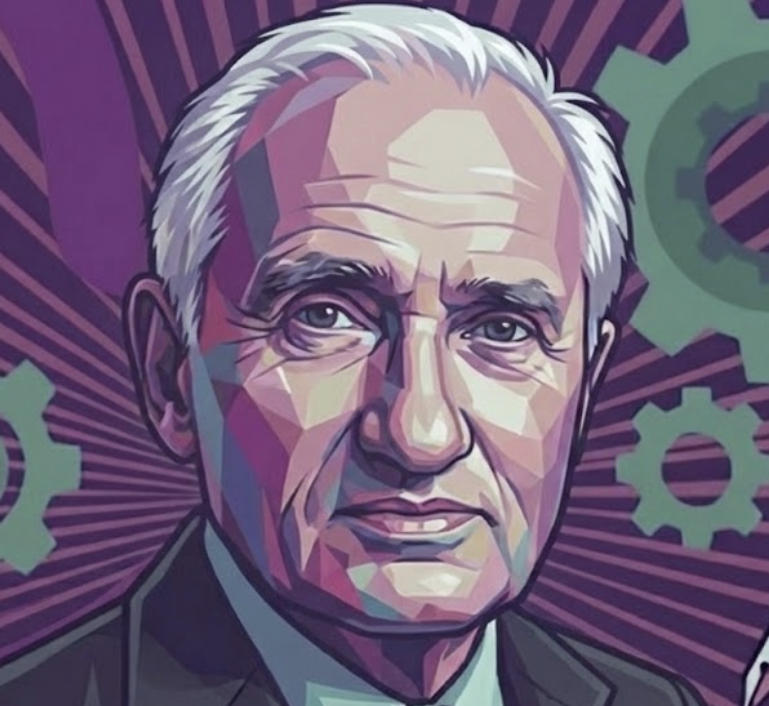
As medium for reaching understanding, speech acts serve: a) to establish and renew interpersonal relations, whereby the speaker takes up a relation to something in the world of legitimate social orders; b) to represent states and events, whereby the speaker takes up a relation to something in the world of existing states of affairs; c) to manifest experiences that is, to represent oneself- whereby the speaker takes up a relation to something in the subjective world to which he has privileged access.
If a man walk in the woods for love of them half of each day, he is in danger of being regarded as a loafer; but if he spends his whole day as a speculator, shearing off those woods and making earth bald before her time, he is esteemed an industrious and enterprising citizen. As if a town had no interest in its forests but to cut them down!
Fire is the most tolerable third party.

Frantic administration of panaceas to the world is certainly discouraged by the reflection that "this present" might be "the world's last night"; sober work for the future, within the limits of ordinary morality and prudence, is not.
But the philosophy that killed off truth proclaims unlimited tolerance for the "language games" (i.e., opinions, beliefs and doctrines) that people find useful. The outcome is expressed in the words of Karl Kraus: "Alles ist wahr und auch das Gegenteil." "Everything is true, and also its opposite."
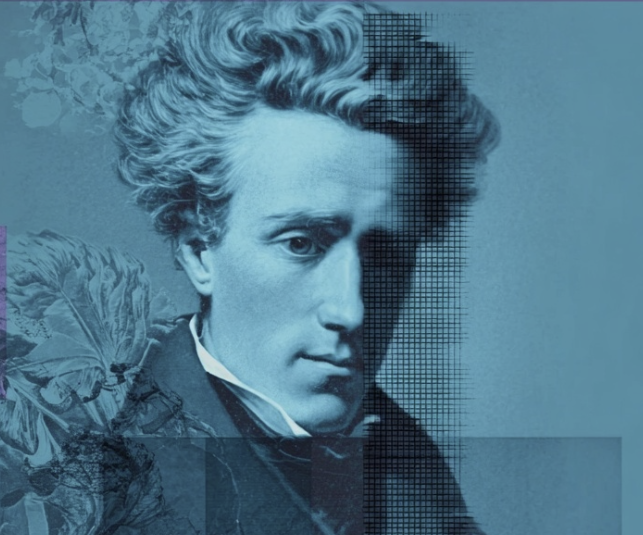
Let others complain that the age is wicked; my complaint is that it is paltry; for it lacks passion. Men's thoughts are thin and flimsy like lace, they are themselves pitiable like the lacemakers. The thoughts of their hearts are too paltry to be sinful. For a worm it might be regarded as a sin to harbor such thoughts, but not for a being made in the image of God. Their lusts are dull and sluggish, their passions sleepy. They do their duty, these shopkeeping souls, but they clip the coin a trifle, like the Jews; they think that even if the Lord keeps ever so careful a set of books, they may still cheat Him a little. Out upon them! This is the reason my soul always turns back to the Old Testament and to Shakespeare. I feel that those who speak there are at least human beings; they hate, they love, they murder their enemies, and curse their descendants throughout all generations, they sin.
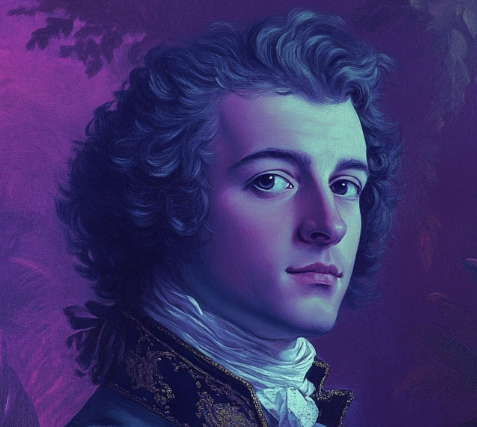
Virtue is a state of war, and to live in it means one always has some battle to wage against oneself.

How much good it would do if one could exterminate the human race.

The people are asleep; they remain indifferent. They forge their own chains and do the bidding of their masters to crucify their Christs.
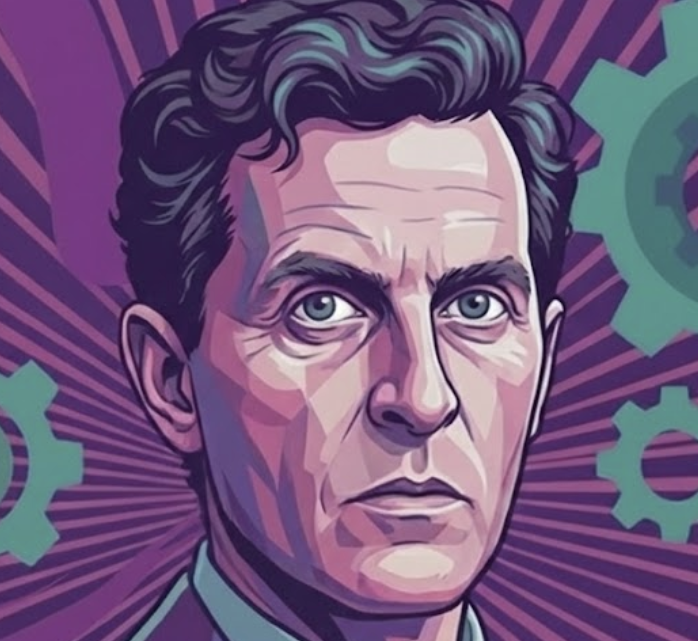
A hero looks death in the face, real death, not just the image of death. Behaving honourably in a crisis doesn't mean being able to act the part of a hero well, as in the theatre, it means being able to look death itself in the eye. For an actor may play lots of different roles, but at the end of it all he himself, the human being, is the one who has to die.
Great men, great nations, have not been boasters and buffoons, but perceivers of the terror of life, and have manned themselves to face it.
An entire mythology is stored within our language.
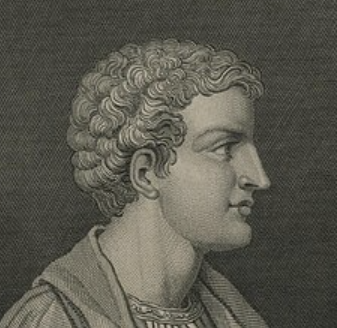
The covetous man is ever in want.
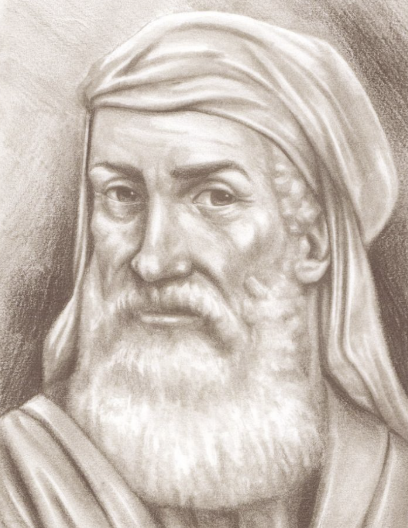
The sight of both eyes becomes one.

I suddenly dreamt that I picked up the revolver and aimed it straight at my heart - my heart, and not my head; and I had determined beforehand to fire at my head, at my right temple. After aiming at my chest I waited a second or two, and suddenly my candle, my table, and the wall in front of me began moving and heaving. I made haste to pull the trigger.

Not one moment when I have not been conscious of being outside Paradise.

From the power to transform him into a thing by killing him there proceeds another power, and much more prodigious, that which makes a thing of him while he still lives.
Genius is always sufficiently the enemy of genius by over influence.

What, could ye not watch with me one hour? Watch and pray, that ye enter not into temptation: the spirit indeed is willing, but the flesh is weak.

Our life is a hope which is continually converting itself into memory and memory in its turn begets hope. Give us leave to live! The eternity that is like an eternal present, without memory and without hope, is death. Thus do ideas exist in the God-Idea, but not thus do men live in the living God, in the God-Man.
Why expect a false theory of the world, i.e. classical physics, to yield a true account of consciousness?
We need a good alternative to Trumpism. There is a majority in favor of that, but... the other party is really not providing that alternative in a very clear way.

Whenever you say anything good about East Germany, immediately somebody jumps up and says, "My God, you're a Stalinist..." I'm not defending everything about it, of course. But I laboured on the chapter that talks about the east. I fact-checked it; I had somebody else fact-check it. I knew that I was going to get a lot of flak for that. But in the beginning, East Germany did a better job. They just did.
What makes The Present Age and The Difference Between a Genius and an Apostle important is not so much that the former essay anticipates Heidegger and the latter, Barth: it would be more accurate to say that Heidegger's originality is widely overestimated, and that many things he says at great length in his highly obscure German were said earlier by various writers who had made the same points much more elegantly, and that some of these writers, including Kierkegaard, were known to Heidegger. Why should Kierkegaard's significance depend on someone else's, quite especially when many points that others copied from him may be wrong?
Our institutions and conditions rest upon deep-seated ideas. To change those conditions and at the same time leave the underlying ideas and values intact means only a superficial transformation, one that cannot be permanent or bring real betterment. It is a change of form only, not of substance, as so tragically proven by Russia.
The fundamental cause of the trouble is that in the modern world the stupid are cocksure while the intelligent are full of doubt.

Maslow explained that, some time in the late thirties, he had been struck by the thought that modern psychology is based on the study of sick people. But since there are more healthy people around than sick people, how can this psychology give a fair idea of the workings of the human mind? It struck him that it might be worthwhile to devote some time to the study of healthy people.
The skepticism which fails to contribute to the ruin of our health is merely an intellectual exercise.
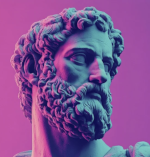
We may assume the superiority ceteris paribus [all things being equal] of the demonstration which derives from fewer postulates or hypotheses—in short from fewer premisses; for... given that all these are equally well known, where they are fewer knowledge will be more speedily acquired, and that is a desideratum. The argument implied in our contention that demonstration from fewer assumptions is superior may be set out in universal form...
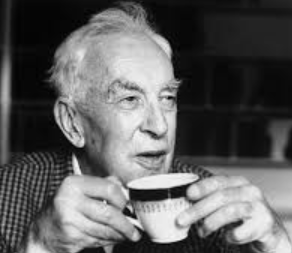
Of the twenty-two civilizations that appear in history, nineteen of them collapsed when they reached the moral state the United States is in now. The average age of the world's great civilizations has been 200 years. All nations have progressed through this sequence:From bondage to spiritual faithFrom spiritual faith to great courageFrom courage to libertyFrom liberty to abundanceFrom abundance to selfishnessFrom selfishness to complacencyFrom complacency to apathyFrom apathy to dependencyFrom dependency back again into bondage.
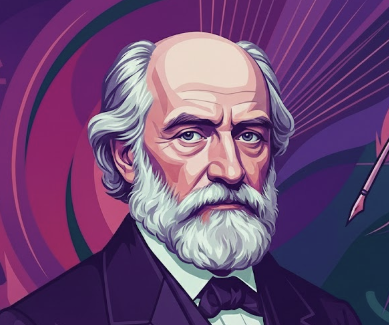
Life is a business that does not cover the costs.

Falsehood and delusion are allowed in no case whatever: But, as in the exercise of all the virtues, there is an œconomy of truth. It is a sort of temperance, by which a man speaks truth with measure that he may speak it the longer.

We are by no means opposed to the globalization of relationships as such-in fact, as we said, the strongest forces of Leftist internationalism have effectively led this process. The enemy, rather, is a specific regime of global relations that we call Empire.

The country that is more developed industrially only shows, to the less developed, the image of its own future.

There is less trouble and trauma involved in writing a new piece than in trying to salvage an unsatisfactory old one.
Fundamentally we are highly social creatures. We feel a big sense of anomie and discomfort when we are isolated from our fellow human beings. …We seek community in different ways. There's a right wing... and... a left wing version of this.
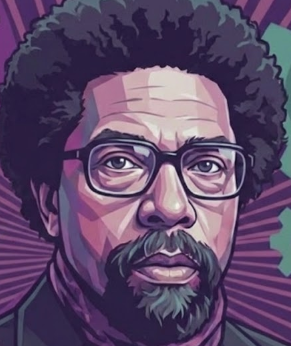
Anytime two human beings find genuine pleasure, joy, and love, the stars smile and the universe is enriched. Yet as long as that pleasure, joy, and love is still predicated on myths of black sexuality, the more fundamental challenge of humane interaction remains unmet.

No fixed capital can yield any revenue but by means of a circulating capital.
The dominant, almost general, idea of revolution - particularly the Socialist idea - is that revolution is a violent change of social conditions through which one social class, the working class, becomes dominant over another class, the capitalist class. It is the conception of a purely physical change, and as such it involves only political scene shifting and institutional rearrangements. Bourgeois dictatorship is replaced by the "dictatorship of the proletariat" - or by that of its "advance guard," the Communist Party. Lenin takes the seat of the Romanovs, the Imperial Cabinet is rechristened Soviet of People's Commissars, Trotsky is appointed Minister of War, and a labourer becomes the Military Governor General of Moscow. That is, in essence, the Bolshevik conception of revolution, as translated into actual practice.
Now drown care in wine.
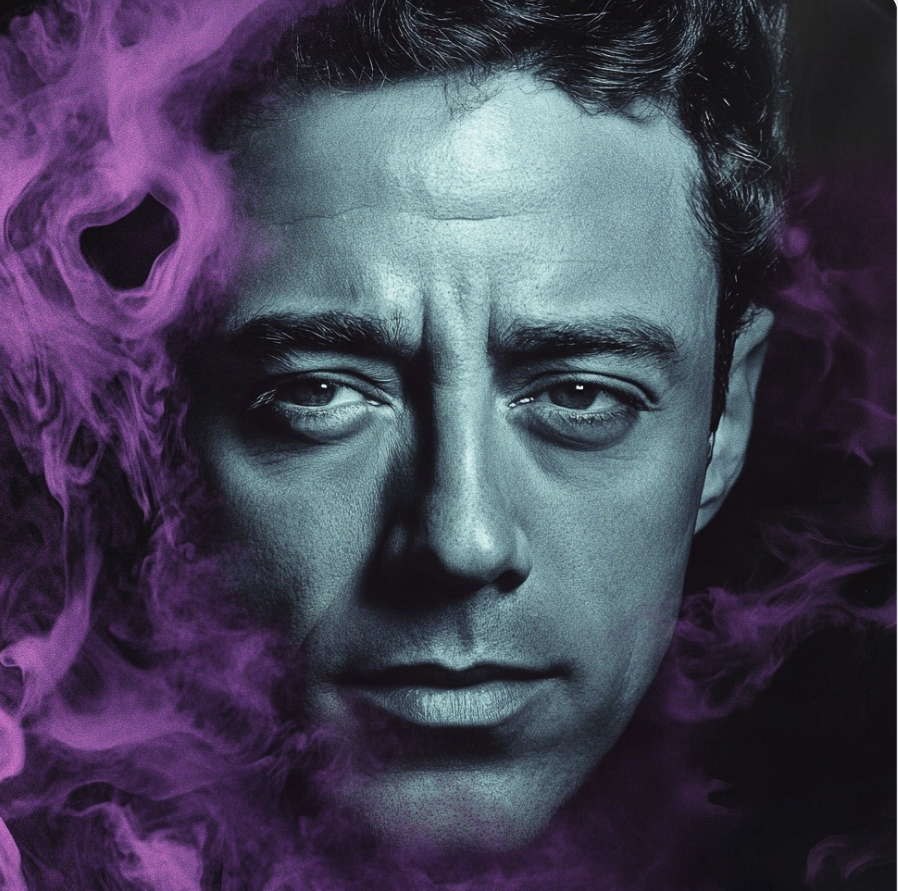
Great novelists are philosopher-novelists who write in images instead of arguments.
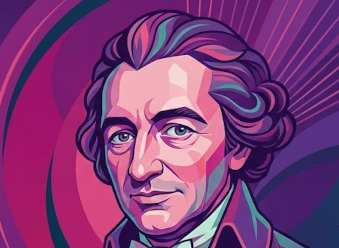
[W]e hold, that the moral obligation of providing for old age, helpless infancy, and poverty, is far superior to that of supplying the invented wants of courtly extravagance, ambition and intrigue.
The purpose of consciousness is to illuminate the world. If we try to run consciousness at half its proper voltage, the result will be a "devalued" world. But that is not the fault of the world; it is our fault. Low-voltage consciousness shows us less of the world than high-voltage consciousness, just as we would see an art gallery less clearly by candlelight than by sunlight.
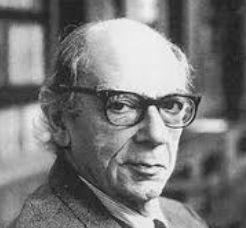
The simple point which I am concerned to make is that where ultimate values are irreconcilable, clear-cut solutions cannot, in principle, be found. To decide rationally in such situations is to decide in the light of general ideals, the overall pattern of life pursued by a man or a group or a society.
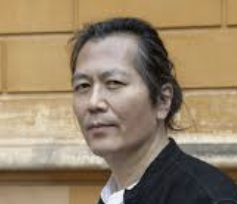
Zen Buddhism is inspired by a basic trust in the Here, a basic trust in the world.
CivilSimian.com created by AxiomaticPanic, CivilSimian, Kalokagathia