


1 month 2 weeks ago
Feminism in the United States has never emerged from the women who are most victimized by sexist oppression; women who are daily beaten down, mentally, physically, and spiritually-women who are powerless to change their condition in life. They are a silent majority. A mark of their victimization is that they accept their lot in life without visible question, without organized protest, without collective anger or rage.
▼
Source
source
p. 1.
2 months 6 days ago
The correct relationship between the higher and lower classes, the appropriate mutual interaction between the two is, as such, the true underlying support on which the improvement of the human species rests. The higher classes constitute the mind of the single large whole of humanity; the lower classes constitute its limbs; the former are the thinking and designing part, the latter the executive part.
▼
Source
source
The System of Ethics According to the Principles of the Wissenschaftslehre (1798; Cambridge, 2005), p. 320.
1 month 4 weeks ago
All art is the struggle to be, in a particular sort of way, virtuous.
▼
Source
source
The Black Prince (1973); 2003, p. 181.
3 months 3 weeks ago
Don't you know that a good and excellent person does nothing for the sake of appearances, but only for the sake of having acted right?
▼
Source
source
Book III, ch. 24, 50.
2 months 1 week ago
France has always more or less influenced manners in England; and when your fountain is choked up and polluted, the stream will not run long, or not run clear, with us, or perhaps with any nation. This gives all Europe, in my opinion, but too close and connected a concern in what is done in France. Excuse me, therefore, if I have dwelt too long on the atrocious spectacle of the 6th of October, 1789, or have given too much scope to the reflections which have arisen in my mind on occasion of the most important of all revolutions, which may be dated from that day, I mean a revolution in sentiments, manners, and moral opinions.

2 months 3 days ago
For a long while I have lived with the notion that I was the most normal being that ever existed. This notion gave me the taste, even the passion for being unproductive: what was the use of being prized in a world inhabited by madmen, a world mired in mania and stupidity? For whom was one to bother, and to what end? It remains to be seen if I have quite freed myself from this certitude, salvation in the absolute, ruin in the immediate.
1 month 4 days ago
His own character is the arbiter of every one's fortune.
▼
Source
source
Maxim 283

3 months 1 week ago
Only that day dawns to which we are awake. There is more day to dawn. The sun is but a morning star.
▼
Source
source
p. 375
3 months 3 weeks ago
If you believe what you like in the gospels, and reject what you don't like, it is not the gospel you believe, but yourself.
▼
Source
source
Earliest attribution found in Who Said That?: More than 2,500 Usable Quotes and Illustrations (1995) by George Sweeting. Online sources always attribute the quote to Augustine, but never specify in which of his works it is to be found.
3 months 1 week ago
It is a matter of perfect indifference where a thing originated; the only question is: "Is it true in and for itself?" Many think that by pronouncing a doctrine to be Neo-Platonic, they have ipso facto banished it from Christianity. Whether a Christian doctrine stands exactly thus or thus in the Bible, the point to which the exegetical scholars of modern times devote all their attention is not the only question. The Letter kills, the Spirit makes alive: this they say themselves, yet pervert the sentiment by taking the Understanding for the Spirit.
▼
Source
source
Pt. III, sec. 3, ch. 2 Lectures on the History of History Vol 1 p. 344 John Sibree translation (1857), 1914
2 months 3 weeks ago
My cares and my inquiries are for decency and truth, and in this I am wholly occupied.
▼
Source
source
Book I, epistle i, line 11

3 months 1 week ago
It would be too ridiculous to go about seriously to prove that wealth does not consist in money, or in gold and silver; but in what money purchases, and is valuable only for purchasing. Money no doubt, makes always a part of the national capital; but it has already been shown that it generally makes but a small part, and always the most unprofitable part of it.
▼
Source
source
Chapter I, p. 470.

4 months 1 week ago
The liar is a person who uses the valid designations, the words, in order to make something which is unreal appear to be real. He says, for example, "I am rich," when the proper designation for his condition would be "poor." He misuses fixed conventions by means of arbitrary substitutions or even reversals of names. If he does this in a selfish and moreover harmful manner, society will cease to trust him and will thereby exclude him. What men avoid by excluding the liar is not so much being defrauded as it is being harmed by means of fraud. Thus, even at this stage, what they hate is basically not deception itself, but rather the unpleasant, hated consequences of certain sorts of deception. It is in a similarly restricted sense that man now wants nothing but truth: he desires the pleasant, life-preserving consequences of truth. He is indifferent toward pure knowledge which has no consequences; toward those truths which are possibly harmful and destructive he is even hostilely inclined.

3 months 1 day ago
The interpretation of a case is corroborated only by the successful continuation of a self-formative process, that is by the completion of self-reflection, and not in any unmistakable way by what the patient says or how he behaves.
▼
Source
source
p. 266

2 months 6 days ago
No one can be perfectly free till all are free; no one can be perfectly moral till all are moral; no one can be perfectly happy till all are happy.
▼
Source
source
Pt. IV, Ch. 30 : General Considerations


2 months 1 week ago
Difficulty is a severe instructor, set over us by the supreme ordinance of a parental Guardian and Legislator, who knows us better than we know ourselves, as he loves us better too. Pater ipse colendi haud facilem esse viam voluit. He that wrestles with us strengthens our nerves, and sharpens our skill. Our antagonist is our helper.
▼
Source
source
Volume iii, p. 453

1 month 2 weeks ago
Art is thought, and thought only gives the world an appearance of order to anyone weak enough to be convinced by its show.
▼
Source
source
Chapter one, The Country of the Blind
4 weeks 1 day ago
There is simply too much to think about. It is hopeless - too many kinds of special preparation are required. In electronics, in economics, in social analysis, in history, in psychology, in international politics, most of us are, given the oceanic proliferating complexity of things, paralyzed by the very suggestion that we assume responsibility for so much. This is what makes packaged opinion so attractive.
▼
Source
source
There Is Simply Too Much to Think About (1992), pp. 173-174
2 months 3 days ago
No one should try to live if he has not completed his training as a victim.
3 months 1 day ago
Reaching and understanding is the process of bringing about an agreement on the presupposed basis of validity claims that are mutually recognized.
▼
Source
source
p. 23

3 months 3 weeks ago
The Yin based its propriety on that of the Xia, and what it added and subtracted is knowable. The Zhou has based its propriety on that of the Shang and what it added and subtracted is knowable. In this way, what continues from the Chou, even if 100 generations hence, is knowable.

2 months 2 weeks ago
In this theater of man's life it is reserved only for God and angels to be lookers on.
▼
Source
source
Francis Bacon, in The Advancement of Learning (1605) Book II, xx, 8.
1 month 4 weeks ago
The notion contradicts reality when the latter has become self-contradictory. Hegel says that a prevailing social form can be successfully attacked by thought only if this form has come into open contradiction with its own 'truth,' in other words, if it can no longer fulfill the demands of its own contents.

3 months 1 week ago
A testimony is sufficient when it rests on: 1st. A great number of very sensible witnesses who agree in having seen well. 2d. Who are sane, bodily and mentally. 3d. Who are impartial and disinterested. 4th. Who unanimously agree. 5th. Who solemnly certify to the fact.
▼
Source
source
As quoted by H. P. Blavatsky in Isis Unveiled, Vol. I, p. 108, 1877

3 months 1 week ago
Thee might observe incidentally that if the state paid for child-bearing it might and ought to require a medical certificate that the parents were such as to give a reasonable result of a healthy child - this would afford a very good inducement to some sort of care for the race, and gradually as public opinion became educated by the law, it might react on the law and make that more stringent, until one got to some state of things in which there would be a little genuine care for the race, instead of the present haphazard higgledy-piggledy ways.
▼
Source
source
Letter to Alys Pearsall Smith (1894); published in The Selected Letters of Bertrand Russell, Volume 1: The Private Years (1884-1914)
1 month 4 weeks ago
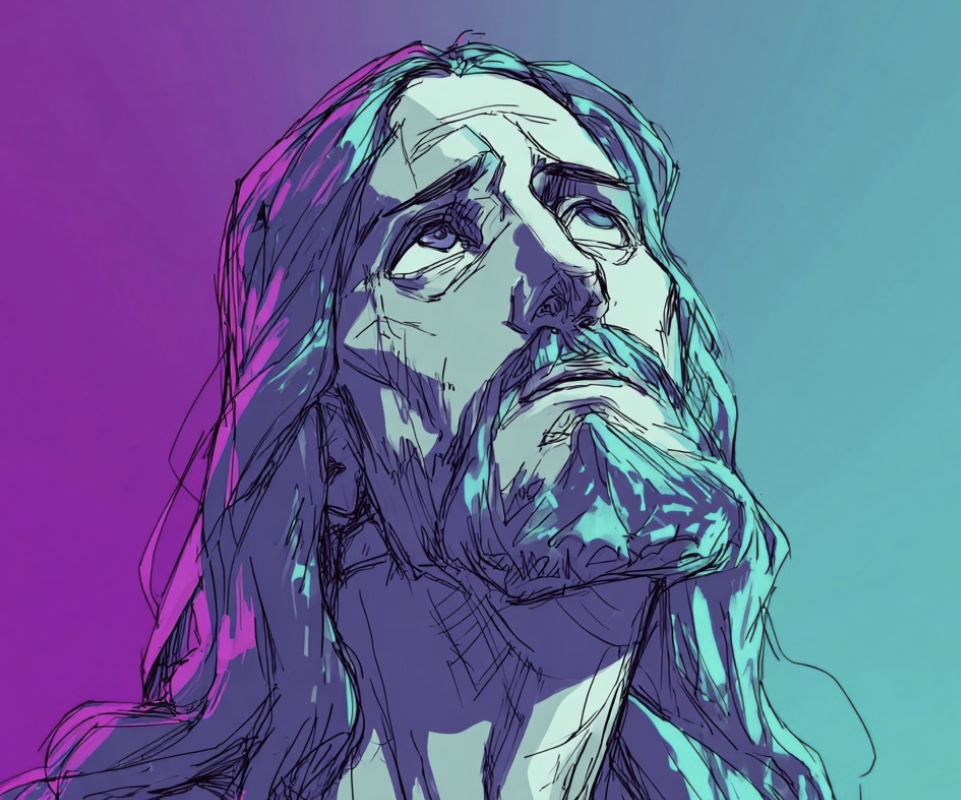
Go and shew John again those things which ye do hear and see: The blind receive their sight, and the lame walk, the lepers are cleansed, and the deaf hear, the dead are raised up, and the poor have the gospel preached to them. And blessed is he, whosoever shall not be offended in me.
▼
Source
source
11:4-6 (KJV)
1 month 4 weeks ago
There can be no movement toward a consummating close unless there is a progressive massing of values, a cumulative effect. This result cannot exist without conservation of the import of what has gone before. Moreover, to secure the needed continuity, the accumulated experience must be such as to create suspense and anticipation of resolution. Accumulation is at the same time preparation, as with each phase of the growth of a living embryo. Only that is carried on which is led to; otherwise there is arrest and a break. For this reason consummation is relative; instead of occurring once for all at a given point, it is recurrent. The final end is anticipated by rhythmic pauses, while that end is final only in an external way. For as we turn from reading a poem or novel or seeing a picture the effect presses forward in further experiences, even if only subconsciously.
▼
Source
source
p. 143
1 month 2 weeks ago
People do not go into the company of their fellow-creatures for what would seem a very sufficient reason, namely, that they have something to say to them, or something that they want to hear from them; but in the vague hope that they may find something to say.

1 month 2 weeks ago
There is no such thing as data-driven thinking.
3 months 5 days ago
Nicias, do you think you can erase with good deeds the wrongs you committed against your mother? What good deed will ever reach her? Her soul is a scorching noon time, without a single breath of a breeze, nothing moves, nothing changes, nothing lives there; a great emaciated sun, an immobile sun eternally consumes her.
▼
Source
source
King Aegistheus, Act 2

3 months 6 days ago
I was looking at my furniture, not as the utilitarian who has to sit on chairs, to write at desks and tables, and not as the cameraman or scientific recorder, but as the pure aesthete whose concern is only with forms and their relationships within the field of vision or the picture space. But as I looked, this purely aesthetic, Cubist's-eye view gave place to what I can only describe as the sacramental vision of reality. I was back where I had been when I was looking at the flowers-back in a world where everything shone with the Inner Light, and was infinite in its significance.
▼
Source
source
describing his experiment with mescaline, p. 22

3 months 2 days ago
Ambition is the death of thought.
▼
Source
source
p. 77e
3 months 1 week ago
The sham cause in physical influence consists in rashly assuming that the commerce of substance and transitive forces is sufficiently knowable from their mere existence. Hence it is not so much a system as rather the neglect of all philosophical system as a superfluity in the argument. Freeing the concept from this defect, we shall have a species of commerce alone deserving to be called real, and from which the whole constituting the world merits being called real, and not ideal or imaginary.

1 month 6 days ago
He did not, and could not, understand the meaning of words apart from their context. Every word and action of his was the manifestation of an activity unknown to him, which was his life.
▼
Source
source
About Platon Karataev in Bk. XII, ch. 13
2 months 2 days ago
History has proved us, and all who thought like us, wrong. It has made it clear that the state of economic development on the Continent at that time was not, by a long way, ripe for the removal of capitalist production.
▼
Source
source
Introduction (1895) to Marx's The Class Struggles in France

3 months 1 week ago
A man builds a fine house; and now he has a master, and a task for life: he is to furnish, watch, show it, and keep it in repair, the rest of his days.
▼
Source
source
Works and Days
2 months 3 days ago
Ambition is a drug that makes its addicts potential madmen.
3 months 1 week ago
There are Plebes in all classes.
▼
Source
source
As quoted by Julien Coupat in Interview with Julien Coupat, 2009
1 month 3 weeks ago
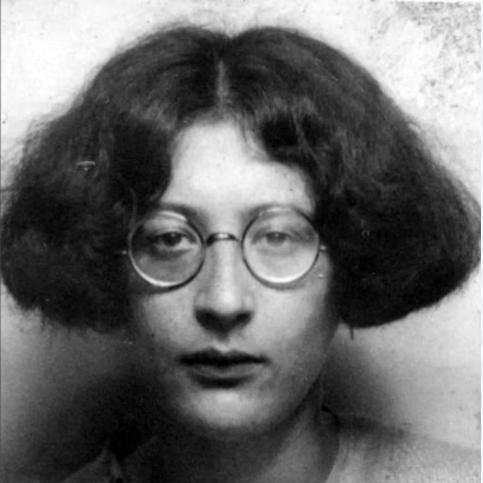
In order to obey God, one must receive his commands. How did it happen that I received them in adolescence, while I was professing atheism? To believe that the desire for good is always fulfilled - that is faith, and whoever has it is not an atheist.
▼
Source
source
Last Notebook (1942) p. 137
3 months 1 week ago
I should like to believe my people's religion, which was just what I could wish, but alas, it is impossible. I have really no religion, for my God, being a spirit shown merely by reason to exist, his properties utterly unknown, is no help to my life. I have not the parson's comfortable doctrine that every good action has its reward, and every sin is forgiven. My whole religion is this: do every duty, and expect no reward for it, either here or hereafter.
▼
Source
source
Greek Exercises (1888), written two days after his sixteenth birthday.
1 month 4 weeks ago
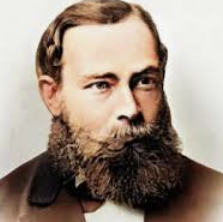
Facts, facts, facts,' cries the scientist if he wants to emphasize the necessity of a firm foundation for science. What is a fact? A fact is a thought that is true. But the scientist will surely not recognize something which depends on men's varying states of mind to be the firm foundation of science.
▼
Source
source
Gottlob Frege (1956). "The thought: A logical inquiry" in: Peter Ludlow (1997) Readings in the Philosophy of Language. p. 27

1 month 3 weeks ago
For what is specific in the Catholic religion is immortalization and not justification, in the Protestant sense. Rather is this latter ethical. It is from Kant, in spite of what orthodox Protestants may think of him, that Protestantism derived its penultimate conclusions - namely, that religion rests upon morality, and not morality upon religion, as in Catholicism.
2 months 3 days ago
To conceive a thought - just one, but one that would tear the universe to pieces.
2 months 3 days ago
The desire to die was my one and only concern; to it I have sacrificed everything, even death.
1 month 2 weeks ago
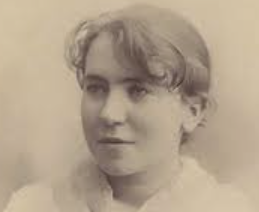
Direct action, having proven effective along economic lines, is equally potent in the environment of the individual. There a hundred forces encroach upon his being, and only persistent resistance to them will finally set him free. Direct action against the authority in the shop, direct action against the authority of the law, direct action against the invasive, meddlesome authority of our moral code, is the logical, consistent method of Anarchism. Will it not lead to a revolution? Indeed, it will. No real social change has ever come about without a revolution. People are either not familiar with their history, or they have not yet learned that revolution is but thought carried into action.
1 month 2 weeks ago
The God idea is growing more impersonal and nebulous in proportion as the human mind is learning to understand natural phenomena and in the degree that science progressively correlates human and social events.
4 months 1 week ago
Whoever has overthrown an existing law of custom has hitherto always first been accounted a bad man: but when, as did happen, the law could not afterwards be reinstated and this fact was accepted, the predicate gradually changed: - history treats almost exclusively of these bad men who subsequently became good men!
3 months 1 week ago
We are not so absurd as to propose that the teacher should not set forth his own opinions as the true ones and exert his utmost powers to exhibit their truth in the strongest light. To abstain from this would be to nourish the worst intellectual habit of all, that of not finding, and not looking for, certainty in any teacher. But the teacher himself should not be held to any creed; nor should the question be whether his own opinions are the true ones, but whether he is well instructed in those of other people, and, in enforcing his own, states the arguments for all conflicting opinions fairly.
▼
Source
source
"Civilization," London and Westminster Review, April 1836
CivilSimian.com created by AxiomaticPanic, CivilSimian, Kalokagathia