


4 months 3 days ago
The absurd does not liberate; it binds. It does not authorize all actions. "Everything is permitted" does not mean that nothing is forbidden.
1 month 2 weeks ago
Man's main task in life is to give birth to himself, to become what he potentially is. The most important product of his effort is his own personality.
▼
Source
source
Ch. 4 "Problems of Humanistic Ethics"
3 months 2 weeks ago
All who say the same things do not possess them in the same manner; and hence the incomparable author of the Art of Conversation pauses with so much care to make it understood that we must not judge of the capacity of a man by the excellence of a happy remark that we heard him make. ...let us penetrate, says he, the mind from which it proceeds... it will oftenest be seen that he will be made to disavow it on the spot, and will be drawn very far from this better thought in which he does not believe, to plunge himself into another, quite base and ridiculous.
▼
Source
source
Montaigne, Essais, liv. III, chap. viii.-Faugère

3 months 1 week ago
It is, therefore, a just political maxim, that every man must be supposed a knave: Though at the same time, it appears somewhat strange, that a maxim should be true in politics, which is false in fact. But to satisfy us on this head, we may consider, that men are generally more honest in their private than in their public capacity, and will go greater lengths to serve a party, than when their own private interest is alone concerned. Honour is a great check upon mankind: But where a considerable body of men act together, this check is, in a great measure, removed; since a man is sure to be approved of by his own party, for what promotes the common interest; and he soon learns to despise the clamours of adversaries.
▼
Source
source
Part I, Essay 6: Of The Independency of Parliament; first line often paraphrased as "It is a just political maxim, that every man must be supposed a knave."

2 months 1 week ago
I have never in my life met a man like him for noble simplicity, and boundless truthfulness. I understood from the way he talked that anyone who chose could deceive him, and that he would forgive anyone afterwards who had deceived him, and that was why I grew to love him.
▼
Source
source
Part 4, Chapter 8
3 months 1 week ago
Aims, principles, &c., have a place in our thoughts, in our subjective design only; but not yet in the sphere of reality. That which exists for itself only, is a possibility, a potentiality; but has not yet emerged into Existence. A second element must be introduced in order to produce actuality - viz. actuation, realization; and whose motive power is the Will - the activity of man in the widest sense.

3 months 5 days ago
You can put this another way by saying that while in other sciences the instruments you use are things external to yourself (things like microscopes and telescopes), the instrument through which you see God is your whole self. And if a man's self is not kept clean and bright, his glimpse of God will be blurred-like the Moon seen through a dirty telescope. That is why horrible nations have horrible religions: they have been looking at God through a dirty lens.
▼
Source
source
Book IV, Chapter 2, "The Three-personal God"

1 month 4 days ago
The press is a group confessional form that provides communal participation. The book is a private confessional form that provides a "point of view."
▼
Source
source
(p. 204)


1 month 2 weeks ago
What would become of the rich, if not for the poor? What would become of these idle, parasitic ladies, who squander more in a week than their victims earn in a year, if not for the eighty million wage-workers? Equality, who ever heard of such a thing?
1 month 4 days ago
A man's reach must exceed his grasp or what's a metaphor?
▼
Source
source
(p.7) A play on the lines in Robert Browning's poem "Andrea del Sarto":Ah, but a man's reach should exceed his grasp, Or what's a heaven for?

3 months 6 days ago
The hearing ear is always found close to the speaking tongue.
▼
Source
source
Race

2 months 2 days ago
However intimate we may be with the operations of the mind, we cannot think more than two or three minutes a day; - unless, by taste or by profession, we practice, for hours on end, brutalizing words in order to extract ideas from them. The intellectual represents the major disgrace, the culminating failure of Homo sapiens.

1 month 2 weeks ago
The key to understanding Crowley is the same as the key to understanding the Marquis de Sade. Both wasted an immense amount of energy screaming defiance at the authority they resented so much, and lacked the insight to see that they were shaking their fists at an abstraction.
▼
Source
source
p. 29

1 month 2 weeks ago
What concerns me alone I only think, what concerns my friends I tell them, what can be of interest to only a limited public I write, and what the world ought to know is printed...
▼
Source
source
B 52
3 months 6 days ago
What point of morals, of manners, of economy, of philosophy, of religion, of taste, of the conduct of life, has he not settled? What mystery has he not signified his knowledge of? What office, or function, or district of man's work, has he not remembered? What king has he not taught state, as Talma taught Napoleon? What maiden has not found him finer than her delicacy? What lover has he not outloved? What sage has he not outseen? What gentleman has he not instructed in the rudeness of his behavior?
▼
Source
source
Shakespeare; or, The Poet

3 months 2 weeks ago
Marriage is like a cage; one sees the birds outside desperate to get in, and those inside equally desperate to get out.
▼
Source
source
Book III, Ch. 5
3 months 5 days ago
God made us: invented us as a man invents an engine. A car is made to run on petrol, and it would not run properly on anything else. Now God designed the human machine to run on Himself.
▼
Source
source
Book II, Chapter 3, "The Shocking Alternative"

3 months 1 week ago
Even if a civil society were to be dissolved by the consent of all its members (e.g., if a people inhabiting an island decided to separate and disperse throughout the world), the last murderer remaining in prison would first have to be executed, so that each has done to him what his deeds deserve and blood guilt does not cling to the people for not having insisted upon this punishment; for otherwise the people can be regarded as collaborators in his public violation of justice.
▼
Source
source
Kt6:333
2 months 4 days ago
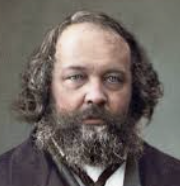
A person is strong only when he stands upon his own truth, when he speaks and acts from his deepest convictions. Then, whatever the situation he may be in, he always knows what he must say and do. He may fall, but he cannot bring shame upon himself or his cause. If we seek the liberation of the people by means of a lie, we will surely grow confused, go astray, and lose sight of our objective, and if we have any influence at all on the people we will lead them astray as well - in other words, we will be acting in the spirit of reaction and to its benefit.
▼
Source
source
"Appendix A"
2 months 3 weeks ago
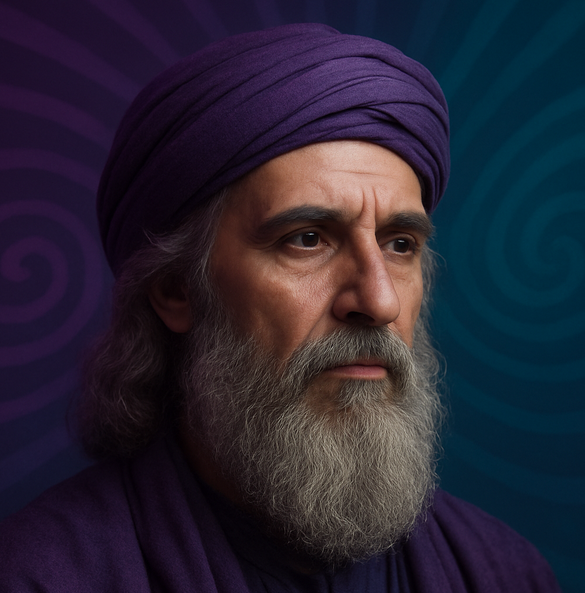
Suffer no anxiety, for he who is a sufferer of anxiety becomes regardless of enjoyment of the world and the spirit, and contraction happens to his body and soul.
3 months 5 days ago
I can imagine no man who will look with more horror on the End than a conscientious revolutionary who has, in a sense sincerely, been justifying cruelties and injustices inflicted on millions of his contemporaries by the benefits which he hopes to confer on future generations: generations who, as one terrible moment now reveals to him, were never going to exist. Then he will see the massacres, the faked trials, the deportations, to be all ineffaceably real, an essential part, his part, in the drama that has just ended: while the future Utopia had never been anything but a fantasy.

3 months 1 week ago
Is a fixed income not a good thing? Does not everyone love to count on a sure thing? Especially every petty-bourgeois, narrow-minded Frenchman? the 'ever needy' man?
▼
Source
source
(Bastiat and Carey), pp. 809-810.
4 months 1 week ago
[T]he first philosophers, in investigating the truth and the nature of things, wandered, as if led by ignorance, into a certain... path. Hence, they say that no being is either generated or corrupted, because it is necessary that what is generated should be generated either from being or non-being: but both these are impossible; for neither can being be generated, since it already is; and from nothing, nothing can be generated... And thus... they said that there were not many things, but that being alone had a subsistence. ...the ancient philosophers ...through this ignorance added so much to their want of knowledge, as to fancy that nothing else was generated or had a being; but they subverted all generation.
3 months 3 weeks ago
He who disdained not to assume us unto Himself, did not disdain to take our place and speak our words, in order that we might speak His words.
▼
Source
source
p.421
1 month 4 weeks ago
To call war the soil of courage and virtue is like calling debauchery the soil of love.
▼
Source
source
Ch. III: Industry, Government, the peasants

3 months 1 week ago
On the other hand, the cheapest form of pride is national pride; for the man affected therewith betrays a want of individual qualities of which he might be proud, since he would not otherwise resort to that which he shares with so many millions. The man who possesses outstanding personal qualities will rather see most clearly the faults of his own nation, for he has them constantly before his eyes. But every miserable fool, who has nothing in the world whereof he could be proud, resorts finally to being proud of the very nation to which he belongs. In this he finds compensation and is now ready and thankful to defend, ... all the faults and follies peculiar to it.
▼
Source
source
From 'Parerga and Paralipomena', Vol. 1, Aphorisms on the Wisdom of Life, 'What A Man Represents', pp. 360
3 months 2 weeks ago
For truth itself does not have the privilege to be employed at any time and in every way; its use, noble as it is, has its circumscriptions and limits.
▼
Source
source
Ch. 13
1 month 1 week ago
1. Fidelity & Allegiance sworn to the King is only such a fidelity and obedience as is due to him by the law of the land; for were that faith and allegiance more than what the law requires, we would swear ourselves slaves, and the King absolute; whereas, by the law, we are free men, notwithstanding those Oaths. 2. When, therefore, the obligation by the law to fidelity and allegiance ceases, that by the Oath also ceases...
▼
Source
source
Letter to Dr. Covel Feb. 21, (1688-9) Thirteen Letters from Sir Isaac Newton to J. Covel, D.D.

3 months 1 week ago
Whatever we know without inference is mental.
▼
Source
source
Human Knowledge: Its Scope and Limits (1948), p. 224

3 months 1 week ago
My father's moral inculcations were at all times mainly those of the "Socratici viri;" justice, temperance (to which he gave a very extended application), veracity, perseverance, readiness to encounter pain and especially labour; regard for the public good; estimation of persons according to their merits, and of things according to their intrinsic usefulness; a life of exertion in contradiction to one of self-indulgent sloth. These and other moralities he conveyed in brief sentences, uttered as occasion arose, of grave exhortation, or stern reprobation and contempt.But though direct moral teaching does much, indirect does more; and the effect my father produced on my character, did not depend solely on what he said or did with that direct object, but also, and still more, on what manner of man he was.
▼
Source
source
(p. 47)
3 months 1 week ago
In fact of course, this 'productive' worker cares as much about the crappy shit he has to make as does the capitalist himself who employs him, and who also couldn't give a damn for the junk.
▼
Source
source
Notebook II, The Chapter on Capital, p. 193.
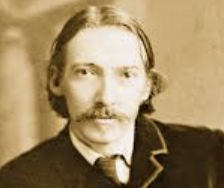
1 month 2 days ago
It seems as if marriage were the royal road through life, and realised, on the instant, what we have all dreamed on summer Sundays when the bells ring, or at night when we cannot sleep for the desire of living. They think it will sober and change them. Like those who join a brotherhood, they fancy it needs but an act to be out of the coil and clamour for ever. But this is a wile of the devil's. To the end, spring winds will sow disquietude, passing faces leave a regret behind them, and the whole world keep calling and calling in their ears. For marriage is like life in this - that it is a field of battle, and not a bed of roses.
▼
Source
source
Virginibus Puerisque, Ch. 1.
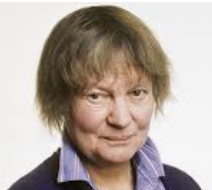
1 month 4 weeks ago
Art is the final cunning of the human soul which would rather do anything than face the gods.
▼
Source
source
"Art and Eros: A Dialogue about Art", Acastos: Two Platonic Dialogues (1986).
1 month 4 days ago
The literate man is a sucker for propaganda...You cannot propagandize a native. You can sell him rum and trinkets, but you cannot sell him ideas.
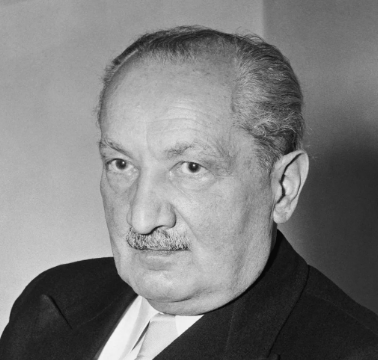
3 months 2 days ago
It is said that "being" is the most universal and the emptiest concept. As such it resists every attempt at definition. Nor does this most universal and thus indefinable concept need any definition. Everybody uses it constantly and also already understands what is meant by it.
▼
Source
source
Introduction: The Exposition of the Question of the Meaning of Being (Stambaugh translation)

2 months 1 week ago
In any country where talent and virtue produce no advancement, money will be the national god. Its inhabitants will either have to possess money or make others believe that they do. Wealth will be the highest virtue, poverty the greatest vice. Those who have money will display it in every imaginable way. If their ostentation does not exceed their fortune, all will be well. But if their ostentation does exceed their fortune they will ruin themselves. In such a country, the greatest fortunes will vanish in the twinkling of an eye. Those who don't have money will ruin themselves with vain efforts to conceal their poverty. That is one kind of affluence: the outward sign of wealth for a small number, the mask of poverty for the majority, and a source of corruption for all.

3 months 3 weeks ago
The order of authority derives from God, as the Apostle says [in Romans 13:1-7]. For this reason, the duty of obedience is, for the Christian, a consequence of this derivation of authority from God, and ceases when that ceases. But, as we have already said, authority may fail to derive from God for two reasons: either because of the way in which authority has been obtained, or in consequence of the use which is made of it. There are two ways in which the first may occur. Either because of a defect in the person, if he is unworthy; or because of some defect in the way itself by which power was acquired, if, for example, through violence, or simony or some other illegal method.
▼
Source
source
in Aquinas: Selected Political Writings (Basil Blackwell: 1974), p. 183
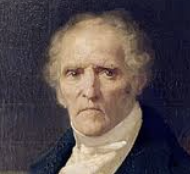
2 days ago
It is certain that nature inclines us toward the amorous orgy, just as much as toward the gastronomic orgy, and that while both are blameworthy in the excess, they would become praiseworthy in an order in which they could be equilibrated.
▼
Source
source
Charles Fourier: The Visionary and His World, J. Beecher (1986), p. 310
3 months 2 weeks ago
My trade and my art is living.
▼
Source
source
Ch. 6 (tr. Donald M. Frame)
3 months 5 days ago
I am almost inclined to set it up as a canon that a children's story which is enjoyed only by children is a bad children's story. The good ones last. A waltz which you can like only when you are waltzing is a bad waltz.
▼
Source
source
"On Three Ways of Writing for Children" (1952) - in Of Other Worlds: Essays and Stories (1967), p. 24
3 months 3 weeks ago
What is the use of believing, if the dost blaspheme? Thou adorest Him as Head, and dost blaspheme Him in His body. He loves His body. Thou canst cut thyself off from the body, but the Head does not detach itself from its body. "Thou dost honor me in vain," He cries from heaven, "thou dost honor Me in vain!" If someone wished to kiss thy cheek, but insisted at the same time on trampling thy feet; if with his hailed boots he were to crush thy feet as he tries to hold thy head and kiss thee, wouldst thou not interrupt his expression of respect and cry out: "What are thou doing, man? Thou art trampling upon me!" It is for this reason that before He ascended into heaven our Lord Jesus Christ recommended to us His body, by which He was to remain upon earth. For He foresaw that many would pay Him homage because of His glory in heaven, but that their homage would be vain, so long as they despise His members on earth.
▼
Source
source
(pp. 436-437)

1 month 3 weeks ago
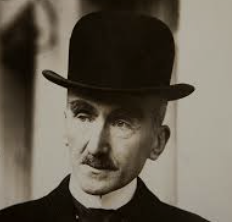
In training a child to activity of thought, above all things we must beware of what I will call "inert ideas"-that is to say, ideas that are merely received into the mind without being utilised, or tested, or thrown into fresh combinations.In the history of education, the most striking phenomenon is that schools of learning, which at one epoch are alive with a ferment of genius, in a succeeding generation exhibit merely pedantry and routine. The reason is, that they are overladen with inert ideas. Education with inert ideas is not only useless: it is, above all things, harmful.
1 month 4 weeks ago
All the living hold together, and all yield to the same tremendous push. The animal takes its stand on the plant, man bestrides animality, and the whole of humanity, in space and in time, is one immense army galloping beside and before and behind each of us in an overwhelming charge able to beat down every resistance and clear the most formidable obstacles, perhaps even death.
▼
Source
source
Creative Evolution (1907), Chapter III. New York: Henry Holt and Company, 1911, p. 271
3 months 1 week ago
What modern apologists call 'true' Christianity is something depending upon a very selective process. It ignores much that is to be found in the Gospels: for example, the parable of the sheep and the goats, and the doctrine that the wicked will suffer eternal torment in Hell fire. It picks out certain parts of the Sermon on the Mount, though even these it often rejects in practice. It leaves the doctrine of non-resistance, for example, to be practised only by non-Christians such as Gandhi. The precepts that it particularly favours are held to embody such a lofty morality that they must have had a divine origin. And yet ... these precepts were uttered by Jews before the time of Christ.
▼
Source
source
"Can Religion Cure Our Troubles?", in Stockholm newspaper Dagens Nyheter, part II., 11/11/1954
3 months 2 weeks ago
Certainly it is true that Christians, so far as they themselves are concerned, are subject neither to law nor sword, and have need of neither. But take heed and first fill the world with real Christians before you attempt to rule it in a Christian and evangelical manner. This you will never accomplish; for the world and the masses are and always will be un-Christian, even if they are all baptized and Christian in name.
▼
Source
source
p. 91
3 months 1 week ago
Enjoin him to play so many hours every day, and look that he do it; and you shall see he will quickly be sick of it; and willing to leave it. By this means making the recreations you dislike a business to him, he will of himself with delight betake himself to those things you would have him do, especially if they be proposed as rewards for having performed the task in that play which is commanded of him.
▼
Source
source
Sec. 129
3 months 6 days ago
So nigh is grandeur to our dust, So near is God to man, When Duty whispers low, Thou must, The youth replies, I can.
▼
Source
source
Voluntaries, st. 3
CivilSimian.com created by AxiomaticPanic, CivilSimian, Kalokagathia