

4 months 1 day ago
So long as antimilitarists propose no substitute for war's disciplinary function, no moral equivalent of war, analogous, as one might say, to the mechanical equivalent of heat, so long they fail to realize the full inwardness of the situation.
▼
Source
source
The Moral Equivalent of War
2 months 2 weeks ago
The Fathers of the Church can well afford to preach the gospel of Christ. It contains nothing dangerous to the regime of authority and wealth; it stands for self-denial and self-abnegation, for penance and regret, and is absolutely inert in the face of every indignity, every outrage imposed upon mankind.

3 months 1 week ago
There is no road or ready way to virtue.
▼
Source
source
Section 55

4 months 1 week ago
Saturninus said, "Comrades, you have lost a good captain to make him an ill general."
▼
Source
source
Book III, Ch. 9. Of Vanity


2 months 2 weeks ago
Today, tattoos lack symbolic power. All they do is point toward the uniqueness of the bearer. The body is neither a ritual stage nor a surface of projection; rather, it is an advertising space.

4 months 2 days ago
England, it is true, in causing a social revolution in Hindostan, was actuated only by the vilest interests, and was stupid in her manner of enforcing them. But that is not the question. The question is, can mankind fulfil its destiny without a fundamental revolution in the social state of Asia? If not, whatever may have been the crimes of England she was the unconscious tool of history in bringing about that revolution.
▼
Source
source
"The British Rule in India," New York Daily Tribune, 10 June 1853.
2 months 2 weeks ago
Nietzsche ... did not settle for a demure civic conversation in the style of Richard Rorty's ironist, or saunter off with the smug nod that registers a deconstructive job neatly done. He was aware that his own criticisms and exposures owed both their motivation and their effect to the spirit of truthfulness. His aim was to see how far the values of truth could be revalued, how they might be understood in a perspective quite different from the Platonic and Christian metaphysics which had provided their principal source in the West up to now.
▼
Source
source
p. 18
2 months 3 weeks ago
A word is a bud attempting to become a twig. How can one not dream while writing? It is the pen which dreams. The blank page gives the right to dream.
▼
Source
source
Introduction, sect. 6
2 months 4 days ago
In the performance of an illocutionary act in the literal utterance of a sentence, the speaker intends to produce a certain effect by means of getting the hearer to recognize his intention to produce that effect; and furthermore, if he is using the words literally, he intends this recognition to be achieved in virtue of the fact that the rules for using the expressions he utters associate the expression with the production of that effect.
▼
Source
source
P. 45.
4 months 4 weeks ago
The greatest saving one can make in the order of thought is to accept the unintelligibility of the world and to pay attention to man.

2 months 3 weeks ago
In conditions of private property ... "life-activity" stands in the service of property instead of property standing the service of free life-activity.
▼
Source
source
"The Foundations of Historical Materialism," Studies in Critical Philosophy (1972), p. 32
1 week 4 days ago
The introduction of numbers as coordinates by reference to the particular division scheme of the open one dimensional continuum is an act of violence whose only practical vindication is the special calculatory manageability of the ordinary number continuum with its four basic operations. The topological skeleton determines the connectivity of the manifold in the large.
▼
Source
source
Philosophy of Mathematics and Natural Science (1949), p. 90

3 months 3 weeks ago
Education is an ornament for the prosperous, a refuge for the unfortunate.
▼
Source
source
Freeman (1948), p. 161

2 months 1 day ago
Art is a human activity consisting in this, that one consciously, by means of certain external symbols, conveys to others the feelings one has experienced, whereby people so infected by these feelings, also experience them.
4 months 3 days ago
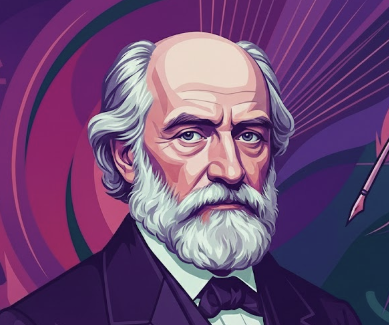
It is asserted that beasts have no rights; the illusion is harboured that our conduct, so far as they are concerned, has no moral significance, or, as it is put in the language of these codes, that "there are no duties to be fulfilled towards animals." Such a view is one of revolting coarseness, a barbarism of the West, whose source is Judaism. In philosophy, however, it rests on the assumption, despite all evidence to the contrary, of the radical difference between man and beast,-a doctrine which, as is well known, was proclaimed with more trenchant emphasis by Descartes than by any one else: it was indeed the necessary consequence of his mistakes.
▼
Source
source
Part III, Ch. VIII, 7, p. 218
2 months 1 week ago
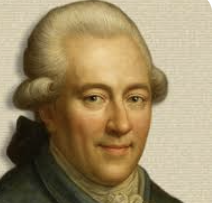
If all else fails, the character of a man can be recognized by nothing so surely as by a jest which he takes badly. K 46 Variant translation: A person reveals his character by nothing so clearly as the joke he resents.
2 days ago
High up where the poor sat, the people quaked with fear:they saw the soul stretched on the ground, a votive beastbeaten by the conflicting powers of light and dark,and their minds shook, nor knew now what great god to choose,for comfort's road dropped to the right, the rough ascentrose to the left, and both roads seemed to lead to God,while at the crossroads stood the human heart, and swayed.
▼
Source
source
Book VI, line 242
2 months 3 weeks ago
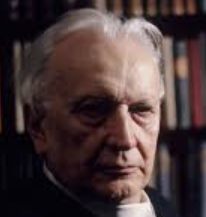
Imminent seems the collapse of that which for millennium has constituted man's universe. The new world which has arisen as an apparatus for supply of the necessaries of life compels everything and everyone to serve it. It annihilates whatever it has no place for person seems to be going undergoing absorption into that which is nothing more than a means to an end, into that which is devoid of purpose of significance.

4 months ago
The more we learn about the world, and the deeper our learning, the more conscious, specific, and articulate will be our knowledge of what we do not know, our knowledge of our ignorance. For this, indeed, is the main source of our ignorance - the fact that our knowledge can be only finite, while our ignorance must necessarily be infinite. Variant translation: The more we learn about the world, and the deeper our learning, the more conscious, clear, and well-defined will be our knowledge of what we do not know, our knowledge of our ignorance. The main source of our ignorance lies in the fact that our knowledge can only be finite, while our ignorance must necessarily be infinite.
2 months 3 weeks ago
The RIGHT OF NATURE, which Writers commonly call Jus Naturale, is the Liberty each man hath, to use his own power, as he will himself, for the preservation of his own Nature; that is to say, of his own Life; and consequently, of doing any thing, which in his own Judgement, and Reason, he shall conceive to be the aptest means thereunto.
▼
Source
source
The First Part, Chapter 14, p. 64
1 day ago
The States should be urged to concede to the General Government, with a saving of chartered rights, the exclusive power of establishing banks of discount for paper.
▼
Source
source
ME 13:431

1 month 4 weeks ago
Art is anything you can get away with.

2 weeks 2 days ago
Anger, as we have said, is eager to punish; and that such a desire should exist in man's peaceful breast is least of all according to his nature; for human life is founded on benefits and harmony and is bound together into an alliance for the common help of all, not by terror, but by love towards one another.

2 months 2 weeks ago
The state of conformity is an imitation of grace. By a strange mystery - which is connected with the power of the social element - a profession can confer on quite ordinary men in their exercise of it, virtues which, if they were extended to all circumstances of life, would make of them heroes or saints. But the power of the social element makes these virtues natural.
▼
Source
source
Accordingly they need a compensation. p. 124

3 months 3 weeks ago
One can mistrust one's own senses, but not one's own belief. If there were a verb meaning "to believe falsely," it would not have any significant first person, present indicative.
▼
Source
source
Pt II, p. 162
4 months 1 week ago
Nay, number (itself) in armies, importeth not much, where the people is of weak courage; for (as Virgil saith) it never troubles the wolf how many the sheep be.
▼
Source
source
Essays or Counsels Civil and Moral (1597), XXIX: "Of the True Greatness of Kingdoms and Estates."
2 months 3 weeks ago
Domination has its own aesthetics, and democratic domination has its democratic aesthetics.
▼
Source
source
p. 65

2 months 3 weeks ago
The desire to die was my one and only concern; to it I have sacrificed everything, even death.
1 month 2 weeks ago
When one is a stranger to oneself then one is estranged from others too. If one is out of touch with oneself, then one cannot touch others.
2 months 3 weeks ago
To think is to run after insecurity, to be demoralized for grandiose trifles, to immure oneself in abstractions with a martyr's avidity, to hunt up complications the way others pursue collapse or gain. The thinker is by definition keen for torment.
2 months 2 weeks ago
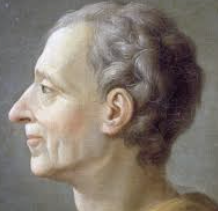
Life was given to me as a favor, so I may abandon it when it is one no longer.
▼
Source
source
No. 76. (Usbek writing to Ibben)
1 week 5 days ago
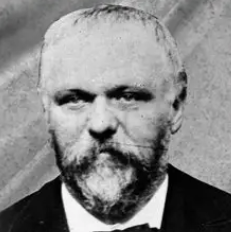
I have no reason to suppose that Lenin gained his ideas from my books; but if that were true, I should be not a little proud of having contribute to the intellectual development of a man who seems to me to be at once the greatest theoretician of socialism since Marx and a statesman whose genius recalls that of Peter the Great.
▼
Source
source
For Lenin, Soviet Russia, Official Organ of The Russian Soviet Government Bureau, Vol. II, New York: NY, January-June 1920 (April 10, 1920), p. 356

4 months 5 days ago
Tis certainly a kind of indignity to philosophy, whose sovereign authority ought every where to be acknowledg'd, to oblige her on every occasion to make apologies for her conclusions, and justify herself to every particular art and science, which may be offended at her.
▼
Source
source
Part 4, Section 5
1 week 5 days ago
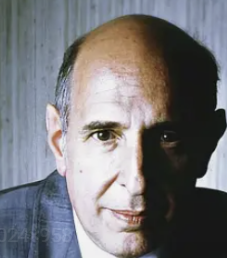
The distinction between private and public undermines the unity of spiritual strength, draining the public of the transcendent energies while trivializing them because the merely private life provides no proper stage for their action.
▼
Source
source
"Commerce and Culture," p. 280.

4 months 5 days ago
Man can, indeed, act contrarily to the decrees of God, as far as they have been written like laws in the minds of ourselves or the prophets, but against that eternal decree of God, which is written in universal nature, and has regard to the course of nature as a whole, he can do nothing.
▼
Source
source
Ch. 2, Of Natural Right

4 months 2 days ago
When the husk gets separated from the kernel, almost all men run after the husk and pay their respects to that. It is only the husk of Christianity that is so bruited and wide spread in this world; the kernel is still the very least and rarest of all things. There is not a single church founded on it.
4 months ago
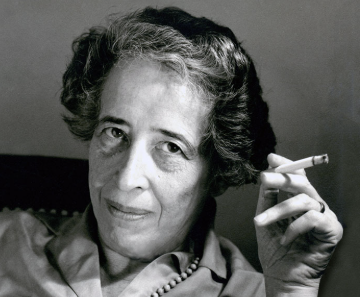
Totalitarianism in power invariably replaces all first-rate talents, regardless of their sympathies, with those crackpots and fools whose lack of intelligence and creativity is still the best guarantee of their loyalty.
▼
Source
source
Part 3, Chapter 10
4 months 2 weeks ago
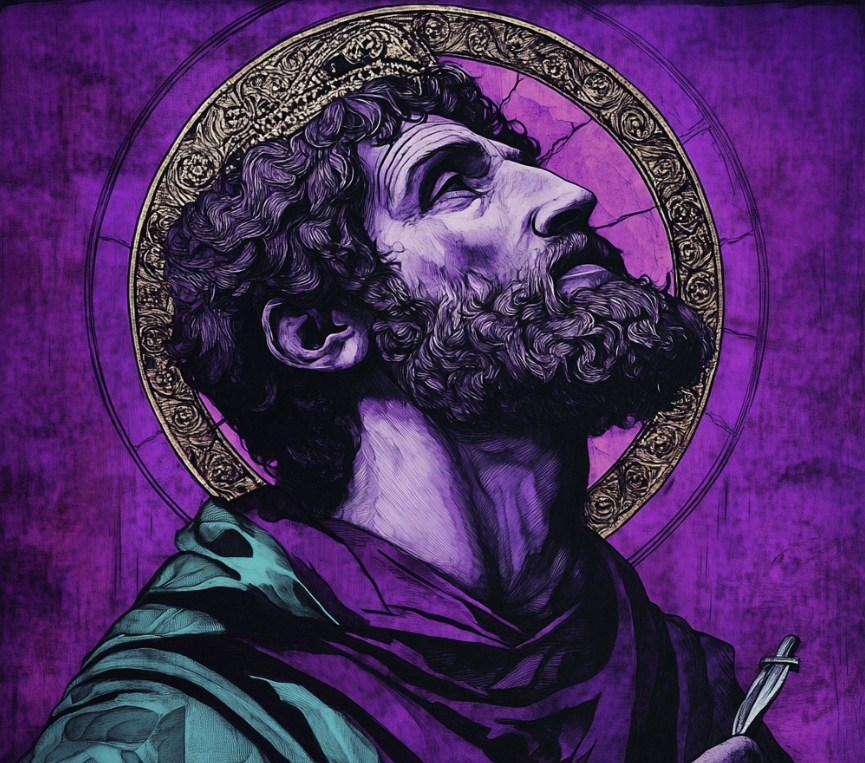
Who is this that cries from the ends of the earth? Who is this one man who reaches to the extremities of the universe? He is one, but that one is unity. He is one, not one in a single place, but the cry of this one man comes from the remotest ends of the earth. But how can this one man cry out from the ends of the earth, unless he be one in all?
▼
Source
source
p.423
2 months 1 week ago
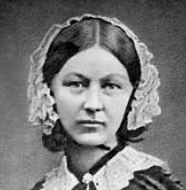
Asceticism is the trifling of an enthusiast with his power, a puerile coquetting with his selfishness or his vanity, in the absence of any sufficiently great object to employ the first or overcome the last.
▼
Source
source
Letter (5 September 1857), quoted in The Life of Florence Nightingale (1913) by Edward Tyas Cook, p. 369
1 day ago
A little reflection will show us that every belief, even the simplest and most fundamental, goes beyond experience when regarded as a guide to our actions. ... Even the fundamental "I am," which cannot be doubted, is no guide to action until it takes to itself "I shall be," which goes beyond experience. The question is not, therefore, "May we believe what goes beyond experience?" for this is involved in the very nature of belief; but "How far and in what manner may we add to our experience in forming our beliefs?"
3 months 1 day ago
Revolution is like Saturn, it devours its own children.
▼
Source
source
Act I.
2 months 2 weeks ago
I have always observed that to succeed in the world one should appear like a fool but be wise.
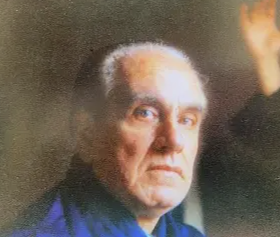
1 week 2 days ago
Within a nominally Christian world, chivalry upheld without any substantial alterations an Aryan ethics in the following things: (1) upholding the ideal of the hero rather than the saint, and of the conqueror rather than of the martyr; (2) regarding faithfulness and honor, rather than caritas and humbleness, as the highest virtues; (3) regarding cowardice and dishonor, rather than sin, as the worst possible evil; (4) ignoring or hardly putting into practice the evangelical precepts of not opposing evil and not retaliating against offenses, but rather, methodically punishing unfairness and evil; (5) excluding from its ranks those who followed the Christian precept 'Thou Shalt Not Kill' to the letter; and (6) refusing to love one's enemy and instead fighting him and being magnanimous only after defeating him.
3 weeks 3 days ago
Karl Marx was born at Trier on 5 May 1818, the child of Jewish parents with a long rabbinical tradition on both sides. His grandfathers were rabbis; his father, a well-to-do lawyer, changed his first name from Herschel to Heinrich and adopted Protestantism, which in Prussia was a necessary condition of professional and cultural emancipation.
▼
Source
source
(pg. 96)
2 months 3 weeks ago
In old days the plastic arts, music, and poesy were so germane to man in his totality that his Transcendence plainly manifest in them. ... What is to-day obvious to all is a decay in the essence of art. ... the opposition to man's true nature as man.
2 months 3 weeks ago
This is the pure form of servitude: to exist as an instrument.
▼
Source
source
p. 33
3 months 3 weeks ago
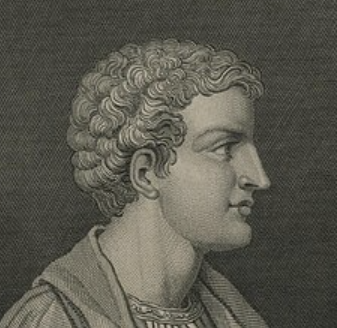
He who postpones the hour of living rightly is like the rustic who waits for the river to run out before he crosses.
▼
Source
source
Book I, epistle ii, lines 41-42
1 month 3 weeks ago
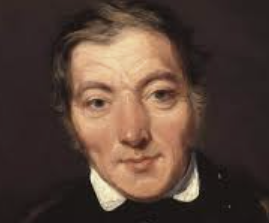
As there are a very great variety of religious sects in the world (and which are probably adapted to different constitutions under different circumstances, seeing there are many good and conscientious characters in each), it is particularly recommended, as a means of uniting the inhabitants of the village into one family, that while each faithfully adheres to the principles which he most approves, at the same time all shall think charitably of their neighbours respecting their religious opinions, and not presumptuously suppose that theirs alone are right.
▼
Source
source
"Rules and Regulations for the Inhabitants of New Lanark"
4 months 2 days ago
The present hour is always wealthiest when it is poorer than the future ones, as that is the pleasantest site which affords the pleasantest prospect.
▼
Source
source
Pearls of Thought (1881) p. 210
CivilSimian.com created by AxiomaticPanic, CivilSimian, Kalokagathia