

2 months 3 weeks ago
Society is eliminating the prerogatives and privileges of feudal. aristocratic culture together with its content. The fact that the transcending truths of the fine arts, the aesthetics of life and thought, were accessible only to the few wealthy and educated was the fault of a repressive society. But this fault is not corrected by paperbacks, general education, long-playing records, and the abolition of formal dress in the theater and concert hall. The cultural privileges expressed the injustice of freedom, the contradiction between ideology and reality, the separation of intellectual from material productivity; but they also provided a protected realm in which the tabooed truths could survive in abstract integrity-remote from the society which suppressed them.
▼
Source
source
pp. 64-65

3 months 2 days ago
The pretended rights of these theorists are all extremes: and in proportion as they are metaphysically true, they are morally and politically false. The rights of men are in a sort of middle, incapable of definition, but not impossible to be discerned. The rights of men in government are their advantages; and these are often in balances between differences of good; in compromises between good and evil, and sometimes between evil and evil. Political reason is a computing principle: adding, subtracting, multiplying, and dividing, morally and not metaphysically or mathematically, true moral denominations.
1 week 5 days ago
Truth has no special time of its own. Its hour is now - always, and indeed then most truly when it seems most unsuitable to actual circumstances. Care for distress at home and care for distress elsewhere do but help each other if, working together, they wake men in sufficient numbers from their thoughtlessness, and call into life a new spirit of humanity.
▼
Source
source
Ch. XI : Conclusion
2 months 3 weeks ago
As also the great number of Corporations; which are as it were many lesser Common-wealths in the bowels of a greater, like wormes in the entrayles of a natural man.
▼
Source
source
The Second Part, Chapter 29, p. 174
2 months 3 weeks ago
The physical change in the thickness of walls since the Middle Ages could be shown in a diagram. In the fourteenth century each house was a fortress. Man spent the major portion of his day in them, in secret and well-defended solitude. That solitude, working on the soul hour after hour, forged it, like a transcendent blacksmith, into a compact and forceful character. Under its treatment, man consolidated his individual destiny and sallied forth with impunity, never yielding to the contamination from the public. It is only in isolation that we gain, almost automatically, a certain discrimination in ideas, desires, longings, that we learn which are ours, and which are anonymous, floating in the air, falling on us like dust in the street.
▼
Source
source
p. 168

3 months 3 weeks ago
Philosophy is a battle against the bewitchment of our intelligence by means of our language.
▼
Source
source
§ 109
3 months 3 weeks ago
Resting on your laurels is as dangerous as resting when you are walking in the snow. You doze off and die in your sleep.
▼
Source
source
p. 35e

4 months 1 week ago
He who does not give himself leisure to be thirsty cannot take pleasure in drinking.
▼
Source
source
Ch. 42

2 weeks 2 days ago
No man expects such exact fidelity as a traitor.
▼
Source
source
De Ira (On Anger): Book 2, cap. 28, line 7.
4 months 1 week ago
Make your educational laws strict and your criminal ones can be gentle; but if you leave youth its liberty you will have to dig dungeons for ages.
1 day ago
How much pain have cost us the evils which have never happened.
4 months 3 days ago
The beauty or uncomeliness of many things, in good and ill breeding, will be better learnt, and make deeper impressions on them, in the examples of others, than from any rules or instructions can be given about them.
▼
Source
source
Sec. 82
3 months 3 weeks ago
I believe that political power also exercises itself through the mediation of a certain number of institutions that seem to have nothing in common with political power, that have the appearance of being independent, but are not.
▼
Source
source
Debate with Noam Chomsky, École Supérieure de Technologie à Eindhoven, November 1971
2 months 3 weeks ago
Desire, to know why, and how, CURIOSITY; such as is in no living creature but Man; so that Man is distinguished, not only by his Reason; but also by this singular Passion from other Animals; in whom the appetite of food, and other pleasures of Sense, by predominance, take away the care of knowing causes; which is a Lust of the mind, that by a perseverance of delight in the continual and indefatigable generation of Knowledge, exceedeth the short vehemence of any carnal Pleasure.
▼
Source
source
The First Part, Chapter 6, p. 26
1 day ago
Yet the hour of emancipation is advancing, in the march of time. It will come.

4 months ago
"The cardinal difficulty," said MacPhee, "in collaboration between the sexes is that women speak a language without nouns. If two men are doing a bit of work, one will say to the other, 'Put this bowl inside the bigger bowl which you'll find on the top shelf of the green cupboard.' The female for this is, 'Put that in the other one in there.' And then if you ask them, 'in where?' they say, 'in there, of course.' There is consequently a phatic hiatus."
▼
Source
source
Ch. 8 : Moonlight at Belbury, section 2

4 months 4 weeks ago
The essential is to cease being free and to obey, in repentance, a greater rogue than oneself. When we are all guilty, that will be democracy.

5 months 4 days ago
If you have hitherto believed that life was one of the highest value and now see yourselves disappointed, do you at once have to reduce it to the lowest possible price?
2 months 3 weeks ago
Democracy would be wholly valueless to the proletariat if it were not immediately used as a means for putting through measures directed against private property and ensuring the livelihood of the proletariat.

3 months 2 days ago
If you want to be respected by others the great thing is to respect yourself. Only by that, only by self-respect will you compel others to respect you.
▼
Source
source
Part III, Chapter 2

1 week 2 days ago
We must be clear that when it comes to atoms, language can be used only as in poetry. The poet, too, is not nearly so concerned with describing facts as with creating images and establishing mental connections.
▼
Source
source
In his first meeting with Werner Heisenberg in early summer 1920, in response to questions on the nature of language, as reported in Discussions about Language (1933)

4 months 4 weeks ago
If one thing goes without saying, almost anything can.

4 months 2 days ago
I am looking forward very much to getting back to Cambridge, and being able to say what I think and not to mean what I say: two things which at home are impossible. Cambridge is one of the few places where one can talk unlimited nonsense and generalities without anyone pulling one up or confronting one with them when one says just the opposite the next day.
▼
Source
source
Letter to Alys Pearsall Smith (1893); published in The Selected Letters of Bertrand Russell, Volume 1: The Private Years (1884-1914), edited by Nicholas Griffin
1 day ago
By scientific thought we mean the application of past experience to new circumstances by means of an observed order of events. By saying that this order of events is exact we mean that it is exact enough to correct experiments by, but we do not mean that it is theoretically or absolutely exact, because we do not know. The process of inference [is] in itself an assumption of uniformity, and... as the known exactness of the uniformity became greater, the stringency of the inference [is] increased. By saying that the order of events is reasonable we do not mean that everything has a purpose, or that everything can be explained, or that everything has a cause; for neither of these is true. But we mean that to every reasonable question there is an intelligible answer, which either we or posterity may know by the exercise of scientific thought.
▼
Source
source
155-156.
2 months 3 weeks ago
Outside the academic establishment, the "far-reaching change in all our habits of thought" is more serious. It serves to coordinate ideas and goals with those exacted by the prevailing system, to enclose them in the system, and to repel those which are irreconcilable with the system. The reign of such a one-dimensional reality does not mean that materialism rules, and that the spiritual, metaphysical, and bohemian occupations are petering out. On the contrary, there is a great deal of "Worship together this week," "Why not try God," Zen, existentialism, and beat ways of life, etc. But such modes of protest and transcendence are no longer contradictory to the status quo and no longer negative. They are rather the ceremonial part of practical behaviorism, its harmless negation, and are quickly digested by the status quo as part of its healthy diet.
▼
Source
source
pp. 13-14

4 months ago
Catherine: Why commit Evil? Goetz: Because Good has already been done. Catherine: Who has done it? Goetz: God the Father. I, on the other hand, am improvising.
▼
Source
source
Act 3, sc. 4
4 months 4 weeks ago
There is no way of being almost funny or mildly funny or fairly funny or tolerably funny. You are either funny or not funny and there is nothing in between. And usually it is the writer who thinks he is funny and the reader who thinks he isn't.
3 months 3 weeks ago
The world and life are one.
▼
Source
source
(5.621) Original German: Die Welt und das Leben sind Eins.
4 months 4 weeks ago
Now in this island of Atlantis there was a great and wonderful empire which had rule over the whole island and several others, and over parts of the continent and, furthermore, the men of Atlantis had subjected the parts of Libya within the columns of Heracles as far as Egypt, and of Europe as far as Tyrrhenia. This vast power, gathered into one, endeavored to subdue at a blow our country and yours and the whole of the region within the straits, and then, Solon, your country shone forth, in the excellence of her virtue and strength, among all mankind.

2 months 2 weeks ago
If life is deprived of any meaningful closure, it will be ended in non-time.
4 months 2 days ago
There is one very serious defect to my mind in Christ's moral character, and that is that He believed in hell. I do not myself feel that any person who is really profoundly humane can believe in everlasting punishment.
▼
Source
source
"The Moral Problem"

2 months 2 weeks ago
What objection is there in reason to there being no other purpose in the sum of things save only to exist and happen as it does exist and happen? For him who places himself outside of himself, none; but for him who lives and suffers and desires within himself - for him it is a question of life or death.

4 months 1 day ago
The soul of wit may become the very body of untruth.
▼
Source
source
Foreward (p. vii)
4 months 1 week ago
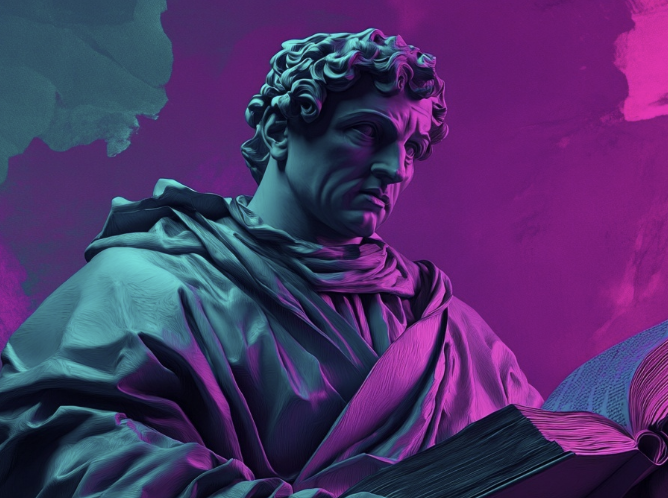
But the exceedingly foul deed of Onan, the basest of wretches, follows. Onan must have been a malicious and incorrigible scoundrel. This is a most disgraceful sin. It is far more atrocious than incest and adultery. We call it unchastity, yes a Sodomitic sin. For Onan goes in to her; that is, he lies with her and copulates, and when it comes to the point of insemination, spills the semen, lest the woman conceive. Surely at such a time the order of nature established by God in procreation should be followed. Accordingly, it was a most disgraceful crime to produce semen and excite the woman, and to frustrate her at that very moment.
▼
Source
source
Luther's works Vol. 7 (1965), Lectures on Genesis, Chapters 38-44
2 months 3 weeks ago
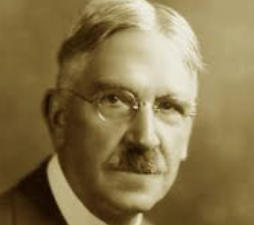
Freedom of thought and of expression are not mere rights to be claimed. They have their roots deep in the existence of individuals as developing careers in time. Their denial and abrogation is an abdication of individuality and a virtual rejection of time as opportunity.
1 month 3 weeks ago
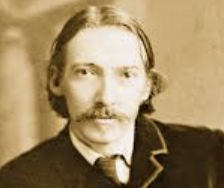
This is still the strangest thing in all man's travelling, that he should carry about with him incongruous memories.
▼
Source
source
Pt. II, ch. III.

1 month 1 week ago
Darwinist thinkers such as Richard Dawkins and Daniel Dennett are militant opponents of Christianity. Yet their atheism and humanism are versions of Christian concepts. As a defender of Darwinism, Dawkins is committed to the view that humans are like other animal species in being 'gene machines' ruled by the laws of natural selection. He asserts nevertheless that humans, uniquely, can defy these natural laws: 'We, alone on earth, can rebel against the tyranny of the selfish replicators.' In affirming human uniqueness in this way, Dawkins relies on a Christian world-view.
▼
Source
source
Post-Apocalypse: After Secularism (pp. 265-6)
1 month 3 weeks ago
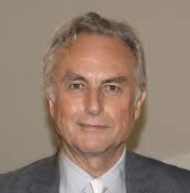
I am extremely pleased by Daniel Fincke's article, which says exactly what I SHOULD have said and, to my regret, didn't make sufficiently clear in my Reason Rally speech. The best way to summarise it would be to modify the quotation from Johann Hari. Johann said, "I respect you too much to respect your ridiculous beliefs". From now on, my version will be, "I respect you too much to accept that you really believe anything so ridiculous as you claim. Please either defend those beliefs and explain why they are not ridiculous, or else declare that you do not hold them and publicly disown the church to which you claim loyalty."
▼
Source
source
comment on Daniel Fincke (2 April 2012), "In Defense of Dawkins's Reason Rally Speech", RichardDawkins.net, retrieved on 1 May 2012

2 months 2 weeks ago
"Why do you not say how things will be operated under Anarchism?" is a question I have had to meet thousands of times. Because I believe that Anarchism can not consistently impose an iron-clad program or method on the future. The things every new generation has to fight, and which it can least overcome, are the burdens of the past, which holds us all as in a net. Anarchism, at least as I understand it, leaves posterity free to develop its own particular systems, in harmony with its needs. Our most vivid imagination can not foresee the potentialities of a race set free from external restraints. How, then, can any one assume to map out a line of conduct for those to come? We, who pay dearly for every breath of pure, fresh air, must guard against the tendency to fetter the future. If we succeed in clearing the soil from the rubbish of the past and present, we will leave to posterity the greatest and safest heritage of all ages.
1 month 3 weeks ago
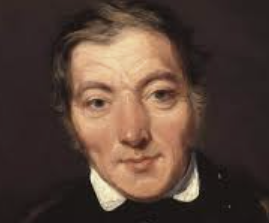
The end of government is to make the governed and the governors happy. That government then is thebest, which in practice produces the greatest happiness to the greatest number; including those who govern, and those who obey.
▼
Source
source
Essay Fourth, The Principles of the Former Essays Applied to Government
4 months 1 week ago
When you see a person squirming in the clutches of the Law, say to him: "Brother, get things straight. You let the Law talk to your conscience. Make it talk to your flesh.
▼
Source
source
Chapter 2, Verse 19
3 months 3 weeks ago
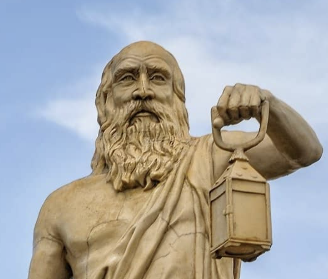
Perdiccas threatened to put him to death unless he came to him, "That's nothing wonderful," Diogenes said, "for a beetle or a tarantula would do the same."
▼
Source
source
Diogenes Laërtius, vi. 44
4 months ago
Much of the modern resistance to chastity comes from men's belief that they "own" their bodies - those vast and perilous estates, pulsating with the energy that made the worlds, in which they find themselves without their consent and from which they are ejected at the pleasure of Another!
▼
Source
source
Letter XXI
4 months 4 weeks ago
The whole business is the crudest sort of stratagem, since we have no way of foreseeing it to the end. It is a mere paying out of rope on the chance that somewhere along the length of it will be a noose.

2 months 3 weeks ago
In order to deceive melancholy, you must keep moving. Once you stop, it wakens, if in fact it has ever dozed off.
2 weeks 2 days ago
I do not know whether I shall make progress; but I should prefer to lack success rather than to lack faith.
2 months 2 weeks ago
Society creates the victims that it afterwards vainly attempts to get rid of.
2 months 2 weeks ago
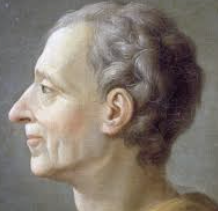
One must give one power a ballast, so to speak, to put it in a position to resist another.
▼
Source
source
Book V, Chapter 14.
CivilSimian.com created by AxiomaticPanic, CivilSimian, Kalokagathia