

1 month 3 weeks ago
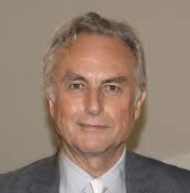
Just because science can't in practice explain things like the love that motivates a poet to write a sonnet, that doesn't mean that religion can. It's a simple and logical fallacy to say, 'If science can't do something, therefore religion can'.
2 months 2 weeks ago
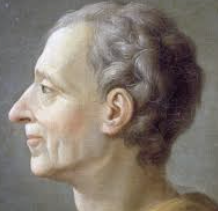
The Ottoman Empire whose sick body was not supported by a mild and regular diet, but by a powerful treatment, which continually exhausted it.
▼
Source
source
No. 19. (Usbek writing to Rustan)

4 months 2 weeks ago
The superior man loves his soul; the inferior man loves his property.

4 months 4 weeks ago
Parmenides: If anyone, with his mind fixed on all these objections and others like them, denies the existence of ideas of things, and does not assume an idea under which each individual thing is classed, he will be quite at a loss, since he denies that the idea of each thing is always the same, and in this way he will utterly destroy the power of carrying on discussion... Then what will become of philosophy? To what can you turn, if these things are unknown?

4 months ago
A third illusion haunts us, that a long duration, as a year, a decade, a century, is valuable. But an old French sentence says, "God works in moments," - "En peu d'heure Dieu labeure." We ask for long life, but 't is deep life, or grand moments, that signify. Let the measure of time be spiritual, not mechanical. Life is unnecessarily long. Moments of insight, of fine personal relation, a smile, a glance, - what ample borrowers of eternity they are! Life culminates and concentrates; and Homer said, "The Gods ever give to mortals their appointed share of reason only on one day."
▼
Source
source
Works and Days

2 months 2 weeks ago
To fall into a habit is to begin to cease to be.
2 months 3 weeks ago
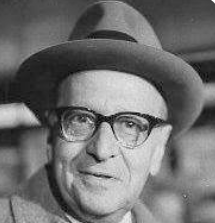
Bourgeois society is ruled by equivalence. It makes the dissimilar comparable by reducing it to abstract quantities. To the Enlightenment, that which does not reduce to numbers, and ultimately to the one, becomes illusion.
▼
Source
source
John Cumming trans., p. 7.
4 months ago
Our age is retrospective. It builds the sepulchres of the fathers. It writes biographies, histories, and criticism. The foregoing generation beheld God and nature face to face; we, through their eyes. Why should not we also enjoy an original relation to the universe. Why should not we have a poetry and philosophy of insight and not of tradition, and a religion by revelation to us, and not the history of theirs?
▼
Source
source
Introduction
4 months 1 week ago
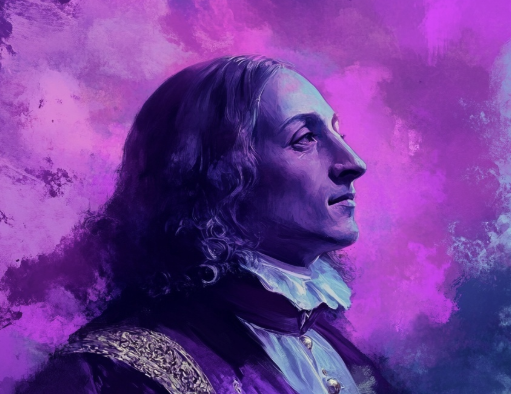
As soon as the soul has been made to perceive that a thing can conduct it to that which it loves supremely, it must inevitably embrace it with joy.
2 months ago
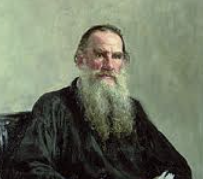
Amid this life based on coercion, one and the same thought constantly emerged among different nations, namely, that in every individual a spiritual element is manifested that gives life to all that exists, and that this spiritual element strives to unite with everything of a like nature to itself, and attains this aim through love.
▼
Source
source
II
4 months ago
Conversation is an art in which a man has all mankind for his competitors, for it is that which all are practising every day while they live.
▼
Source
source
Considerations by the Way

3 months 3 weeks ago
Thou shouldst not become presumptuous through life; for death comes upon thee at last, and the perishable part falls to the ground.
3 months 3 weeks ago
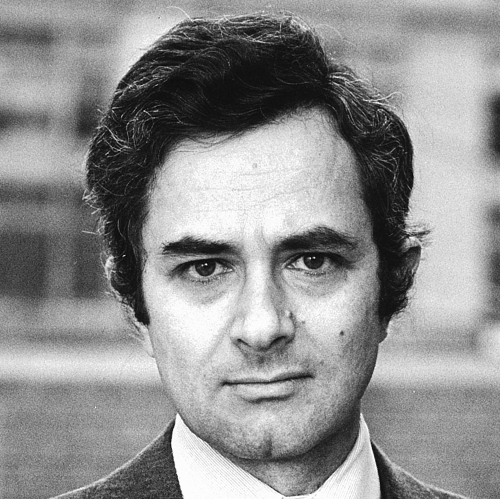
In speaking of the move from subjective to objective characterization, I wish to remain noncommittal about the existence of an endpoint, the completely objective intrinsic nature of the thing, which one might or might not be able to reach. It may be more accurate to think of objectivity as a direction in which the understanding can travel. And in understanding a phenomenon like lightning, it is legitimate to go as far away as one can from a strictly human viewpoint.But in the case of experience, on the other hand, the connexion with a particular point of view seems much closer. It is difficult to understand what could be meant by the objective character of an experience, apart from the particular point of view from which its subject apprehends it. After all, what would be left of what it was like to be a bat if one removed the viewpoint of the bat?
▼
Source
source
p. 173.

1 month 4 weeks ago
Societies have always been shaped more by the nature of the media by which humans communicate than by the content of the communication.
▼
Source
source
(p. 23)
2 months 3 weeks ago
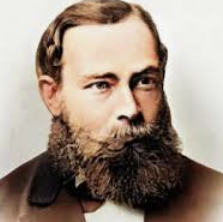
A scientist can hardly meet with anything more undesirable than to have the foundations give way just as the work is finished. I was put in this position by a letter from Mr. Bertrand Russell when the work was nearly through the press.
▼
Source
source
Note in the appendix of Grundlagen der Arithmetik (Vol. 2) after Frege had received a letter of Bertrand Russell in which Russell had explained his discovery of, what is now known as, Russell's paradox.
Just now
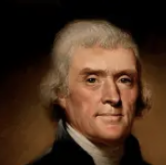
I allow nothing for losses by death, but, on the contrary, shall presently take credit four per cent. per annum, for their increase over and above keeping up their own numbers.
▼
Source
source
On his profits from slavery as quoted in The Dark Side of Thomas Jefferson, by Henry Wiencek, Smithsonian Magazine,
4 months 2 days ago
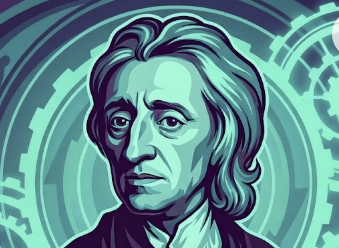
Where danger shews it self, apprehension cannot, without stupidity, be wanting; where danger is, sense of danger should be; and so much fear as should keep us awake, and excite our attention, industry, and vigour; but not to disturb the calm use of our reason, nor hinder the execution of what that dictates.
▼
Source
source
Sec. 115
4 months 2 days ago
I am sure, zeal or love for truth can never permit falsehood to be used in the defence of it.
▼
Source
source
187
1 week 4 days ago
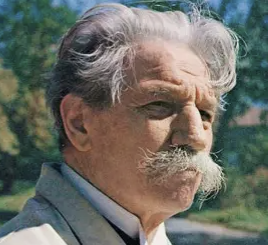
Awakening of Western thought will not be complete until that thought steps outside itself and comes to an understanding with the search for a world-view as this manifests itself in the thought of mankind as a whole. We have too long been occupied with the developing series of our own philosophical systems, and have taken no notice of the fact that there is a world-philosophy of which our Western philosophy is only a part. If, however, one conceives philosophy as being a struggle to reach a view of the world as a whole, and seeks out the elementary convictions which are to deepen it and give it a sure foundation, one cannot avoid setting our own thought face to face with that of the Hindus, and of the Chinese in the Far East. ... Our Western philosophy, if judged by its own latest pronouncements, is much naiver than we admit to ourselves, and we fail to perceive this only because we have acquired the art of expressing what is simple in a pedantic way.

4 months 3 weeks ago
What will be left of the power of example if it is proved that capital punishment has another power, and a very real one, which degrades men to the point of shame, madness, and murder?

4 months ago
Defined in psychological terms, a fanatic is a man who consciously over-compensates a secret doubt.
▼
Source
source
"The Substitutes for Religion, The Religion of Sex"

3 months 1 day ago
People will not look forward to posterity, who never look backward to their ancestors.
▼
Source
source
Volume iii, p. 274

2 months 3 weeks ago
What place do we occupy in the "universe"? A point, if that! Why reproach ourselves when we are evidently so insignificant? Once we make this observation, we grow calm at once: henceforth, no more bother, no more frenzy, metaphysical or otherwise. And then that point dilates, swells, substitutes itself for space. And everything begins all over again.
1 month 4 weeks ago
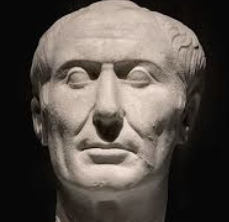
Have courage, or cunning, when you deal with an enemy.
▼
Source
source
Maxim 156

2 weeks 1 day ago
Perhaps its destruction has been brought about only that it may be raised up again to a better destiny. Oftentimes a reverse has but made room for more prosperous fortune. Many structures have fallen only to rise to a greater height.
1 month 4 weeks ago
The criminal, like the artist, is a social explorer.
▼
Source
source
quoted in "Marshall McLuhan, Author, Dies; Declared 'Medium Is the Message'" by Alden Whitman, The New York Times, January 1, 1981
2 months 3 weeks ago
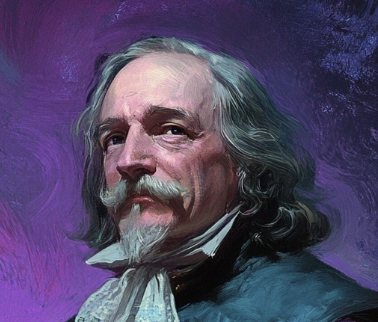
For such is the nature of men, that howsoever they may acknowledge many others to be more witty, or more eloquent, or more learned; Yet they will hardly believe there be many so wise as themselves: For they see their own wit at hand, and other men's at a distance.
▼
Source
source
The First Part, Chapter 13, p. 61
1 month 3 weeks ago
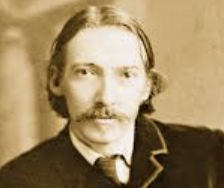
Just now, when every one is bound, under pain of a decree in absence convicting them of lèse-respectability, to enter on some lucrative profession, and labour therein with something not far short of enthusiasm, a cry from the opposite party, who are content when they have enough.
▼
Source
source
An Apology for Idlers.
2 months 3 weeks ago
To found a family. I think it would have been easier for me to found an empire.

3 months 4 weeks ago
The For-itself, in fact, is nothing but the pure nihilation of the In-itself; it is like a hole of being at the heart of Being.
4 months ago
In fact, it is as difficult to appropriate the thoughts of others as it is to invent.
▼
Source
source
Quotation and Originality
3 months 2 weeks ago
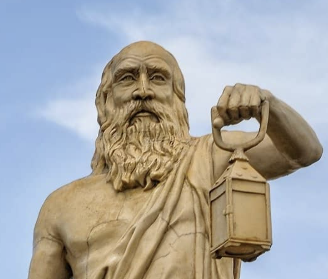
On reaching Athens he fell in with Antisthenes. Being repulsed by him, because he never welcomed pupils, by sheer persistence Diogenes wore him out. Once when he stretched out his staff against him, the pupil offered his head with the words, "Strike, for you will find no wood hard enough to keep me away from you, so long as I think you've something to say."
▼
Source
source
Diogenes Laërtius, vi. 21,

3 months 3 weeks ago
A philosopher is a man who has to cure many intellectual diseases in himself before he can arrive at the notions of common sense.
▼
Source
source
p. 44e
2 months 1 week ago
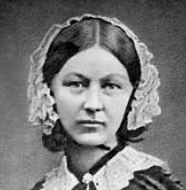
Law is the continuous manifestation of God's presence - not reason for believing him absent. Great confusion arises from our using the same word law in two totally distinct senses ... as the cause and the effect. It is said that to "explain away" everything by law is to enable us to do without God. But law is no explanation of anything; law is simply a generalization, a category of facts. Law is neither a cause, nor a reason, nor a power, nor a coercive force. It is nothing but a general formula, a statistical table. Law brings us continually back to God instead of carrying us away from him.
▼
Source
source
Suggestions for Thought : Selections and Commentaries (1994), edited by Michael D. Calabria and Janet A. MacRae, p. 41
3 months 3 weeks ago
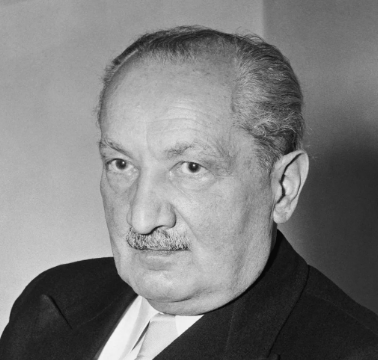
Nietzsche understands the aesthetic state of the observer and recipient on the basis of the state of the creator. Thus the effect of the artwork is nothing else than a reawakening of the creator's state in the one who enjoys the artwork. Observation of art follows in the wake of creation. Nietzsche says (SM, 821), "-the effect of artworks is arousal of the art-creating state, rapture."
▼
Source
source
p. 117

4 months 1 day ago
There is an artist imprisoned in each one of us. Let him loose to spread joy everywhere.
▼
Source
source
Last Essay: "1967"

3 weeks ago
Men's hearts ought not to be set against one another; but set with one another, and all against the Evil Thing only.
3 months ago
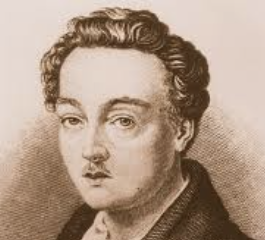
They say in the grave there is peace, and peace and the grave are one and the same.
▼
Source
source
Act I.
4 months 2 weeks ago
When I walk along with two others, they may serve me as my teachers. I will select their good qualities and follow them, their bad qualities and avoid them.

2 months 3 weeks ago
Ye fools, did not he that made that which is without make that which is within also?
▼
Source
source
11:40 (KJV)

4 months 4 days ago
A man must always live by his work, and his wages must at least be sufficient to maintain him. They must even upon most occasions be somewhat more, otherwise it would be impossible for him to bring up a family, and the race of such workmen could not last beyond the first generation.
▼
Source
source
Chapter VIII, p. 81.
4 months 1 day ago
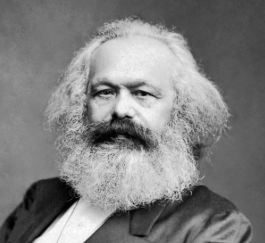
Long hours of labour seem to be the secret of the rational and healthful processes, which are to raise the condition of the labourer by an improvement of his mental and moral powers and to make a rational consumer out of him.
▼
Source
source
Vol. II, Ch. XXI, p. 520.
3 months 4 weeks ago
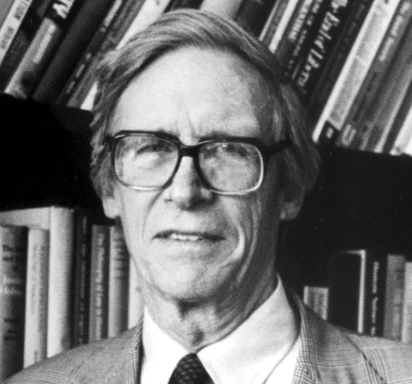
In all sectors of society there should be roughly equal prospects of culture and achievement for everyone similarly motivated and endowed. The expectations of those with the same abilities and aspirations should not be affected by their social class.
▼
Source
source
Chapter II, Section 12, pg. 73

2 months 1 week ago
Violence and freedom are the two endpoints on the scale of power.

4 months 1 week ago
We are wont to call that human reasoning which we apply to Nature the anticipation of Nature (as being rash and premature) and that which is properly deduced from things the interpretation of Nature.
3 months 1 day ago
Tyrants seldom want pretexts.
3 months 1 day ago
Superstition is the religion of feeble minds.
4 months 1 day ago
No nation was ever so virtuous as each believes itself, and none was ever so wicked as each believes the other.
▼
Source
source
Justice in War-Time (1916), p. 70
Just now
The God who gave us life, gave us liberty at the same time; the hand of force may destroy, but cannot disjoin them.
▼
Source
source
Summary View of the Rights of British America (1774); The Writings of Thomas Jefferson (19 Vols., 1905) edited by Andrew A. Lipscomb and Albert Ellery Bergh, Vol. 1, p. 211
1 month 2 weeks ago
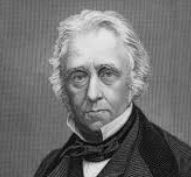
As civilization advances, poetry almost necessarily declines.
▼
Source
source
p. 5
CivilSimian.com created by AxiomaticPanic, CivilSimian, Kalokagathia