


4 months ago
The advance of liberalism, so-called, in Christianity, during the past fifty years, may fairly be called a victory of healthy-mindedness within the church over the morbidness with which the old hell-fire theology was more harmoniously related. We have now whole congregations whose preachers, far from magnifying our consciousness of sin, seem devoted rather to making little of it. They ignore, or even deny, eternal punishment, and insist on the dignity rather than on the depravity of man. They look at the continual preoccupation of the old-fashioned Christian with the salvation of his soul as something sickly and reprehensible rather than admirable; and a sanguine and 'muscular' attitude, which to our forefathers would have seemed purely heathen, has become in their eyes an ideal element of Christian character. I am not asking whether or not they are right, I am only pointing out the change.
▼
Source
source
Lectures IV and V, "The Religion of Healthy-Mindedness"
3 months 2 weeks ago
Virtue cannot dwell with wealth either in a city or in a house.
▼
Source
source
Stobaeus, iv. 31c. 88
3 weeks 4 days ago
Men accept servility in order to acquire wealth; as if they could acquire anything of their own when they cannot even assert that they belong to themselves.
▼
Source
source
Part 3

3 weeks ago
And yet I will venture to believe that in no time, since the beginnings of Society, was the lot of those same dumb millions of toilers so entirely unbearable as it is even in the days now passing over us. It is not to die, or even to die of hunger, that makes a man wretched; many men have died; all men must die,-the last exit of us all is in a Fire-Chariot of Pain. But it is to live miserable we know not why; to work sore and yet gain nothing; to be heart-worn, weary, yet isolated, unrelated, girt in with a cold universal Laissez-faire: it is to die slowly all our life long, imprisoned in a deaf, dead, Infinite Injustice, as in the accursed iron belly of a Phalaris' Bull! This is and remains forever intolerable to all men whom God has made. Do we wonder at French Revolutions, Chartisms, Revolts of Three Days? The times, if we will consider them, are really unexampled.

3 months 4 weeks ago
For it was my master who taught me not only how very little I knew but also that any wisdom to which I might ever aspire could consist only in realizing more fully the infinity of my ignorance.
3 months ago
I am excluded from the possession of a determined object, not through the will of the other, but only through my own free-will. If I had not excluded myself, I should not be excluded. But I must exclude myself from something in virtue of the Conception of Rights.
▼
Source
source
** P. 182
2 months 3 weeks ago
Here and there it happened in my practice that a patient grew beyond himself because of unknown potentialities, and this became an experience of prime importance to me. I had learned in the meanwhile that the greatest and most important problems of life are all in a certain sense insoluble. They must be so because they express the necessary polarity inherent in every self-regulating system. They can never be solved, but only outgrown.
▼
Source
source
The Secret of the Golden Flower, ibid.
2 months 4 weeks ago
Nothing, I am sure, calls forth the faculties so much as the being obliged to struggle with the world; and this is not a woman's province in a married state. Her sphere of action is not large, and if she is not taught to look into her own heart, how trivial are her occupations and pursuits! What little arts engross and narrow her mind!
▼
Source
source
Thoughts on the Education of Daughters (1787), "Matrimony", p. 100

3 months 1 week ago
A solitary man is a God, or a beast.

4 months 4 days ago
But though there be naturally a wide difference in point of delicacy between one person and another, nothing tends further to encrease and improve this talent, than practice in a particular art, and the frequent survey or contemplation of a particular species of beauty.

3 months 4 weeks ago
We are in hell and I will have my turn!
▼
Source
source
Inès warns Garcin and Estelle not to make love in her presence, Act 1, sc. 5
1 month 1 week ago
The supreme accomplishment is to blur the line between work and play.
▼
Source
source
In Ellen J. Langer (ed.) Mindfulness (Merloyd Lawrence Books, 1989) p. 133

1 month 1 week ago
Ridden with conflicts and lacking the industrial base of communism and nazism, Islamism is nowhere near a danger of the magnitude of those that were faced down in the 20th century.

Just now
Architecture worth great attention. As we double our numbers every 20 years we must double our houses. Besides we build of such perishable materials that one half of our houses must be rebuilt in every space of 20 years. So that in that term, houses are to be built for three fourths of our inhabitants. It is then among the most important arts: and it is desireable to introduce taste into an art which shews so much.
▼
Source
source
Hints to Americans travelling in Europe, letter to John Rutledge, Jr. (June 19, 1788); in The Papers of Thomas Jefferson, ed. Julian P. Boyd (1956), vol. 13, p. 269
2 months 3 days ago
One may dream of a culture where everyone bursts into laughter when someone says: this is true, this is real.


3 months 3 weeks ago
The world and life are one.
▼
Source
source
(5.621) Original German: Die Welt und das Leben sind Eins.
4 months 4 days ago
The great end of all human industry, is the attainment of happiness. For this were arts invented, sciences cultivated, laws ordained, and societies modelled, by the most profound wisdom of patriots and legislators.
▼
Source
source
Part I, Essay 16: The Stoic

4 months ago
You can't worship a spirit in spirit, unless you do it now. Wallowing in the past may be good literature. As wisdom, it's hopeless. Time Regained is Paradise Lost, and Time Lost is Paradise Regained. Let the dead bury their dead. If you want to live at every moment as it presents itself, you've got to die to every other moment.
▼
Source
source
John Rivers in The Genius and the Goddess, 1955
1 month 2 weeks ago
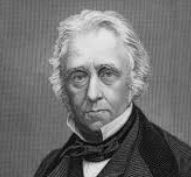
Hence it may be concluded that the happiest state of society is that in which supreme power resides in the whole body of a well-informed people. This is an imaginary, perhaps an unattainable, state of things. Yet, in some measure, we may approximate to it; and he alone deserves the name of a great statesman, whose principle it is to extend the power of the people in proportion to the extent of their knowledge, and to give them every facility for obtaining such a degree of knowledge as may render it safe to trust them with absolute power. In the mean time, it is dangerous to praise or condemn constitutions in the abstract; since, from the despotism of St. Petersburg to the democracy of Washington, there is scarcely a form of government which might not, at least in some hypothetical case, be the best possible.
▼
Source
source
pp. 161-162
3 months ago
It is the destiny of our race to become united into one great body, thoroughly connected in all its parts, and possessed of similar culture. Nature, and even the passions and vices of Man, have from the beginning tended towards this end. A great part of the way towards it is already passed, and we may surely calculate that it will in time be reached.
▼
Source
source
Jane Sinnett, trans 1846 p. 88
1 month 3 weeks ago
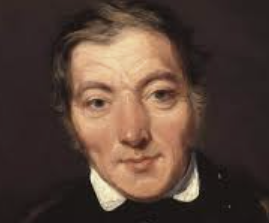
To train and educate the rising generation will at all times be the first object of society, to which every other will be subordinate.

2 months 3 weeks ago
As the years pass, the number of those we can communicate with diminishes. When there is no longer anyone to talk to, at last we will be as we were before stooping to a name.

3 months 6 days ago
I am not so much afraid of death, as ashamed thereof; 'tis the very disgrace and ignominy of our natures, that in a moment can so disfigure us that our nearest friends, Wife, and Children stand afraid and start at us.
▼
Source
source
Section 40
1 month 3 weeks ago
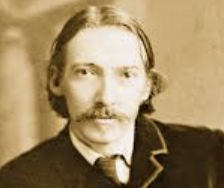
The old land is still the true love, the others are but pleasant infidelities.
▼
Source
source
Pt. I, ch. IV
1 week 2 days ago
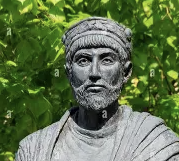
Can anyone be proved innocent, if it be enough to have accused him?
▼
Source
source
Julian, at the trial of Numerius, governor of Gallia Narbonensis, who was accused of embezzlement. Reported in Ammianus, Res gestae, bk. 18, ch. 1, sec. 4

3 months 4 weeks ago
I am sorry that my convictions do not allow me to repeat my friend's offer, said one of the others. But I have had to abandon the humanitarian and egalitarian fancies. His name was Mr. Neo-Classical.
▼
Source
source
Pilgrim's Regress 89

2 months 2 weeks ago
In a sense, all explanation must end in an ultimate arbitrariness.
▼
Source
source
Ch. 5: "The Romantic Reaction", p. 130

1 month 4 weeks ago
Technologies themselves, regardless of content, produce a hemispheric bias in the users.
▼
Source
source
p. 71

4 months 1 day ago
He who gives himself entirely to his fellow-men appears to them useless and selfish; but he who gives himself partially to them is pronounced a benefactor and philanthropist.

2 weeks 1 day ago
At any rate, if you wish to sift doubtful meanings of this kind, teach us that the happy man is not he whom the crowd deems happy, namely, he into whose coffers mighty sums have flowed, but he whose possessions are all in his soul, who is upright and exalted, who spurns inconstancy, who sees no man with whom he wishes to change places, who rates men only at their value as men, who takes Nature for his teacher, conforming to her laws and living as she commands, whom no violence can deprive of his possessions, who turns evil into good, is unerring in judgment, unshaken, unafraid, who may be moved by force but never moved to distraction, whom Fortune when she hurls at him with all her might the deadliest missile in her armoury, may graze, though rarely, but never wound.

Just now
We know enough of our own history by now to be aware that people exploit what they have merely concluded to be of value, but they defend what they love. To defend what we love we need a particularizing language, for we love what we particularly know.

3 months 5 days ago
The French want no-one to be their superior. The English want inferiors. The Frenchman constantly raises his eyes above him with anxiety. The Englishman lowers his beneath him with satisfaction.
▼
Source
source
Journeys to England and Ireland (1835).
4 months ago
By means of ever more effective methods of mind-manipulation, the democracies will change their nature; the quaint old forms- elections, parliaments, Supreme Courts and all the rest-will remain. The underlying substance will be a new kind of non-violent totalitarianism. All the traditional names, all the hallowed slogans will remain exactly what they were in the good old days. Democracy and freedom will be the theme of every broadcast and editorial-but democracy and freedom in a strictly Pickwickian sense. Meanwhile the ruling oligarchy and its highly trained elite of soldiers, policemen, thought-manufacturers and mind-manipulators will quietly run the show as they see fit.
▼
Source
source
Chapter 3, p. 25

4 months ago
Undoubtedly we have no questions to ask which are unanswerable. We must trust the perfection of the creation so far, as to believe that whatever curiosity the order of things has awakened in our minds, the order of things can satisfy. Every man's condition is a solution in hieroglyphic to those inquiries he would put. He acts it as life, before he apprehends it as truth.
▼
Source
source
Introduction

4 months 1 day ago
In reality, the labourer belongs to capital before he has sold himself to capital.
▼
Source
source
Vol. I, Ch. 23, pg. 633.
3 months 6 days ago
There is surely a Physiognomy, which those experienced and Master Mendicants observe... For there are mystically in our faces certain Characters that carry in them the motto of our Souls, wherein he that cannot read A.B.C. may read our natures.
▼
Source
source
Section 2
1 month 3 weeks ago
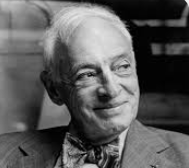
It seems hard for the American people to believe that anything could be more exciting than the times themselves. What we read daily and view on the TV has thrust imagined forms into the shadow. We are staggeringly rich in facts, in things, and perhaps, like the nouveau riche of other ages, we want our wealth faithfully reproduced by the artist.
▼
Source
source
Facts That Put Fancy to Flight (1962), p. 67
4 months ago
Self-reliance, the height and perfection of man, is reliance on God.
▼
Source
source
The Fugitive Slave Law, a lecture in NYC, March 7, 1854
3 months ago
Reason does not exist for the sake of life, but life for the sake of reason. An existence which does not of itself satisfy reason and solve all her doubts, cannot be the true one.
▼
Source
source
Jane Sinnett, trans 1846 p.94
4 months ago
Though love repine, and reason chafe, There came a voice without reply, - "'T is man's perdition to be safe When for the truth he ought to die."
▼
Source
source
Sacrifice
3 months 5 days ago
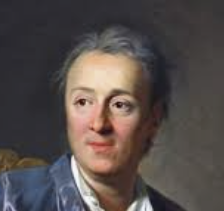
It has been said that love robs those who have it of their wit, and gives it to those who have none.
▼
Source
source
Paradoxe sur le Comédien

3 months 1 day ago
I have no idea of a liberty unconnected with honesty and justice. Nor do I believe, that any good constitutions of government, or of freedom, can find it necessary for their security to doom any part of the people to a permanent slavery. Such a constitution of freedom, if such can be, is in effect no more than another name for the tyranny of the strongest faction; and factions in republics have been, and are, full as capable as monarchs, of the most cruel oppression and injustice.
▼
Source
source
Speech at Bristol Previous to the Election (6 September 1780), quoted in The Works of the Right Honourable Edmund Burke, Vol. II (1855), p. 163
2 months 3 weeks ago
Pragmatism, in trying to turn experimental physics into a prototype of all science and to model all spheres of intellectual life after the techniques of the laboratory, is the counterpart of modern industrialism, for which the factory is the prototype of human existence, and which models all branches of culture after production on the conveyor belt.
▼
Source
source
p. 50.

4 months 1 day ago
You, your families, your friends and your countries are to be exterminated by the common decision of a few brutal but powerful men. To please these men, all the private affections, all the public hopes, all that has been achieved in art, and knowledge and thought and all that might be achieved hereafter is to be wiped out forever. Our ruined lifeless planet will continue for countless ages to circle aimlessly round the sun unredeemed by the joys and loves, the occasional wisdom and the power to create beauty which have given value to human life.
▼
Source
source
Leaflet issued while Russell was in Brixton Prison, 1961
4 months 1 week ago
It is necessary to show that there is nothing so little known [as the above rules], nothing more difficult to practice, or nothing more useful and universal.
2 months 2 weeks ago
A race preserves its vigour so long as it harbours a real contrast between what has been and what may be, and so long as it is nerved by the vigour to adventure beyond the safeties of the past. Without adventure, civilization is in full decay.
▼
Source
source
p. 360.

4 months 4 days ago
It is the highest impertinence and presumption, therefore, in kings and ministers, to pretend to watch over the economy of private people, and to restrain their expence, either by sumptuary laws, or by prohibiting the importation of foreign luxuries. They are themselves always, and without any exception, the greatest spendthrifts in the society. Let them look well after their own expence, and they may safely trust private people with theirs. If their own extravagance does not ruin the state, that of their subjects never will.
▼
Source
source
Chapter III, p. 381.
CivilSimian.com created by AxiomaticPanic, CivilSimian, Kalokagathia