


3 months 1 week ago
...the competition of the poor takes away from the reward of the rich.
▼
Source
source
Chapter X, Part II, p. 154.

3 months 2 weeks ago
There is nothing so easy, so sweet, and so favourable, as the divine law: it calls and invites us to her, guilty and abominable as we are; extends her arms and receives us into her bosom, foul and polluted as we at present are, and are for the future to be. But then, in return, we are to look upon her with a respectful eye; we are to receive this pardon with all gratitude and submission, and for that instant at least, wherein we address ourselves to her, to have the soul sensible of the ills we have committed, and at enmity with those passions that seduced us to offend her.
▼
Source
source
Ch. 56, tr. Cotton, rev. W. Carew Hazlitt, 1877

3 months 5 days ago
The heart of Christianity is a myth which is also a fact.
▼
Source
source
"Myth Became Fact", 1944

4 months 1 week ago
The Sophist demonstrates that everything is true and nothing is true.

3 months 6 days ago
Whatever games are played with us, we must play no games with ourselves, but deal in our privacy with the last honesty and truth.
▼
Source
source
Illusions

3 months 1 week ago
We all look for happiness, but without knowing where to find it: like drunkards who look for their house, knowing dimly that they have one.
▼
Source
source
Notebooks (c.1735-c.1750)

3 months 2 days ago
I am showing my pupils details of an immense landscape which they cannot possibly know their way around.
▼
Source
source
p. 56e

3 months 1 week ago
No difference of rank, position, or birth, is so great as the gulf that separates the countless millions who use their head only in the service of their belly, in other words, look upon it as an instrument of the will, and those very few and rare persons who have the courage to say: No! my head is too good for that; it shall be active only in its own service; it shall try to comprehend the wondrous and varied spectacle of this world and then reproduce it in some form, whether as art or as literature, that may answer to my character as an individual.
▼
Source
source
On Genius, Parerga and Paralipomena, Chapter III

4 months 1 week ago
Are designations congruent with things? Is language the adequate expression of all realities? It is only by means of forgetfulness that man can ever reach the point of fancying himself to possess a "truth" of the grade just indicated. If he will not be satisfied with truth in the form of tautology, that is to say, if he will not be content with empty husks, then he will always exchange truths for illusions.

3 months 1 week ago
A house may be large or small; as long as the neighboring houses are likewise small, it satisfies all social requirement for a residence. But let there arise next to the little house a palace, and the little house shrinks to a hut. The little house now makes it clear that its inmate has no social position at all to maintain, or but a very insignificant one; and however high it may shoot up in the course of civilization, if the neighboring palace rises in equal or even in greater measure, the occupant of the relatively little house will always find himself more uncomfortable, more dissatisfied, more cramped within his four walls.
▼
Source
source
Wage Labour and Capital (December 1847), in Marx Engels Selected Works, Volume I, p. 163.

3 months 1 week ago
The problem of establishing a perfect civic constitution is dependent upon the problem of a lawful external relation among states and cannot be solved without a solution of the latter problem.
▼
Source
source
Seventh Thesis



1 month 2 weeks ago
Crime is naught but misdirected energy. So long as every institution of today, economic, political, social, and moral, conspires to misdirect human energy into wrong channels; so long as most people are out of place doing the things they hate to do, living a life they loathe to live, crime will be inevitable, and all the laws on the statutes can only increase, but never do away with, crime.
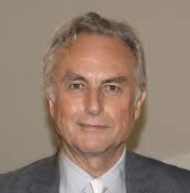
1 month 2 days ago
The successful scientist and the raving crank are separated by the quality of their inspirations. But I suspect that this amounts, in practice, to a difference, not so much in ability to notice analogies as in ability to reject foolish analogies and pursue helpful ones.
▼
Source
source
Chapter 8 "Explosions and Spirals" (pp. 195-196)

3 months 6 days ago
When all is said and done, we are in the end absolutely dependent on the universe; and into sacrifices and surrenders of some sort, deliberately looked at and accepted, we are drawn and pressed as into our only permanent positions of repose. Now in those states of mind which fall short of religion, the surrender is submitted to as an imposition of necessity, and the sacrifice is undergone at the very best without complaint. In the religious life, on the contrary, surrender and sacrifice are positively espoused: even unnecessary givings-up are added in order that the happiness may increase. Religion thus makes easy and felicitous what in any case is necessary; and if it be the only agency that can accomplish this result, its vital importance as a human faculty stands vindicated beyond dispute. It becomes an essential organ of our life, performing a function which no other portion of our nature can so successfully fulfill.
▼
Source
source
Lecture II, "Circumscription of the Topic"
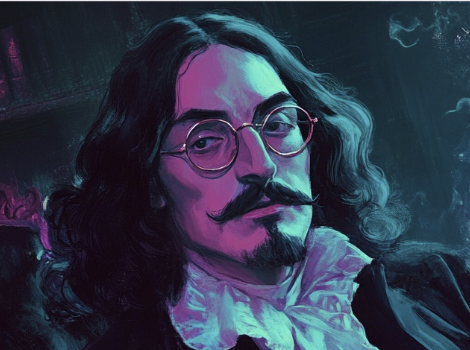
3 months 2 weeks ago
I suppose the body to be nothing but a statue or machine made of earth, which God forms with the explicit intention of making it as much as possible like us.
▼
Source
source
Descartes, René (1662). Le Homme (The Treatise on Man), XI:119, CSM I:99 in The Stanford Encyclopedia of Philosophy: "Descartes and the Pineal Gland - 2.1 "The Treatise of Man".
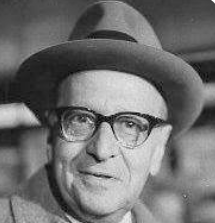
1 month 3 weeks ago
Leibniz's theory on the subject as substantia ideans in the sense of a causative agent of decision and acts stands much closer to a materialist interpretation of history than does a philosophy which reduces the thinking subject to the role of subsuming protocol sentences under general propositions and deducing other sentences from them.
▼
Source
source
p. 149.
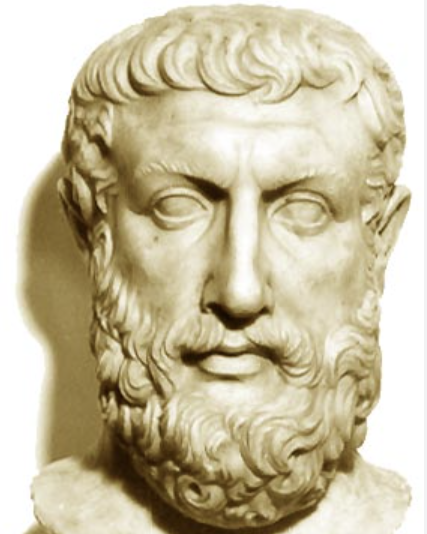
2 months 3 weeks ago
For it is the same thing that can be thought and that can be.
▼
Source
source
Frag. B 3, quoted by Plotinus, Enneads V, i.8

3 months 3 weeks ago
The perfection of the effect demonstrates the perfection of the cause, for a greater power brings about a more perfect effect. But God is the most perfect agent. Therefore, things created by Him obtain perfection from Him. So, to detract from the perfection of creatures is to detract from the perfection of divine power.
▼
Source
source
III, 69, 15

2 months 2 days ago
One hardly saves a world without ruling it.
2 months 3 weeks ago
After the battle in Pharsalia, when Pompey was fled, one Nonius said they had seven eagles left still, and advised to try what they would do. "Your advice," said Cicero, "were good if we were to fight jackdaws."
▼
Source
source
Cicero
3 months 2 days ago
Like everything metaphysical the harmony between thought and reality is to be found in the grammar of the language.
▼
Source
source
§ 112

1 month 4 days ago
The ways of thinking implanted by electronic culture are very different from those fostered by print culture. Since the Renaissance most methods and procedures have strongly tended towards stress on the visual organization of knowledge.

2 months 1 week ago
Heroic love is the property of those superior natures who are called insane not because they do not know, but because they over-know.
▼
Source
source
As quoted in The Tragic Sense of Life (1913), by Miguel de Unamuno, as translated by J. E. Crawford
2 months 2 days ago
Detachment from the world as an attachment to the ego... Who can realize the detachment in which you are as far away from yourself as you are from the world?
2 weeks 1 day ago
The negative utilitarian might reply that this formulation of the problem is misleading. We do not live in a notional world where only a pinprick, minor pains, or even just "mild" suffering exists. In the real world, frightful horrors as well as humdrum malaise occur every day. The intensity of suffering is sometimes so dreadful that its victims are prepared to destroy themselves to bring their torment to an end. Each year, some 800,000 people across the planet kill themselves while in the grip of suicidal despair. Tens of millions of people are severely depressed or suffer chronic neuropathic pain. By way of contrast, the genteel conventions of an ethics seminar in academic philosophy, or the scholarly technicalities of a journal article, simply fail to come to terms with the enormity of what's at stake. To talk of a "pinprick" is to trivialise the NU ethical stance.
▼
Source
source
"The Pinprick Argument", BLTC Research, 2005

2 months 1 week ago
The use of force alone is but temporary. It may subdue for a moment; but it does not remove the necessity of subduing again: and a nation is not governed, which is perpetually to be conquered.

3 months 1 week ago
It is never to be expected in a revolution that every man is to change his opinion at the same moment. There never yet was any truth or any principle so irresistibly obvious that all men believed it at once. Time and reason must cooperate with each other to the final establishment of any principle; and therefore those who may happen to be first convinced have not a right to persecute others, on whom conviction operates more slowly. The moral principle of revolutions is to instruct, not to destroy.
3 months 2 days ago
Scepticism is not irrefutable, but obviously nonsensical, when it tries to raise doubts where no questions can be asked. For doubt can exist only where a question exists, a question only where an answer exists, and an answer only where something can be said.
2 months 2 days ago
Read day and night, devour books - these sleeping pills - not to know but to forget! Through books you can retrace your way back to the origins of spleen, discarding history and its illusions.
3 months 6 days ago
Creatures extremely low in the intellectual scale may have conception. All that is required is that they should recognize the same experience again. A polyp would be a conceptual thinker if a feeling of 'Hello! thingumbob again!' ever flitted through its mind.
▼
Source
source
Ch. 12
1 month 2 days ago
I am extremely pleased by Daniel Fincke's article, which says exactly what I SHOULD have said and, to my regret, didn't make sufficiently clear in my Reason Rally speech. The best way to summarise it would be to modify the quotation from Johann Hari. Johann said, "I respect you too much to respect your ridiculous beliefs". From now on, my version will be, "I respect you too much to accept that you really believe anything so ridiculous as you claim. Please either defend those beliefs and explain why they are not ridiculous, or else declare that you do not hold them and publicly disown the church to which you claim loyalty."
▼
Source
source
comment on Daniel Fincke (2 April 2012), "In Defense of Dawkins's Reason Rally Speech", RichardDawkins.net, retrieved on 1 May 2012
3 months 1 week ago
It might otherwise appear paradoxical that money can be replaced by worthless paper; but that the slightest alloying of its metallic content depreciates it.
▼
Source
source
Notebook VII, The Chapter on Capital, p. 734.
1 month 2 weeks ago
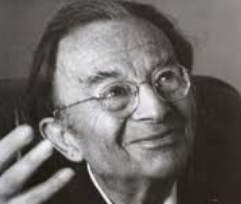
Fairness means not to use fraud and trickery in the exchange of commodities and services and the exchange of feelings.

3 months 6 days ago
...this Jewish doctrine of the primacy of economic values has found the widest acceptance and been most whole-heartedly acted upon. From America it has begun to infect the rest of the world. We may be pardoned for wishing that the Jews had remained not forty, but four thousand years in their repulsive wilderness.
▼
Source
source
"One and Many," pp. 18
1 month 2 weeks ago
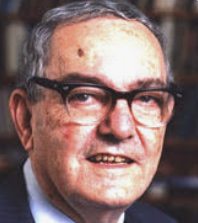
Organizations and institutions permit stable expectations to be formed by each member of the group as to the behavior of the other members under specified conditions.
▼
Source
source
p. 100.
3 months 1 week ago
Good roads, canals, and navigable rivers, by diminishing the expence of carriage, put the remote parts of the country more nearly upon a level with those of the neighbourhood of the town. They are upon that the greatest of all improvements.
▼
Source
source
Chapter XI, Part I, p. 174.
3 months 1 week ago
How selfish soever man may be supposed, there are evidently some principles in his nature, which interest him in the fortune of others, and render their happiness necessary to him, though he derives nothing from it except the pleasure of seeing it.
▼
Source
source
Section I, Chap. I

1 month 3 weeks ago
Nature is a structure of evolving processes. The reality is the process.
▼
Source
source
Ch. 4: "The Eighteenth Century", p. 102
1 month 2 weeks ago
I prefer to reach the few who really want to learn, rather than the many who come to be amused.
3 weeks 4 days ago
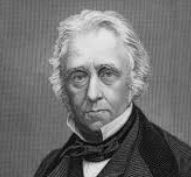
We hardly know any instance of the strength and weakness of human nature so striking, and so grotesque, as the character of this haughty, vigilant, resolute, sagacious blue-stocking, half Mithridates and half Trissotin, bearing up against a world in arms, with an ounce of poison in one pocket and a quire of bad verses in the other.
▼
Source
source
'Frederic the Great', The Edinburgh Review (April 1842), quoted in T. B. Macaulay, Critical and Historical Essays Contributed to The Edinburgh Review: A New Edition (1852), p. 802
3 months 5 days ago
Of all tyrannies, a tyranny sincerely exercised for the good of its victims may be the most oppressive. It would be better to live under robber barons than under omnipotent moral busybodies. The robber baron's cruelty may sometimes sleep, his cupidity may at some point be satiated; but those who torment us for our own good will torment us without end for they do so with the approval of their own conscience. They may be more likely to go to Heaven yet at the same time likelier to make a Hell of earth. This very kindness stings with intolerable insult. To be "cured" against one's will and cured of states which we may not regard as disease is to be put on a level of those who have not yet reached the age of reason or those who never will; to be classed with infants, imbeciles, and domestic animals.
▼
Source
source
God in the Dock: Essays on Theology (Making of Modern Theology)
3 months 2 weeks ago
The only good histories are those that have been written by the persons themselves who commanded in the affairs whereof they write.
▼
Source
source
Book II, Ch. 10. Of Books
1 month 4 days ago
In this book we turn to the study of new patterns of energy arising from man's physical and psychic artifacts and social organizations. The only method for perceiving process and pattern is by inventory of effects obtained by the comparison and contrast of developing situations.
▼
Source
source
(p. 8)
1 month 2 weeks ago
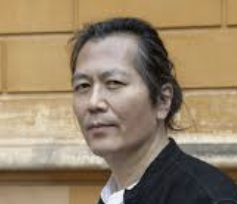
Perhaps power is never free from a feeling of lack.

3 months 5 days ago
For an occurrence to become an adventure, it is necessary and sufficient for one to recount it.
1 month 1 week ago
Disneyland exists in order to hide that it is the "real" country, all of "real" America that is Disneyland (a bit like prisons are there to hide that it is the social in its entirety, in its banal omnipresence, that is carceral). Disneyland is presented as imaginary in order to make us believe that the rest is real.
▼
Source
source
"The Precession of Simulacra," p. 12
3 months 2 days ago
To obey a rule, to make a report, to give an order, to play a game of chess, are customs.
▼
Source
source
(uses, institutions) § 199
CivilSimian.com created by AxiomaticPanic, CivilSimian, Kalokagathia