


1 month 3 weeks ago
A man, in so far as he is an individual, may be very sharply detached from others, a sort of spiritual crustacean, and yet be very poor in differentiating content. And further, it is true on the other hand that the more personality a man has and the greater his interior riches and the more he is a society within himself, the less brusquely he is divided from his fellows.

1 month 2 weeks ago
We all observe that the reality of sexual intercourse is far from perfect; yet this does not convince us that sex is a greatly overrated occupation. Every time a man glimpses a pretty girl pulling up her stocking, he catches a glimpse of what might be called the "primal sexual vision." It is unfortunate that there seems to be a certain disparity between this primal vision and most ordinary sexual experience. But it dances in front of us like a will-o'-the-wisp, luring us into tormented effort. It can lead novelists to write novels, poets to write poems, and musicians to write symphonies.
▼
Source
source
p. 39
2 months 1 week ago
To disrespect the masses is moral; to honor them, lawful.
▼
Source
source
Lucinde and the Fragments, P. Firchow, trans. (1991), "Athenaeum Fragments" § 211

1 month 6 days ago
For us, with the rule of right and wrong given us by Christ, there is nothing for which we have no standard. And there is no greatness where there is not simplicity, goodness, and truth.
▼
Source
source
Bk. XIV, ch. 18
1 month 4 weeks ago
Art is the final cunning of the human soul which would rather do anything than face the gods.
▼
Source
source
"Art and Eros: A Dialogue about Art", Acastos: Two Platonic Dialogues (1986).

2 months 2 weeks ago
The mathematician speculates the causes of a certain sensible effect, without considering its actual existence; for the contemplation of universals excludes the knowledge of particulars; and he whose intellectual eye is fixed on that which is general and comprehensive, will think but little of that which is sensible and singular.
▼
Source
source
A Dissertation on the Doctrine of Ideas, &c.

3 months 1 week ago
But love for an object eternal and infinite feeds the mind with joy alone, and a joy which is free from all sorrow. This is something greatly to be desired and to be sought with all our strength.
▼
Source
source
I, 10; translation by W. Hale White (Revised by Amelia Hutchison Stirling)



3 months 1 week ago
In the metaphysical elements of aesthetics the various nonmoral feelings are to be made use of; in the elements of moral metaphysics the various moral feelings of men, according to the differences in sex, age, education, and government, of races and climates, are to be employed.
▼
Source
source
Part III : Selection on Education from Kant's other Writings, Ch. I Pedagogical Fragments, # 58

3 months 5 days ago
Ha! to forget. How childish! I feel you in my bones. Your silence screams in my ears. You may nail your mouth shut, you may cut out your tongue, can you keep yourself from existing? Will you stop your thoughts.
▼
Source
source
Inès reiterating to Garcin that they cannot ignore one another, Act 1, sc. 5

3 months 1 week ago
Eloquence, when at its highest pitch, leaves little room for reason or reflection; but addressing itself entirely to the fancy or the affections, captivates the willing hearers, and subdues their understanding. Happily, this pitch it seldom attains. But what a Tully or a Demosthenes could scarcely effect over a Roman or Athenian audience, every Capuchin, every itinerant or stationary teacher can perform over the generality of mankind, and in a higher degree, by touching such gross and vulgar passions.
▼
Source
source
Section 10 : Of Miracles Pt. 2

3 months 1 week ago
A company of solemn tyrants is impervious to all seductions.
▼
Source
source
"Tyranny", 1764

2 months 1 week ago
Men must be governed by those laws which they love. Where thirty millions are to be governed by a few thousand men, the government must be established by consent, and must be congenial to the feelings and to the habits of the people. That which creates tyranny is the imposition of a form of government contrary to the will of the governed: and even a free and equal plan of government, would be considered as despotic by those who desired to have their old laws and their ancient system.
▼
Source
source
Speech in the House of Commons on India (27 June 1781), quoted in The Parliamentary Register: Or, History of the Proceedings and Debates of the House of Commons, Volume III (1782), pp. 666-667

3 months 1 week ago
The people who are regarded as moral luminaries are those who forego ordinary pleasures themselves and find compensation in interfering with the pleasures of others.
▼
Source
source
Ch. 8: Eastern and Western Ideals of Happiness
3 months 3 weeks ago
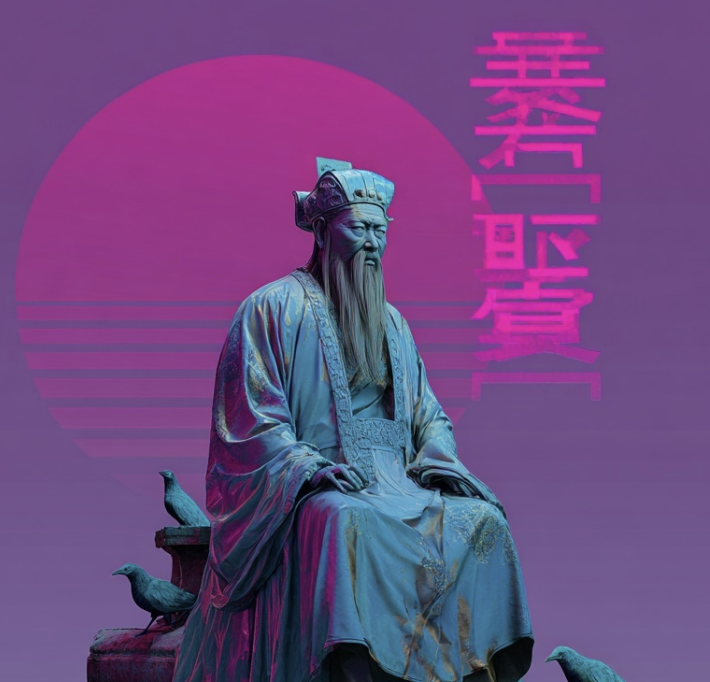
To study and not think is a waste. To think and not study is dangerous. Learning without thought is labor lost; thought without learning is perilous.

2 months 2 days ago
The more intense a spiritual leader's appetite for power, the more he is concerned to limit it to others.
2 months 2 days ago
The proletariat is that class in society which lives entirely from the sale of its labor and does not draw profit from any kind of capital; whose weal and woe, whose life and death, whose sole existence depends on the demand for labor - hence, on the changing state of business, on the vagaries of unbridled competition.
1 month 2 weeks ago
The characteristic of the really great writer is the ability of his mind to to suddenly leap beyond his ordinary human values, into sudden perception of universal values.
▼
Source
source
p. 33
2 months 2 days ago
If, at the limit, you can rule without crime, you cannot do so without injustices.
1 month 2 weeks ago
Sabbath rest does not follow creation; it brings creation to completion.
3 months 5 days ago
Commoners are weightless. But he was a royal bon vivant who, no matter what, always weighed 125 kilos. I would be very surprised if he didn't have a few pounds left.
▼
Source
source
A soldier in Argos, speaking of the dead King Agamemnon, Act 2
3 months 1 week ago
It is not by prayer and humility that you cause things to go as you wish, but by acquiring a knowledge of natural laws.
1 month 1 week ago
Picturing others and everything which brings you closer to them is futile from the instant that 'communication' can make their presence immediate.
▼
Source
source
(p. 42)
1 month 3 weeks ago
And this God, the living God, your God, our God, is in me, is in you, lives in us, and we live and move and have our being in Him. And he is in us by virtue of the hunger, the longing, which we have for Him, He is Himself creating the longing for Himself.
3 months 1 week ago
As the analysis of a substantial composite terminates only in a part which is not a whole, that is, in a simple part, so synthesis terminates only in a whole which is not a part, that is, the world.
3 months 2 weeks ago
Lastly, we must also know what Baptism signifies, and why God has ordained just such external sign and ceremony for the Sacrament by which we are first received into the Christian Church. But the act or ceremony is this, that we are sunk under the water, which passes over us, and afterwards are drawn out again. These two parts, to be sunk under the water and drawn out again, signify the power and operation of Baptism, which is nothing else than putting to death the old Adam, and after that the resurrection of the new man, both of which must take place in us all our lives, so that a truly Christian life is nothing else than a daily baptism, once begun and ever to be continued.
▼
Source
source
On Infant Baptism, Large Catechism

3 months 5 days ago
Imagine yourself as a living house. God comes in to rebuild that house. At first, perhaps, you can understand what He is doing. He is getting the drains right and stopping the leaks in the roof and so on: you knew that those jobs needed doing and so you are not surprised. But presently he starts knocking the house about in a way that hurts abominably and does not seem to make sense. What on earth is He up to? The explanation is that He is building quite a different house from the one you thought of-throwing out a new wing here, putting on an extra floor there, running up towers, making courtyards. You thought you were going to be made into a decent little cottage: but He is building a palace. He intends to come and live in it Himself.
▼
Source
source
Book IV, Chapter 9, "Counting the Cost"
3 months 5 days ago
What do we mean by saying that existence precedes essence? We mean that man first of all exists, encounters himself, surges up in the world-and defines himself afterwards. If man as the existentialist see him is not definable, it is because to begin with he is nothing. He will not be anything until later, and then he will be what he makes of himself. Thus, there is no human nature, because there is no God to have a conception of it. Man simply is. Not that he is simply what he conceives himself to be, but he is what he wills, and as he conceives himself after already existing - as he wills to be after that leap towards existence. Man is nothing else but that which he makes of himself. That is the first principle of existentialism.
▼
Source
source
p. 28

2 months 1 week ago
We term sleep a death, and yet it is waking that kills us, and destroys those spirits that are the house of life.
▼
Source
source
Section 12

4 months 1 week ago
The pride connected with knowing and sensing lies like a blinding fog over the eyes and senses of men, thus deceiving them concerning the value of existence. For this pride contains within itself the most flattering estimation of the value of knowing. Deception is the most general effect of such pride, but even its most particular effects contain within themselves something of the same deceitful character.
3 weeks 1 day ago
Sound knowledge respecting the habits and mode of life of the man-like Apes has been even more difficult of attainment than correct information regarding their structure.
▼
Source
source
Ch.1, p. 36
2 months 2 days ago
If there is anyone who owes everything to Bach, it is certainly God.
4 months 1 week ago
It belongs to the imperfection of everything human that man can only attain his desire by passing through its opposite.
3 months 1 week ago
Do not most of us resemble that old general of ninety who, having come upon some young officers debauching some girls, said to them angrily: "Gentlemen, is that the example I give you?" "Character"
▼
Source
source
1764
1 month 3 weeks ago
Antiquity believed that the forces of love in the universe were limited. Therefore they were to be used sparingly,and everyone was to be loved only according to his value.
▼
Source
source
L. Coser, trans. (1961), p. 94
4 months 3 days ago
Truth, like light, blinds. Falsehood, on the contrary, is a beautiful twilight that enhances every object.

1 month 4 days ago
Visual space is the space of detachment. Audile-tactile space is the space of involvement.
▼
Source
source
(p. 194)
3 months 1 week ago
Life seems to me essentially passion, conflict, rage... It is only intellect that keeps me sane; perhaps this makes me overvalue intellect against feeling.
▼
Source
source
Letter to Lady Ottoline Morrell in 1912, as quoted in Clark The life of Bertrand Russell (1976), p. 174
1 month 2 weeks ago
One simple method is to take a pen or pencil and hold it up against a blank wall or ceiling. Now concentrate on the pen as if it is the most important thing in the world. Then allow your sense to relax, so you see the pen against the background of the wall. Concentrate again. Relax again. Keep on doing this until you become aware of the ability to focus attention at will. You will find that this unaccustomed activity of the will is tiring; it produces a sense of strain behind the eyes. My own perception is that if you persist, in spite of the strain, the result is acute discomfort, followed by a sudden immense relief - the 'peak experience'.
▼
Source
source
p. 33

1 week 6 days ago
It is because human needs are contradictory that no human life can be perfect. That does not mean that human life is imperfect. It means that the idea of perfection has no meaning.
▼
Source
source
'Modus Vivendi' (p.29)
3 months 5 days ago
We reduce things to mere Nature in order that we may 'conquer' them.
1 month 1 week ago
I once had a conversation with a famous French philosopher who's a friend of mine. And I said to him, "Why the hell do you write so badly? Pourquoi tu écris si mal?" ... And this was Michel Foucault. He was a very smart guy and wrote a lot of very good stuff but in general he just wrote badly. When you heard him give a lecture in Berkeley, it was perfectly clear, just as clear as I am. ... And he said, "Well, in France, it would be regarded as somewhat childish and naive if you wrote clearly. ... In France you've got to have 10% incomprehensible."
▼
Source
source
Otherwise people won't think it's deep. They won't think you're a profound thinker.
2 months 2 weeks ago
You, Socrates, began by saying that virtue can't be taught, and now you are insisting on the opposite, trying to show that all things are knowledge, justice, soundness of mind, even courage, from which it would follow that virtue most certainly can be taught.
▼
Source
source
As quoted in Protagoras by Plato
3 months 1 week ago
William James used to preach the "will-to-believe." For my part, I should wish to preach the "will-to-doubt." None of our beliefs are quite true; all at least have a penumbra of vagueness and error. What is wanted is not the will to believe, but the will to find out, which is the exact opposite.
▼
Source
source
Ch. 12: Free Thought and Official Propaganda
1 month 6 days ago
Go - take the mother's soul, and learn three truths: Learn What dwells in man, What is not given to man, and What men live by. When thou hast learnt these things, thou shalt return to heaven.
▼
Source
source
Ch. IV
3 weeks 1 day ago
That mysterious independent variable of political calculation, Public Opinion.
▼
Source
source
Universities, Actual and Ideal

3 months 1 day ago
In these downbeat times, we need as much hope and courage as we do vision and analysis; we must accent the best of each other even as we point out the vicious effects of our racial divide and pernicious consequences of our maldistribution of wealth and power. We simply cannot enter the twenty-first century at each other's throats, even as we acknowledge the weighty forces of racism, patriarchy, economic inequality, homophobia, and ecological abuse on our necks. We are at a crucial crossroad in the history of this nation--and we either hang together by combating these forces that divide and degrade us or we hang separately. Do we have the intelligence, humor, imagination, courage, tolerance, love, respect, and will to meet the challenge? Time will tell. None of us alone can save the nation or world. But each of us can make a positive difference if we commit ourselves to do so.
▼
Source
source
(p 109)
1 month 6 days ago
What is the Jew?...What kind of unique creature is this whom all the rulers of all the nations of the world have disgraced and crushed and expelled and destroyed; persecuted, burned and drowned, and who, despite their anger and their fury, continues to live and to flourish. What is this Jew whom they have never succeeded in enticing with all the enticements in the world, whose oppressors and persecutors only suggested that he deny (and disown) his religion and cast aside the faithfulness of his ancestors?! The Jew - is the symbol of eternity. ... He is the one who for so long had guarded the prophetic message and transmitted it to all mankind. A people such as this can never disappear. The Jew is eternal. He is the embodiment of eternity.
▼
Source
source
Attributed in "The Final Resolution", in Jewish World Periodical (1908), p. 189
3 months 3 weeks ago
The journey of a thousand miles begins with a single step.
CivilSimian.com created by AxiomaticPanic, CivilSimian, Kalokagathia