


2 months 1 week ago
The severe Schools shall never laugh me out of the Philosophy of Hermes, that this visible world is but a picture of the invisible.
▼
Source
source
Section 12

3 months 1 week ago
... no testimony is sufficient to establish a miracle, unless the testimony be of such a kind, that its falsehood would be more miraculous, than the fact, which it endeavors to establish.
▼
Source
source
Section 10 : Of Miracles Pt. 1

3 months 2 days ago
"Everything is already there in...." How does it come about that [an] arrow points? Doesn't it seem to carry in it something besides itself? - "No, not the dead line on paper; only the psychical thing, the meaning, can do that." - That is both true and false. The arrow points only in the application that a living being makes of it.
▼
Source
source
§ 454

2 months 6 days ago
As there must be moderation in other things, so there must be moderation in self-criticism. Perpetual contemplation of our own actions produces a morbid consciousness, quite unlike that normal consciousness accompanying right actions spontaneously done; and from a state of unstable equilibrium long maintained by effort, there is apt to be a fall towards stable equilibrium, in which the primitive nature reasserts itself. Retrogression rather than progression may hence result.
▼
Source
source
Ch. 10, General Conclusions
2 months 4 days ago
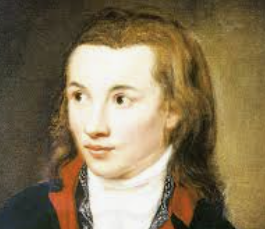
There are ideal series of events which run parallel with the real ones. They rarely coincide. Men and circumstances generally modify the ideal train of events, so that it seems imperfect, and its consequences are equally imperfect. Thus with the Reformation; instead of Protestantism came Lutheranism.
▼
Source
source
Epigraph, "The Mystery Of Marie Rogêt" (1842) by Edgar Allan Poe, adapted from Fragments from German Prose Writers (1841) by Sarah Austin
1 month 4 weeks ago
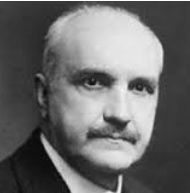
The empiricist thinks he believes only what he sees, but he is much better at believing than at seeing.
▼
Source
source
"Objections to Belief in Substance", p. 201
2 months 3 weeks ago
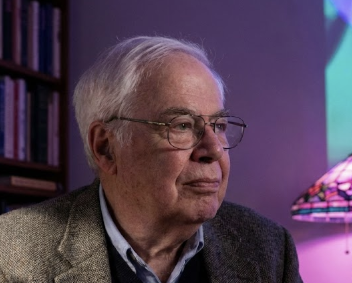
Contemporary intellectuals have given up the Enlightenment assumption that religion, myth, and tradition can be opposed to something ahistorical, something common to all human beings qua human.
1 month 2 days ago
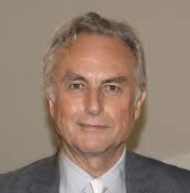
It takes intellectual courage to kick yourself out of your emotional incredulity and persuade yourself that there is no other rational choice.
▼
Source
source
The Intellectual and Moral Courage of Atheism

2 months 1 week ago
There is the world for you. Beauty, true beauty, is intangible. It is in the eye of the beholder. Something that we can lose at any moment, and the more you examine it, the more illusive it becomes. True happiness is virtue, and virtue is predicated on knowledge and righteous conduct.
▼
Source
source
The Alchemy of Happiness
2 months 4 days ago
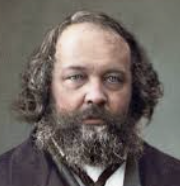
Allow me, Gentlemen, to pose this question in a more serious manner. Do I need to tell you that it is not a question at first of the natural, physiological, ethnographic difference that exists between individuals, but of the social difference, that is produced by the economic organization of society? Give to all the children, from their birth, the same means of maintenance, education, and instruction; give then to all the men thus raised the same social milieu, the same means of earning their living by their own labor, and you will see then that many of these differences, that we believe to be natural differences, will disappear because they are nothing but the effect of an unequal division of the conditions of intellectual and physical development - of the conditions of life.

3 months 1 week ago
Only that position can impart dignity in which we do not appear as servile tools but rather create independently within our circle.
▼
Source
source
Writings of the Young Marx on Philosophy and Society, L. Easton, trans. (1967), p. 38
2 months 1 week ago
The proximity between the counterfeit and the good coin does not make the good coin counterfeit nor the counterfeit good. In the same way the proximity between truth and falsehood does not make truth falsehood nor falsehood truth.
▼
Source
source
III. The Classes of Seekers, p. 33.
1 month 2 weeks ago
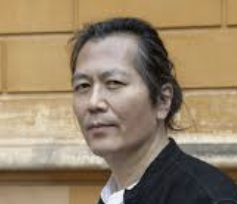
The pornographic face says nothing. It has no expressivity or mystery.

3 months 2 weeks ago
So clearly will truths kindle light for truths.
▼
Source
source
Book I, line 1117 (tr. W. H. D. Rouse and M. F. Smith)
3 months 3 weeks ago
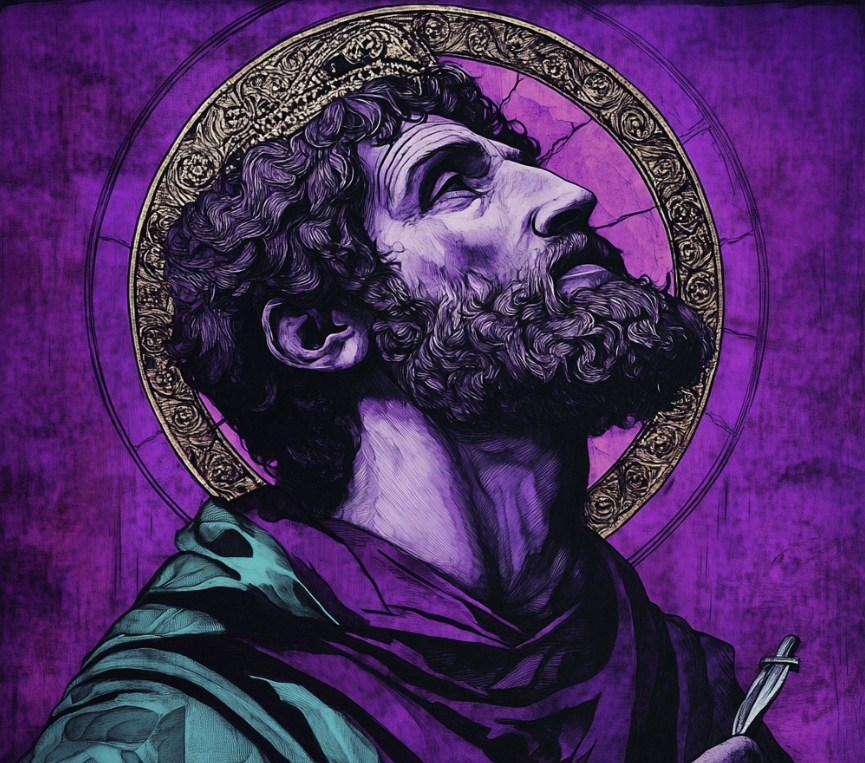
Don't hold yourselves cheap, seeing that the creator of all things and of you estimates your value so high, so dear, that he pours out for you every day the most precious blood of his only-begotten Son.
▼
Source
source
216:3:1

3 months 6 days ago
Obey the voice at eve obeyed at prime.
▼
Source
source
Terminus
1 month 2 days ago
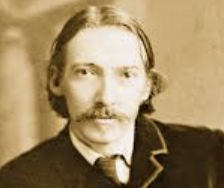
I shall doubtless outlive some troublesome desires; but I am in no hurry about that; nor, when the time comes, shall I plume myself on the immunity just in the same way, I do not greatly pride myself on having outlived my belief in the fairy tales of Socialism. Old people have faults of their own; they tend to become cowardly, niggardly, and suspicious. Whether from the growth of experience or the decline of animal heat, I see that age leads to these and certain other faults; and it follows, of course, that while in one sense I hope I am journeying towards the truth, in another I am indubitably posting towards these forms and sources of error.
▼
Source
source
Crabbed Age and Youth.
3 months 1 day ago
At the point at which the concept of différance, and the chain attached to it, intervenes, all the conceptual oppositions of metaphysics (signifier/signified; sensible/intelligible; writing/speech; passivity/activity; etc.)- to the extent that they ultimately refer to the presence of something present (for example, in the form of the identity of the subject who is present for all his operations, present beneath every accident or event, self-present in its "living speech," in its enunciations, in the present objects and acts of its language, etc.)- become non pertinent. They all amount, at one moment or another, to a subordination of the movement of différance in favor of the presence of a value or a meaning supposedly antecedent to différance, more original than it, exceeding and governing it in the last analysis. This is still the presence of what we called above the "transcendental signified.
▼
Source
source
p. 29

1 month 6 days ago
The recognition that love represents the highest morality was nowhere denied or contradicted, but this truth was so interwoven everywhere with all kinds of falsehoods which distorted it, that finally nothing of it remained but words. It was taught that this highest morality was only applicable to private life - for home use, as it were - but that in public life all forms of violence - such as imprisonment, executions, and wars - might be used for the protection of the majority against a minority of evildoers, though such means were diametrically opposed to any vestige of love.
▼
Source
source
III
3 months 6 days ago
Whoso walketh in solitude, And inhabiteth the wood, Choosing light, wave, rock, and bird, Before the money-loving herd, Into that forester shall pass From these companions power and grace.
▼
Source
source
Wood-notes, no. II, st. 4
1 month 2 weeks ago
I spoke after Sasha, for an hour. I discussed the farce of a government undertaking to carry democracy abroad by suppressing the last vestiges of it at home. I took up the contention of Judge Mayer that only such ideas are permissible as are "within the law." Thus he had instructed the jurymen when he had asked them if they were prejudiced against those who propagate unpopular ideas. I pointed out that there had never been an ideal, however humane and peaceful, which in its time had been considered "within the law." I named Jesus, Socrates, Galileo, Giordano Bruno. "Were they 'within the law"?" I asked. "And the men who set America free from British rule, the Jeffersons and the Patrick Henrys? The William Lloyd Garrisons, the John Browns, the David Thoreaus and Wendell Phillipses-were they within the law?"
▼
Source
source
chapter 45
3 weeks 1 day ago
Only two suppositions seem to be open to us - Either each species of crocodile has been specially created, or it has arisen out of some pre-existing form by the operation of natural causes. Choose your hypothesis; I have chosen mine. I can find no warranty for believing in the distinct creation of a score of successive species of crocodiles in the course of countless ages of time.
1 month 4 days ago
The telegraph press mosaic is acoustic space as much as an electric circus.
3 months 6 days ago
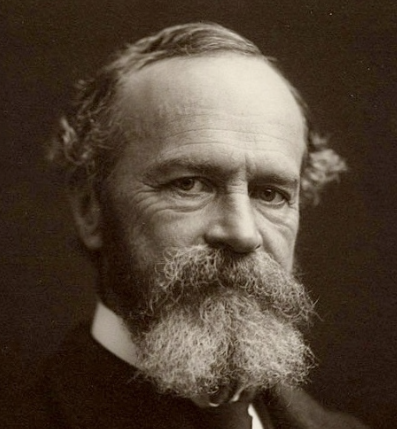
Pretend what we may, the whole man within us is at work when we form our philosophical opinions. Intellect, will, taste, and passion co-operate just as they do in practical affairs; and lucky it is if the passion be not something as petty as a love of personal conquest over the philosopher across the way.
3 months 1 week ago
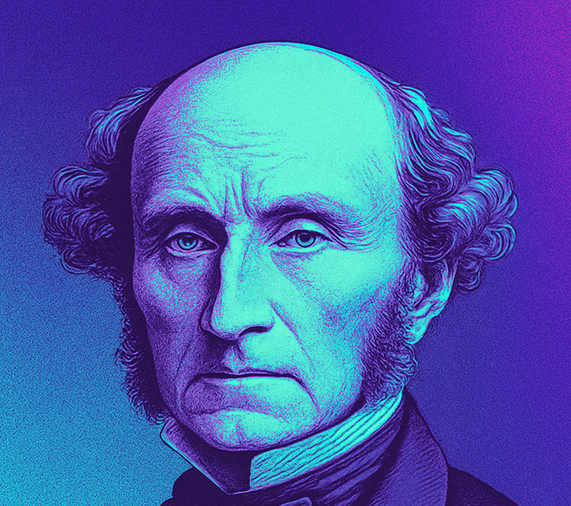
We are not so absurd as to propose that the teacher should not set forth his own opinions as the true ones and exert his utmost powers to exhibit their truth in the strongest light. To abstain from this would be to nourish the worst intellectual habit of all, that of not finding, and not looking for, certainty in any teacher. But the teacher himself should not be held to any creed; nor should the question be whether his own opinions are the true ones, but whether he is well instructed in those of other people, and, in enforcing his own, states the arguments for all conflicting opinions fairly.
▼
Source
source
"Civilization," London and Westminster Review, April 1836
1 month 2 weeks ago
What so impressed me on that first reading was the self-containedness of Tolkien's world. I suppose there are a few novelists who have created worlds that are uniquely their own -- Faulkner, for example, or Dickens. But since their world is fairly close to the actual world, it cannot really be called a unique creation. The only parallel that occurs to me is the Wagner Ring cycle, that one can only enter as if taking a holiday on a strange planet.
▼
Source
source
pp. 8-9
2 months 3 days ago
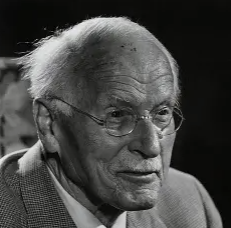
The whole nature of man presupposes woman, both physically and spiritually. His system is tuned into woman from the start, just as it is prepared for a quite definite world where there is water, light, air, salt, carbohydrates etc.
▼
Source
source
"Two Essays in Analytical Psychology" In CW 7: P. 188
1 month 6 days ago
The most important person is the one you are with in this moment.
▼
Source
source
p. 206
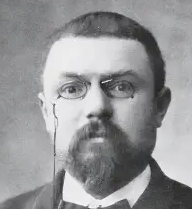
Just now
We do not have and cannot have any means of discovering whether or not we are carried along in a uniform motion of translation.
▼
Source
source
L'état actuel et l'avenir de la physique mathematique
3 weeks 1 day ago
The extent of the region of the uncertain, the number of the problems the investigation of which ends in a verdict of not proven, will vary according to the knowledge and the intellectual habits of the individual agnostic. I do not very much care to speak of anything as unknowable. What I am sure about is that there are many topics about which I know nothing, and which, so far as I can see, are out of reach of my faculties. But whether these things are knowable by any one else is exactly one of those matters which is beyond my knowledge, though I may have a tolerably strong opinion as to the probabilities of the case.
1 month 2 days ago
It's almost impossible to say anything against Islam in this country, because you are accused of being racist or Islamophobic.
▼
Source
source
2008 comment quoted in "Fury over Richard Dawkins's burka jibe as atheist tells of his 'visceral revulsion' at Muslim dress", Daily Mail

2 months 1 week ago
The one infinite is perfect, in simplicity, of itself, absolutely, nor can aught be greater or better, This is the one Whole, God, universal Nature, occupying all space, of whom naught but infinity can give the perfect image or semblance.
▼
Source
source
II 12 as translated by Dorothea Waley Singer

2 months 2 days ago
Only thoughts that are randomly born die. The other thoughts we carry with us without knowing them. They have abandoned themselves to forgetfulness so that they can be with us all the time.
3 months 2 weeks ago
Now when God sends forth his holy Gospel, He deals with us in a twofold manner, the first outwardly, then inwardly. Outwardly he deals with us through the oral word of the Gospel and through material sings, that is, baptism adndthe sacrament of the altar. Inwardly He deals with us through the Holy spirit, faith, and other gifts. But whatever their measure of order the outward factors should and must procede. The inward experience follows and is effected by the outward. God has determined to give the inward to no one except through the outward.
▼
Source
source
Luthers Works, 40 p. 146 as quoted in Against the Idols: The Reformation of Worship from Erasmus to Calvinby Carlos M. N. Eire, p. 72
3 months 6 days ago
Blessed are those who have no talent!
▼
Source
source
February 1850
4 weeks 1 day ago
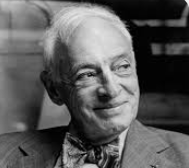
There's something that remains barbarous in educated people, and lately I've more and more had the feeling that we are nonwondering primitives. And why is it that we no longer marvel at these technological miracles? They've become the external facts of every life. We've all been to the university, we've had introductory courses in everything, and therefore we have persuaded ourselves that if we had the time to apply ourselves to these scientific marvels, we would understand them. But of course that's an illusion. It couldn't happen. Even among people who have had careers in science. They know no more about how it all works than we do. So we are in the position of savage men who, however, have been educated into believing that they are capable of understanding everything. Not that we actually do understand, but that we have the capacity.
▼
Source
source
"A Half Life" (1990), pp. 302-303
3 months 5 days ago
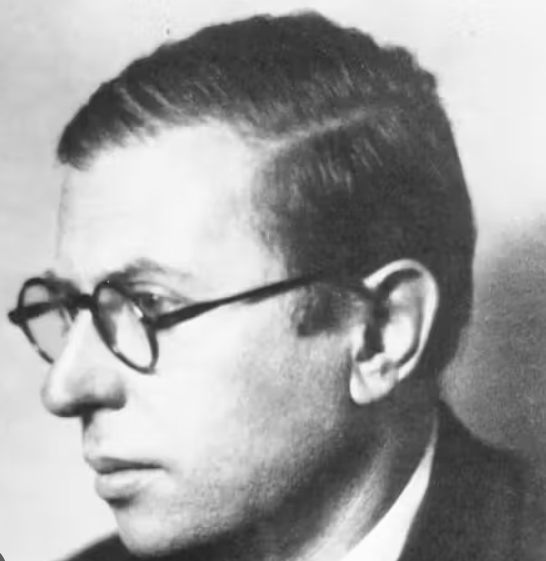
Freedom is what you do with what's been done to you.

3 months 3 weeks ago
There are two kinds of pleasure: one consisting in a state of rest, in which both body and mind are undisturbed by any kind of pain; the other arising from an agreeable agitation of the senses, producing a correspondent emotion in the soul. It is upon the former of these that the enjoyment of life chiefly depends. Happiness may therefore be said to consist in bodily ease, and mental tranquility.
2 months 1 week ago
Whoever hasn't yet arrived at the clear realization that there might be a greatness existing entirely outside his own sphere and for which he might have absolutely no feeling; whoever hasn't at least felt obscure intimations concerning the approximate location of this greatness in the geography of the human spirit: that person either has no genius in his own sphere, or else he hasn't been educated to the level of the classic.
▼
Source
source
Lucinde and the Fragments, P. Firchow, trans. (1991), "Critical Fragments," § 36

3 months 3 weeks ago
Does anyone bathe in a mighty little time? Don't say that he does it ill, but in a mighty little time. Does anyone drink a great quantity of wine? Don't say that he does ill, but that he drinks a great quantity. For, unless you perfectly understand the principle from which anyone acts, how should you know if he acts ill? Thus you will not run the hazard of assenting to any appearances but such as you fully comprehend.
▼
Source
source
(45).
1 month 3 weeks ago
Underlying the concept of positivity is the conviction that the positive is intrinsically positive in itself, without anyone pausing to ask what is to be regarded as positive. ... It is significant and really quite interesting that the term 'positive' actually contains this ambivalence. On the one hand, 'positive' means what is given, is postulated, is there-as when we speak of positivism as the philosophy that sticks to the facts. But, equally, 'positive' also refers to the good, the approvable, in a certain sense, the ideal. And I imagine that this semantic constellation expresses with precision what countless people actually feel to be the case.
▼
Source
source
p. 18
4 months 4 days ago
The beginning in every task is the chief thing.

3 months 1 week ago
When we hear news, we should always wait for the sacrament of confirmation.
▼
Source
source
Letter to Charles-Augustin Ferriol, comte d'Argental, 28 August 1760]]
1 month 3 weeks ago
Men have been released from [concentration] camps who have taken over the jargon of their jailers and with cold reason and mad consent (the price, as it were, of their survival) tell their story as if it could not have been otherwise than it was, contending that they have not been treated so badly after all.
▼
Source
source
p. 45.
3 months 1 day ago
The political, ethical, social, philosophical problem of our day is not to try to liberate the individual from the state and from the state's institutions but to liberate us both from the state and from the type of individualization which is linked to the state. We have to promote new forms of subjectivity through the refusal of this kind of individuality which has been imposed on us for several centuries.
▼
Source
source
p. 785
2 months 1 week ago
Our philosophy... reduceth to a single origin and relateth to a single end, and maketh contraries to coincide so that there is one primal foundation both of origin and of end. From this coincidence of contraries, we deduce that ultimately it is divinely true that contraries are within contraries; wherefore it is not difficult to compass the knowledge that each thing is within every other.
▼
Source
source
As translated by Dorothea Waley Singer
2 months 2 days ago
But where is the antidote for lucid despair, perfectly articulated, proud, and sure? All of us are miserable, but how many know it? The consciousness of misery is too serious a disease to figure in an arithmetic of agonies or in the catalogues of the Incurable. It belittles the prestige of hell, and converts the slaughterhouses of time into idyls. What sin have you committed to be born, what crime to exist? Your suffering like your fate is without motive. To suffer, truly to suffer, is to accept the invasion of ills without the excuse of causality, as a favor of demented nature, as a negative miracle. . .
2 months 4 days ago
The rights and duties of man thus simplified, it seems almost impertinent to attempt to illustrate truths that appear so incontrovertible: yet such deeply rooted prejudices have clouded reason, and such spurious qualities have assumed the name of virtues, that it is necessary to pursue the course of reason as it has been perplexed and involved in error, by various adventitious circumstances, comparing the simple axiom with casual deviations.Men, in general, seem to employ their reason to justify prejudices, which they have imbibed, they cannot trace how, rather than to root them out. The mind must be strong that resolutely forms its own principles; for a kind of intellectual cowardice prevails which makes many men shrink from the task, or only do it by halves. Yet the imperfect conclusions thus drawn, are frequently very plausible, because they are built on partial experience, on just, though narrow, views.
▼
Source
source
Ch. 1
3 months 2 days ago
You can't be reluctant to give up your lie and still tell the truth.
▼
Source
source
p. 44e
CivilSimian.com created by AxiomaticPanic, CivilSimian, Kalokagathia