

2 months 3 weeks ago
If there is a state, then necessarily there is domination and consequently slavery. A state without slavery, open or camouflaged, is inconceivable - that is why we are enemies of the state.

2 months 4 weeks ago
Every man has his dignity. I'm willing to forget mine, but at my own discretion and not when someone else tells me to.

2 months 2 weeks ago
The farther men get from God, the farther they advance into the knowledge of religions.

3 months 3 weeks ago
I have always - at least, ever since I can remember - had a kind of longing for death. Psyche
1 week 6 days ago
Middle age begins with marriage; for then work and responsibility replace carefree play, passion surrenders to the limitations of social order, and poetry yields to prose.
▼
Source
source
Ch. 3 : On Middle Age
5 days ago
Just as no thing or organism exists on its own, it does not act on its own. Furthermore, every organism is a process: thus the organism is not other than its actions. To put it clumsily: it is what it does. More precisely, the organism, including its behavior, is a process which is to be understood only in relation to the larger and longer process of its environment. For what we mean by "understanding" or "comprehension" is seeing how parts fit into a whole, and then realizing that they don't compose the whole, as one assembles a jigsaw puzzle, but that the whole is a pattern, a complex wiggliness, which has no separate parts. Parts are fictions of language, of the calculus of looking at the world through a net which seems to chop it up into bits. Parts exist only for purposes of figuring and describing, and as we figure the world out we become confused if we do not remember this all the time.
▼
Source
source
p. 73

3 months 3 weeks ago
If you say that this is absurd, that we cannot be in love with everyone at once, I merely point out to you that, as a matter of fact, certain persons do exist with an enormous capacity for friendship and for taking delight in other people's lives; and that such person know more of truth than if their hearts were not so big. The vice of ordinary Jack and Jill affection is not its intensity, but its exclusions and its jealousies. Leave those out, and you see that the ideal I am holding up before you, however impracticable to-day, yet contains nothing intrinsically absurd.
▼
Source
source
"What Makes a Life Significant?"

3 months 3 weeks ago
The prospect for the human race is sombre beyond all precedent. Mankind are faced with a clear-cut alternative: either we shall all perish, or we shall have to acquire some slight degree of common sense. A great deal of new political thinking will be necessary if utter disaster is to be averted.
1 month 2 weeks ago
Maybe somewhere in some other galaxy there is a super-intelligence so colossal that from our point of view it would be a god. But it cannot have been the sort of God that we need to explain the origin of the universe, because it cannot have been there that early.

2 months 1 week ago
The chief error in philosophy is overstatement.
▼
Source
source
Pt. I, ch. 1, sec. 1.

4 months 3 weeks ago
Of these not right forms of government, monarchy, when bound by good written rules, which we call laws, is the best of all the six; but without law it is hard and most oppressive to live with. The government of the few must be considered intermediate, both in good and in evil. The government of the multitude is weak in all respects and able to do nothing great, either good or bad, when compared with the other forms of government, therefore of all these governments when they are lawful, this is the worst, and when they are all lawless it is the best.
2 months 1 week ago
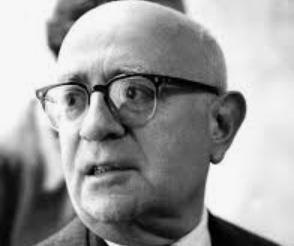
Jazz is the false liquidation of art - instead of utopia becoming reality it disappears from the picture.
▼
Source
source
Perennial fashion - Jazz, as quoted in The Sociology of Rock (1978) by Simon Frith

2 months 3 weeks ago
All writers, not ours alone but foreigners also, who have sought to represent Absolute Beauty, were unequal to the task, for it is an infinitely difficult one. The beautiful is the ideal ; but ideals, with us as in civilized Europe, have long been wavering. There is in the world only one figure of absolute beauty: Christ. That infinitely lovely figure is, as a matter of course, an infinite marvel.
▼
Source
source
Letter to his Niece Sofia Alexandrovna, Geneva, January 1, 1868. Ethel Golburn Mayne, Letters of Fyodor Michailovitch Dostoyevsky to His Family and Friends (1879), Dostoevsky's Letters XXXIX, p. 136

2 weeks 1 day ago
The work we desire and prize is not the courage to die decently, but to live manfully.

2 months 3 weeks ago
It shews the anxiety of the great men who influenced the conduct of affairs at that great event, to make the Revolution a parent of settlement, and not a nursery of future revolutions.
▼
Source
source
Referring to the Glorious Revolution of 1688

4 months 3 weeks ago
It seemed to him [Euphemius] it would be a brilliant notion to call in an outside force to fight on his behalf. This same brilliant notion has occurred to participants in civil wars uncounted times in history and it has ended in catastrophe just about every time, since those called in invariably take over for themselves. Of all history's lessons, this seems to be the plainest, and the most frequently ignored.

3 months 3 weeks ago
The two parties which divide the State, the party of Conservatism and that of Innovation are very old, and have disputed the possession of the world ever since it was made ... Now one, now the other gets the day, and still the fight renews itself as if for the first time, under new names and hot personalities ... Innovation is the salient energy; Conservatism the pause on the last movement.
▼
Source
source
Via Arthur M. Schlesinger, Jr., The Cycles of American History (Houghton Mifflin, 1986) p. 23

3 months 4 weeks ago
The evident justice and utility of the foregoing maxims have recommended them more or less to the attention of all nations.
▼
Source
source
Chapter II, Part II, p. 894.

2 months 2 weeks ago
Now precisely because Galilean science is, in the formation of its concepts, the technic of a specific Lebenswelt, it does not and cannot transcend this Lebenswelt. It remains essentially within the basic experiential framework and within the universe of ends set by this reality.
▼
Source
source
p. 164
3 months 3 weeks ago
The hopes which inspire communism are, in the main, as admirable as those instilled by the Sermon on the Mount, but they are held as fanatically and are as likely to do as much harm.
▼
Source
source
Part I, The Present Condition of Russia, Ch. 1: What Is Hoped From Bolshevism

2 months 6 days ago
At present we live to impede each other's satisfactions; competition, domestic life, society, what is it all but this? We go somewhere where we are not wanted and where we don't want to go. What else is conventional life? Passivity when we want to be active. So many hours spent every day in passively doing what conventional life tells us, when we would so gladly be at work. And is it a wonder that all individual life is extinguished?

4 months 2 weeks ago
A nihilist is not one who believes in nothing, but one who does not believe in what exists.
2 months 2 weeks ago
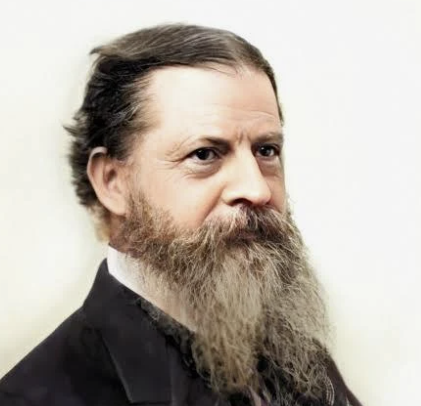
It is important to understand what I mean by semiosis. All dynamic action, or action of brute force, physical or psychical, either takes place between two subjects, - whether they react equally upon each other, or one is agent and the other patient, entirely or partially, - or at any rate is a resultant of such actions between pairs. But by "semiosis" I mean, on the contrary, an action, or influence, which is, or involves, a cooperation of three subjects, such as a sign, its object, and its interpretant, this tri-relative influence not being in any way resolvable into actions between pairs.
▼
Source
source
"Pragmatism" (1907) in The Essential Peirce : Selected Philosophical Writings (1998) edited by the Peirce Edition Project, Vol. 2, p. 411, Indiana University Press.

4 months 1 day ago
In judging policies we should consider the results that have been achieved through them rather than the means by which they have been executed.
▼
Source
source
From an undated letter to Piero Soderini (translated here by Dr. Arthur Livingston), in The Living Thoughts of Machiavelli, by Count Carlo Sforza, published by Cassell, London (1942), p. 85

2 months 1 week ago
Emptiness empties the one seeing into what is seen.

3 months 3 weeks ago
I do not give a damn about the dead. They died for the [Communist] Party and the Party can decide what it wants. I practice a live man's politics, for the living.
▼
Source
source
Act 5, sc. 3
3 months 3 weeks ago
Power may be defined as the production of intended effects.
▼
Source
source
Ch. 3: The Forms of Power
2 months 6 days ago
The existential split in man would be unbearable could he not establish a sense of unity within himself and with the natural and human world outside.
▼
Source
source
p. 262

2 months 6 days ago
Anarchism, more than any other social theory, values human life above things.
2 months 2 weeks ago
For such Truth as opposeth no man's profit nor pleasure is to all men welcome.
▼
Source
source
Review and Conclusion, p. 396, (Last text line)
3 months 3 weeks ago
A European who goes to New York and Chicago sees the future... when he goes to Asia he sees the past.
▼
Source
source
Ch. 8: Eastern and Western Ideals of Happiness
7 months 4 weeks ago
In the more sophisticated versions of the critics of ideology - that developed by the Frankfurt School, for example - it is not just a question of seeing things (that is, social reality) as they 'really are," of throwing away the distorting spectacles of ideology; the main point is to see how the reality itself cannot reproduce itself without this so-called ideological mystification. The mask is not simply hiding the real state of things; the ideological distortion is written into its very essence... the moment we see it 'as it really is,' this being dissolves itself into nothingness or, more precisely, it changes into another kind of reality. That is why we must avoid simple metaphors of demasking, of throwing away the veils which are supposed to hide the naked reality.
3 months 3 weeks ago
I do not think it can be questioned that sympathy is a genuine motive, and that some people at some times are made somewhat uncomfortable by the sufferings of some other people. It is sympathy that has produced the many humanitarian advances of the last hundred years. We are shocked when we hear stories of the ill-treatment of lunatics, and there are now quite a number of asylums in which they are not ill-treated. Prisoners in Western countries are not supposed to be tortured, and when they are, there is an outcry if the facts are discovered. We do not approve of treating orphans as they are treated in Oliver Twist.
2 months 2 weeks ago
The apparatus defeats its own purpose if its purpose is to create a humane existence on the basis of a humanized nature.
▼
Source
source
pp. 145-146
2 months 4 weeks ago
The purpose of an encyclopedia is to collect knowledge disseminated around the globe; to set forth its general system to the men with whom we live, and transmit it to those who will come after us, so that the work of preceding centuries will not become useless to the centuries to come; and so that our offspring, becoming better instructed, will at the same time become more virtuous and happy, and that we should not die without having rendered a service to the human race in the future years to come.
▼
Source
source
Encyclopédie
2 months 3 weeks ago
Expect nothing more from philosophy than a voice, language and grammar of the instinct for Godliness that lies at its origin, and, essentially, is philosophy itself.
▼
Source
source
"On Philosophy: To Dorothea," in Theory as Practice (1997), p. 421
4 months 1 day ago
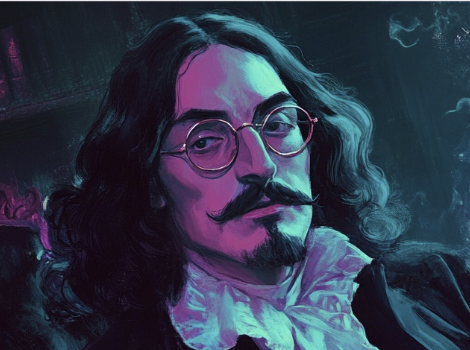
Staying as I am, one foot in one country and the other in another, I find my condition very happy, in that it is free.
▼
Source
source
Letter to Elisabeth of Bohemia, Princess Palatine, Paris, June/July 1648

3 months 2 weeks ago
Not only must people know, they must see with their own eyes. Because they must be made to be afraid; but also because they must be the witnesses, the guarantors, of the punishment, and because they must to a certain extent take part in it.
▼
Source
source
Chapter One, pp.58
2 weeks 1 day ago
Clever men are good, but they are not the best.
▼
Source
source
Goethe.
3 months 3 weeks ago
A vivid thought brings the power to paint it; and in proportion to the depth of its source is the force of its projection.
▼
Source
source
p. 261


4 days ago
Only when the true ends of society have nothing to do with the sublime does "culture" become necessary as a veneer to cover over the void. Culture can at best appreciate the monuments of earlier faith; it cannot produce them.
▼
Source
source
"Commerce and Culture," p. 280.
4 months 2 weeks ago
Blessed are the hearts that can bend; they shall never be broken.

3 months 5 days ago
We ought so to behave to one another as to avoid making enemies of our friends, and at the same time to make friends of our enemies. As quoted in Diogenes Laërtius, Lives and Opinions of Eminent Philosophers, "Pythagoras", Sect. 23, as translated in Dictionary of Quotations (1906) by Thomas Benfield Harbottle, p. 320
2 months 2 weeks ago
It is an understatement to say that in this society injustices abound: in truth, it is itself the quintessence of injustice.
5 days ago
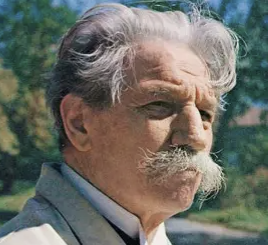
I don't know what your destiny will be, but one thing I know, the only ones among you who will be really happy are those who have sought and found how to serve.
▼
Source
source
Widely attributed to Schwietzer online, no known original source.

4 months 1 week ago
This happy state can only be obtained by a prudent care of the body, and a steady government of the mind. The diseases of the body are to be prevented by temperance, or cured by medicine, or rendered tolerable by patience.
4 months 6 days ago
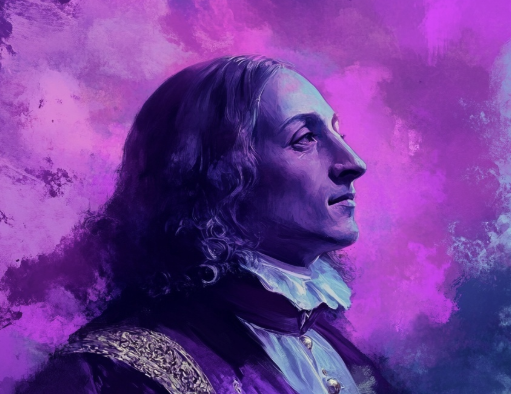
They [men] have corrupted this [God's supernatural] order by making profane things what they should make of holy things, because in fact, we believe scarcely any thing except which pleases us.

3 months 2 weeks ago
I would rather discover one cause than gain the kingdom of Persia.
▼
Source
source
Freeman (1948), p. 155
CivilSimian.com created by AxiomaticPanic, CivilSimian, Kalokagathia