


2 months 2 weeks ago
It is a woman's outstanding characteristic that she can do anything for the love of a man. But those women who can achieve something important for the love of a thing are most exceptional, because this does not really agree with their nature. Love for a thing is a man's prerogative. But since masculine and feminine elements are united in our human nature, a man can live in the feminine part of himself, I and a woman in her masculine part. None the less the feminine element in man is only something in the background, as is the masculine element in woman. If one lives out the opposite sex in oneself one is living in one's own background, and one's real individuality suffers. A man should live as a man and a woman as a woman.
▼
Source
source
P. 243

2 months 2 weeks ago
But I say unto you, That whosoever is angry with his brother without a cause shall be in danger of the judgment: and whosoever shall say to his brother, Raca, shall be in danger of the council: but whosoever shall say, Thou fool, shall be in danger of hell fire.
▼
Source
source
5:22, King James Version.

1 month 2 weeks ago
Old and young, we are all on our last cruise.
▼
Source
source
Crabbed Age and Youth.

1 month 2 weeks ago
There is a real, living unity in our time, as in any other, but it lies submerged under a superficial hubbub of sensation.
▼
Source
source
Letter to Harold Adam Innis (14 March 1951), published in Letters of Marshall McLuhan (1987), p. 223

4 months 3 weeks ago
Everything that depends on the action of nature is by nature as good as it can be, and similarly everything that depends on art or any rational cause, and especially if it depends on the best of all causes. To entrust to chance what is greatest and most noble would be a very defective arrangement.
2 months 2 weeks ago
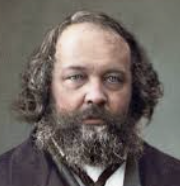
A person is strong only when he stands upon his own truth, when he speaks and acts from his deepest convictions. Then, whatever the situation he may be in, he always knows what he must say and do. He may fall, but he cannot bring shame upon himself or his cause. If we seek the liberation of the people by means of a lie, we will surely grow confused, go astray, and lose sight of our objective, and if we have any influence at all on the people we will lead them astray as well - in other words, we will be acting in the spirit of reaction and to its benefit.
▼
Source
source
"Appendix A"

1 month 2 weeks ago
I am extremely pleased by Daniel Fincke's article, which says exactly what I SHOULD have said and, to my regret, didn't make sufficiently clear in my Reason Rally speech. The best way to summarise it would be to modify the quotation from Johann Hari. Johann said, "I respect you too much to respect your ridiculous beliefs". From now on, my version will be, "I respect you too much to accept that you really believe anything so ridiculous as you claim. Please either defend those beliefs and explain why they are not ridiculous, or else declare that you do not hold them and publicly disown the church to which you claim loyalty."
▼
Source
source
comment on Daniel Fincke (2 April 2012), "In Defense of Dawkins's Reason Rally Speech", RichardDawkins.net, retrieved on 1 May 2012
1 month 2 weeks ago
Omnipresence has become an ordinary human dimension.

4 months ago
But the best demonstration by far is experience, if it go not beyond the actual experiment.
▼
Source
source
Aphorism 70
3 months 1 week ago
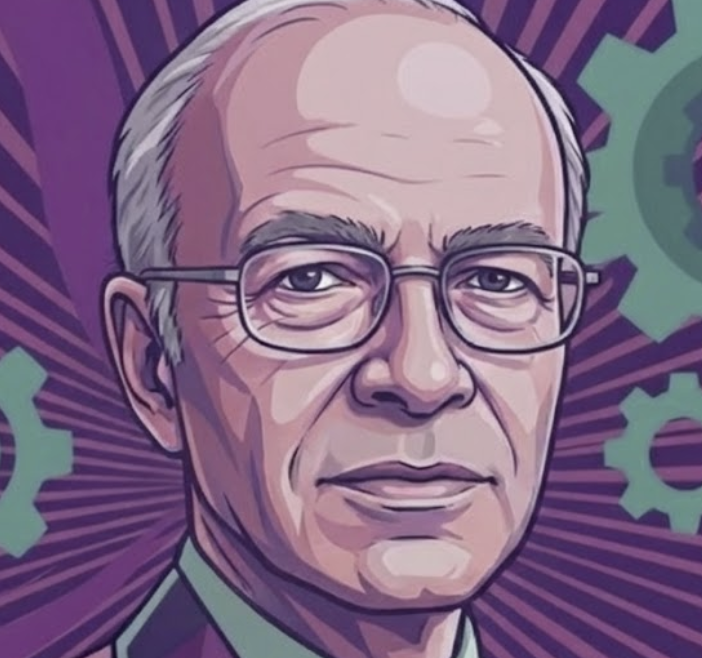
The principles of ethics come from our own nature as social, reasoning beings.
▼
Source
source
Chapter 6, A New Understanding Of Ethics, p. 149

3 months 3 weeks ago
A young man before he leaves the shelter of his father's house, and the guard of a tutor, should be fortify'd with resolution, and made acquainted with men, to secure his virtues, lest he should be led into some ruinous course, or fatal precipice, before he is sufficiently acquainted with the dangers of conversation, and his steadiness enough not to yield to every temptation.
▼
Source
source
Sec. 70

2 months 4 weeks ago
The single spirit doth simultaneously temper the whole together; this is the single soul of all things; all are filled with God.
▼
Source
source
IV 9; as translated by Dorothea Waley Singer
1 month 2 weeks ago
Faith is the great cop-out, the great excuse to evade the need to think and evaluate evidence. Faith is belief in spite of, even perhaps because of, the lack of evidence.
▼
Source
source
From speech at the Edinburgh International Science Festival, 1992-04-15.

4 months 2 weeks ago
And the true order of going, or being led by another, to the things of love, is to begin from the beauties of earth and mount upwards for the sake of that other beauty, using these steps only, and from one going on to two, and from two to all fair forms to fair practices, and from fair practices to fair notions, until from fair notions he arrives at the notion of absolute beauty, and at last knows what the essence of beauty is.

3 months 2 weeks ago
The First [Friend] is the alter ego, the man who first reveals to you that you are not alone in the world by turning out (beyond hope) to share all your most secret delights. There is nothing to be overcome in making him your friend; he and you join like raindrops on a window. But the Second Friend is the man who disagrees with you about everything... Of course he shares your interests; otherwise he would not become your friend at all. But he has approached them all at a different angle. he has read all the right books but has got the wrong thing out of every one... How can he be so nearly right, and yet, invariably, just not right? He is as fascinating (and infuriating) as a woman.

2 months 5 days ago
Open, honest, truth-telling individuals value privacy. We all need spaces where we can be alone with thoughts and feelings - where we can experience healthy psychological autonomy and can choose to share when we want to.
▼
Source
source
All About Love: New Visions
4 months 6 days ago
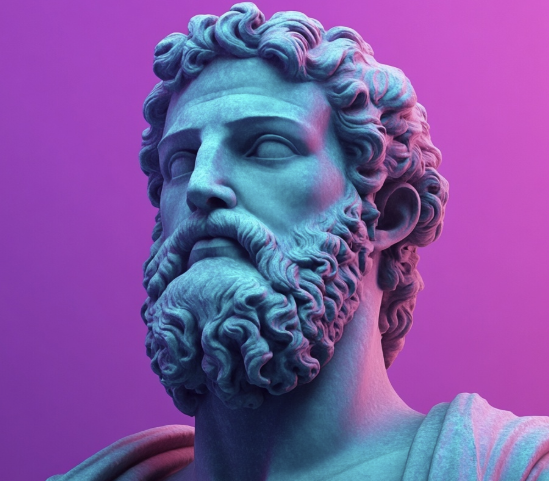
Do you suppose that you can do the things you do now, and yet be a philosopher? Do you suppose that you can eat in the same fashion, drink in the same fashion, give way to anger and to irritation, just as you do now?
▼
Source
source
Book III, ch. 15, 10 (= Enchiridion 29, 10).

2 months 1 week ago
And what is its moral proof? We may formulate it thus: Act so that in your own judgment and in the judgment of others you may merit eternity, act so that you may become irreplaceable, act so that you may not merit death. Or perhaps thus: Act as if you were to die tomorrow, but to die in order to survive and be eternalized. The end of morality is to give personal, human finality to the Universe; to discover the finality that belongs to it - if indeed it has any finality - and to discover it by acting.



2 months 3 weeks ago
Every other art,-as poetry, music, painting,-may be practised without the process showing forth the rules according to which it is conducted ;-but in the self-cognizant art of the philosopher, no step can be taken without declaring the grounds upon which it proceeds.
▼
Source
source
p. 14

4 months 3 weeks ago
Spontaneous love can reach the point of despair, shows that it is in despair, that even when it is happy it loves with the power of despair.
4 months 1 week ago
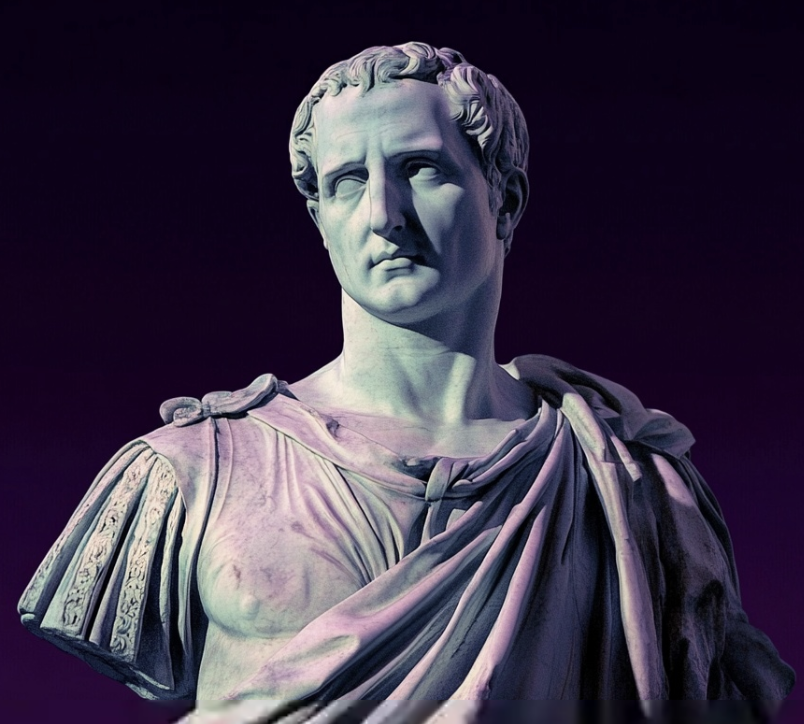
The greatest states have been overthrown by the young and sustained and restored by the old. ... Rashness is the product of the budding-time of youth, prudence of the harvest-time of age.
▼
Source
source
section 20

3 months 3 weeks ago
We are thus led to a somewhat vague distinction between what we may call "hard" data and "soft" data. This distinction is a matter of degree, and must not be pressed; but if not taken too seriously it may help to make the situation clear. I mean by "hard" data those which resist the solvent influence of critical reflection, and by " soft " data those which, under the operation of this process, become to our minds more or less doubtful.
▼
Source
source
p. 70
2 months 4 weeks ago
For no one's authority ought to rank so high as to set a value on his words and terms even though nothing clear and determinate lies behind them.
▼
Source
source
Paragraph 1

2 months 4 days ago
Those who have a spark of self-respect left, prefer open defiance, prefer crime to the emaciated, degraded position of poverty.

2 months 2 weeks ago
"What is truth?" is a fundamental question. But what is it compared to "How to endure life?" And even this one pales beside the next: "How to endure oneself?" - That is the crucial question in which no one is in a position to give us an answer.

3 months 3 weeks ago
Every sensible man, every honorable man, must hold the Christian sect in horror.
▼
Source
source
Examen important de milord Bolingbroke (1736): Conclusion

2 weeks 2 days ago
Finally, and... somewhat belatedly, there is the growing of a left that... has now been energized and is increasingly vocal... in certain quarters of the cultural community, in the arts and the universities, in Hollywood, in the media... where in some versions it also engages in a kind of illiberal... politics.
▼
Source
source
20:21
2 months 3 weeks ago
History is mere Empiricism; it has only facts to communicate, and all its proofs are founded upon facts alone. To attempt to rise to Primeval History on this foundation of fact, or to argue by this means how such or such a thing might have been, and then to take for granted that it has been so in reality,is to stray beyond the limits of History, and produce an a priori History; just as the Philosophy of Nature, referred to in our preceding lecture, endeavoured to find an a priori Science of Physics.
▼
Source
source
p. 140

3 months 3 weeks ago
Truth never turns to rebuke falsehood; her own straightforwardness is the severest correction.
▼
Source
source
Pearls of Thought (1881) p. 264
2 months 1 week ago
When we see a great man desiring power instead of his real goal we soon recognize that he is sick, or more precisely that his attitude to his work is sick. He overreaches himself, the work denies itself to him, the incarnation of the spirit no longer takes place, and to avoid the threat of senselessness he snatches after empty power. This sickness casts the genius on to the same level as those hysterical figures who, being by nature without power, slave for power, in order that they may enjoy the illusion that they are inwardly powerful, and who in this striving for power cannot let a pause intervene, since a pause would bring with it the possibility of self-reflection and self-reflection would bring collapse.
▼
Source
source
p. 180

3 months 3 weeks ago
There are two classes of poets - the poets by education and practice, these we respect; and poets by nature, these we love.
▼
Source
source
Parnassus (1874) Preface

3 months 2 weeks ago
Similarly, individual acts of aristocratic generosity do not eliminate pauperism; they perpetuate it.
▼
Source
source
p. 219

2 months 1 week ago
The notion of rights is linked with the notion of sharing out, of exchange, of measured quantity. It has a commercial flavor, essentially evocative of legal claims and arguments. Rights are always asserted in a tone of contention; and when this tone is adopted, it must rely upon force in the background, or else it will be laughed at.
▼
Source
source
p. 61
2 months 4 days ago
Power is never naked. Rather, it is eloquent.
2 days ago
We cannot understand what happens in the universe. What is glorious in it is united with what is full of horror. What is full of meaning is united to what is senseless. The spirit of the universe is at once creative and destructive - it creates while it destroys and destroys while it creates, and therefore it remains to us a riddle. And we must inevitably resign ourselves to this.
▼
Source
source
p. 5
3 months 3 weeks ago
There is a kind of latent omniscience not only in every man but in every particle.
▼
Source
source
p. 263
4 months 2 weeks ago
The vicious lover is the follower of earthly Love who desires the body rather than the soul; his heart is set on what is mutable and must therefore be inconstant. And as soon as the body he loves begins to pass the first flower of its beauty, he "spreads his wings and flies away," giving the lie to all his pretty speeches and dishonoring his vows, whereas the lover whose heart is touched by moral beauties is constant all his life, for he has become one with what will never fade.
2 months 2 weeks ago
The aphorism is cultivated only by those who have known fear in the midst of words, that fear of collapsing with all the words.
1 month 1 week ago
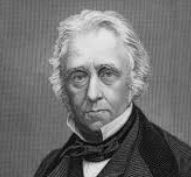
To sum up the whole, we should say that the aim of the Platonic philosophy was to exalt man into a god. The aim of the Baconian philosophy was to provide man with what he requires while he continues to be man. The aim of the Platonic philosophy was to raise us far above vulgar wants. The aim of the Baconian philosophy was to supply our vulgar wants. The former aim was noble; but the latter was attainable.
▼
Source
source
'Lord Bacon', The Edinburgh Review (July 1837), quoted in T. B. Macaulay, Critical and Historical Essays Contributed to The Edinburgh Review, Vol. II (1843), p. 395
2 months 2 weeks ago
The foxes have holes, and the birds of the air have nests; but the Son of man hath not where to lay his head.
▼
Source
source
8:20 (KJV)
4 months ago
Above all, every relation must be considered as suspicious, which depends in any degree upon religion, as the prodigies of Livy: And no less so, everything that is to be found in the writers of natural magic or alchemy, or such authors, who seem, all of them, to have an unconquerable appetite for falsehood and fable.
▼
Source
source
Aphorism 29

2 weeks 2 days ago
The regeneration of the inferior or bastard races by the superior ones is consistent with God's plans for humanity. The man of the people, in our countries, is always a fallen aristocrat; his hands are made to handle the sword rather than the laborer's tools. He prefers warring to working, that is, he returns to his original calling.
▼
Source
source
93, as translated by Asselin Charles, in "Colonial Discourse Since Christopher Columbus," Journal of Black Studies, Vol. 26, No. 2 (November 1995), 147
2 months 2 weeks ago
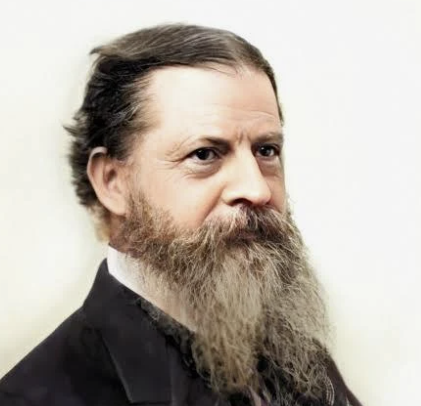
The word "God," so "capitalised" (as we Americans say), is the definable proper name, signifying Ens necessarium; in my belief Really creator of all three Universes of Experience. I, Ens necessarium is a latin expression which signifies "Necessary being, necessary entity"
4 months ago
It is manifest that there is no danger at all in the proportion or quantity of knowledge, how large soever, lest it should make it swell or out-compass itself; no, but it is merely the quality of knowledge, which, be it in quantity more or less, if it be taken without the true corrective thereof, hath in it some nature of venom or malignity, and some effects of that venom, which is ventosity or swelling. This corrective spice, the mixture whereof maketh knowledge so sovereign, is charity, which the Apostle immediately addeth to the former clause; for so he saith, "Knowledge bloweth up, but charity buildeth up".
▼
Source
source
Book I

2 weeks 3 days ago
Every identity, such (third) critics say, even the multitude, must be defined by its remained, those outside of it, call them excluded, the abject, or the subaltern. ... There can certainly be points or nodes outside a network but none are necessarily outside. Its boundaries are indefinite and open. ... None is necessarily excluded but this inclusion is not guaranteed: the expansion of the common is a practical, political manner.
▼
Source
source
226
2 months 3 weeks ago
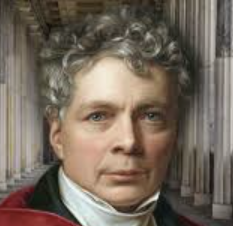
Yes! We believe in a higher principle than your virtue and the kind of morality you speak of so paltrily and without much conviction. We believe that there is no imperative or reward for virtue for the soul because it simply acts according to the necessity of its inherent nature. The moral imperative expresses itself in an ought and presupposes the concept of an evil next to that of good.
▼
Source
source
P. 43

3 months 3 days ago
There is no word or action but has its echo in Eternity. Thought is an Idea in transit, which when once released, never can be lured back, nor the spoken word recalled. Nor ever can the overt act be erased All that thou thinkest, sayest, or doest bears perpetual record of itself, enduring for Eternity.
▼
Source
source
As quoted in Pythagoron: The Religious, Moral, and Ethical Teachings of Pythagoras (1947) by Hobart Huson, p. 99
7 months 3 weeks ago
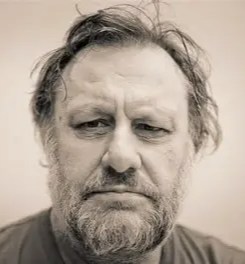
I already am eating from the trash can all the time. The name of this trash can is ideology. The material force of ideology makes me not see what I am effectively eating.
2 months 3 weeks ago
To disrespect the masses is moral; to honor them, lawful.
▼
Source
source
Lucinde and the Fragments, P. Firchow, trans. (1991), "Athenaeum Fragments" § 211
CivilSimian.com created by AxiomaticPanic, CivilSimian, Kalokagathia