


5 days ago
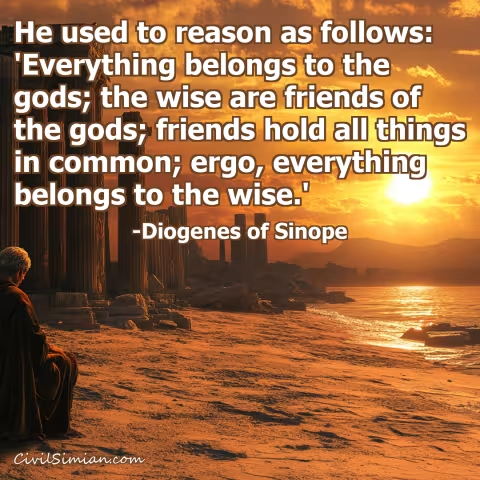
The wise man will live as long as he ought, not as long as he can.
▼
Source
source
Line 4.
1 day ago
In the presence of the total reality upon which our conduct is founded, our knowledge is characterized by peculiar limitations and aberrations. We cannot say in principle that "error is life and knowledge is death," because a being involved in persistent errors would continually act wide of the purpose, and would thus inevitably perish.
▼
Source
source
p. 444

1 month 3 weeks ago
This world wants to be childish in order to make us believe that the adults are elsewhere, in the "real" world, and to conceal the fact that true childishness is everywhere-that it is that of the adults themselves who come here to act the child in order to foster illusions as to their real childishness.
▼
Source
source
"The Precession of Simulacra," p. 13

2 months 2 weeks ago
To tell the truth, I couldn't care less about the relativity of knowledge, simply because the world does not deserve to be known.
5 days ago
I propose to value them according to their character, and not according to their duties. Each man acquires his character for himself, but accident assigns his duties.

2 months 4 days ago
One of the major problems of our society is that so many people are too intelligent to accept religion, but not intelligent or strong-minded enough to look for acceptable alternatives; in the same way, many people are strong-minded enough not to want to be 'organization men', but incapable of seeing beyond an act of protest. These situations produce a sense of being 'between two stools', lacking real motive; a sense of mental strain is produced that may find its outlet in violence, or in organised anti-social behaviour.
▼
Source
source
p. 224, Crimes of Freedom -- and their cure

2 months 2 weeks ago
The pursuit of individual happiness within those limits prescribed by social conditions, is the first requisite to the attainment of the greatest general happiness.
▼
Source
source
Ethics (New York:1915), § 70, pp. 190-191

4 months 2 weeks ago
"In the light, the earth remains our first and our last love. Our brothers are breathing under the same sky as we; justice is a living thing. Now is born that strange joy which helps one live and die, and which we shall never again postpone to a later time."

2 months 3 weeks ago
My Lords, to obtain empire is common; to govern it well has been rare indeed. To chastise the guilt of those who have been instruments of imperial sway over other nations by the high superintending justice of the sovereign state has not many striking examples among any people.
▼
Source
source
Speech in opening the impeachment of Warren Hastings (16 February 1788), quoted in The Works of the Right Honourable Edmund Burke, Volume the Ninth (1899), p. 398

4 months 3 weeks ago
An old proverb fetched from the outward and visible world says: "Only the man that works gets the bread." Strangely enough this proverb does not aptly apply in that world to which it expressly belongs. For the outward world is subjected to the law of imperfection, and again and again the experience is repeated that he too who does not work gets the bread, and that he who sleeps gets it more abundantly than the man who works. In the outward world everything is made payable to the bearer, this world is in bondage to the law of indifference, and to him who has the ring, the spirit of the ring is obedient, whether he be Noureddin or Aladdin, and he who has the world's treasure, has it, however he got it.

1 month 2 weeks ago
Try not to have Emily exposed to hours and hours of TV. It is a vile drug which permeates the nervous system, especially in the young.
▼
Source
source
Letter to son Eric McLuhan, regarding one of Eric's daughters, 1976

3 months 2 weeks ago
Kant [...] stated that he had "found it necessary to deny knowledge [...] to make room for faith," but all he had "denied" was knowledge of things that are unknowable, and he had not made room for faith but for thought.
▼
Source
source
p. 63

1 month 2 weeks ago
Ivan Ilych's life had been most simple and most ordinary and therefore most terrible.
▼
Source
source
Ch. II

4 months 6 days ago
The philosophers who wished us to have the gods for our friends rank the friendship of the holy angels in the fourth circle of society, advancing now from the three circles of society on earth to the universe, and embracing heaven itself. And in this friendship we have indeed no fear that the angels will grieve us by their death or deterioration. But as we cannot mingle with them as familiarly as with men (which itself is one of the grievances of this life), and as Satan, as we read, sometimes transforms himself into an angel of light, to tempt those whom it is necessary to discipline, or just to deceive, there is great need of God's mercy to preserve us from making friends of demons in disguise, while we fancy we have good angels for our friends; for the astuteness and deceitfulness of these wicked spirits is equalled by their hurtfulness.
▼
Source
source
XIX, 9

3 months 3 weeks ago
The horseman serves the horse, The neatherd serves the neat, The merchant serves the purse, The eater serves his meat; 'Tis the day of the chattel, Web to weave, and corn to grind; Things are in the saddle, And ride mankind.
▼
Source
source
Ode: Inscribed to W. H. Channing, st. 7

1 month 2 weeks ago
We humans are an extremely important manifestation of the replication bomb, because it is through us - through our brains, our symbolic culture and our technology - that the explosion may proceed to the next stage and reverberate through deep space.
▼
Source
source
Ch. 5: The Replication Bomb

3 months 3 weeks ago
There are those who blame the Press, but in this I think they are mistaken. The Press is such as the public demands, and the public demands bad newspapers because it has been badly educated.
▼
Source
source
p. 133
1 month 4 weeks ago
Global rationality, the rationality of neoclassical theory, assumes that the decision maker has a comprehensive, consistent utility function, knows all the alternatives that are available for choice, can compute the expected value of utility associated with each alternative, and chooses the alternative that maximizes expected utility. Bounded rationality, a rationality that is consistent with our knowledge of actual human choice behavior, assumes that the decision maker must search for alternatives, has egregiously incomplete and inaccurate knowledge about the consequences of actions, and chooses actions that are expected to be satisfactory (attain targets while satisfying constraints).
▼
Source
source
Simon (1997, p. 17); As cited in: Gustavo Barros (2010, p. 460).

2 months 2 days ago
In one sense, I do believe I am "like a man," as Parthe [the writer's sister] says. But how? In having sympathy. ... Women crave for being loved, not for loving. They scream out at you for sympathy all day long, they are incapable of giving any in return, for they cannot remember your affairs long enough to do so. ... They cannot state a fact accurately to another, nor can that other attend to it accurately enough for it to become information. Now is not all this the result of want of sympathy?
▼
Source
source
Letter to Madame Mohl
1 month 3 days ago
The difference between a Humanist and a lunatic is in fact one of degree.
▼
Source
source
Vol. 9
2 weeks 1 day ago
When an astronomer tells me that some stellar phenomenon, which his telescope reveals to him at this moment, happened... fifty years ago... I... ask... how he has measured the velocity of light.
5 days ago
If you could be alarmed into the semblance of modesty, you would charm everybody; but remember my joke against you about the Moon and the Solar System;-"Damn the solar system! bad light - planets too distant - pestered with comets - feeble contriviance; - could make a better with great ease."
▼
Source
source
Vol. II, letter to Lord Jeffrey (1806), p. 23 Discussed in David A. Kent, D. R. Ewen, "Romantic Parodies, 1797-1831", The Review of English Studies, New Series, Vol. 44, No. 175, (1993), pp. 430-432
3 months 3 weeks ago
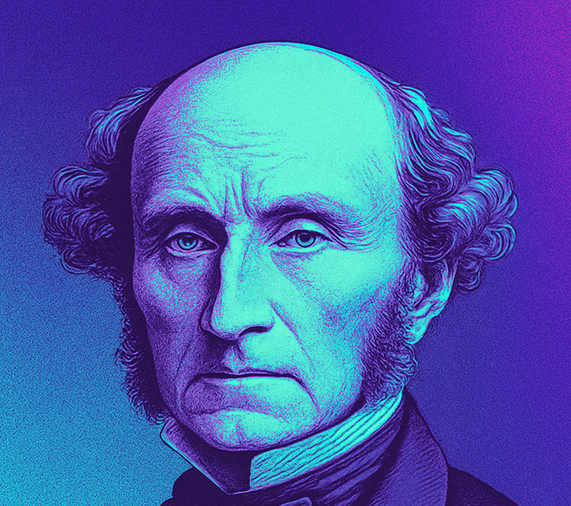
Moreover, if the character is formed, and the mind made up, on the few cardinal points of human opinion, agreement of conviction and feeling on these, has been felt in all times to be an essential requisite of anything worthy the name of friendship, in a really earnest mind. All these circumstances united, made the number very small of those whose society, and still more whose intimacy, I now voluntarily sought.
▼
Source
source
(p. 229)

2 months 3 days ago
Capitalism dislikes silence.

3 months 2 weeks ago
Yes, Lord, you are innocence itself: how could you conceive of Nothingness, you who are plenitude? Your gaze is light and transforms all into light: how could you know the half-light in my heart?
▼
Source
source
Act 3, sc. 6
2 months 4 days ago
When I was in my teens, I invented a term to describe them. I call it 'holiday consciousness' . . . because I often experienced this sense of optimism and wide-awakeness when setting out on a journey or a holiday. It was always the feeling that the world is self-evidently complex and beautiful, and that life is so obviously good that man's boredom and defeat is an absurdity . . . And then I used to ask: Why do men forget this so easily? And the answer seemed obvious: because the human will is so flabby and weak. Instead of being self-controlled, self-driven creatures, most men are little more than leaves on a stream, they drift along hoping for the best. I once wrote that men are like grandfather clocks driven by watchsprings.
▼
Source
source
p. 75
4 months 2 weeks ago
Every rebellion implies some kind of unity.

4 months 3 weeks ago
We have seen how it is originally language which works on the construction of concepts, a labor taken over in later ages by science. Just as the bee simultaneously constructs cells and fills them with honey, so science works unceasingly on this great columbarium of concepts, the graveyard of perceptions.
2 months 2 weeks ago
For two thousand years, Jesus has revenged himself on us for not having died on a sofa.
3 months 4 days ago
Things essentially incorporeal, because they are more excellent than all body and place, are every where, not with interval, but impartibly. Things essentially incorporeal are not locally present with bodies but are present with them when they please; by verging towards them so far as they are naturally adapted so to verge. They are not, however, present with them locally, but through habitude, proximity, and alliance. Things essentially incorporeal, are not present with bodies, by hypostasis and essence; for they are not mingled with bodies. But they impart a certain power which is proximate to bodies, through verging towards them. For tendency constitutes a certain secondary power proximate to bodies.
2 months 2 weeks ago
We define only out of despair, we must have a formula... to give a facade to the void.

3 months 2 weeks ago
As we take, in fact, a general view of the wonderful stream of our consciousness, what strikes us first is this different pace of its parts. Like a bird's life, it seems to be made of an alternation of flights and perchings.
▼
Source
source
Ch. 9
3 months 1 week ago
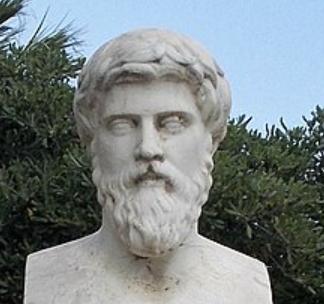
When one asked him what boys should learn, "That," said he, "which they shall use when men."
▼
Source
source
Of Agesilaus the Great
3 months 3 weeks ago
The infliction of cruelty with a good conscience is a delight to moralists. That is why they invented Hell.
▼
Source
source
Ch. 1: The Value of Scepticism
4 months 2 weeks ago
God is not needed to create guilt or to punish. Our fellow men suffice, aided by ourselves.

3 months 3 weeks ago
This sacrifice of common sense is the certain badge which distinguishes slavery from freedom; for when men yield up the privilege of thinking, the last shadow of liberty quits the horizon.
▼
Source
source
"Reflections on Titles", Pennsylvania Magazine
3 months 1 week ago
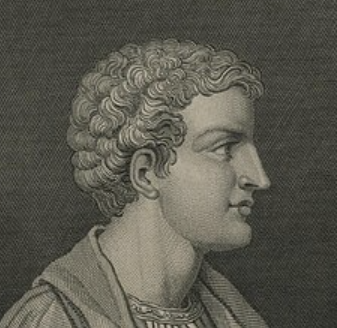
To have a great man for an intimate friend seems pleasant to those who have never tried it; those who have, fear it.
▼
Source
source
Book I, epistle xviii, line 86
3 months 2 weeks ago
Our responsibility is much greater than we might have supposed, because it involves all mankind.
▼
Source
source
Existentialism and Human Emotions
3 months 3 weeks ago
The people who are regarded as moral luminaries are those who forego ordinary pleasures themselves and find compensation in interfering with the pleasures of others.
▼
Source
source
Ch. 8: Eastern and Western Ideals of Happiness
3 months 3 weeks ago
A mind does not receive truth as a chest receives jewels that are put into it, but as the stomach takes up food into the system. It is no longer food, but flesh, and is assimilated. The appetite and the power of digestion measure our right to knowledge. He has it who can use it. As soon as our accumulation overruns our invention or power to use, the evils of intellectual gluttony begin,- congestion of the brain, apoplexy, and strangulation.
▼
Source
source
"The Natural History of Intellect", p. 30

2 months 3 weeks ago
I should have loved freedom, I believe, at all times, but in the time in which we live I am ready to worship it.
▼
Source
source
Book Four, Chapter VII.


3 months 2 weeks ago
I have changed my mind about the testability and logical status of the theory of natural selection; and I am glad to have an opportunity to make a recantation.

3 months 3 weeks ago
A philosophical attempt to work out a universal history according to a natural plan directed to achieving the civic union of the human race must be regarded as possible and, indeed, as contributing to this end of Nature.
▼
Source
source
Ninth Thesis
3 months 3 weeks ago
The art of music is good, for the reason, among others, that it produces pleasure; but what proof is it possible to give that pleasure is good? If, then, it is asserted that there is a comprehensive formula, including all things which are in themselves good, and that whatever else is good, is not so as an end, but as a mean, the formula may be accepted or rejected, but is not a subject of what is commonly understood by proof.
▼
Source
source
Ch. 1

4 months 2 weeks ago
Predicting the future is a hopeless, thankless task, with ridicule to begin with and, all too often, scorn to end with.
2 months 3 weeks ago
Taxing is an easy business. Any projector can contrive new impositions, any bungler can add to the old.
4 months 2 weeks ago
Hungary conquered and in chains has done more for freedom and justice than any people for twenty years. But for this lesson to get through and convince those in the West who shut their eyes and ears, it was necessary, and it can be no comfort to us, for the people of Hungary to shed so much blood which is already drying in our memories. In Europe's isolation today, we have only one way of being true to Hungary, and that is never to betray, among ourselves and everywhere, what the Hungarian heroes died for, never to condone, among ourselves and everywhere, even indirectly, those who killed them. It would indeed be difficult for us to be worthy of such sacrifices.
CivilSimian.com created by AxiomaticPanic, CivilSimian, Kalokagathia