

Sun, 30 Nov 2025 - 01:59
There is the name and the thing: the name is a voice which denotes and signifies the thing; the name is no part of the thing, nor of the substance; 'tis a foreign piece joined to the thing, and outside it. God, who is all fulness in Himself and the height of all perfection, cannot augment or add anything to Himself within; but His name may be augmented and increased by the blessing and praise we attribute to His exterior works: which praise, seeing we cannot incorporate it in Him, forasmuch as He can have no accession of good, we attribute to His name, which is the part out of Him that is nearest to us. Thus is it that to God alone glory and honour appertain; and there is nothing so remote from reason as that we should go in quest of it for ourselves; for, being indigent and necessitous within, our essence being imperfect, and having continual need of amelioration, 'tis to that we ought to employ all our endeavour.

Sat, 6 Dec 2025 - 21:50
I find that the whiter my hair becomes the more ready people are to believe what I say.
Sun, 30 Nov 2025 - 01:59
An untempted woman cannot boast of her chastity.

Fri, 5 Dec 2025 - 22:45
What a pity and what a poverty of spirit, to assert that beasts are machines deprived of knowledge and sentiment, which affect all their operations in the same manner, which learn nothing, never improve, &c. [...] Some barbarians seize this dog, who so prodigiously excels man in friendship, they nail him to a table, and dissect him living, to show the mezarian veins. You discover in him all the same organs of sentiment which are in yourself. Answer me, machinist, has nature arranged all the springs of sentiment in this animal that he should not feel? Has he nerves to be incapable of suffering? Do not suppose this impertinent contradiction in nature. [...] The animal has received those of sentiment, memory, and a certain number of ideas. Who has bestowed these gifts, who has given these faculties? He who has made the herb of the field to grow, and who makes the earth gravitate towards the sun.
Thu, 20 Nov 2025 - 03:19
I will speak in a low voice, just so as to let the judges hear me. For men are not wanting who would be glad to excite that people against me and against every eminent man; and I will not assist them and enable them to do so more easily.
Mon, 8 Dec 2025 - 23:17
Suppose that I wish to deserve the title of "robber of remorse" and that I place in myself all [the townspeople's] repentence?
Sun, 7 Dec 2025 - 06:08
We see then, commodities are in love with money, but "the course of true love never did run smooth".
Sun, 7 Dec 2025 - 06:08
The entire process seems simple and natural, i.e., possesses the naturalness of a shallow rationalism.

Mon, 10 Nov 2025 - 02:44
The Dantean conceptions of Inferno were childish and unworthy of the Divine imagination: fire and torture. Boredom is much more subtle. The inner torture of a mind unable to escape itself in any way, condemned to fester in its own exuding mental pus for all time, is much more fitting. Oh, yes, my friend, we have been judged, and condemned, too, and this is not Heaven, but hell.
Sun, 30 Nov 2025 - 01:59
The first law that ever God gave to man was a law of pure obedience; it was a commandment naked and simple, wherein man had nothing to inquire after, nor to dispute; forasmuch as to obey is the proper office of a rational soul, acknowledging a heavenly superior and benefactor.
Sat, 6 Dec 2025 - 05:48
The auspices for philosophy are bad if, when proceeding ostensibly on the investigation of truth, we start saying farewell to all uprightness, honesty and sincerity, and are intent only on passing ourselves off for what we are not. We then assume, like those three sophists [Fichte, Schelling and Hegel], first a false pathos, then an affected and lofty earnestness, then an air of infinite superiority, in order to impose where we despair of ever being able to convince.

Sat, 13 Dec 2025 - 04:40
But what then is this confrontation below the language of reason? Where might this interrogation lead, following not reason in its horizontal becoming, but seeking to retrace in time this constant verticality, which, the length of Western culture, confronts it with what it is not, measuring it with its own extravagance?
Tue, 11 Nov 2025 - 02:01
Real fulfillment, for the man who allows absolutely free rein to his desires, and who must dominate everything, lies in hatred.
Sat, 6 Dec 2025 - 21:50
Written words differ from spoken words in being material structures. A spoken word is a process in the physical world, having an essential time-order; a written word is a series of pieces of matter, having an essential space-order.
Sat, 22 Nov 2025 - 03:30
What has the Church done to thee, that thou shouldst wish to decapitate her? Thou wouldst take away her Head, and believe in the Head alone, despising the body. Vain is thy service, and false thy devotion to the Head. For to sever it from the body is an injury to both Head and body.

Mon, 8 Dec 2025 - 01:37
Single-mindedness is all very well in cows or baboons; in an animal claiming to belong to the same species as Shakespeare it is simply disgraceful.

Wed, 3 Dec 2025 - 22:19
The value which the workmen add to the materials, therefore, resolves itself in this case into two parts, of which the one pays their wages, the other the profits of the employer upon the whole stock of materials and wages which he advanced.

Wed, 5 Nov 2025 - 03:11
Without art we would be nothing but foreground and live entirely in the spell of that perspective which makes what is closest at hand and most vulgar appear as if it were vast, and reality itself.
Mon, 4 Aug 2025 - 03:11
The analysis achieves its end when the patient is able to recognize, in the Real of his symptom, the only support of his being. That is how we must read Freud's 'wo we war, soll ich werden:' you, the subject, must identify yourself with the place where your symptom already was; in its pathological particularity you must recognize the element which gives consistency to your being.
Tue, 25 Nov 2025 - 01:55
Do not mistake yourself by believing that your being has something in it more exalted than that of others.

Wed, 3 Dec 2025 - 23:17
By Natura naturans we must understand what is in itself and is conceived through itself, or such attributes of substance as express an eternal and infinite essence, that is ... God, insofar as he is considered as a free cause. But by Natura naturata I understand whatever follows from the necessity of God's nature, or from God's attributes, that is, all the modes of God's attributes insofar as they are considered as things which are in God, and can neither be nor be conceived without God.
Tue, 11 Nov 2025 - 02:01
Autumn is a second Spring when every leaf is a flower.

Fri, 5 Dec 2025 - 21:04
Men did not make the earth... It is the value of the improvements only, and not the earth itself, that is individual property... Every proprietor owes to the community a ground rent for the land which he holds.
Sat, 6 Dec 2025 - 21:50
The best life is the one in which the creative impulses play the largest part and the possessive impulses the smallest.
Sat, 6 Dec 2025 - 05:48
Life is a business that does not cover the costs.
Mon, 4 Aug 2025 - 02:14
Precisely as an enigma, the symptom, so to speak, announces its dissolution through interpretation: the aim of psychoanalysis is to re-establish the broken network of communication by allowing the patient to verbalize the meaning of his symptom: through this verbalization the symptom is automatically dissolved. This, then is the basic point: in its very construction, the symptom implies the field of the big Other as consistent, complete, because its very function is an appeal to the Other which contains its meaning.
Sun, 7 Dec 2025 - 02:19
The South may keep her pine-apples, and we will be content with our strawberries, which are, as it were, pine-apples with "going a-strawberrying" stirred into them, infinitely enhancing their flavor.
Sun, 30 Nov 2025 - 01:59
Let us give Nature a chance; she knows her business better than we do.
Fri, 12 Dec 2025 - 05:30
Do the essences of proposition and of the truth determine themselves from out of the essence of the thing, or does the essence of the thing determine itself from out of the essence of the proposition? The question is posed as an either/or. However does this either/or itself suffice? Are the essence of the thing and the essence of the proposition only built as mirror images because both of them together determine themselves from out of the same but deeper lying root? However, what and where can be this common ground for the essence of the thing and of the proposition and of their origin? The unconditioned (Unbedingt)? We stated at the beginning that what conditions the essense of the thing in its thingness can no longer itself be thing and conditioned, it must be an unconditioned (Un-bedingtes).
Sun, 7 Dec 2025 - 06:08
Money is therefore not only the object but also the fountainhead of greed.
Sun, 7 Dec 2025 - 00:01
A philosophy without heart and a faith without intellect are abstractions from the true life of knowledge and faith. The man whom philosophy leaves cold, and the man whom real faith does not illuminate, may be assured that the fault lies in them, not in knowledge and faith. The former is still an alien to philosophy, the latter an alien to faith.
Sat, 6 Dec 2025 - 21:50
No rules, however wise, are a substitute for affection and tact.

Wed, 5 Nov 2025 - 03:58
O woman, great is thy faith: be it unto thee even as thou wilt. 15:28 (KJV)
Sat, 6 Dec 2025 - 21:50
Diet, injections, and injunctions will combine, from a very early age, to produce the sort of character and the sort of beliefs that the authorities consider desirable, and any serious criticism of the powers that be will become psychologically impossible. Even if all are miserable, all will believe themselves happy, because the government will tell them that they are so.
Mon, 8 Dec 2025 - 21:06
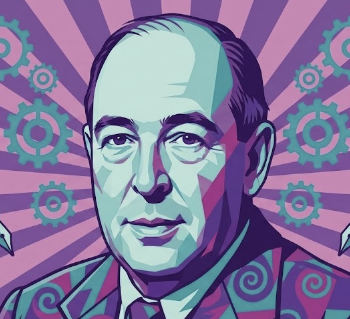
What seem our worst prayers may really be, in God's eyes, our best. Those, I mean, which are least supported by devotional feeling. For these may come from a deeper level than feeling. God sometimes seems to speak to us most intimately when he catches us, as it were, off our guard.
Sun, 7 Dec 2025 - 02:19
Howitt says of the man who found the great nugget which weighed twenty-eight pounds, at the Bendigo diggings in Australia: - "He soon began to drink; got a horse, and rode all about, generally at full gallop, and, when he met people, called out to inquire if they knew who he was, and then kindly informed them that he was 'the bloody wretch that had found the nugget.' At last he rode full speed against a tree, and nearly knocked his brains out." I think, however, there was no danger of that, for he had already knocked his brains out against the nugget.
Sun, 7 Dec 2025 - 19:56
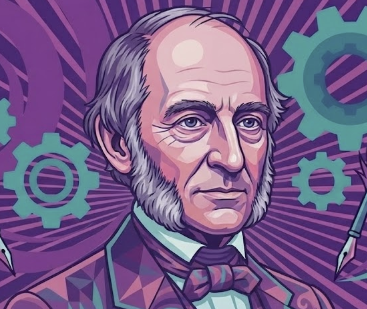
Man Thinking must not be subdued by his instruments.
Sat, 6 Dec 2025 - 21:50
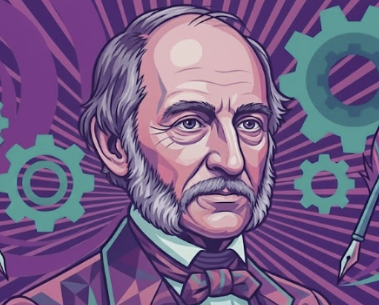
I cannot escape from the conclusion that the great ages of progress have depended upon a small number of individuals of transcendent ability. Ch. 8: Western Civilisation
Sun, 7 Dec 2025 - 22:49
Now in all of us, however constituted, but to a degree the greater in proportion as we are intense and sensitive and subject to diversified temptations, and to the greatest possible degree if we are decidedly psychopathic, does the normal evolution of character chiefly consist in the straightening out and unifying of the inner self. The higher and the lower feelings, the useful and the erring impulses, begin by being a comparative chaos within us - they must end by forming a stable system of functions in right subordination. Unhappiness is apt to characterize the period of order-making and struggle.
Sun, 7 Dec 2025 - 02:19
Truth, Goodness, Beauty - those celestial thrins,Continually are born; e'en now the Universe,With thousand throats, and eke with greener smiles,Its joy confesses at their recent birth.
Wed, 5 Nov 2025 - 03:58
Suffer little children, and forbid them not, to come unto me: for of such is the kingdom of heaven. 19:14 (KJV)
Tue, 18 Nov 2025 - 01:07
Of all people, girls and servants are the most difficult to behave to. If you are familiar with them, they lose their humility. If you maintain a reserve towards them, they are discontented.
Sun, 23 Nov 2025 - 04:29
When you close your doors, and make darkness within, remember never to say that you are alone, for you are not alone; nay, God is within, and your genius is within. And what need have they of light to see what you are doing?
Sat, 6 Dec 2025 - 21:50
Among human beings, the subjection of women is much more complete at a certain level of civilization than it is among savages. And the subjection is always reinforced by morality.
Sun, 23 Nov 2025 - 04:29
Yet God hath not only granted these faculties, by which we may bear every event without being depressed or broken by it, but like a good prince and a true father, hath placed their exercise above restraint, compulsion, or hindrance, and wholly within our own control.
Mon, 8 Dec 2025 - 21:06
He sees as well as you do that courage is not simply one of the virtues, but the form of every virtue at the testing point, which means, at the point of highest reality. A chastity or honesty, or mercy, which yields to danger will be chaste or honest or merciful only on conditions.

Sun, 7 Dec 2025 - 02:53
Persons of genius, it is true, are, and are always likely to be, a small minority; but in order to have them, it is necessary to preserve the soil in which they grow. Genius can only breathe freely in an atmosphere of freedom.
Tue, 18 Nov 2025 - 01:07
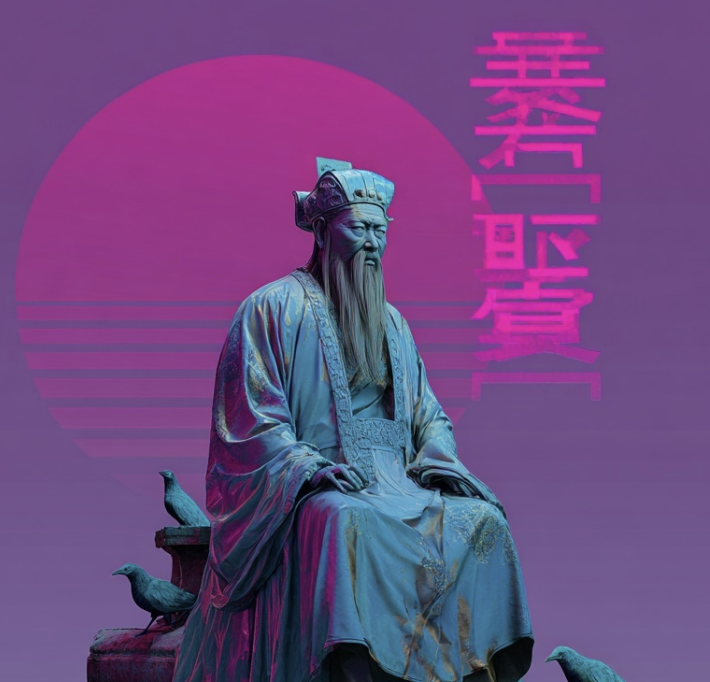
If names be not correct, language is not in accordance with the truth of things. Paraphrased as a chinese proverb stating "The beginning of wisdom is to call things by their proper name."
Sun, 30 Nov 2025 - 01:59
I prefer the company of peasants because they have not been educated sufficiently to reason incorrectly.

Thu, 4 Dec 2025 - 23:20
Beings who are so uniquely constituted must necessarily express themselves in other ways than ordinary men. It is impossible that with souls so differently modified, they should not carry over into the expression of their feelings and ideas the stamp of those modifications.
CivilSimian.com created by AxiomaticPanic, CivilSimian, Kalokagathia